


























How Much Does a Sofa Cost? A Budget Guide With Real Price Examples

A sofa budget becomes easier to judge when it names the exact piece you need: a three-seat sofa for everyday use, a sofa with a chaise, or a sectional with enough places for the whole household. Include the upholstery and any added modules before comparing prices. The amount at checkout also needs to leave room for tax and the delivery service you choose.
A useful sofa budget starts with the full configuration
Use the amounts below as shopping budgets, then compare actual offers within the band you can afford. These are planning ranges for the item price in U.S. dollars, rather than a calculated average of the U.S. sofa market.
| Item-price budget | A useful comparison | Keep the budget focused on |
|---|---|---|
| $500–$1,500 | A compact or straightforward sofa that meets your seating needs | Usable seat dimensions, the feel of the cushions and the delivered total |
| $1,500–$3,000 | Complete configurations with the upholstery, seat count or function you want | The specific feature or construction detail you receive for the extra cost |
| $3,000 and above | Larger arrangements or a particular material, mechanism or custom option | The full selected arrangement, including any separate seats and accessories |
A loveseat, a three-seat sofa and a sectional may all appear under one collection name. Open the selected configuration before recording its price. A low starting price can refer to a smaller piece or a different upholstery option.
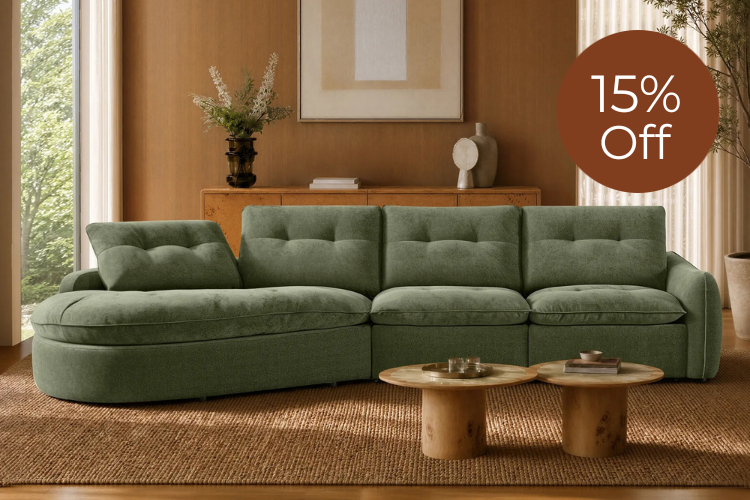
Our sofa collection includes different seating arrangements. Compare the number of usable seats as well as the overall width: wide arms and a corner change how much sitting space a piece provides.

What changes the price? A real configuration example
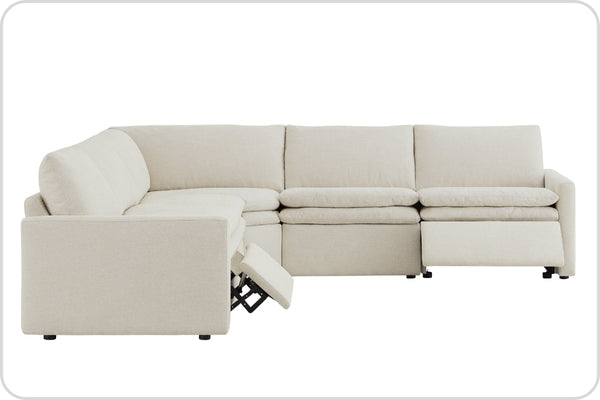
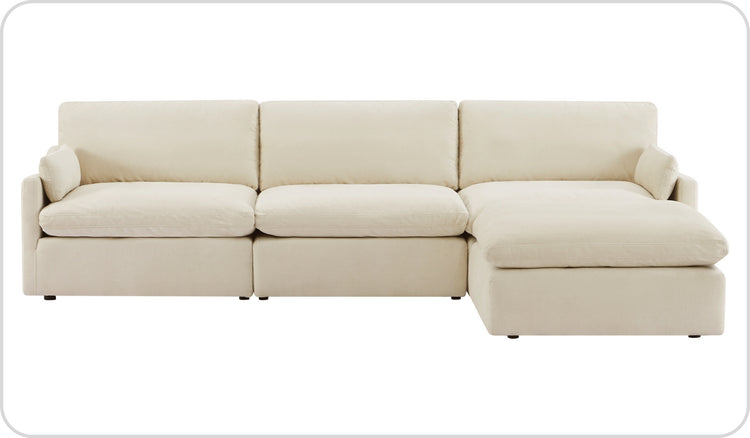
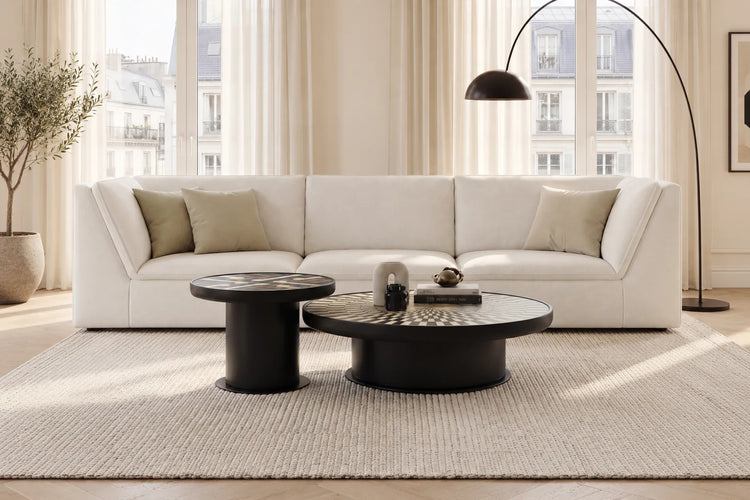
On September 29, 2026, our Kenna 3 Seat Modular Sofa in Cream, with the “With Armless Seat” configuration, had the following listed prices. Both selections used the same color and base configuration; the console-table option changed.
| Selected configuration | Listed price, USD |
|---|---|
| Cream · With Armless Seat · 0 console tables | $1,994.00 |
| Cream · With Armless Seat · 1 console table | $2,491.65 |
| Difference for this selection | $497.65 |
These are dated item-price examples, before any applicable tax, additional service or checkout offer. The selected options on the Kenna 3 Seat Modular Sofa determine the current price. This example shows why two prices from the same product page can describe different purchases.
Seat count and shape
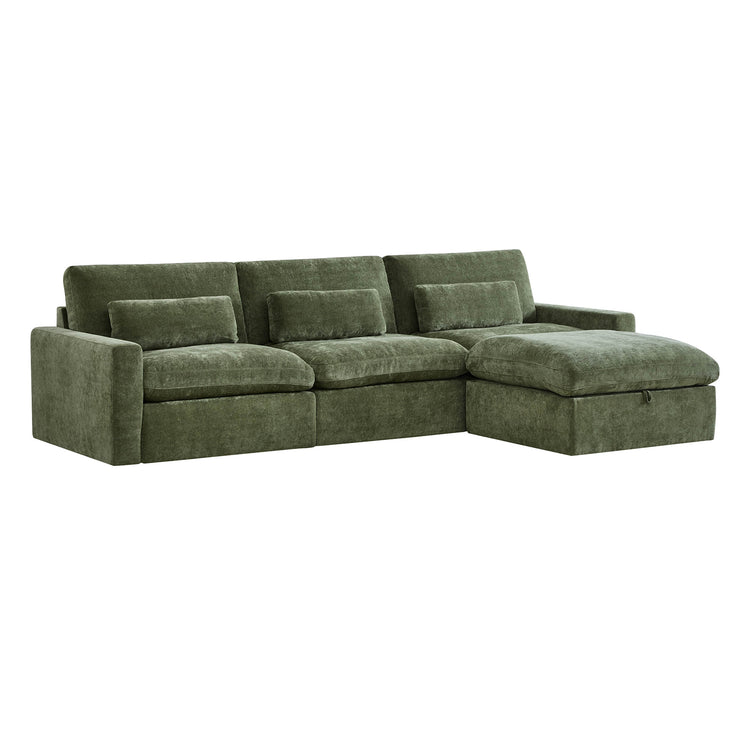
A chaise, corner or extra armless seat changes the components in the order. Count the places people will use at the same time, then compare the complete arrangement. If the room needs three upright seats, a large chaise occupying much of the available width may be a poor use of that budget.
Upholstery, cushions and frame
Compare the materials listed for the seating surfaces, sides and back. Record the cushion fill, whether cushions can be rotated or replaced, and the published frame and support details. A soft seat that needs regular reshaping creates a different ownership routine from a firmer seat. Include that routine in the choice.
Use seat height and usable depth to compare fit. Paying for more depth makes sense when you want room to curl up; check your upright sitting position if that is how you use the sofa most often.
Reclining seats and other functions
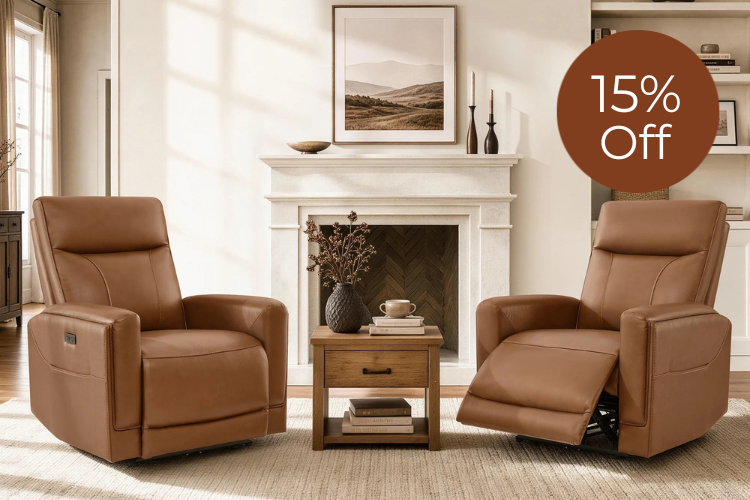
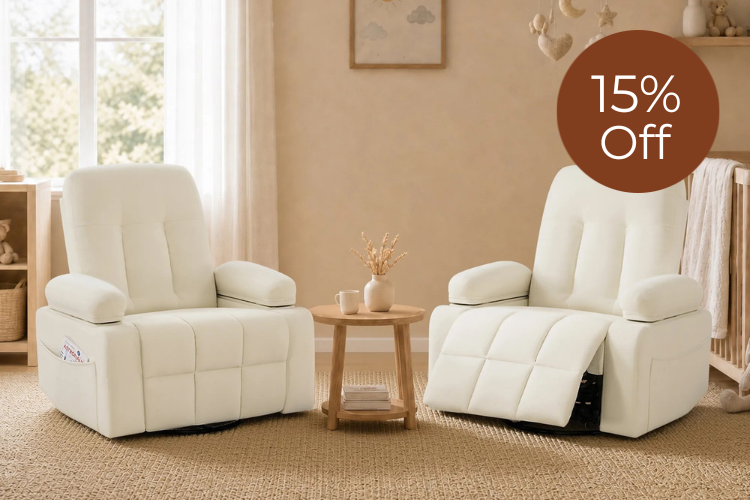
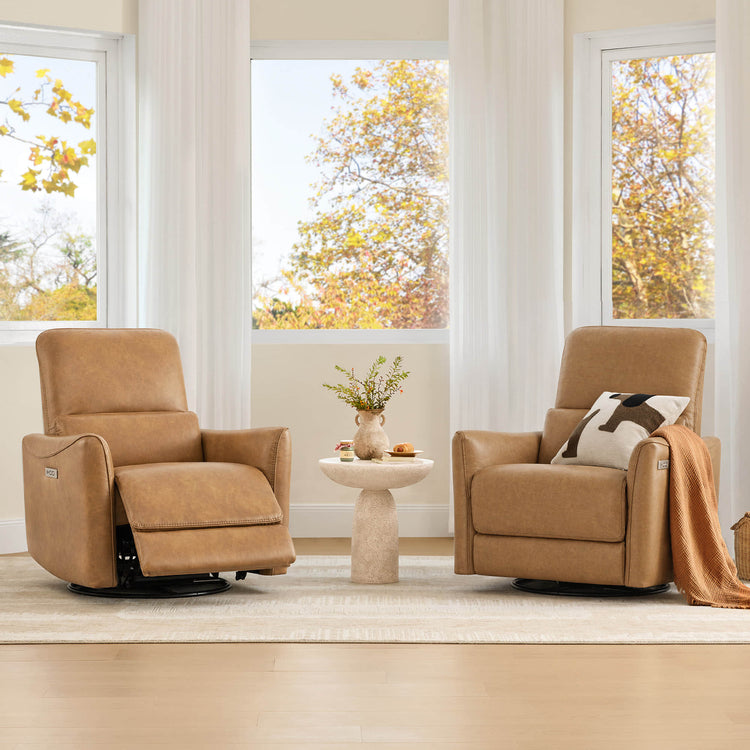
Count how many seats actually recline. Record whether the headrest and footrest adjust separately, which controls are powered, and whether a console or sleeper function is included. Measure the furniture in its extended position so the function you are buying will fit the room.

Build your delivered-cost budget
Write the maximum you want to spend with the sofa installed at home. Use the checkout estimate and any service quotes to fill in this calculation:
Selected item price + applicable tax + delivery and setup + old-sofa removal = planned total.
For example, a hypothetical $1,500 sofa, $120 in tax, $150 in delivery and setup, and $80 for old-sofa removal total $1,850. Those service charges and tax are example amounts. Replace them with the figures for your address and order.
- Delivery: record where the furniture will be left and whether stairs, assembly or room placement are included.
- Access: compare packaged dimensions with doors, turns, stairs and elevators before paying for a delivery service.
- Returns: keep a separate note of the return window, packaging conditions, transport costs and any applicable fees.
- Future upkeep: consider cleaning requirements and the availability of replacement cushions or moving parts.
Our shipping policy and return policy describe the relevant service and return terms. The delivery-route measuring guide explains which access points to record.
What to prioritize at your budget
For the main family sofa, start with seated fit, enough usable places and upholstery care that suits the household. A feature you use every evening has a clearer purpose than an extra module that blocks a doorway.
For an occasional-use room, choose the size and sitting position the room needs. Keeping the configuration simple leaves more of the budget for a suitable rug, lighting or a side table if those are also part of the project.
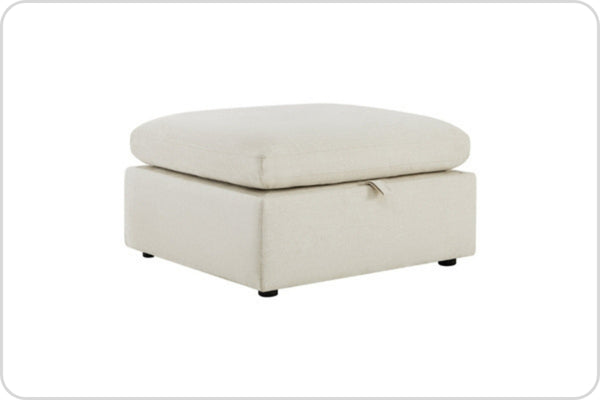
For a larger sectional, write a piece-by-piece order list. Confirm the chaise direction, corner, armless seats and any ottoman. A quoted price is useful only when it covers the arrangement you intend to buy.
Compare offers without losing track of the configuration
Save the date, selected options and final total for each offer. When a sale appears, compare that same configuration again. Keep the delivery level consistent across the offers so a lower item price does not hide an extra service charge.
Read the coverage for the frame, cushions, upholstery and mechanisms in our limited warranty. Record the covered parts and claims process alongside the price. A warranty gives you specific terms to assess when choosing between similar orders.

Sofa cost questions
Is $2,000 too much for a couch?
A $2,000 couch can be a reasonable purchase for everyday use. Look for a comfortable fit, clearly specified frame and cushion materials, upholstery you can maintain, and warranty terms you understand. Compare those details with less expensive options, and include tax and delivery in your budget. Paying more makes sense when it gets you comfort, construction or features you will use and value.
Why does a sectional often cost more than a regular sofa?
A sectional often has more seats and separate modules, requiring more framing, cushioning and upholstery. Adding a chaise, corner unit or reclining seat can increase the total price. The size and features of the complete arrangement explain much of the difference, so a compact sectional and a large straight sofa can fall within the same price range.
Can I tell how long a sofa will last from its price?
No. A higher price may pay for extra seating, upholstery or reclining features. How long the sofa lasts also depends on its frame, cushion construction and daily use. A sofa used every evening by a whole household faces different wear from one used occasionally in a guest room.
What is a good sofa budget for a first apartment?
You can use $500–$1,500 as a starting budget for the sofa itself, with tax and delivery budgeted separately. For example, if your total budget is $1,000 and those extras cost $150, keep the sofa price at $850 or less. Prioritize a comfortable fit for everyday use before paying for extra modules or features.
Recommended Products




More to Read
 7 Sofa Trends That Actually Improve Comfort in 2026
Upgrade your living room with furniture that supports your body. Here are 7 modern sofa features designed to maximize your daily comfort...
7 Sofa Trends That Actually Improve Comfort in 2026
Upgrade your living room with furniture that supports your body. Here are 7 modern sofa features designed to maximize your daily comfort...
 Mother's Day Gift Guide: Cozy and Stylish Furniture Picks for Modern Moms
Make Mother's Day more meaningful with furniture gifts that bring comfort, smart features, storage, and quiet luxury into her everyday routine.
Mother's Day Gift Guide: Cozy and Stylish Furniture Picks for Modern Moms
Make Mother's Day more meaningful with furniture gifts that bring comfort, smart features, storage, and quiet luxury into her everyday routine.
 Performance Fabric Reality Check: Does It Really Repel Pet Hair and Stains?
Performance fabric is often marketed as a miracle solution for homes with pets and kids, but the reality is more nuanced. It...
Performance Fabric Reality Check: Does It Really Repel Pet Hair and Stains?
Performance fabric is often marketed as a miracle solution for homes with pets and kids, but the reality is more nuanced. It...