























Rocker vs. Glider Recliners: Motion, Fit, and Everyday Use

Rocking and gliding feel different as soon as you sit down. A rocker moves through an arc; a glider moves the seat back and forth over its supporting base. That movement is one part of the choice. Seat fit, controls, and the space around the chair affect how comfortably you use it at home.
Feel the difference in the movement
A rocking chair or rocking recliner tips forward and back in an arc. Traditional rocking chairs often use curved runners, while an upholstered recliner can have its rocking mechanism concealed beneath the seat. You initiate and control the movement with your body.
A glider uses a mechanism linking the seat and supporting base to create a forward-and-back gliding movement. Many gliders are moved by the sitter. The word glider describes the movement; check the actual product if you want an automatic motion feature.
| Question | Rocker | Glider |
|---|---|---|
| How does it move? | An arc with a tipping sensation. | A forward-and-back glide over the base. |
| How does it start? | Usually from your body movement. | Usually from your body movement; automatic features need model confirmation. |
| What should I try? | The range and pace you find comfortable. | The movement length and the effort needed to keep it going. |
Noise comes from the particular mechanism, its condition, and contact with the floor. Try the chair at the pace you normally use. Listen for rubbing or unusual sounds through the whole movement, especially if it is going into a quiet room.

Separate gliding, swiveling, and reclining
Gliding is forward-and-back movement. Swiveling turns the seat around its base. Reclining changes the backrest position and extends the footrest. A chair can combine these functions, with different limits for each one.
In a power glider recliner, the powered feature commonly controls the recline. A power recline button does not establish that the gliding motion is motor-driven. Read the controls and motion description for the model you choose. Our manual and power recliner comparison explains the different ways the reclining function is operated.
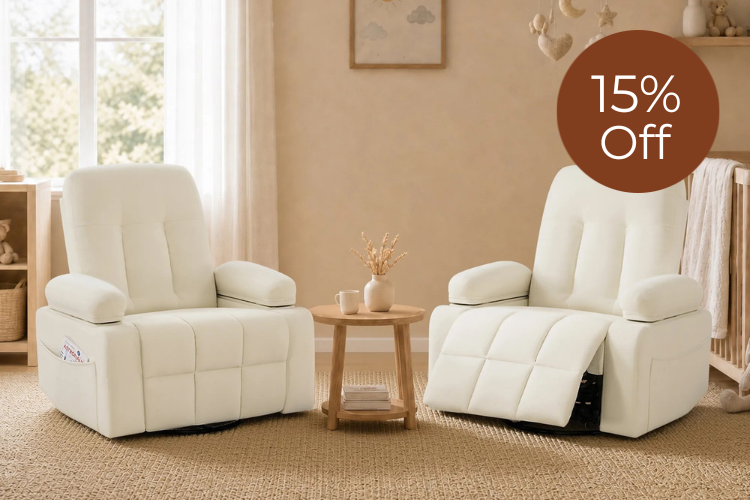
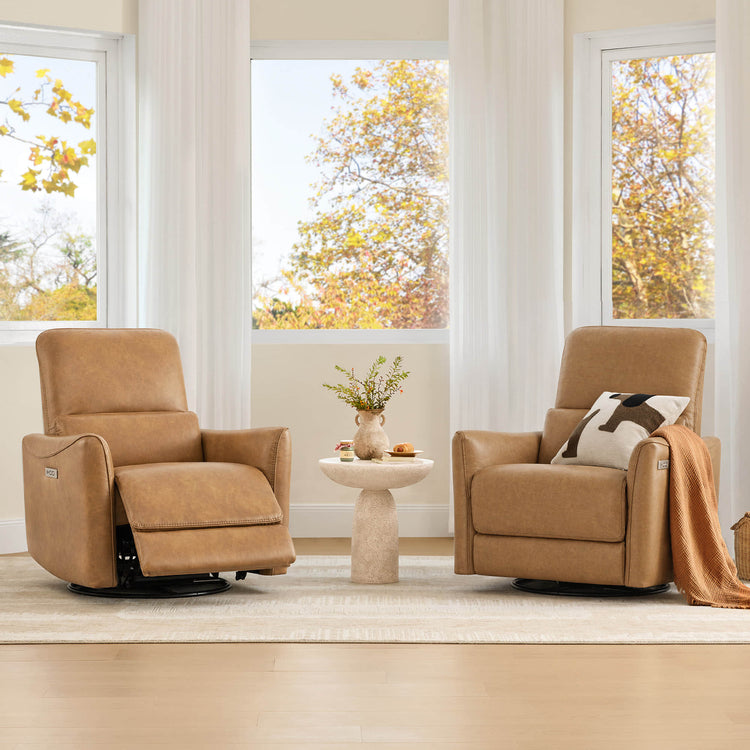
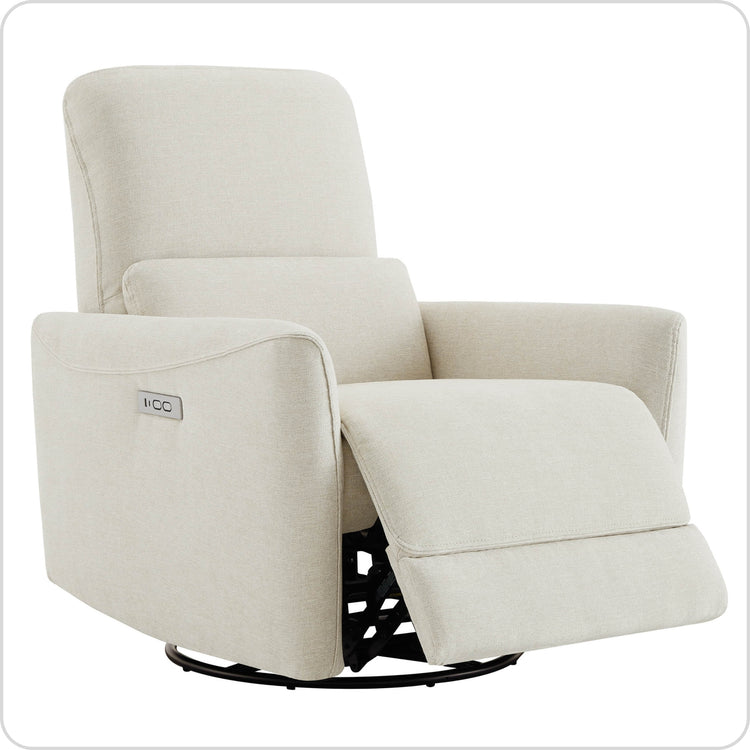
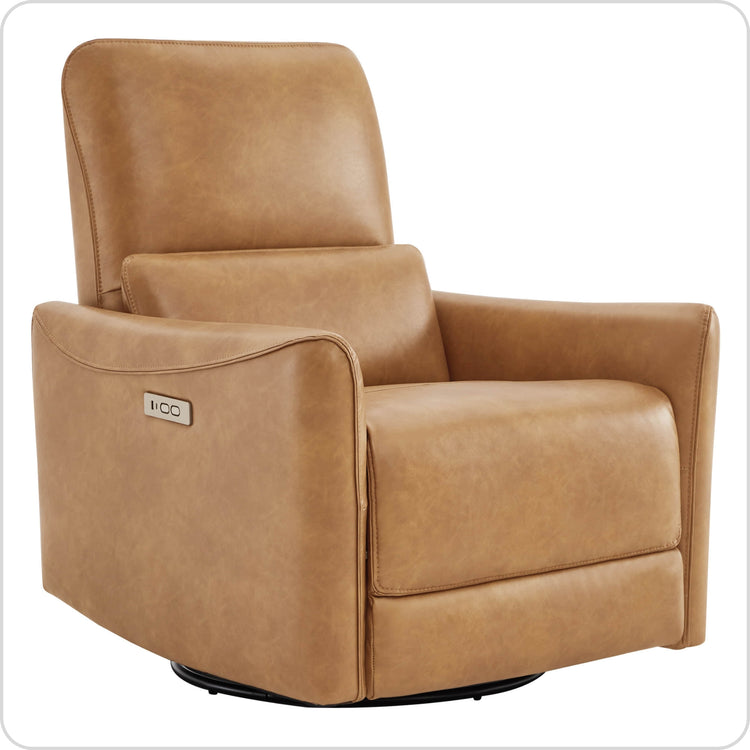
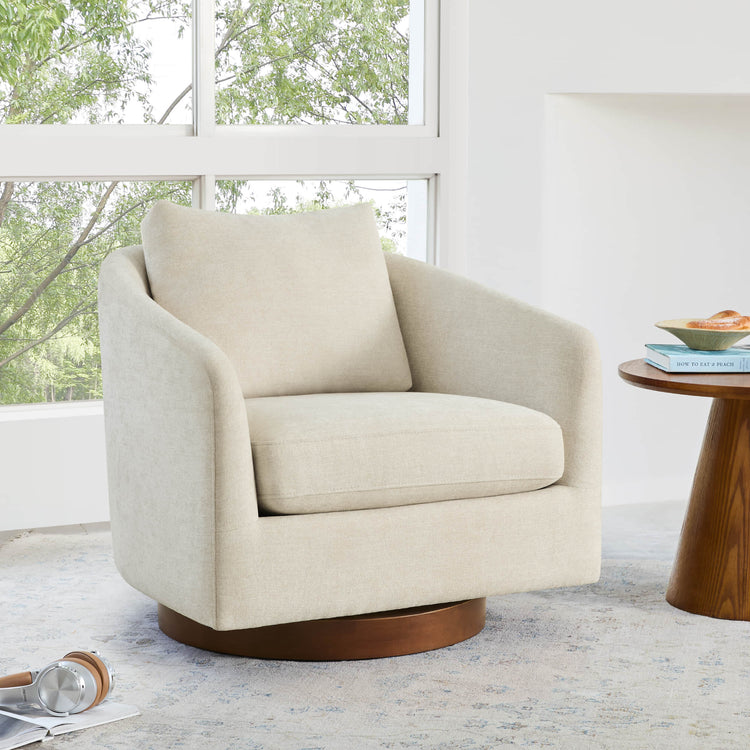
Our Tracee Power Swivel Nursery Glider Recliner is one of our glider options. Compare its current motion description and controls with the other chairs in our swivel recliner collection.
Check what happens as the footrest opens. Some mechanisms restrict rocking, gliding, or turning in particular positions. Use the chair within the operating instructions for each position.

Try the chair in the positions you use
- Sit back with your body supported and check where your feet rest. A seat that feels too deep may make you slide forward to reach the floor.
- Place your forearms where you would hold a book or rest your hands. Check whether the arms feel too high or too low.
- Start the motion gently, then stop it. Notice whether controlling it feels easy for you.
- Try the recline controls while seated. Check the head support in the position you use for reading or watching television.
- Return the chair to its proper upright position and stand up. Repeat this with the surrounding furniture arranged as it will be at home.
A softer seat may feel inviting, and the effort needed to stand up can still vary with its height and depth. Choose the fit that works for the people who will use the chair most often. For a taller sitter, our nursery glider fit guide for tall parents checks head, back, thigh, and foot support in the positions the adult will use.
Plan room for every moving part
Measure the upright chair and its fully reclined depth. Add the specified rear clearance, and account for the swept area if the chair swivels. A nearby side table can be clear of the seat when it faces forward and still meet an arm as it turns. Our small-nursery glider layout guide also checks the route between the chair, crib, and dresser.
Check rugs, cords, and the furniture beside the base. Keep objects away from the mechanism and the space under the footrest. Route a power cable according to the chair instructions so movement leaves it free of pinch points or tension. WorkSafe New Zealand’s cord and plug safety checklist includes inspecting damaged cords and keeping them clear of rugs and furniture.
Place the controls where you can reach them without bending around a table. Leave enough room to return the chair upright and step away from it.
Choose a chair for the nursery or living room
For a nursery, compare the chair using the adult’s feeding or reading position. Arm height, supported feet, and a reachable side table can matter as much as the motion. Keep supplies on a stable surface outside the chair’s moving area. Our nursery glider selection guide brings together seat fit, arm support, and the chair’s available space. Choose cordless window coverings around young children and keep electrical cords out of reach. These are among the American Academy of Pediatrics’ home safety recommendations for young children.
Use a separate infant sleep space when the baby is ready to sleep. A recliner is adult seating. If you are becoming drowsy while holding a baby, put the baby in their own safe sleep space.
For a living room, check the sightline to the television and how you turn toward other seats. A glider may suit someone who enjoys a gentle forward-and-back motion; a rocker may suit someone who prefers a rocking arc. Choose by the movement you enjoy and the fit you have checked.
The American Academy of Pediatrics identifies a firm, flat, separate infant sleep surface in its safe-sleep guidance.

Rocker and glider questions
Does a glider need electricity to glide?
A manually operated glider needs no electricity for its gliding motion. On a power glider recliner, electricity commonly operates the reclining back and footrest. Automatic gliding, if offered, is a separate feature to confirm on the model.
Are gliders quieter than rockers?
Either type can be quiet in normal use. Listen to the specific chair as it moves and check the floor contact. Assembly, mechanism condition, and floor contact affect the sound of either type.
Does CHITA sell glider recliners?
Yes. We offer glider recliners, including Tracee configurations that combine gliding, swiveling, and power recline. Compare the current product descriptions for the motion range, controls, upholstery, and dimensions that suit your room.
Which is better for a nursery, a rocker or a glider?
Choose the movement you find comfortable while checking adult seat fit, supported feet, arm height, and ease of standing up. Try the chair in your feeding or reading position, and keep a separate safe sleep space available for the baby.
Can a rocker or glider treat back pain?
Neither a rocker nor a glider should be relied on to treat back pain. Choose a chair that supports a comfortable position for you, and get clinical advice for persistent pain or a condition that affects how you should sit.
Recommended Products

More to Read
 7 Sofa Trends That Actually Improve Comfort in 2026
Upgrade your living room with furniture that supports your body. Here are 7 modern sofa features designed to maximize your daily comfort...
7 Sofa Trends That Actually Improve Comfort in 2026
Upgrade your living room with furniture that supports your body. Here are 7 modern sofa features designed to maximize your daily comfort...
 Mother's Day Gift Guide: Cozy and Stylish Furniture Picks for Modern Moms
Make Mother's Day more meaningful with furniture gifts that bring comfort, smart features, storage, and quiet luxury into her everyday routine.
Mother's Day Gift Guide: Cozy and Stylish Furniture Picks for Modern Moms
Make Mother's Day more meaningful with furniture gifts that bring comfort, smart features, storage, and quiet luxury into her everyday routine.
 Performance Fabric Reality Check: Does It Really Repel Pet Hair and Stains?
Performance fabric is often marketed as a miracle solution for homes with pets and kids, but the reality is more nuanced. It...
Performance Fabric Reality Check: Does It Really Repel Pet Hair and Stains?
Performance fabric is often marketed as a miracle solution for homes with pets and kids, but the reality is more nuanced. It...