























How to Measure Your Patio for Furniture That Fits

A patio measurement needs to account for furniture in use: chairs pulled out, swivel seats turned, doors open, and people walking between zones. Start with the patio boundary, then draw the space each activity needs. This gives you a usable furniture plan before you choose a set.
Draw the Patio and Its Fixed Obstacles
Use a tape measure, paper, and a pencil. Record the length of each edge rather than assuming opposite sides match. For an irregular patio, divide the plan into rectangles and label each section. Mark steps, posts, planters, drains, slopes, and changes in surface height.
Measure door and gate openings and draw their full swing. Include the delivery route from the driveway or entrance, with any narrow gate or turn. A sofa that fits the patio still has to reach it.
A tape measure's movable end hook compensates for the hook's thickness when switching between inside and outside measurements. Keep the tape straight, use the same endpoints for repeat readings, and label whether a dimension ends at a wall, railing, or another fixed object.

Reserve Routes and the Grill Area First
Draw the routes you use to reach the house, steps, garden, or pool. Keep these routes open when seats are occupied. A narrow passage beside an empty chair can disappear when someone pulls the chair out.
Mark the grill position separately. NFPA's grilling safety guidance places grills away from the home, deck railings, eaves, and overhanging branches. Include the clearances specified for your grill and keep its working area separate from seating and children's play space.
Where an ADA route is required, the accessible-route clearance guidance sets a generally 36-inch continuous clear width, with defined exceptions and additional provisions for turns and passing. For a household layout, test the route for the people and mobility aids that will use it; chair pull-out space and a clear travel route are separate measurements.

Measure Each Furniture Piece and Its Movement
Record overall width, depth, and height from the selected configuration. For a sectional, draw every module and the connected arrangement. For a dining table, add the chairs in their seated position and then check how a person gets up.
| Item | Resting measurement | Extra space to test |
|---|---|---|
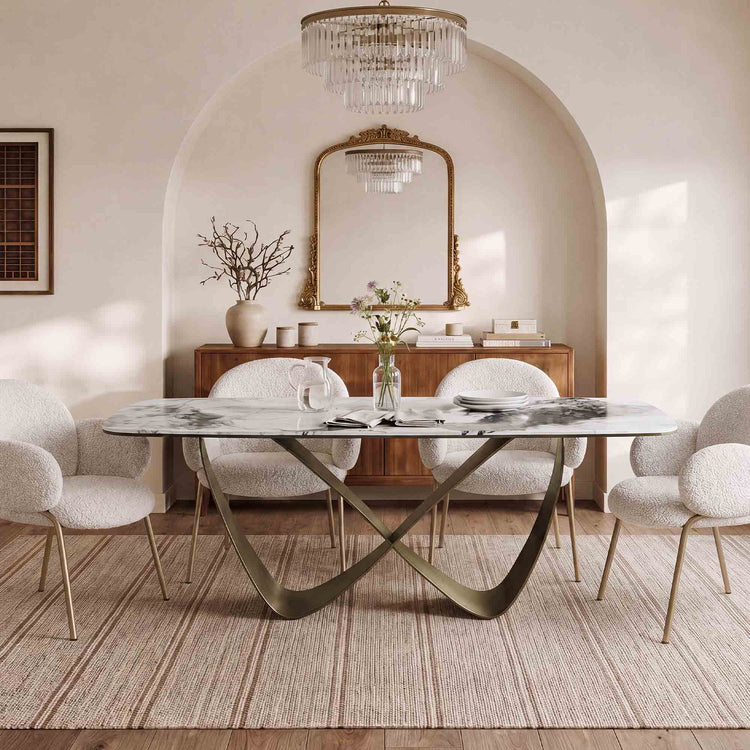
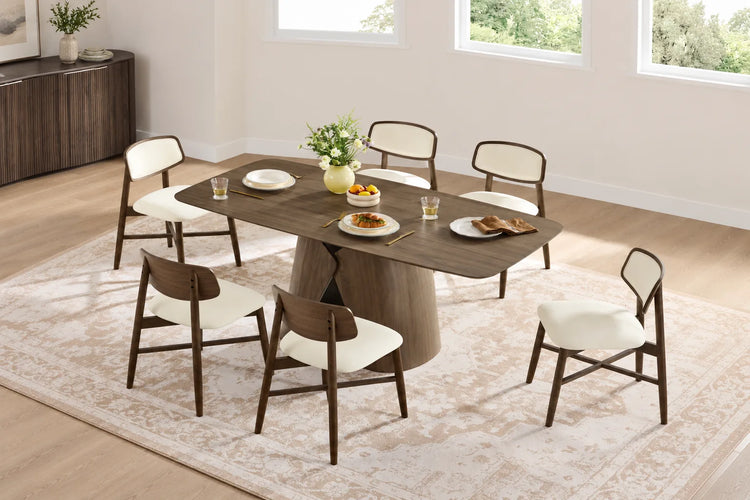
| Dining table and chairs | Table boundary and each chair's full footprint | Pull-out room and the route behind an occupied chair |
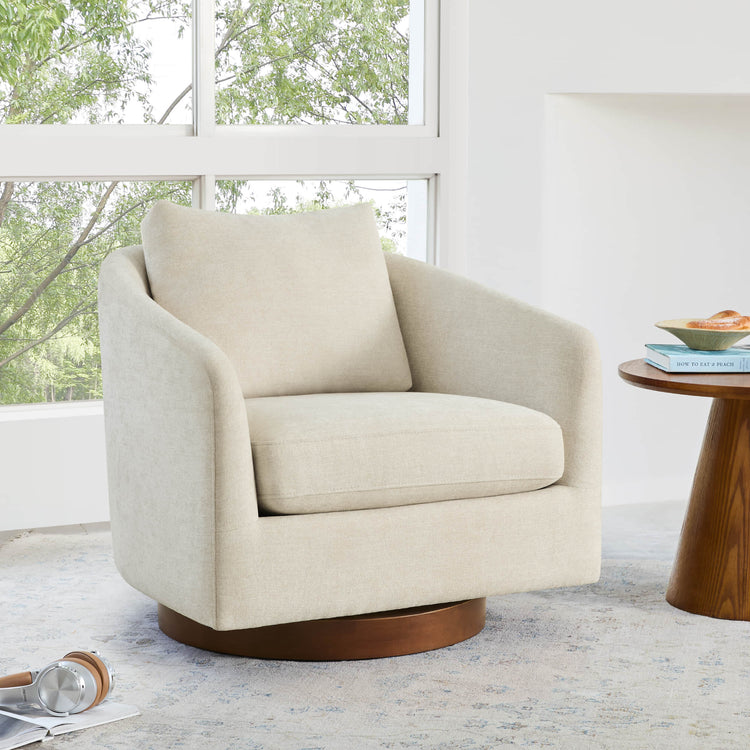
| Swivel chair | Overall width and depth | The outer edge as the seat turns |
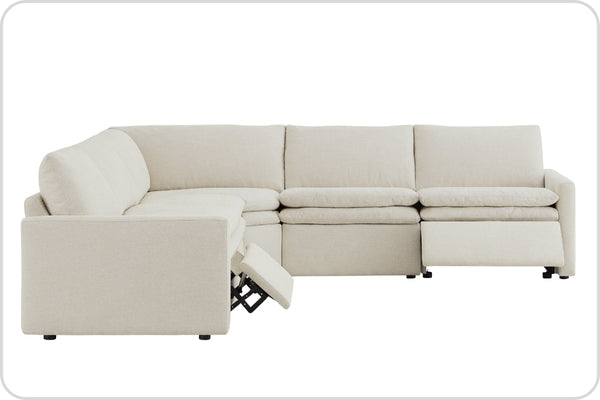
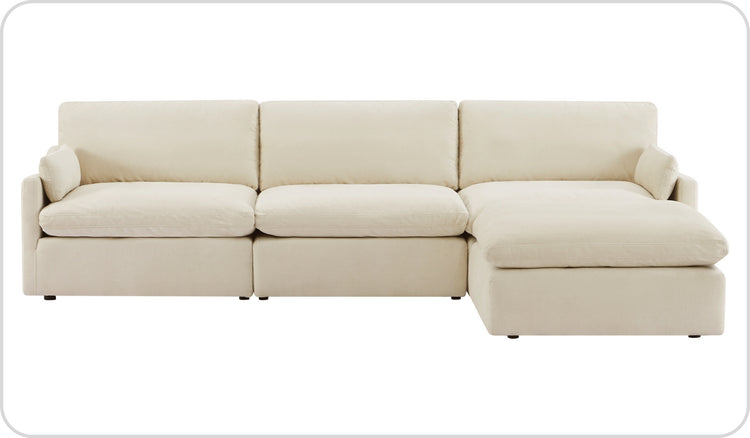
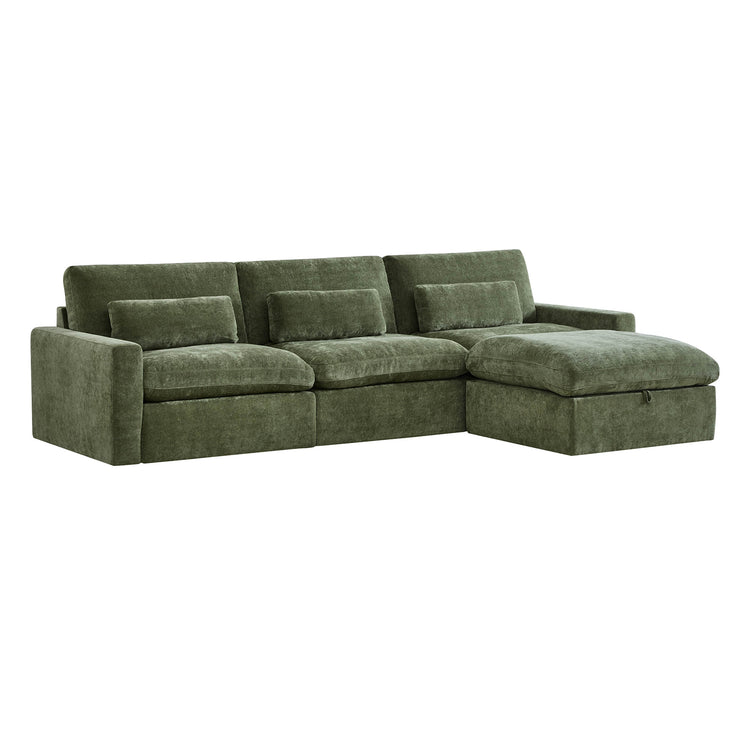
| Sofa or sectional | Full assembled outline | Entry to seats and movement past the ends |
| Coffee or side table | Top and base dimensions | Feet, knees, and access between seats |
Our comparison of patio furniture sets and individual pieces helps you decide whether one matched arrangement or a few separate pieces fit your planned activities. For a small corner, our small-balcony bistro set fit guide includes the door swing and storage position in the same layout check.

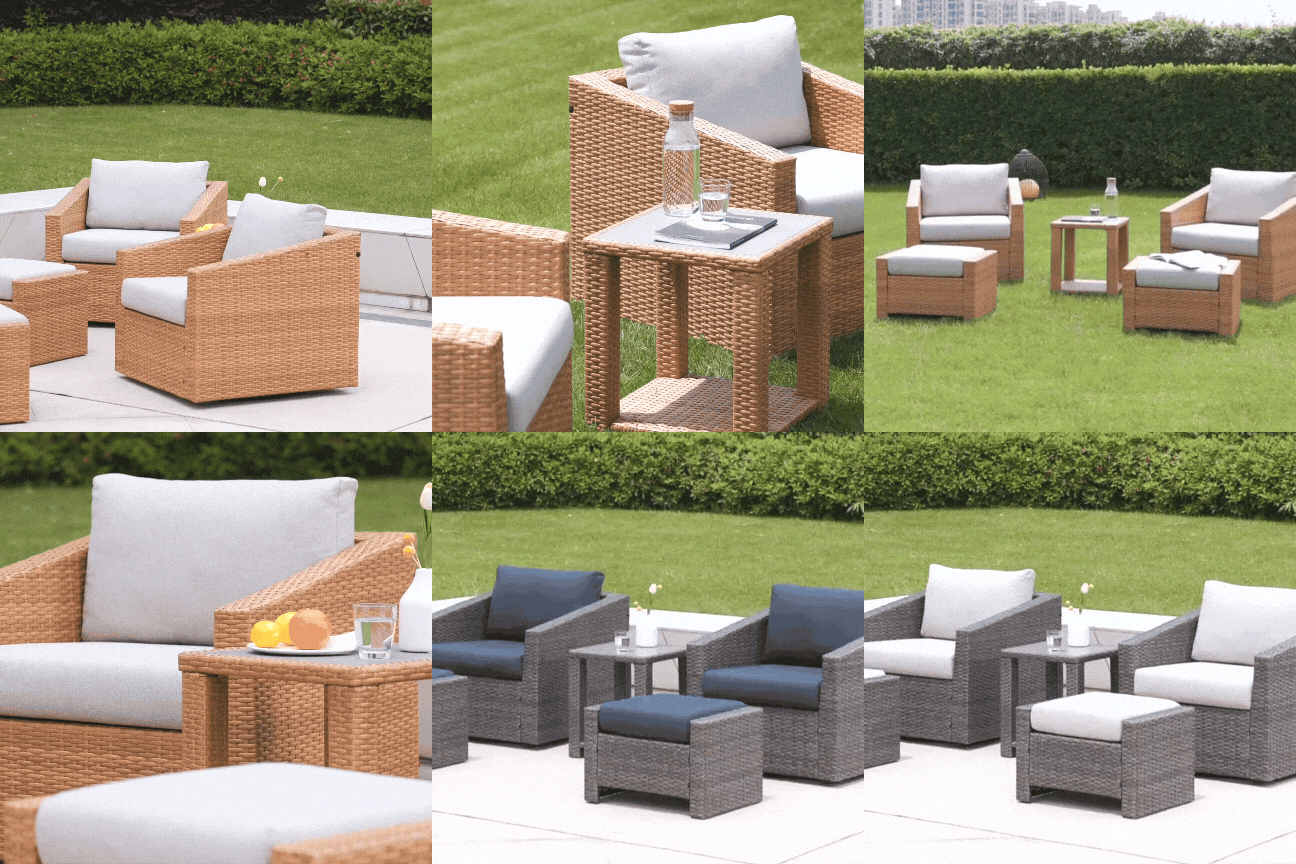
For a swivel example, mark our Beatriz Outdoor Swivel Bistro Set as a complete chair-and-table arrangement. Test the chairs' turning space around the table. The Cream swivel version of our Dylan Outdoor Armchair is another example where the resting footprint and moving outline both matter.

Calculate from Clearly Named Edges
For a dining zone, measure from each table edge to the obstruction on that side. That distance has to accommodate the chair and the intended activity behind it. If you measure a separate walkway, start at the occupied chair's outermost point so the chair is already accounted for.
For example, a 120-inch-wide space containing a 48-inch-wide table leaves 72 inches to divide between its two sides. Centering the table leaves 36 inches from each table edge to the boundary. This arithmetic describes the layout; test an actual occupied chair in that space before assigning any of it to a walking route.
For lounge seating, compare outdoor coffee tables and side tables with how people will reach drinks and enter their seats. A small table beside a chair can leave the center open when a larger shared table would occupy the route.

Tape Out the Arrangement and Try a Normal Day
Use a removable marking method suitable for the patio surface. Place an existing chair inside the outline, open the door, carry a tray through the route, and try getting into and out of each seat. Check the arrangement in its usual daytime and evening use.
Compare the overall dimensions of our outdoor sofas with the sofa outline and routes on your sketch. Then use the measured zones to narrow the chairs, tables, and sofas in our outdoor furniture collection. Keep the sketch with your measurements so each product comparison uses the same boundaries.

Patio Measurement FAQs
Should I measure an empty patio or one with furniture in place?
Measure the fixed patio boundary first, then test the proposed furniture in use. Record doors, gates, steps, and posts on the empty plan. Add seated chairs, turning space, and the walking routes before finalizing the arrangement.
Is 36 inches enough behind a patio dining chair?
The answer changes with the starting point and intended use. A 36-inch distance from the table edge includes the chair; 36 inches from an occupied chair's back describes a separate route. Measure both boundaries and test the required activity with someone seated.
How do I measure for an outdoor swivel chair?
Record its overall width and depth, then allow for its outermost point through the intended turn. Check nearby tables, railings, and neighboring chairs during that movement, including the space used by the seated person's feet.
What should I measure for delivery?
Measure the narrowest gate or doorway, any overhead restriction, and the space needed at turns. Compare those measurements with the packaged dimensions or approved separate components of the selected furniture before arranging delivery.
Recommended Products

More to Read
 7 Sofa Trends That Actually Improve Comfort in 2026
Upgrade your living room with furniture that supports your body. Here are 7 modern sofa features designed to maximize your daily comfort...
7 Sofa Trends That Actually Improve Comfort in 2026
Upgrade your living room with furniture that supports your body. Here are 7 modern sofa features designed to maximize your daily comfort...
 Mother's Day Gift Guide: Cozy and Stylish Furniture Picks for Modern Moms
Make Mother's Day more meaningful with furniture gifts that bring comfort, smart features, storage, and quiet luxury into her everyday routine.
Mother's Day Gift Guide: Cozy and Stylish Furniture Picks for Modern Moms
Make Mother's Day more meaningful with furniture gifts that bring comfort, smart features, storage, and quiet luxury into her everyday routine.
 Performance Fabric Reality Check: Does It Really Repel Pet Hair and Stains?
Performance fabric is often marketed as a miracle solution for homes with pets and kids, but the reality is more nuanced. It...
Performance Fabric Reality Check: Does It Really Repel Pet Hair and Stains?
Performance fabric is often marketed as a miracle solution for homes with pets and kids, but the reality is more nuanced. It...