






















Recliner vs. Lounge Chair: Movement, Support, and Space

The chair you choose needs to fit your body, your room, and the way you rest. Start with the movement you want: an adjustable back, an extending footrest, a swivel base, or a separate ottoman. These features give you a clearer comparison than choosing by the words recliner or lounge chair alone.
How the Two Chair Categories Overlap
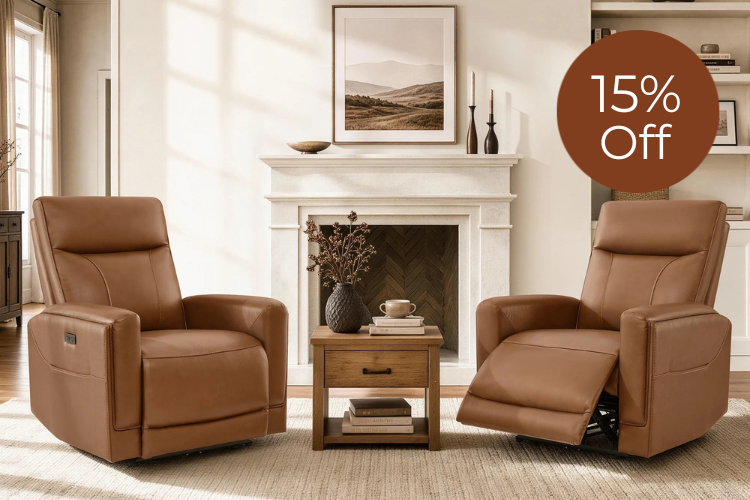
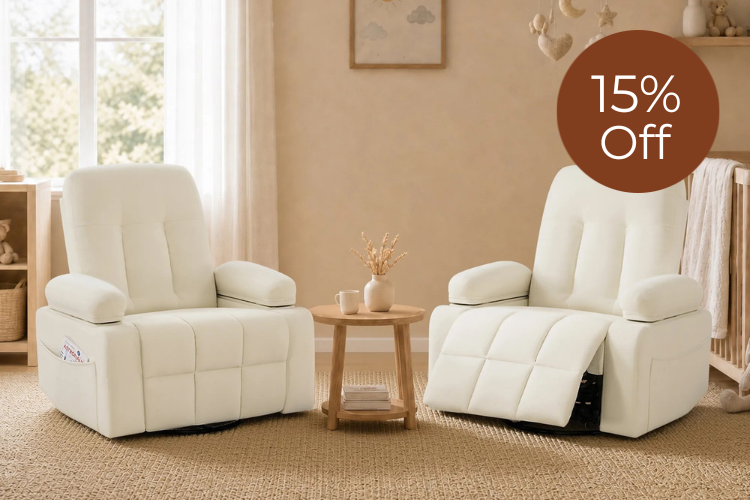
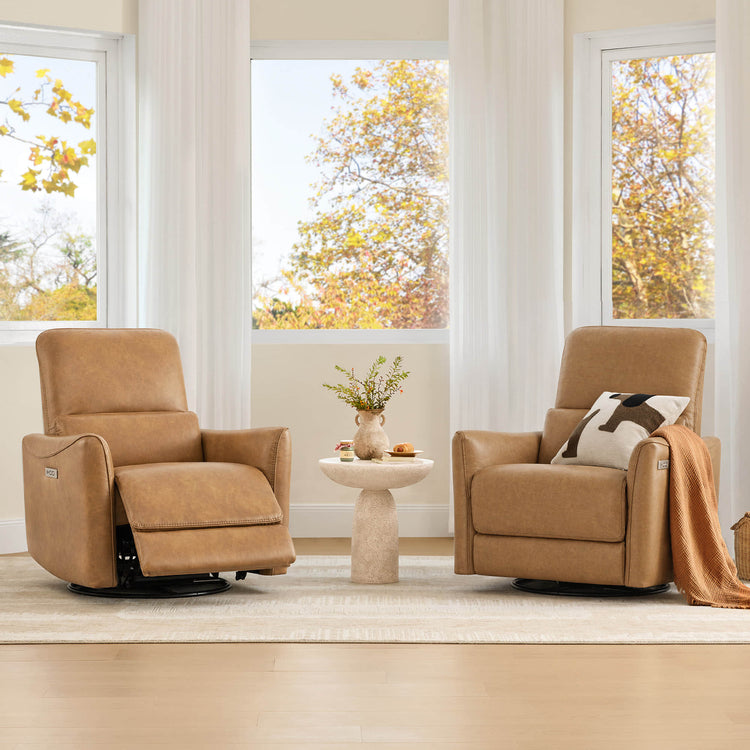
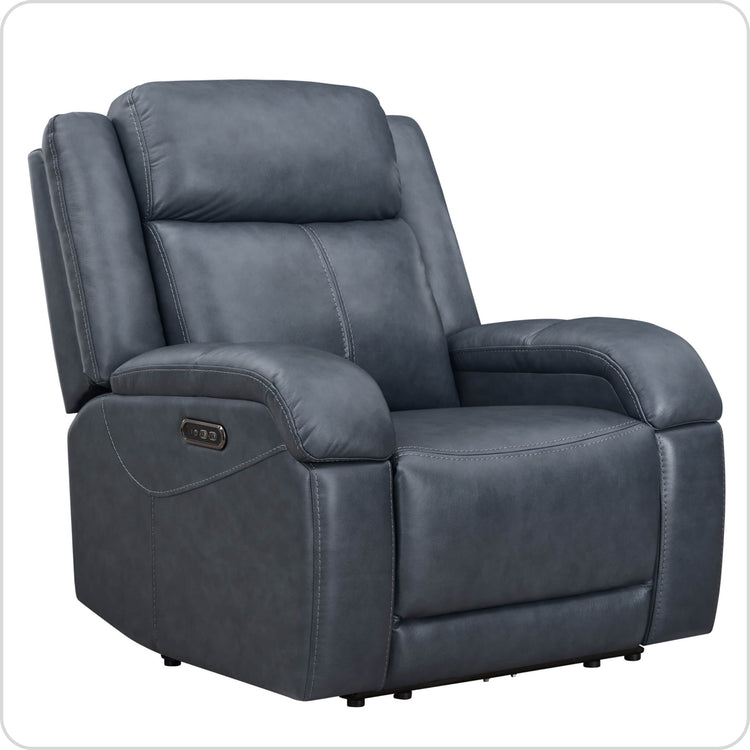
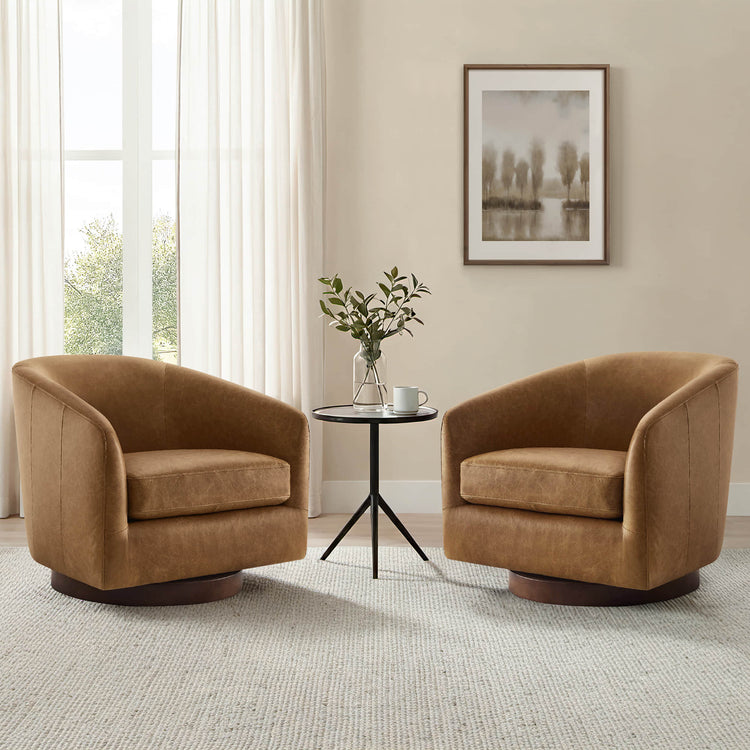
A recliner has a back that adjusts to let you lean farther back. Many models include an extending footrest. A lounge chair is a broader description for relaxed seating; it may have a fixed back, an adjustable back, or a separate ottoman.
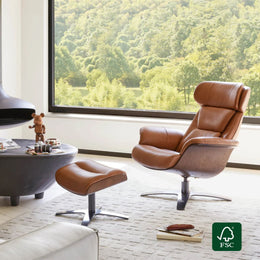
Our Elvin reclining lounge chair and ottoman illustrates the overlap. Its back reclines, and its separate ottoman supports your feet. Its design belongs in a comparison of both categories.
Compare Movement and Leg Support
| Chair arrangement | What moves | What to consider |
|---|---|---|
| Recliner with an integrated footrest | Adjustable back and extending leg support | The operating controls and space for the full movement. |
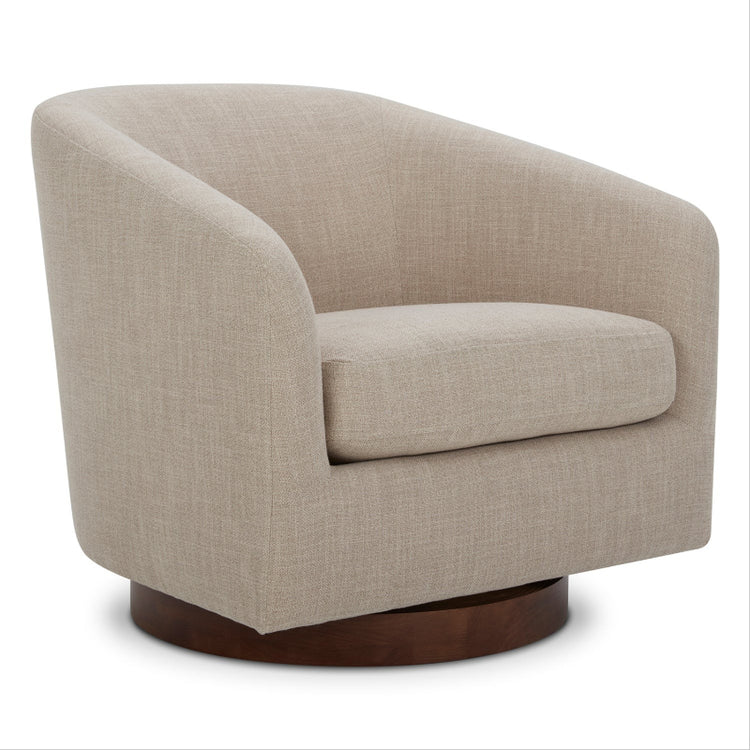
| Fixed lounge chair | The sitting angle stays fixed; the base may swivel | Whether its seat depth and back shape suit your usual position. |
| Reclining lounge chair with ottoman | The back adjusts; the ottoman is separate | Space for both pieces and the reach between them. |
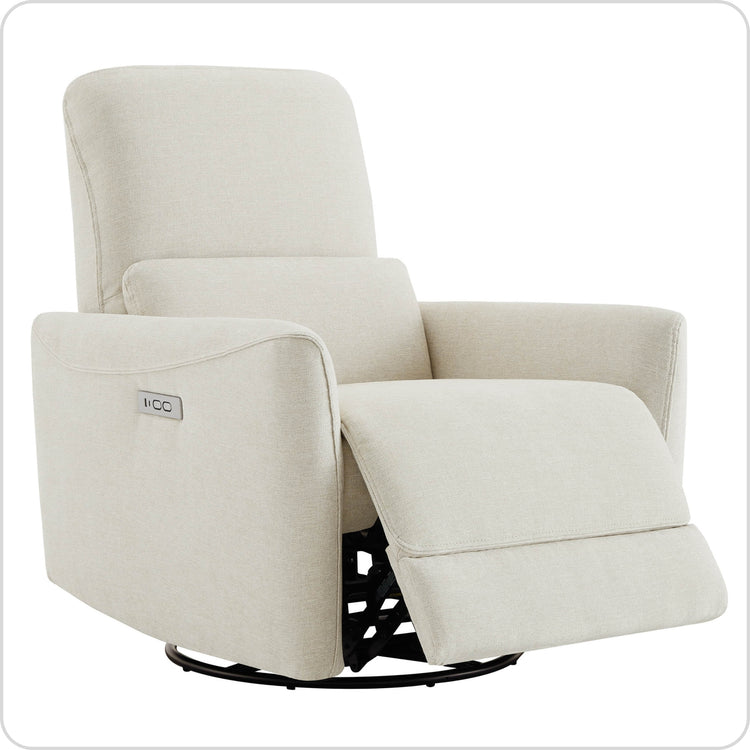
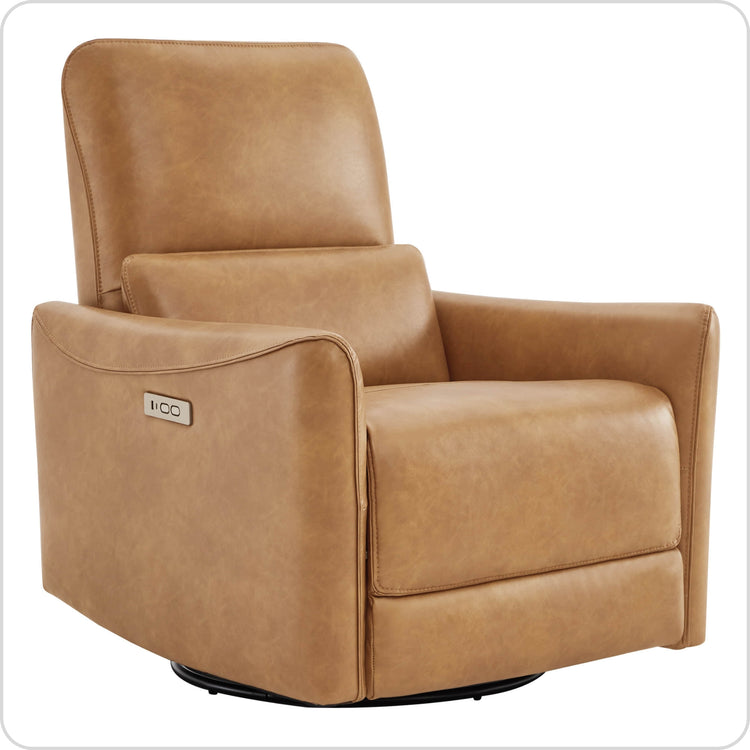
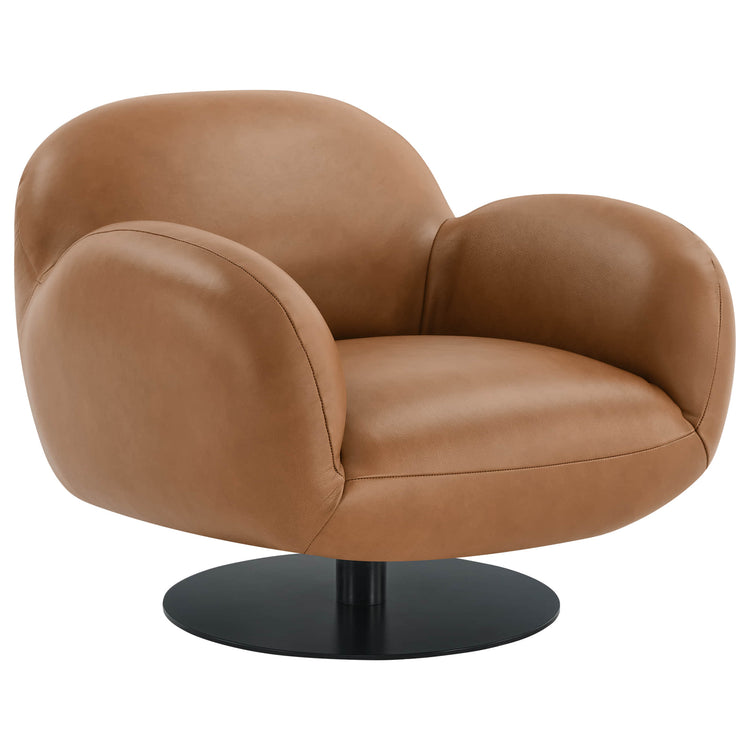
Swivel, glide, and recline describe different movements. Swivel turns the chair around its base. Glide moves it back and forth. Recline changes the back position. A chair can combine them. Our Tracee power swivel glider recliner includes power recline, gliding, and a 270-degree swivel.

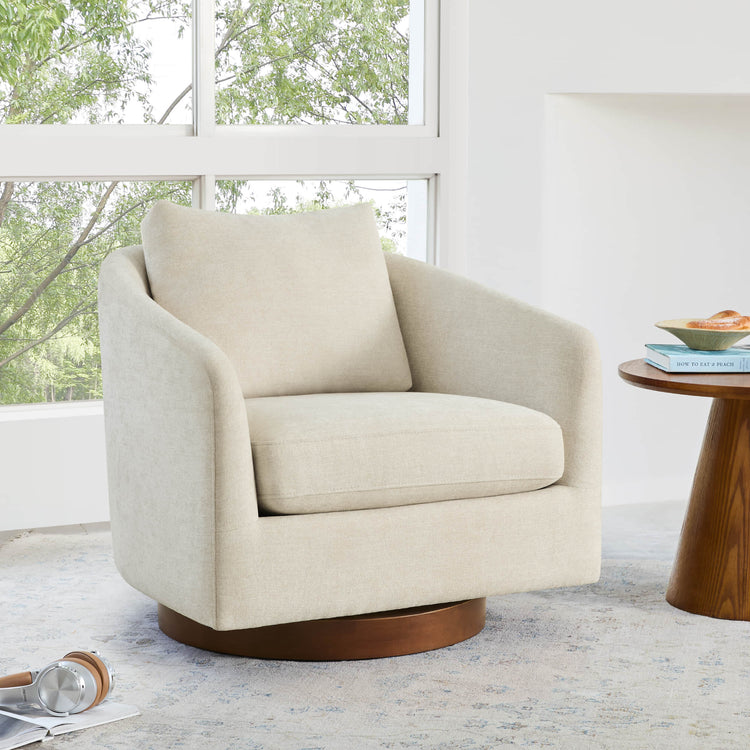
For a fixed-back chair, test where your head and shoulders rest. Adding an ottoman changes your leg position and the floor space you need. For a reclining chair, test how the back and footrest move together and whether you can reach the controls comfortably.

Measure the Chair in Use
Record the upright width and depth, then the full reclined depth. Check the specified wall clearance separately. Include side clearance for swivel movement, nearby curtains, a side table, and the main walking route. Keep door and window exits available in both positions, following the U.S. Fire Administration's unobstructed escape-route guidance.
Our Elvin measures 31.1 inches wide and 34.3 inches deep upright; its fully reclined depth is 45.3 inches. Its listed wall clearance is 11 inches. The ottoman is another separate footprint, measuring 20.5 inches wide by 17.3 inches deep. Lay out both pieces when checking your room.
A compact recliner may work in a corner where a large lounge chair and ottoman would be awkward. A fixed chair may fit where there is no room for an extending footrest. Mark the actual arrangement on the floor and walk through the room before deciding. Our small-room recliner measurement guide separates rear clearance from the full reclining footprint.

Check the Fit for Your Body
- Seat height: In the upright position, can you sit down and stand up comfortably?
- Seat depth: Can your back reach the backrest without the front edge pressing into the backs of your knees?
- Head position: Does the back or headrest support you where you need it, without pushing your chin toward your chest?
- Leg support: Does the footrest or ottoman support your legs comfortably in the position you use?
- Controls: Can you operate the chair and return it upright without twisting or straining?
Try the activities you expect to do: reading, watching television, or sitting with a guest. A chair's cushioning, back shape, and proportions affect its comfort alongside the reclining mechanism. Pay attention to how you feel as you change position. Use our seat height and depth measurement method to record a comfortable reference seat. The National Institute on Aging's home fall-prevention guidance also recommends choosing a seat height that makes getting in and out easier.
If you have a medical restriction or need assistance transferring into a chair, use the guidance from your clinician or care team when making these checks. We can explain the chair dimensions and controls for your transfer requirements. South Tees Hospitals' posture guidance explains why comfortable positions differ between people and why changing position can help.
Choose Around Your Daily Routine
Choose an integrated footrest when you want leg support that folds back into the chair. Compare powered controls if you want the motor to handle the reclining movement. A fixed lounge chair may suit a conversation area where you prefer one sitting angle. A reclining lounge chair and ottoman gives you a separate piece to position for your feet. Our accent chair collection and recliner collection let you compare the listed base movements, back adjustments, and dimensions for each design.

For a shared room, consider the people who use the chair and the route around it. Check where a book, drink, or remote will sit in both upright and reclined positions. These small details matter every time you settle in.
FAQs
Can a lounge chair recline?
Yes. Our Elvin lounge chair has a reclining back, an adjustable headrest, and a separate ottoman for leg support. Its chair depth changes from 34.3 inches upright to 45.3 inches fully reclined, and it needs 11 inches of clearance behind it. The ottoman occupies additional floor space. A fixed-back lounge chair stays at one back angle; adding an ottoman raises your legs without changing that angle.
Is a recliner always more comfortable than a lounge chair?
No. Test the seat fit in the position you actually use. For upright reading, sit back, rest your feet on the floor, and check whether you can reach the back cushion without sliding forward. For reclining, notice whether the headrest pushes your chin toward your chest or the seat edge presses behind your knees. A lounge chair can suit upright reading; a recliner gives you more back-angle options. Choose the chair that passes those checks for your body and activity.
Which option uses less floor space?
For chairs with similar upright dimensions, a fixed-back lounge chair without an ottoman uses less space in front because it has no extending footrest. A recliner needs its full reclined depth and rear clearance; adding an ottoman to a lounge chair also increases the space used. Mark those complete footprints on the floor, including the gap between a chair and its ottoman. Keep a walking route outside them, and allow a swivel chair's corners to rotate without hitting nearby furniture.
Does a swivel chair also recline?
Not necessarily. A swivel base lets the chair turn; reclining requires a separate mechanism that changes the back angle. Gliding is another movement, carrying the seat back and forth. Our Tracee combines swivel, glide, and powered recline. Our Elvin combines a reclining back with a swivel base and a separate ottoman. A swivel-only chair turns toward a conversation or a window while keeping the same back angle.
Is a separate ottoman or a built-in footrest easier to fit around other furniture?
A separate ottoman can be repositioned when you need a walkway or want to change where your legs rest. It also remains a separate object to walk around. A built-in footrest folds back into the recliner after use, so its extension area becomes available again; it needs an unobstructed path each time it opens or closes. For a busy route through the room, mark that moving area before placing a coffee table, pet bed, or floor lamp nearby.
Recommended Products

More to Read
 7 Sofa Trends That Actually Improve Comfort in 2026
Upgrade your living room with furniture that supports your body. Here are 7 modern sofa features designed to maximize your daily comfort...
7 Sofa Trends That Actually Improve Comfort in 2026
Upgrade your living room with furniture that supports your body. Here are 7 modern sofa features designed to maximize your daily comfort...
 Mother's Day Gift Guide: Cozy and Stylish Furniture Picks for Modern Moms
Make Mother's Day more meaningful with furniture gifts that bring comfort, smart features, storage, and quiet luxury into her everyday routine.
Mother's Day Gift Guide: Cozy and Stylish Furniture Picks for Modern Moms
Make Mother's Day more meaningful with furniture gifts that bring comfort, smart features, storage, and quiet luxury into her everyday routine.
 Performance Fabric Reality Check: Does It Really Repel Pet Hair and Stains?
Performance fabric is often marketed as a miracle solution for homes with pets and kids, but the reality is more nuanced. It...
Performance Fabric Reality Check: Does It Really Repel Pet Hair and Stains?
Performance fabric is often marketed as a miracle solution for homes with pets and kids, but the reality is more nuanced. It...