






















Swivel Recliner Reading Nook: Layout, Lighting, and Chair Fit

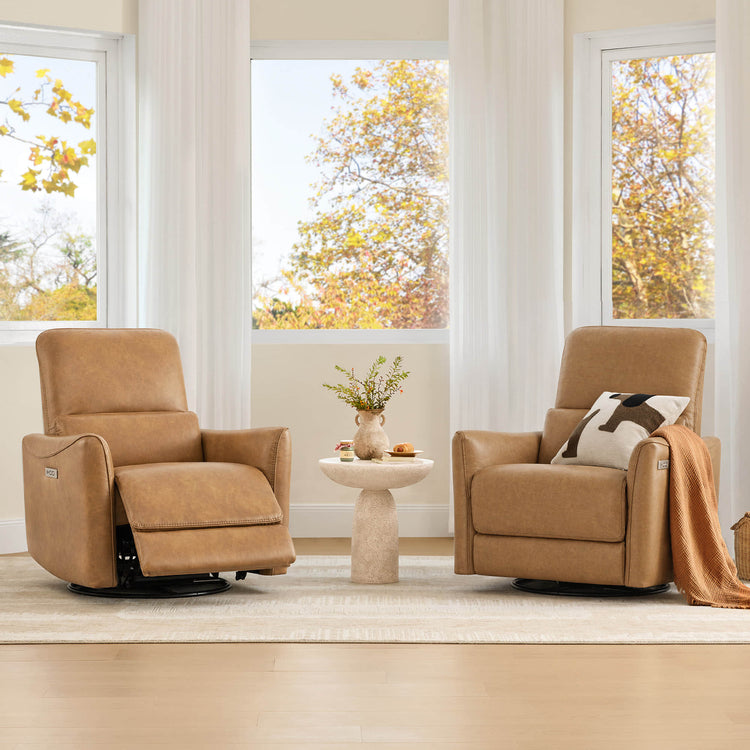
A reading nook works when the chair, light, and your current book are easy to use together. A swivel recliner lets you change direction and adjust the back or footrest while seated. Plan around those movements before filling the corner with a lamp, shelves, and a side table.
Choose a chair that fits how you read
Picture your usual reading session. For a hardcover, you may want your elbows supported and room for a book cushion on your lap. For an e-reader, a small change in the backrest or headrest angle can help you position the screen. Try both an upright seat and a gentle recline with the kind of book you actually use.
When seated upright, check whether your feet reach the floor and whether the seat depth lets your back meet the cushion comfortably. Notice where the armrests sit relative to your relaxed elbows. OSHA's chair-fit guidance treats usable seat depth, thigh support, and foot support as separate checks for seated work. In a reclined position, make sure the headrest supports your preferred viewing angle without pushing your chin forward.

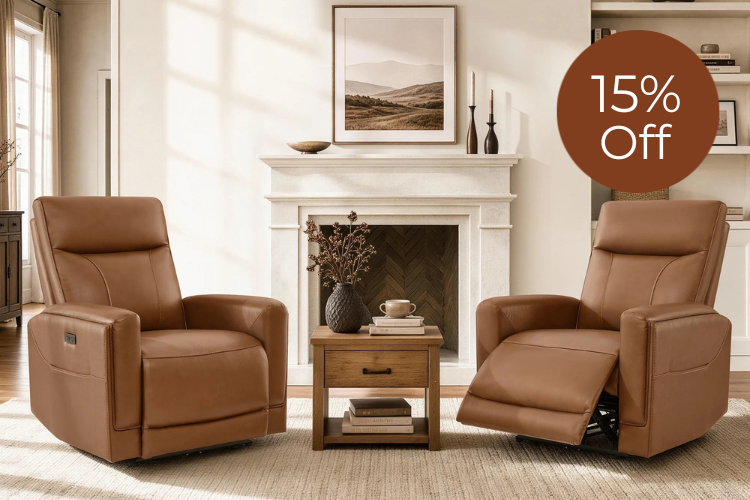
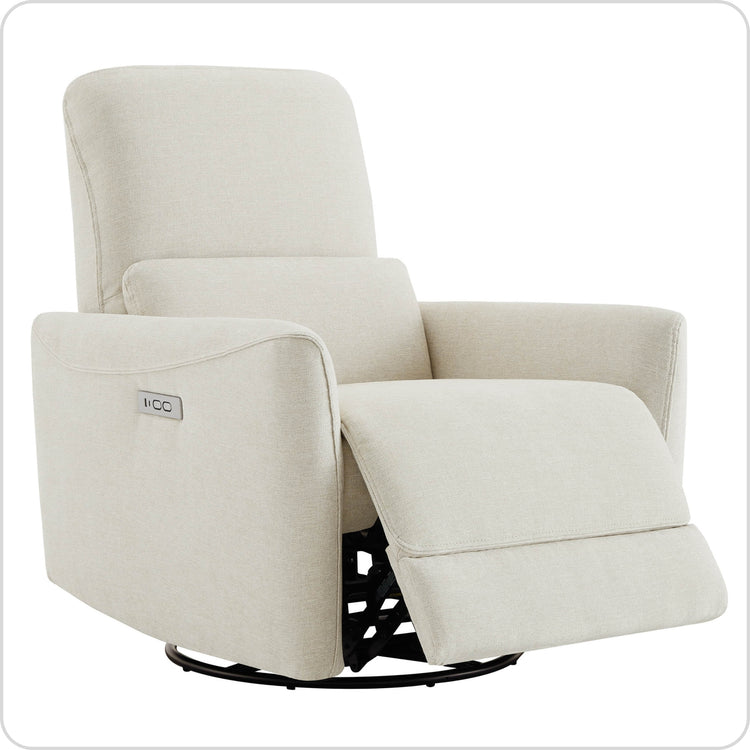
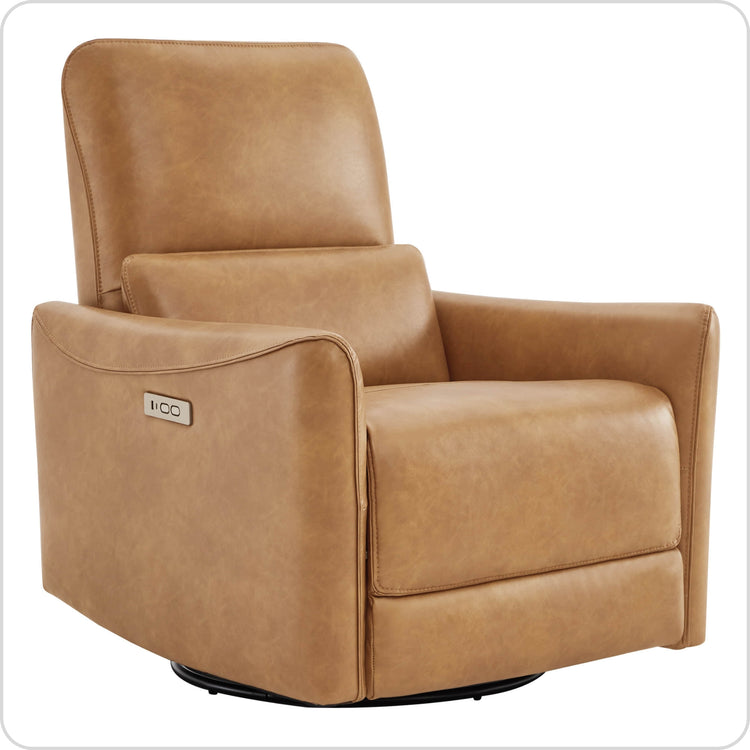
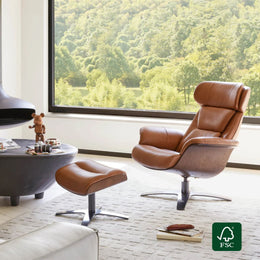
Our Maxwell swivel glider recliner has independently adjustable power headrest and lumbar controls, plus a 270-degree swivel. These let you change the support position while you settle in with a book. Its upright overall dimensions are 31.1 inches wide by 37 inches deep; the full operating area also includes its recline and rotation paths. The product pages in our recliners with headrests collection list the adjustment features available on each model.
For upholstery, choose the surface you enjoy touching and a care routine that suits the room. Maxwell uses top-grain leather on the seating contact areas with matching faux leather on the outside and back. A fabric option offers a different texture; compare swatches in the room's daylight before deciding.

Measure the chair in motion
The base marks only part of a swivel recliner's footprint. The chair's arms and back sweep around it, and the footrest extends into the room. Keep three measurements in your layout notes:
- Upright footprint: the chair's overall width and depth, including arms.
- Reclined footprint: the space needed behind the backrest and in front of the open footrest, using the model's clearance and extended dimensions.
- Swivel path: the area crossed by the arms, back, and footrest during the permitted movement.
Mark the upright footprint with painter's tape suitable for your floor. Add the specified recline space, then account for the rotation path. Leave the doorway, main walking route, curtains, and nearby furniture clear. For a diagonal corner placement, measure the chair in that orientation: the corners of its back and arms may approach both walls as it turns.
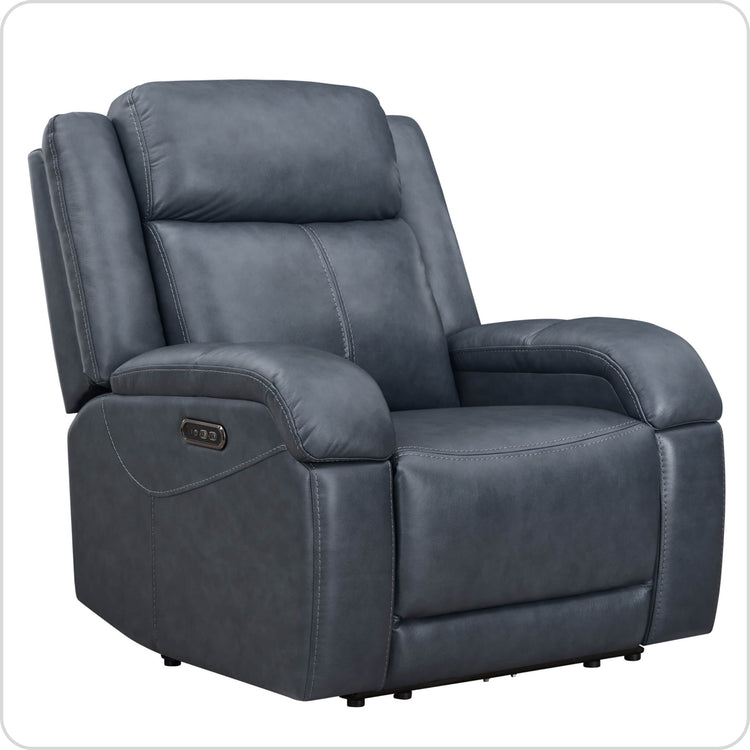
Keep a power recliner within reach of the outlet using the supplied cord arrangement. Route the cord clear of the moving base and footrest. The model's instructions determine when and how rotation and reclining can be used together. Our power and manual recliner comparison explains the differences in controls, footrest operation, and electrical supply.

Arrange light around the page
Start with daylight from the side, then turn the chair or adjust the window covering until the page is easy to see. An e-reader with a reflective screen may need a different angle from a paper book. Test the position at the time of day you usually read. The Canadian Centre for Occupational Health and Safety describes a reflected-glare check: briefly block light coming from above or in front and see whether the text becomes clearer.
Place a reading lamp beside or slightly behind your shoulder, with its beam reaching the page and its bare bulb out of your direct line of sight. Move the lamp if your head or hand casts a shadow on the book. An adjustable shade or arm makes these small changes easier.
Keep the lamp base and cable outside the chair's moving area. A little room light alongside the reading lamp can make the setting pleasant in the evening; choose the brightness you can read with comfortably.
Place books and a side table within reach
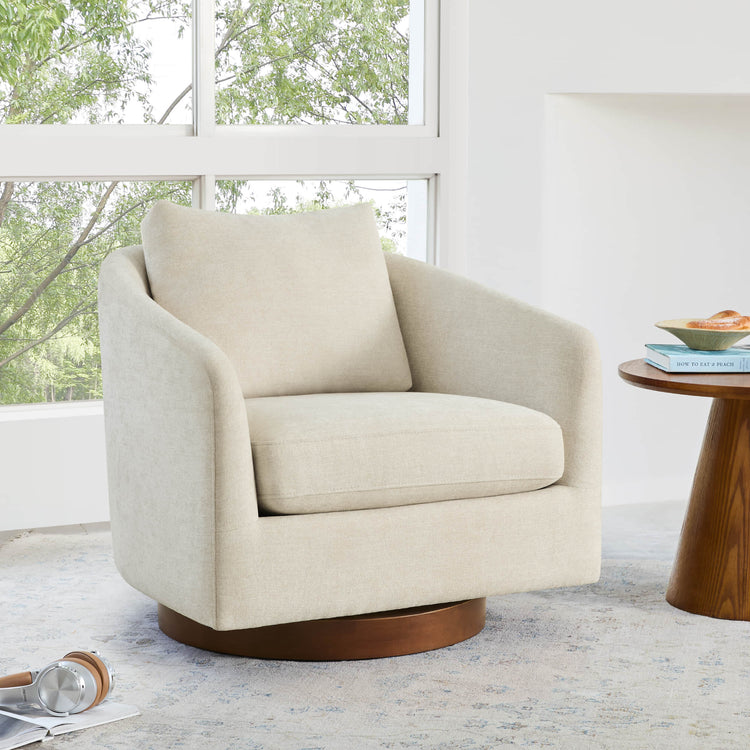
Set the side table beside your resting hand, then check the reach while seated. Its top should be convenient without reaching across the recliner controls or twisting to pick up a drink. Move it far enough away that the chair can turn without catching the table edge.
A freestanding book holder or lap cushion can carry some of a heavy book's weight. Try the page height and angle before a long session, and choose a support that leaves the chair controls accessible. Use an attachment on the chair only where the chair and accessory instructions allow it. A shelf or small basket can keep the next book nearby without adding another table. Secure a tall bookcase using its required installation method; the U.S. Consumer Product Safety Commission's furniture anchoring guidance covers this step.
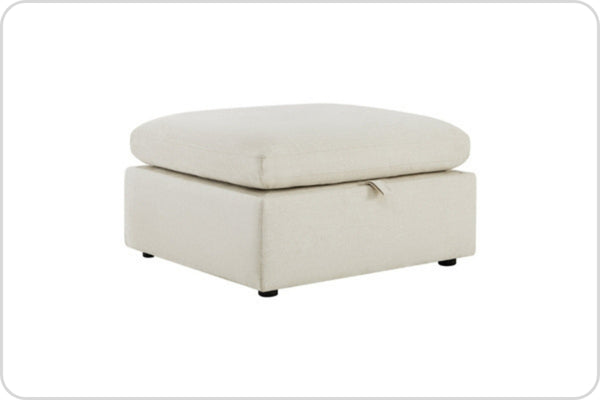
A separate storage ottoman, such as our Delaney Storage Ottoman, can hold a blanket or the next book. Use a suitable tray only where the top provides a stable surface. Put it beside the seating area when you use the recliner's built-in footrest, so the two pieces have room to operate. Keep loose throws out of the base and footrest mechanism.

Try three reading-nook layouts
Beside a window
Angle the chair toward the room, with daylight falling from one side. Put the lamp on the other side if that gives the page better coverage in the evening. Keep the back and arms clear of curtain fabric through the swivel path.
At the end of a living room
Use the chair to face the window while reading and turn toward the room for conversation. Position the table and books on the side away from the main walkway. Test the open footrest before choosing a rug or coffee-table position.
In a bedroom corner
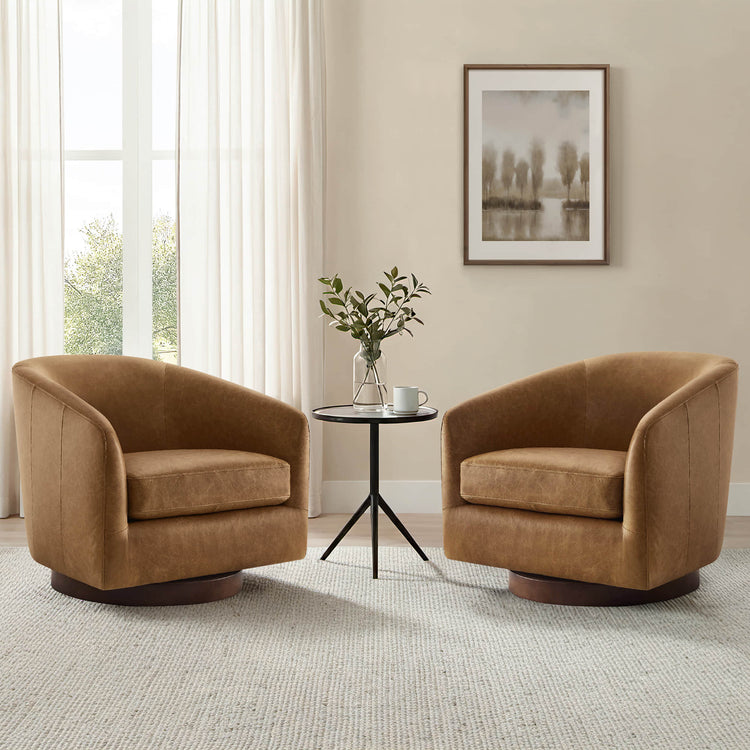
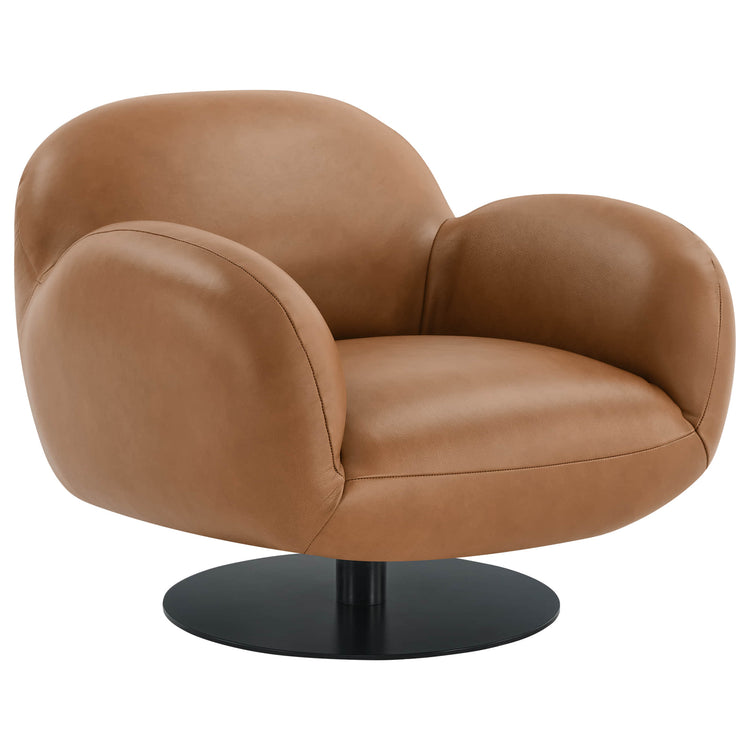
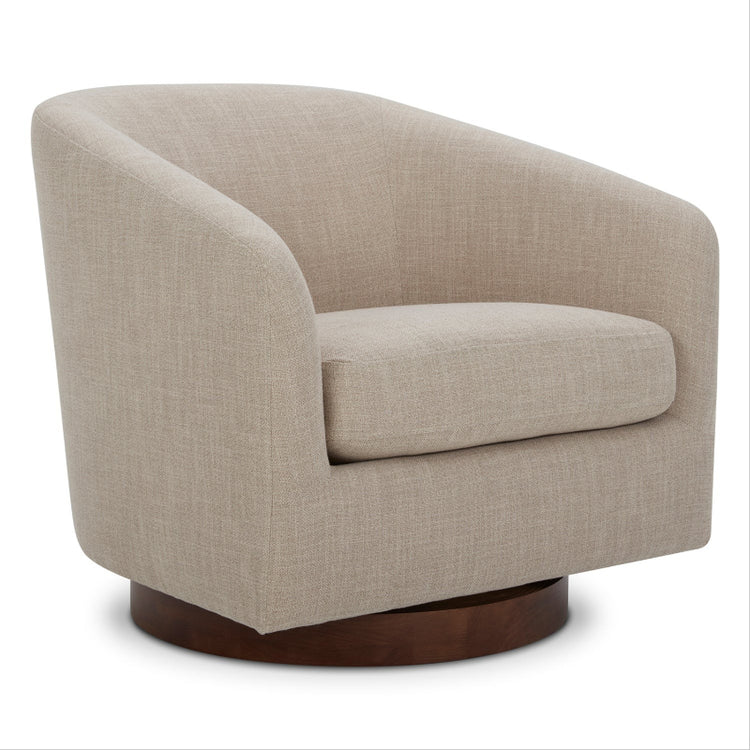
Start with the chair and one lamp. Add a slim table only after you have checked access to the bed, closet, and door. Where the footrest or backrest would block that access, a swivel accent chair may suit the layout with fewer moving parts to accommodate.

Once you have measured your nook, compare our swivel recliners by seat dimensions, control layout, and operating clearance. Those details make it easier to narrow the choice to chairs that fit your room and reading habits.
Frequently asked questions
Is a swivel recliner a good reading chair?
Yes, when the seat fits you and the room has space for its movement. It lets you adjust your direction, backrest, and footrest during reading. Try your usual book position and check that you can reach the controls with your elbows relaxed.
How much space does a swivel recliner need in a corner?
It needs its upright footprint plus the model's recline clearance and swivel path. Measure the back and arms as well as the base, especially for a diagonal placement between two walls. Use the exact model's extended dimensions to locate the table and lamp.
Where should I put a lamp next to a recliner?
Place it beside or slightly behind your shoulder so the light falls on the page while the bulb stays out of your direct view. Adjust it if you see glare or a shadow. Keep the stand and cable outside the chair's movement path.
Can I use a book holder with a recliner?
Yes. A lap cushion or freestanding book holder can support a book at a useful angle while leaving the controls accessible. Check stability in the position you read in, and keep any stand clear of the footrest and swivel path.
How should I arrange a reading nook when children use the room?
Keep cords, loose throws, and small objects away from the chair's moving parts, and supervise children around the recliner. Check that the base and footrest area are clear before operating it. Secure nearby shelving using its required installation method and store controls as the chair instructions direct.
Recommended Products

More to Read
 7 Sofa Trends That Actually Improve Comfort in 2026
Upgrade your living room with furniture that supports your body. Here are 7 modern sofa features designed to maximize your daily comfort...
7 Sofa Trends That Actually Improve Comfort in 2026
Upgrade your living room with furniture that supports your body. Here are 7 modern sofa features designed to maximize your daily comfort...
 Mother's Day Gift Guide: Cozy and Stylish Furniture Picks for Modern Moms
Make Mother's Day more meaningful with furniture gifts that bring comfort, smart features, storage, and quiet luxury into her everyday routine.
Mother's Day Gift Guide: Cozy and Stylish Furniture Picks for Modern Moms
Make Mother's Day more meaningful with furniture gifts that bring comfort, smart features, storage, and quiet luxury into her everyday routine.
 Performance Fabric Reality Check: Does It Really Repel Pet Hair and Stains?
Performance fabric is often marketed as a miracle solution for homes with pets and kids, but the reality is more nuanced. It...
Performance Fabric Reality Check: Does It Really Repel Pet Hair and Stains?
Performance fabric is often marketed as a miracle solution for homes with pets and kids, but the reality is more nuanced. It...