








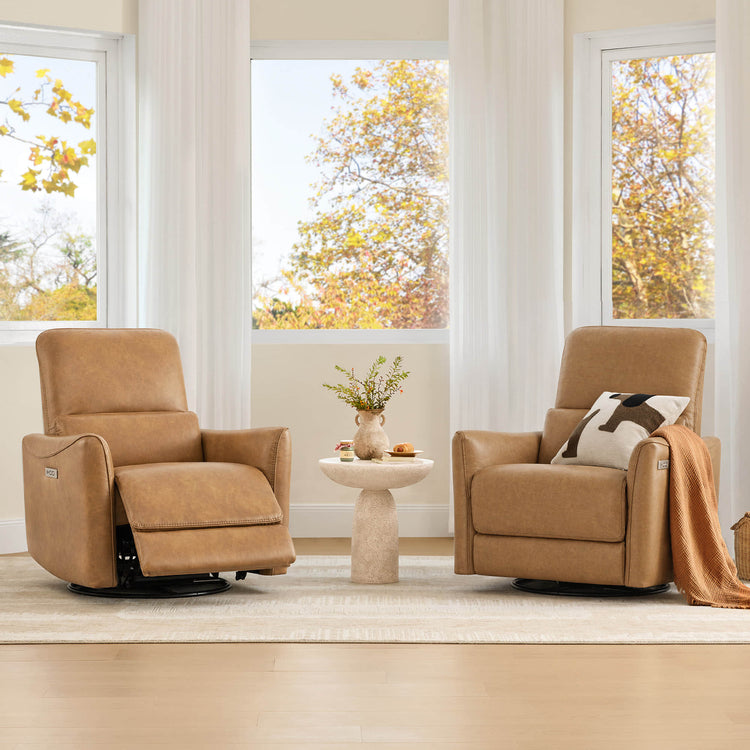














The 2026 Guide to Choosing a Quiet and Comfortable Nursery Glider

Why Quiet Movement and Comfort are Highly Beneficial for Your Nursery
For many parents, a nursery glider serves as a primary ergonomic station for postpartum recovery and long feeding sessions. While a standard living room armchair may suffice for short periods, it often lacks the specialized support required for repetitive nighttime use.
Pediatric resources, such as those shared by Stamford Pediatrics, highlight the importance of maintaining proper posture to reduce back and neck fatigue during feeding. It is important to note that while ergonomic chairs are designed to improve comfort and "may help" reduce physical strain, they are not medical devices. Parents recovering from a C-section or other procedures should prioritize the specific positioning advice provided by their healthcare team.
Noise is the second critical factor. Even minor mechanical creaks can disrupt a lightly sleeping infant. Achieving a quiet environment is often a top priority for parents, making smooth, whisper-quiet operation a practical necessity for successful "transfer-to-crib" moments.
Comparing Gliders, Rockers, and Power Recliners for Feeding
Choosing the right motion type involves balancing physical effort with space and sound.
- Traditional Rockers: These offer a classic arc motion. While many find them soothing, they typically require more leg effort to maintain momentum and may have a larger "footprint" on the floor.
- Gliders: These provide a smooth, linear travel on a fixed track. They are generally quieter than rockers and require less effort to keep in motion.
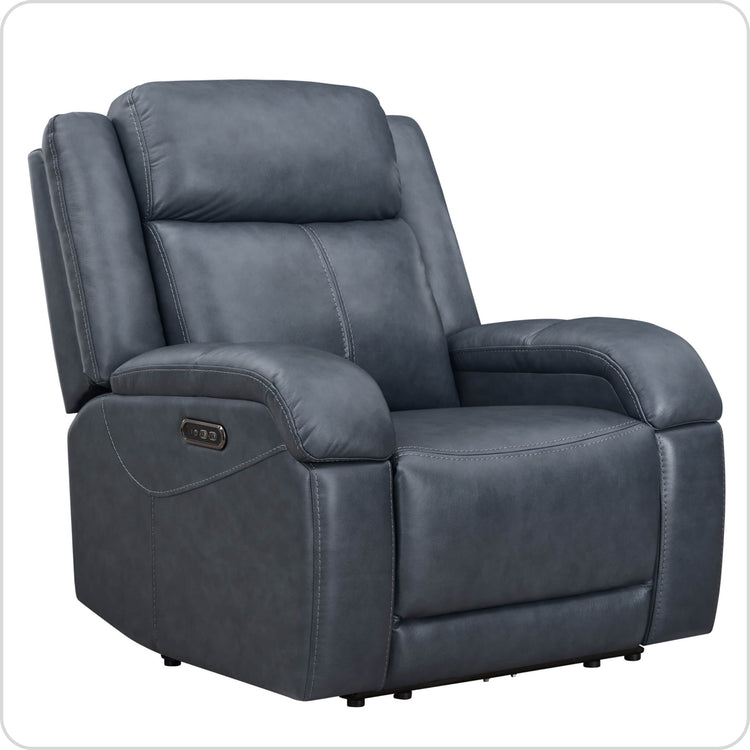
- Power Recliners: These have become a leading choice for modern nurseries due to their effortless positioning. By using a motor to adjust the back and footrest, they can significantly reduce the need for abdominal exertion—a feature often appreciated during postpartum recovery.
Nursery Seating Trade-offs: Rocker vs. Glider vs. Power Recliner
A decision aid for parents comparing the main nursery seating trade-offs. Lower scores are better for smooth motion, lower abdominal effort, quieter use, and less rear clearance needed.
View chart data
| Series | Motion Smoothness | Abdominal Effort | Noise Level | Rear Clearance Needed |
|---|---|---|---|---|
| Rocker | 2.0 | 2.0 | 1.0 | 1.0 |
| Glider | 1.0 | 1.0 | 1.0 | 2.0 |
| Power Recliner | 2.0 | 1.0 | 3.0 | 3.0 |
Note: The ratings in this chart are based on typical manufacturer specifications and general design characteristics; actual performance, especially regarding noise levels, will vary depending on the specific model, motor quality, and room acoustics.
Key Selection Criteria for a Silent and Supportive Nursery Glider
When evaluating a chair, look beyond the aesthetics to the structural and chemical certifications.
- Safety and Stability: The JPMA certification is a key indicator that a model has undergone independent testing for structural integrity.
- Ergonomic Support: Look for firm armrests and adjustable lumbar support. These features help maintain the "cradle" or "football" hold without straining the shoulders.
- Material Safety: Air-quality certifications like Greenguard Gold focus on low VOC emissions, while Oeko-Tex evaluates the textiles themselves. However, these certifications do not always account for topical stain-resistant treatments. For the highest transparency, look for "PFAS-free" or "PFC-free" labels on performance fabrics.
To ensure a "quiet" experience, we recommend testing a floor model in-person if possible. Listen specifically for "clicking" in the reclining mechanism or "whirring" in the power motor.
The Operational Footprint: Fitting Your Glider into a Small Nursery
In smaller nurseries (typically those under 100 square feet), the "motion envelope" is more important than the static width of the chair.
- Rear Clearance: Many recliners require an estimated 10–14 inches of space behind the headrest to reach a full recline. This distance varies significantly based on the recline angle and the specific "wall-hugger" technology used.
- Swivel Radius: Ensure the chair can rotate without hitting the crib or changing table.
Before purchasing, measure your intended space and compare it to the manufacturer’s "fully extended" dimensions rather than just the "closed" dimensions.

Choosing the Right Chair for Your Feeding and Soothing Style
Your choice should align with your primary physical needs and room constraints.
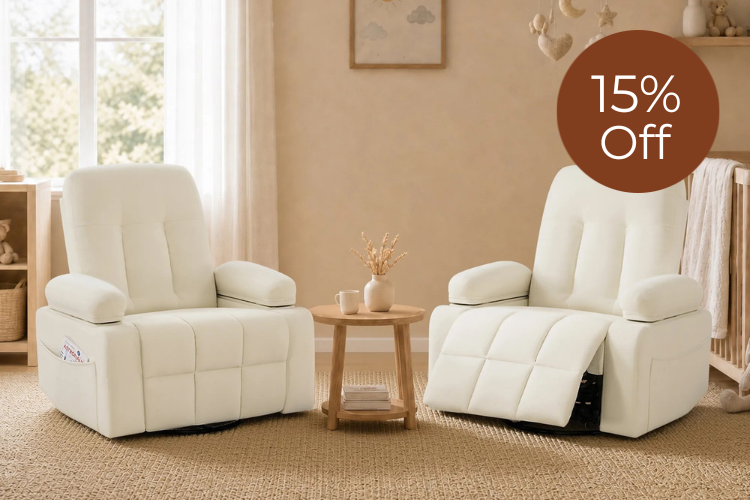
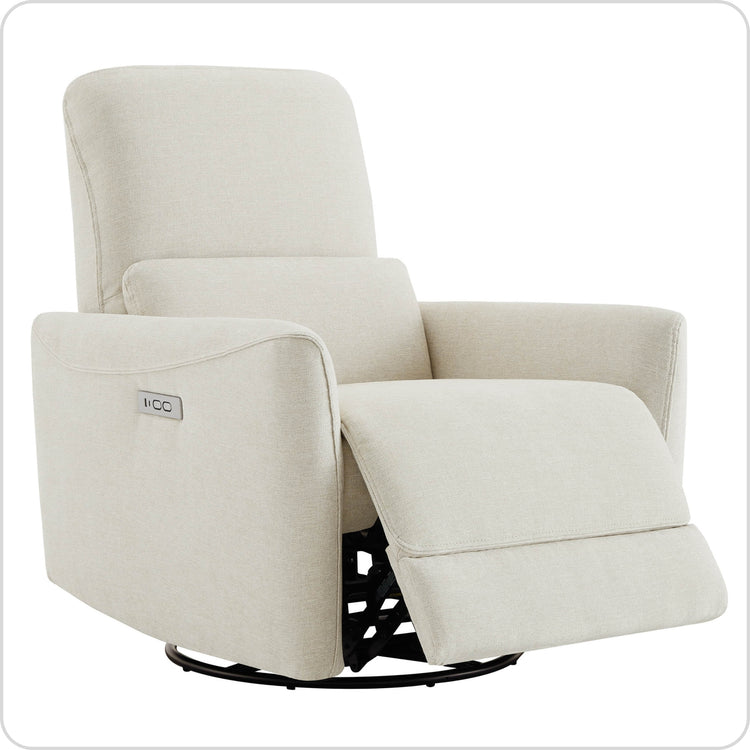
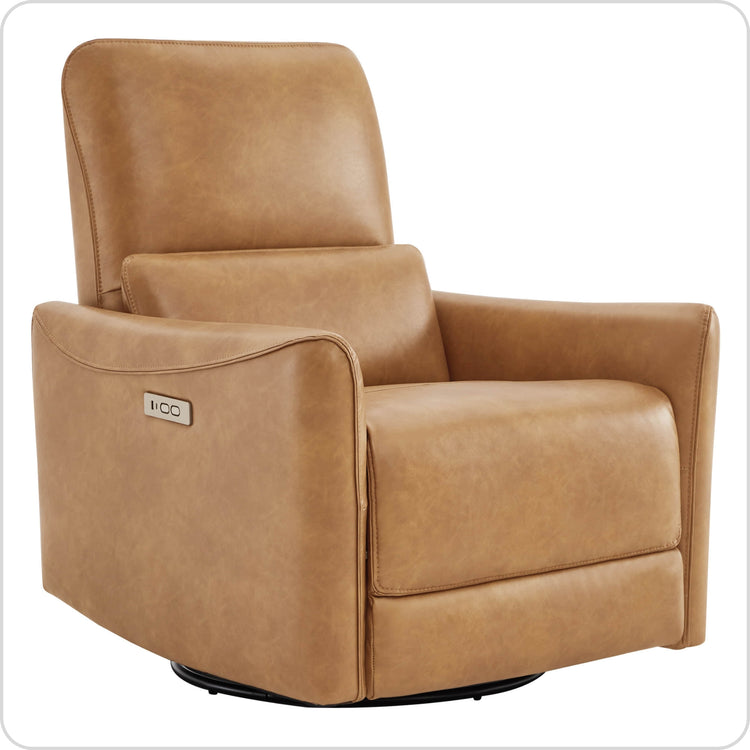
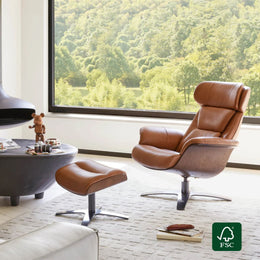
- For Targeted Support: Models like the Vinca Power Swivel Nursery Glider Recliner with Power Lumbar & Headrest are designed for parents who need precise adjustments to maintain posture during long nights.
- For Small Spaces: The Tracee Power Swivel Nursery Glider Recliner offers a GREENGUARD Gold certified option with a more compact frame, making it suitable for tighter layouts.
- For Nighttime Convenience: The Alicia Power Swivel Nursery Glider Recliner with Nightlight includes integrated ambient lighting, which can help parents navigate the room without waking the baby with overhead lights.
When selecting a power model, check the warranty specifically for the motor and electronics, as these are the components most likely to require maintenance over time.
Frequently Asked Questions
Are power recliners too noisy for a nursery? Many modern power recliners equipped with UL-certified actuators operate with minimal mechanical noise, often avoiding the loud "clunk" associated with manual levers. However, motor quality varies by brand; it is always wise to check user reviews regarding "motor hum" before buying.
Do I need an ottoman with my nursery glider? An ottoman or integrated footrest is often recommended because elevating the knees can help prevent slouching and improve breastfeeding posture. If your chair doesn't have a built-in footrest, a separate ottoman provides more flexibility for different leg lengths.
What fabric works best for easy cleaning? Performance weaves are typically the most resilient against spit-up and spills. While light colors are popular, they may show "water rings" or shadows even after cleaning. Look for fabrics that are specifically labeled as "easy-clean" or have removable, machine-washable covers.
How long should a nursery glider last? While many parents use a nursery glider intensively for the first 2–4 years, a high-quality frame can last much longer. For power models, longevity often depends on the motor's duty cycle and whether the manufacturer offers replaceable electronic parts.
Can a glider replace a regular recliner in the nursery? Yes, though dedicated nursery gliders usually offer a 360-degree swivel and a more compact footprint than standard living room recliners, making them better suited for the multi-tasking environment of a baby's room.

Recommended Products


More to Read
 7 Sofa Trends That Actually Improve Comfort in 2026
Upgrade your living room with furniture that supports your body. Here are 7 modern sofa features designed to maximize your daily comfort...
7 Sofa Trends That Actually Improve Comfort in 2026
Upgrade your living room with furniture that supports your body. Here are 7 modern sofa features designed to maximize your daily comfort...
 Mother's Day Gift Guide: Cozy and Stylish Furniture Picks for Modern Moms
Make Mother's Day more meaningful with furniture gifts that bring comfort, smart features, storage, and quiet luxury into her everyday routine.
Mother's Day Gift Guide: Cozy and Stylish Furniture Picks for Modern Moms
Make Mother's Day more meaningful with furniture gifts that bring comfort, smart features, storage, and quiet luxury into her everyday routine.
 Performance Fabric Reality Check: Does It Really Repel Pet Hair and Stains?
Performance fabric is often marketed as a miracle solution for homes with pets and kids, but the reality is more nuanced. It...
Performance Fabric Reality Check: Does It Really Repel Pet Hair and Stains?
Performance fabric is often marketed as a miracle solution for homes with pets and kids, but the reality is more nuanced. It...