
























The Anti-Fast Furniture Guide: Finding Sofas and Recliners Built to Last

In 2026, anti-fast furniture means choosing sofas and recliners engineered for 10+ years of daily use rather than replacing them every 2–4 years when frames loosen, cushions sag, or mechanisms bind. The difference comes down to verifiable construction details—kiln-dried hardwood frames, high-density foam, reinforced joinery, and cycle-tested recliner hardware—rather than marketing claims or initial price. Shoppers who inspect these elements avoid the hidden costs of premature replacement and reduce household waste.

The Anti-Fast Furniture Philosophy: Why Construction Trumps Price
Buying a $900 sofa that needs replacement in three years costs more per year than a $2,200 piece that remains supportive for a decade. Fast furniture often uses lower-grade materials and simplified assembly that look acceptable on the showroom floor but fail under repeated stress from sitting, reclining, and family use. This creates both financial waste and mounting frustration when seams rip, backs wobble, or cushions flatten.
The true cost of ownership calculation favors quality construction once you factor in replacement frequency, delivery charges, and disposal fees. A well-built sofa or recliner typically pays for itself within four to five years compared with budget alternatives that require more frequent turnover. For families or anyone who uses living-room seating daily, prioritizing frame strength, cushion density, and mechanism durability delivers better long-term value than chasing the lowest sticker price. Many buyers later regret choosing on aesthetics alone after experiencing the “disposable chic” cycle of sagging and mechanical failure.
Internal research from our guide on 9 common sofa buying mistakes shows that overlooking frame and cushion specs is the top reason pieces lose comfort within the warranty window.
The Foundation: Why Kiln-Dried Hardwood and Joinery Matter
A solid-wood frame sounds reassuring until you learn that moisture content determines whether it will warp, crack, or loosen over time. According to the USDA Forest Service Dry Kiln Operator’s Manual, kiln-drying hardwood to 6–8% moisture content creates the structural benchmark for long-term stability in residential furniture. This controlled process removes excess water that would otherwise cause seasonal expansion and contraction, preventing joints from failing as humidity changes throughout the year.
Joinery quality matters as much as the wood itself. Corner blocks that are both glued and screwed, combined with mortise-and-tenon or double-doweled connections, resist the racking forces created by years of leaning and reclining. In contrast, frames held together primarily by staples or basic glue often develop wobble within a few years of moderate use. When evaluating sofas or sectionals, lift one corner to check for flex; a quality frame feels rigid. Our FSC-certified furniture collection uses kiln-dried hardwood sourced responsibly, giving buyers confidence in both durability and environmental standards.
Cushion Quality: Avoiding the 'Slouch Trap' and Premature Sagging
The most common regret with sofas and recliners is discovering that the plush seat that felt cloud-like in the store has compressed into a permanent slump after 12–24 months. The Polyurethane Foam Association establishes that seat-cushion foam should measure at least 1.8 pounds per cubic foot (pcf) to resist premature sagging under daily use. Lower-density foams (1.5 pcf or below) compress more easily, lose resilience, and create the “slouch trap” where the seating surface no longer provides proper lumbar support.
High-density foam paired with no-sag sinuous springs or pocketed coils maintains shape far longer than fiber-filled or low-density alternatives. A simple test is to press firmly into the seat cushion for 30 seconds and watch how quickly it rebounds; quality foam returns to shape almost immediately. Avoid ultra-soft “cloud” or feather-blend tops that feel luxurious but often mask inadequate support underneath. Our guide on how to identify good or bad quality sofas and chairs walks through these hands-on checks you can perform in-store or when inspecting online spec sheets.
Sofa and Recliner Durability Benchmarks
Use these thresholds as practical buying checks: hardwood frames, foam density, and cycle testing point to different durability risks rather than a single exact cutoff.
View chart data
| Check | Benchmark | Meaning |
|---|---|---|
| Frame material | Kiln-dried hardwood | Preferred benchmark for stronger structural durability |
| Seat foam density | 1.8 pcf minimum | Lower densities tend to raise sagging-risk concerns |
| Recliner cycle test | 25k+ cycles | A stronger wear benchmark for long-use confidence |
Recliner Reliability: Evaluating Mechanisms for the Long Haul
Recliners experience far higher mechanical stress than stationary sofas, making mechanism quality the single biggest predictor of long-term satisfaction. High-performance models are typically cycle-tested to 25,000 or more openings and closings, separating pieces built for daily family use from those that may bind or lose smooth motion within a few years. Heavy-gauge steel frames, reinforced pivot points, and UL-certified actuators (in power models) contribute to this reliability.
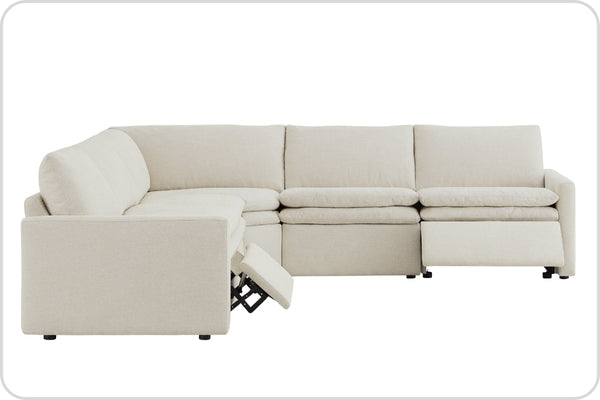
Manual lever recliners place repeated physical stress on the release mechanism, while power versions distribute force more evenly through motors, often resulting in smoother, quieter operation over time. Zero-wall designs that allow full recline near walls add convenience without sacrificing durability when properly engineered. Our Murphy Premium Dual-Motor Genuine Leather Zero-Wall Power Reclining Sofa and Hadley Modern Zero Wall-Hugger Power Recliner incorporate these higher-spec components for buyers seeking motion furniture that lasts. The companion article on power versus manual recliners explores the trade-offs in greater depth.

Performance vs. Maintenance: The Longevity of Your Upholstery
Performance fabrics and leathers can extend the usable life of a sofa or recliner by resisting stains, fading, and abrasion, yet they introduce their own maintenance realities. These materials often require specific cleaning codes (frequently Code S solvent-based cleaners) rather than simple machine washing, which surprises many households expecting “performance” to equal “effortless.” For high-traffic homes with children or pets, the added durability against everyday spills usually outweighs the more involved cleaning routine.
Health-conscious buyers should also consider the PFAS discussion around some stain-repellent treatments and seek OEKO-TEX or similar certifications when available. Our performance fabric collection and easy-clean sofas balance these factors with practical, family-friendly options. The deeper dive in our guide to decoding performance fabrics clarifies which specifications actually correlate with longevity rather than marketing language.
The Anti-Fast Furniture Checklist: How to Inspect Before You Buy
Use this practical checklist whether shopping online or in a showroom to separate durable investment pieces from fast furniture:
- Frame: Confirm kiln-dried hardwood or certified plywood with corner blocks that are glued and screwed (lift corners to test for flex).
- Cushions: Ask for seat-foam density of 1.8 pcf or higher and check for quick rebound when pressed.
- Suspension: Look for eight-way hand-tied springs or heavy-gauge sinuous coils rather than basic webbing.
- Recliner mechanisms (if applicable): Seek 25,000-cycle ratings, heavy steel construction, and smooth operation without binding.
- Upholstery: Verify abrasion ratings appropriate for your household traffic and understand the actual cleaning requirements.
- Warranty and return policy: Longer warranties on frame and mechanism signal manufacturer confidence; understand restocking fees that can turn a trial period into a final purchase.
Applying these checks helps you avoid the restocking-fee trap and ensures the piece you choose will still look and feel good years from now. When a seemingly attractive low-price option fails multiple items on this list, it is usually wiser to invest in quality construction that aligns with your actual usage timeline.
Frequently Asked Questions
Does a higher price always mean better durability for sofas and recliners? No. Price can reflect brand positioning or aesthetic details rather than core construction. A higher price is more likely to deliver longevity only when it correlates with kiln-dried hardwood frames, 1.8 pcf+ foam, reinforced joinery, and cycle-tested mechanisms. Always verify the technical specs instead of assuming cost equals quality.
How can I tell if a recliner mechanism will last without buying it first? Look for manufacturer statements on cycle testing (25,000+ openings is a strong indicator), heavy-gauge steel components, and UL certification on power motors. Read warranty coverage specifically for the mechanism and check return policies carefully, as large motion pieces often carry restocking fees that limit trial periods.
Is high-density foam the same as firm foam? No. Density measures durability and resistance to compression over time, while firmness describes initial feel. You can have high-density foam that still feels plush when paired with the right topper layers. The 1.8 pcf threshold primarily guards against long-term sagging rather than controlling how soft the seat feels initially.
What is the biggest cause of premature sofa failure? Low-density foam combined with inadequate frame reinforcement is the leading culprit. Many “cloud” sofas prioritize initial softness over structural support, causing the seating surface to collapse and lose ergonomic shape within two years of regular use.
Do performance fabrics make furniture last longer? They usually improve resistance to stains, abrasion, and fading, which helps the upholstery remain attractive longer. However, they do not compensate for weak frames or low-density cushions. True longevity still depends on the underlying construction; performance fabric mainly protects the surface layer.
Should renters prioritize different features than homeowners? Renters often benefit from modular or lighter-weight designs that are easier to move, but should still insist on kiln-dried frames and high-density foam to avoid replacing furniture mid-lease. Wall-hugger or zero-wall recliners can maximize small apartment spaces without sacrificing durability when built to the standards outlined above.
Recommended Products



More to Read
 7 Sofa Trends That Actually Improve Comfort in 2026
Upgrade your living room with furniture that supports your body. Here are 7 modern sofa features designed to maximize your daily comfort...
7 Sofa Trends That Actually Improve Comfort in 2026
Upgrade your living room with furniture that supports your body. Here are 7 modern sofa features designed to maximize your daily comfort...
 Mother's Day Gift Guide: Cozy and Stylish Furniture Picks for Modern Moms
Make Mother's Day more meaningful with furniture gifts that bring comfort, smart features, storage, and quiet luxury into her everyday routine.
Mother's Day Gift Guide: Cozy and Stylish Furniture Picks for Modern Moms
Make Mother's Day more meaningful with furniture gifts that bring comfort, smart features, storage, and quiet luxury into her everyday routine.
 Performance Fabric Reality Check: Does It Really Repel Pet Hair and Stains?
Performance fabric is often marketed as a miracle solution for homes with pets and kids, but the reality is more nuanced. It...
Performance Fabric Reality Check: Does It Really Repel Pet Hair and Stains?
Performance fabric is often marketed as a miracle solution for homes with pets and kids, but the reality is more nuanced. It...