










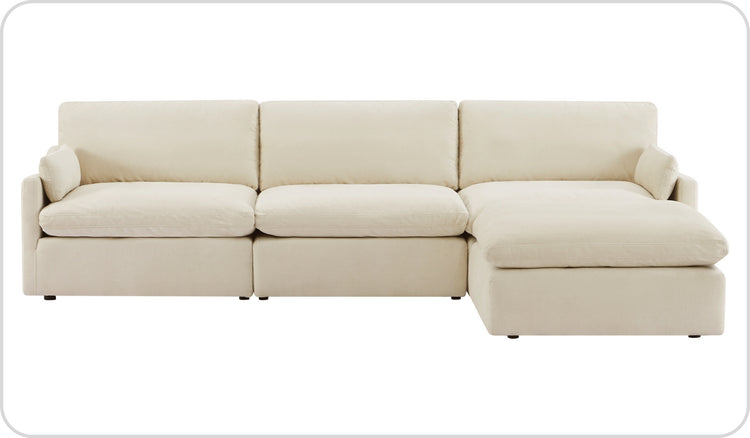


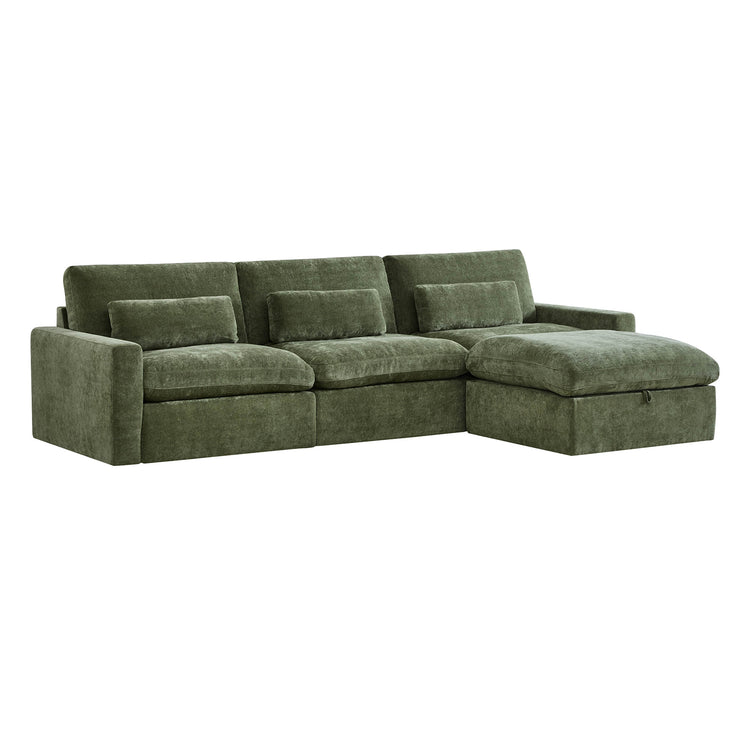





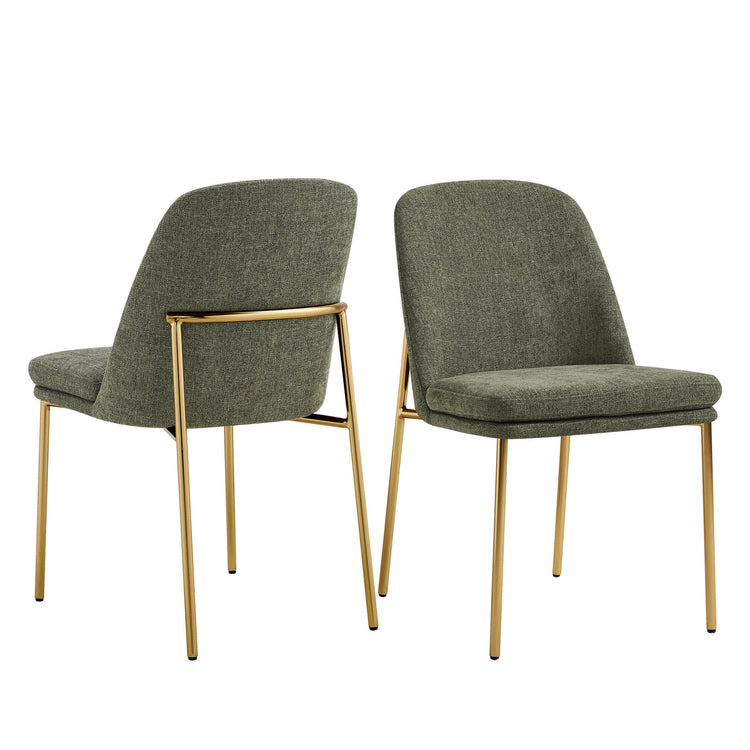
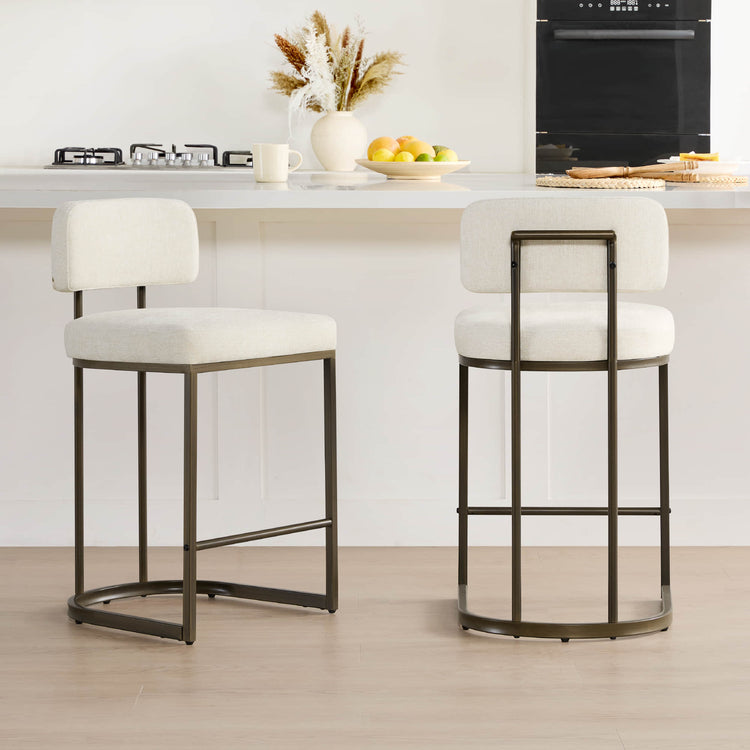


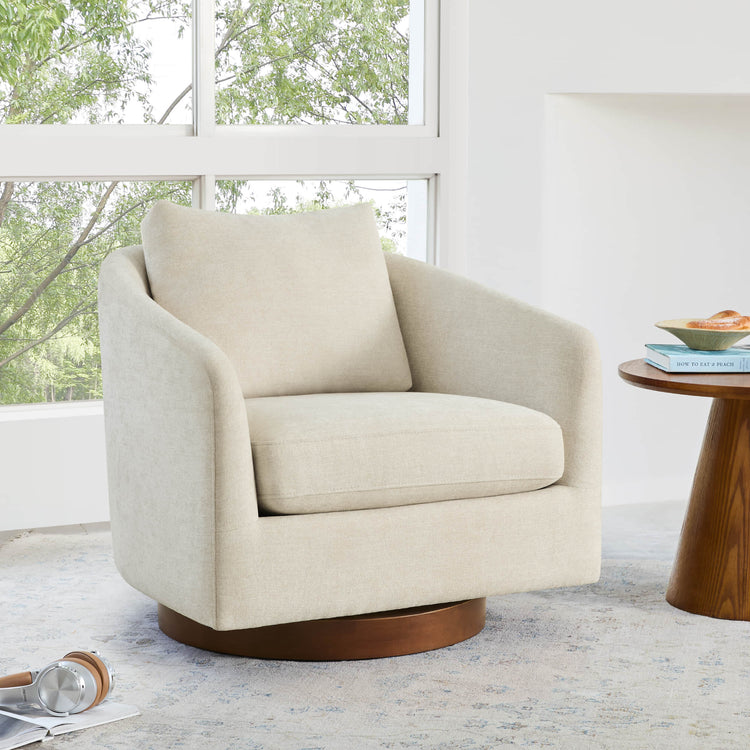
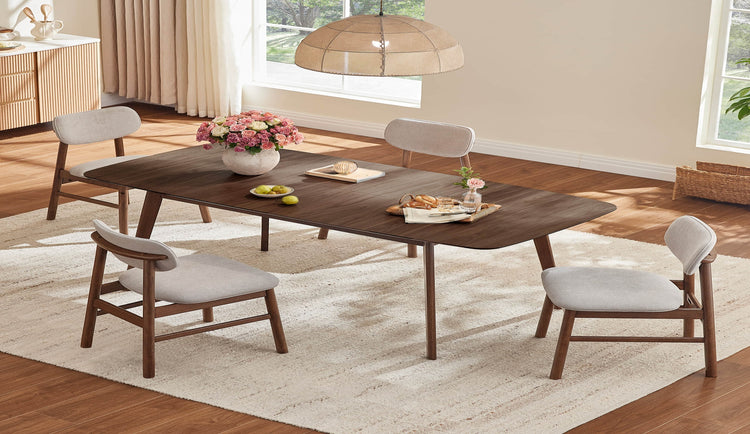
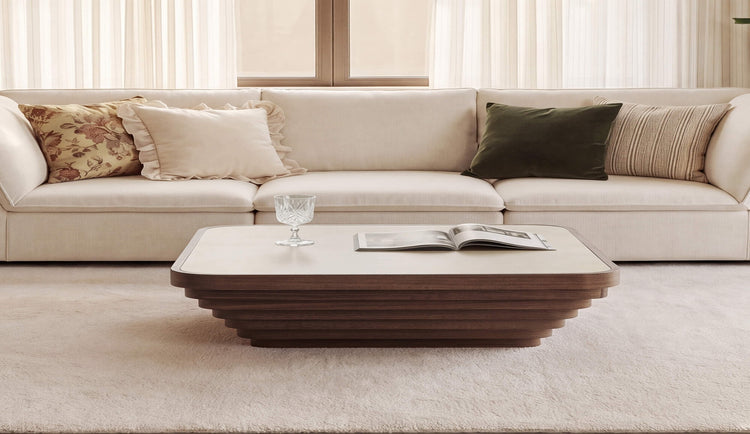
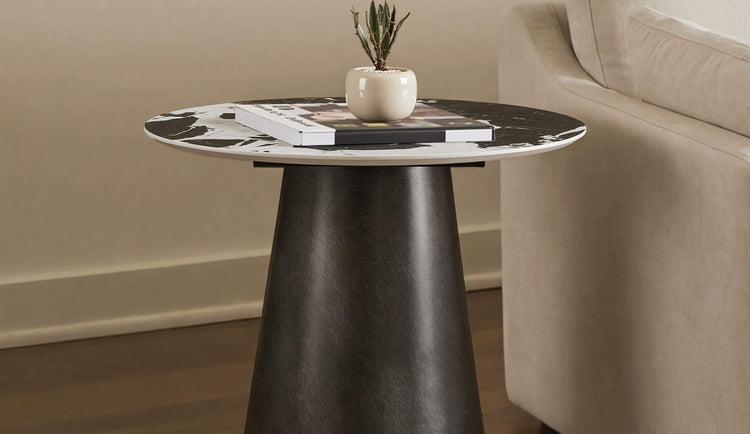
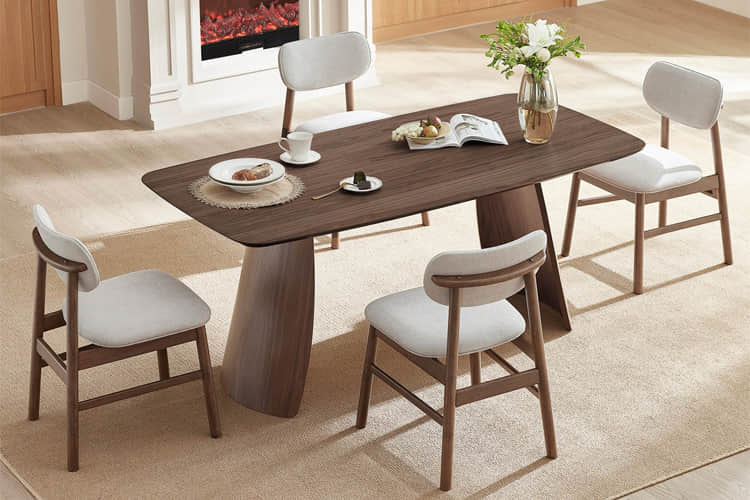
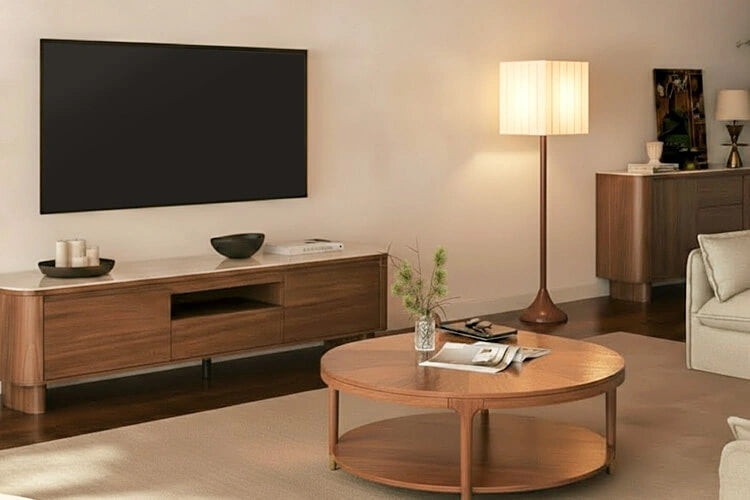











The simplest answer to how tall should a coffee table be is this: start with a table that's about 16 to 18 inches tall, then check whether it lands level with your sofa seat or about 1 to 2 inches lower. That usually gives you the best mix of reach, legroom, and visual balance. If your cushions are very soft, use the compressed seat height as your real reference instead of the fluffy top.
What Height Works Best for Most Coffee Tables?
For most living rooms, coffee table height falls in the 16 to 18 inch range, which makes that band a practical starting point rather than a universal rule. It often lines up well with standard sofa seat heights, but comfort and proportion still matter more than any one number.
The better question is not just "What is the standard coffee table height?" but "How does it sit next to my sofa seat?" A practical rule of thumb is to keep the table level with the seat or slightly lower, since that keeps drinks easy to reach without making the table feel dominant. For most people, that's the sweet spot between comfort and proportion.
A coffee table that is a little lower is usually safer than one that climbs above the seat line. Once the tabletop sits higher than where you actually sit, the setup can feel visually crowded and less natural to use.
If you're still early in the room-planning stage, a broad living room furniture browse can help you think through scale before you commit to a specific shape or finish.

Match Coffee Table Height to Your Sofa
The sofa seat should be your anchor measurement. A practical sizing rule is to keep the coffee table level with the seat cushions or about 1 to 2 inches lower, which is a useful starting point when you are comparing listings online.
Here's the easiest way to measure at home:
- Measure from the floor to the top of the seat cushion where you actually sit.
- Compare that number to the coffee table height in the product listing.
- If the sofa has very plush cushions, think about how much they sink after someone sits down.
- Choose a table that still feels easy to reach from the sofa without leaning forward.
That cushion-sink step matters more than many people expect. A sofa that looks average-height in photos may sit lower in real use if the cushions compress deeply, so a table that seems fine on paper can feel too tall once you're living with it.
A good quick check is to imagine where your mug, book, or remote lands when you sit back. If the tabletop feels slightly below that easy reach point, you're usually in good shape.
For small rooms, the visual fit matters too. The small-space arrangement guide is useful if your seating area needs to feel open as well as functional.
Measure Your Sofa Seat Height
Measure from the floor to the top of the seat cushion, not the sofa back. That gives you the number that actually affects how the table feels in daily use. If the sofa has loose cushions, press them down the way they would settle during normal sitting and note that lower effective height.
Use the Sofa as Your Starting Point
Compare the coffee table to the seat line, not the sofa arms or overall height. A table that looks fine in a showroom can still feel off at home if the seat line is much lower or higher than average. The seat is the reference that keeps the pairing honest.
Adjust for Cushion Sink and Seat Depth
Very soft cushions can make the usable seat height feel lower than the published cushion height, so don't size the table only from the showroom look. Deep seats also change how far you reach, which is why a comfortable table is not always the tallest one that technically fits.
Check Comfort for Real-Life Use
Think about the things you set down most often, like drinks, remotes, chargers, and a plate of snacks. If a tabletop makes you lean forward every time, it is probably too low or too far away. If it blocks your knees or feels like a barrier between you and the sofa, it is probably too high.

When a Coffee Table Feels Too High or Too Low
The height problem is usually obvious once you sit down. A table that is too high often looks like it is competing with the sofa, while a table that is too low can disappear visually and make everyday use feel less convenient. Real-world feedback shows the same frustration, especially when a table rises above the sofa seat line and starts to feel awkward.
A table is probably too tall if you notice any of these:
- Your eye lands on the tabletop before it lands on the seating.
- Reaching for a drink feels like lifting your arm instead of making a relaxed reach.
- The setup looks crowded when the table is close to the sofa.
A table is probably too short if:
- It sits far below the seat and looks disconnected from the sofa.
- You have to bend more than expected for everyday use.
- The table feels visually lost next to a taller, more upright sofa.
The fix depends on what is actually wrong. If reach is the problem, size up or down in height first. If the table looks bulky or heavy, a different shape or lighter-looking base may solve the issue better than a taller top. The point is to adjust the pairing, not just chase a random number.
Coffee Table Height for Different Sofa Styles
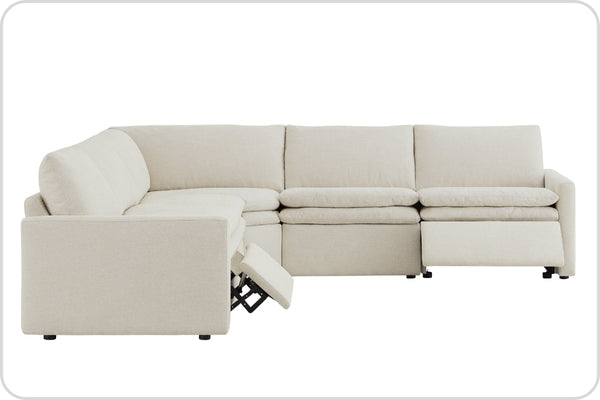
Some sofas make the standard rule easy to use, while others push you to be more careful. Low-profile seating and plush sectionals usually call for a lower-feeling table. Taller, more formal seating can handle a table that looks a little more substantial, but it still should not jump above the seat line in most rooms.
| Sofa or Setup Type | Height Direction | What To Watch For |
|---|---|---|
| Low-profile sofa | Slightly lower end of the usual range | Avoid a table that looks tall beside the seat line |
| Standard sofa | Middle of the usual range | Seat height and room clearance usually decide the final pick |
| Taller or more formal sofa | Upper end of the usual range | Don't let the table overpower the seating visually |
| Sectional | Usually closer to seat height | Shape and reach matter as much as height |
| Apartment-scale seating | Often works best a bit lower | Keep the room open and easy to walk through |
That table is about fit, not style rules. A round table, square table, or rectangular table can all work if the height feels right for the seating. Room openness changes the feel too: a tighter apartment usually benefits from a table that doesn't add visual bulk, while a larger room can tolerate a more substantial look.
If you want to compare setup types before buying, the sofa quality guide is a helpful companion piece because seat depth, cushion feel, and frame support all affect how height reads in real use.
Measure Your Space Before You Buy
Height is only one part of the decision. You should also check how much space you have between the sofa and the table. A practical target is about 16 to 18 inches of clearance, which leaves room for legs, traffic, and easy reach. Apartment-style layout guidance and other room-spacing advice point to that range as a comfortable working distance.
Use this quick pre-buy checklist:
- Measure the sofa seat height from the floor.
- Check the coffee table height against that seat line.
- Leave about 16 to 18 inches between the sofa and table edge.
- Confirm the table still fits with the rug, ottoman, and walking path.
- Make sure the tabletop height feels easy from the exact spot where you sit most often.
If your room is compact, a general furniture arrangement resource can help you judge whether the layout needs more breathing room before you shop.
The goal is not just to buy a coffee table that looks right in a photo. It's to choose one that works when you sit down, set something on it, and move through the room every day.
Final Takeaway
The best coffee table height is usually close to your sofa seat, with 16 to 18 inches as the common starting range and 1 to 2 inches below the seat line as a safe target. Measure the seat height, check the clearance, and think about how your cushions actually compress before you buy. If you're between sizes, choose the option that keeps the room easy to use and visually balanced rather than the one that only looks good on a product page.
FAQs
How Tall Is a Standard Coffee Table?
A standard coffee table is usually about 16 to 18 inches tall. That range gives most shoppers a sensible starting point, but the sofa seat height still matters more than the label standard. If your sofa sits lower or higher than average, adjust from there instead of buying by the number alone.
Should a Coffee Table Be Higher Than the Sofa Seat?
Usually, no. The safest default is for the tabletop to sit level with the seat or slightly below it. If the table rises above the seat line, the setup can start to feel awkward and harder to use, especially in smaller rooms or with low, lounge-style seating.
What Happens If My Coffee Table Is Too Low?
A table that is too low can feel harder to reach and may look disconnected from the sofa. Some rooms can tolerate a lower look if the rest of the furniture is also low and relaxed, but the table should still feel intentional rather than hidden. Comfort should always come first.
How Do You Measure Coffee Table Height at Home?
Measure the table from the floor to the top surface, then measure the sofa from the floor to the top of the seat cushion. Compare those two numbers directly. If the sofa has soft cushions, use the compressed seating height as your real reference because that is what you live with.
Can a Lift-Top Coffee Table Be the Same Height as a Regular One?
Yes, as long as the closed height still works with your sofa. A lift-top table changes the working height when it is raised, but the base height needs to fit the seating area just like any other coffee table. If the closed version already feels too tall, the lift-top function will not solve the proportion issue.