






















Covered Patios Layout Ideas with outdoor furniture

Choose the layout by the patio’s main purpose: use a conversation arrangement for lounging, a dining arrangement for meals, or a mixed-use plan for both. Then measure the usable footprint, protect the main route, and test the complete furniture arrangement before buying. These outdoor furniture layout ideas for covered patios work best when you consider use, shape, access, comfort, and exposure together instead of letting furniture style drive the decision.

Choose a Covered Patio Layout by Its Main Use
The best covered patio furniture arrangement supports the activity you do most often while keeping seats, doors, and the main route accessible. Decide whether conversation, dining, or mixed use is the priority before choosing a sofa, chairs, table, or sectional.
Conversation Layout for Lounging
Use a conversation layout when relaxing, reading, talking, or watching the yard matters more than serving full meals. Face a sofa, chairs, or compact sectional toward one another around a coffee table or another useful surface. Aim the group toward a view or focal point, but don’t fill every edge of the patio just to make it look fuller.
This patio seating layout works when people can reach their seats without walking through the center of the group. Choose it when lounging is the main activity and the full seating footprint leaves a practical route from the house to the yard.

Dining Layout for Meals
Use a dining layout when meals or entertaining are the main reasons you use the patio. Center the table only after accounting for every chair, the space needed to pull chairs out, access to each seat, and the route between the house and the table.
Don’t size the arrangement by the tabletop dimensions alone. A table that fits on paper can still make a covered patio difficult to use if chairs meet a wall, post, door swing, grill, or frequently used path. Choose this layout when dining access remains workable with people seated and moving around the table.
Mixed-Use Layout for Lounging and Dining
Use a mixed-use layout when the patio needs to support relaxation and casual meals without scattering furniture across the entire slab. Create two anchored zones, such as a lounge at one end and a dining or bistro area at the other, with a clear connection between them.
A mixed plan is worthwhile only when the zones remain distinct without overcrowding the connecting route. Choose it for a rectangular or connected footprint that can separate the two activities while keeping the house, yard, and seating areas easy to reach.
| Primary use | Layout family | Main anchor | Main circulation risk |
|---|---|---|---|
| Conversation | Facing seating group | Sofa, chairs, or compact table | The route cuts through the seating area |
| Dining | Table-centered arrangement | Dining table and accessible seats | Chair pull-back blocks doors or routes |
| Mixed use | Two connected zones | Lounge anchor plus dining anchor | The transition between zones becomes congested |
Adapt the Arrangement to the Patio Shape and Usable Footprint
Start with the usable footprint, not the patio’s nominal size. Subtract the space occupied by posts, steps, grills, planters, lighting, door swings, and other fixed obstacles. Then let the remaining shape determine whether furniture belongs along an edge, in the center, or in connected zones.
Narrow or Small Rectangular Patio
For a narrow or small rectangular patio, align compact seating with the long dimension or group it to one side if that protects the primary route. A sofa with one or two chairs, or a compact pair of chairs with a small table, may be more practical than placing furniture on both sides of a tight passage.
Choose the smallest configuration that preserves seat access and movement. Don’t add pieces simply to fill empty edges. This approach is one of the most useful covered patio furniture layout ideas when the patio should feel furnished without making every trip between the house and yard a detour.
Square Patio
A square patio can support a centered conversation or dining group when its doors and obstacles allow a clear approach. Use one focal group rather than several competing clusters, and protect door operation and the most-used entrance before optimizing symmetry.
A sectional can work in a square footprint only when its full depth, arms, table, and access routes fit together. Choose a centered arrangement when the measured space supports it; otherwise, move the group toward an edge and preserve the most important route.
L-Shaped Patio
An L-shaped patio can assign one leg to the primary activity and the other to a secondary role, such as dining, drinks, or additional seating. Keep the inside corner useful as a connector instead of filling it with an oversized piece.
Choose this split only when people can move between the house, both legs, and the yard without squeezing through furniture. The shape suggests a possible arrangement, not a guarantee. Doors, posts, steps, and the actual width of each leg still control the result. If you’re considering modular sectional options, compare each configuration with the measured footprint rather than assuming every combination will fit.
Choose the Outdoor Furniture Format That Executes the Layout
Choose the furniture format only after the patio’s use, shape, and usable footprint have narrowed the options. Modular outdoor seating solves a genuine reconfiguration problem; sofa-and-chair seating creates a defined conversation group; bistro or accent seating adds compact support. None is right for every covered patio.
Modular Seating for Real Reconfiguration Needs
Choose modular seating when the arrangement genuinely needs to change between activities, seasons, or furniture positions and each configuration fits the measured footprint. Don’t add modules merely because flexibility sounds useful. Every added piece affects depth, routes, table access, and the space available for people to sit and move.
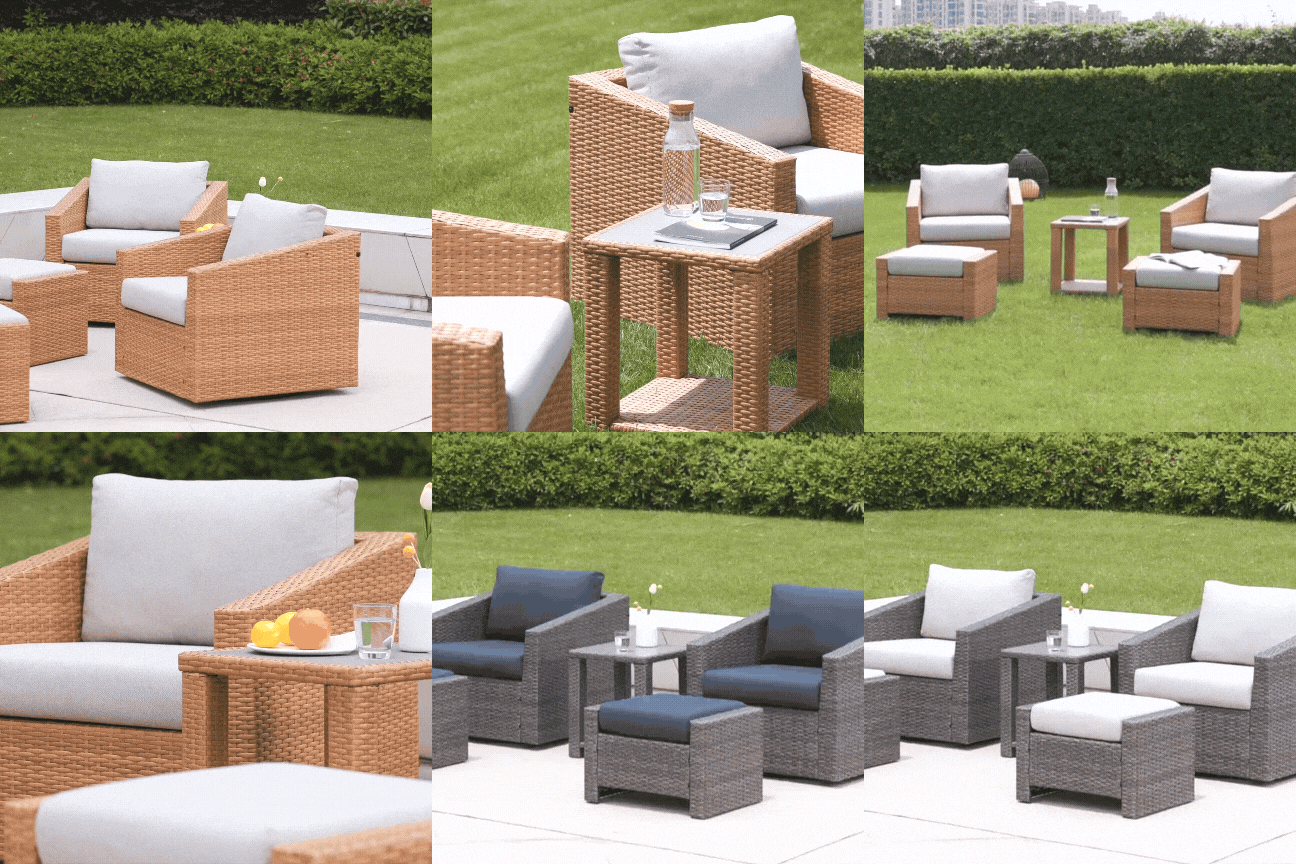
The Clover modular sofa set is one supplied-fact example to assess against a patio plan. Its three-seat modular sofa is listed at 30.7 inches deep by 79.2 inches wide, with 7.9-inch cushions, an FSC-certified acacia frame, and water-resistant olefin fabric. Those details are inputs for a fit and care check, not proof that the set suits every patio or exposure condition.
Sofa-and-Chair Seating for a Defined Conversation Group
Use sofa-and-chair seating when one clear conversation zone is more useful than frequent rearrangement. Place the sofa and chairs so people can face one another, reach the table, and enter or leave without crossing the group’s center.
The Clover set can also be considered in this format when its supplied sofa, chair, and table dimensions match the measured space. Before treating it as a buying option, compare the complete footprint with access points and review the current product page for dimensions, care, and exposure guidance. The listed product information includes a one-year furniture warranty, free shipping to the 48 contiguous states and Washington, D.C., and a 30-day return policy, but review those terms before placing an order.
Bistro or Accent Seating for Compact Support
Use a bistro format when meals, coffee, or drinks need a compact support zone. Add an accent chair only when it improves orientation or access without entering the main route. This format can support a smaller conversation area, a secondary zone in an L-shaped patio, or a dining-focused corner.
The Emberly bistro set includes swivel chairs, an FSC-certified eucalyptus frame, 13-inch cushions, and water-resistant olefin fabric. Its listed chair size is 31.9 inches deep by 30.7 inches wide, so compare that footprint with chair movement and table access before purchase.
The Liana swivel accent chair is listed as 31.9 inches wide and 33.5 inches deep, with a 360-degree swivel, resin wicker, a powder-coated steel frame, and water-resistant olefin fabric. Its supplied data includes an inconsistent seat-depth field, so use the current product page for final measurements. Water-resistant or weather-oriented wording doesn’t eliminate the need to consider shelter, care, and the patio’s actual exposure.
Place Furniture for Comfort, Airflow, and Exposure
A covered patio isn’t exposed in exactly the same way at every position. Roof coverage, orientation, wind, splash, glare, moisture, and airflow can change how comfortable a seat feels and how often cushions need attention. Use those conditions to guide placement, then follow current manufacturer guidance for the selected furniture.
- Shade and glare: Aim seats toward useful views without placing them where direct or reflected glare makes the seating uncomfortable. Check how the patio changes during the times you use it most.
- Airflow: Keep the seating group connected to the home without blocking natural airflow. Avoid using furniture to close off the only practical passage through the covered space.
- Moisture and splash: A roof doesn’t eliminate rain carried by wind, runoff, or damp conditions near the patio edge. Place cushions and frames according to the actual exposure and current care instructions.
- Cushion handling: Leave enough room to remove, turn, clean, or store cushions as directed. A deep seat may feel comfortable but can make a narrow route harder to use.
- Seat depth and table reach: Compare seat depth with the available floor area, then make sure people can reach the table without leaning into a route or moving another chair.
- Swivel and movable pieces: Place a swivel chair where turning improves orientation or access, but keep its movement within the usable footprint rather than the main path.
- Views and connection: Face the primary group toward the yard, fireplace, garden, or home connection that supports the patio’s use. Keep secondary pieces from creating several competing focal points.
For more ideas about connecting the patio to nearby rooms and outdoor areas, explore these indoor-outdoor living ideas after establishing the basic footprint.
Verify the Full Footprint Before You Buy or Rearrange
The arrangement works when the complete furniture footprint fits, the main route remains usable, and the patio still functions with people seated and moving through it. A tape or scale test is a planning aid, not a substitute for actual product dimensions, assembly information, or manufacturer instructions.
- Measure the usable boundary. Record the floor area that furniture can occupy after accounting for walls, posts, steps, grills, planters, lighting, and door swings.
- Mark access points and obstacles. Draw the route from the house to the yard, table, storage area, and every seat people will use.
- Map complete furniture footprints. Tape or sketch the sofa, chairs, tables, arms, corners, and any modular configuration at its actual listed dimensions.
- Test movement and use. Sit in every seat, pull dining chairs out, reach the table, open doors, and walk the busiest realistic route while others remain seated.
- Reject forced detours. Remove or reposition any piece that blocks access, makes a chair unusable, or forces people through the center of a conversation group.
- Verify the current product page. Before adding furniture to the cart, compare current dimensions, care instructions, exposure guidance, shipping terms, warranty, and returns with the arrangement you tested.
Tape or sketch the complete layout first, then compare the tested footprint with the current product details. That final step is the most reliable way to turn a promising patio furniture arrangement into a workable purchase or rearrangement.
FAQ
These answers address the most common final checks after you’ve chosen a use and shape for the patio.
How do I know if outdoor furniture will fit on my covered patio?
Measure the usable area after accounting for fixed obstacles and door swings, then tape the full furniture footprints, including chair pull-back and table access. Test entry, seated movement, and the busiest route. Before buying, compare the taped plan with the current product-page dimensions rather than relying on the listed width of one piece alone.
What is the best furniture layout for a narrow covered patio?
A linear arrangement along the long dimension or a compact group placed to one side is often the better starting point because it can preserve a continuous route. The actual doors, obstacles, and seat dimensions determine whether it works. Tape the smallest realistic configuration and reject it if access depends on squeezing between both sides of the passage.
What should I consider when choosing outdoor furniture for a covered patio?
Compare shade, glare, wind, moisture, splash, airflow, cushion handling, seat depth, and table reach at the exact location. Covered space doesn’t make every position equally sheltered. Match the furniture’s current manufacturer care and exposure guidance to those conditions, and leave enough access to handle cushions as directed.
Recommended Products

More to Read
 7 Sofa Trends That Actually Improve Comfort in 2026
Upgrade your living room with furniture that supports your body. Here are 7 modern sofa features designed to maximize your daily comfort...
7 Sofa Trends That Actually Improve Comfort in 2026
Upgrade your living room with furniture that supports your body. Here are 7 modern sofa features designed to maximize your daily comfort...
 Mother's Day Gift Guide: Cozy and Stylish Furniture Picks for Modern Moms
Make Mother's Day more meaningful with furniture gifts that bring comfort, smart features, storage, and quiet luxury into her everyday routine.
Mother's Day Gift Guide: Cozy and Stylish Furniture Picks for Modern Moms
Make Mother's Day more meaningful with furniture gifts that bring comfort, smart features, storage, and quiet luxury into her everyday routine.
 Performance Fabric Reality Check: Does It Really Repel Pet Hair and Stains?
Performance fabric is often marketed as a miracle solution for homes with pets and kids, but the reality is more nuanced. It...
Performance Fabric Reality Check: Does It Really Repel Pet Hair and Stains?
Performance fabric is often marketed as a miracle solution for homes with pets and kids, but the reality is more nuanced. It...