



















In 2026, the most practical gaming setups have moved beyond dedicated battlestations to flexible lounge-first spaces that handle console play, active VR, and group streaming without constant rearrangement. High-spec modular sofas make this possible by letting you reconfigure seating around a fixed 6.5 ft × 6.5 ft roomscale VR zone while still delivering comfortable, supported positions for long sessions. The key decision is treating the room as two distinct modes rather than forcing one static layout.

Defining the 2026 Gaming Lounge: Use Cases and Priorities
A 2026 gaming lounge prioritizes multi-use flexibility over a single-purpose desk setup. Instead of a fixed battlestation, the space must support three overlapping activities: seated console gaming, active roomscale VR, and social streaming or movie nights for couples, roommates, or families.
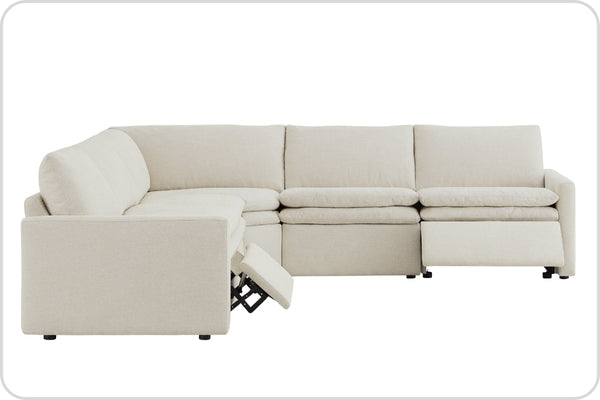
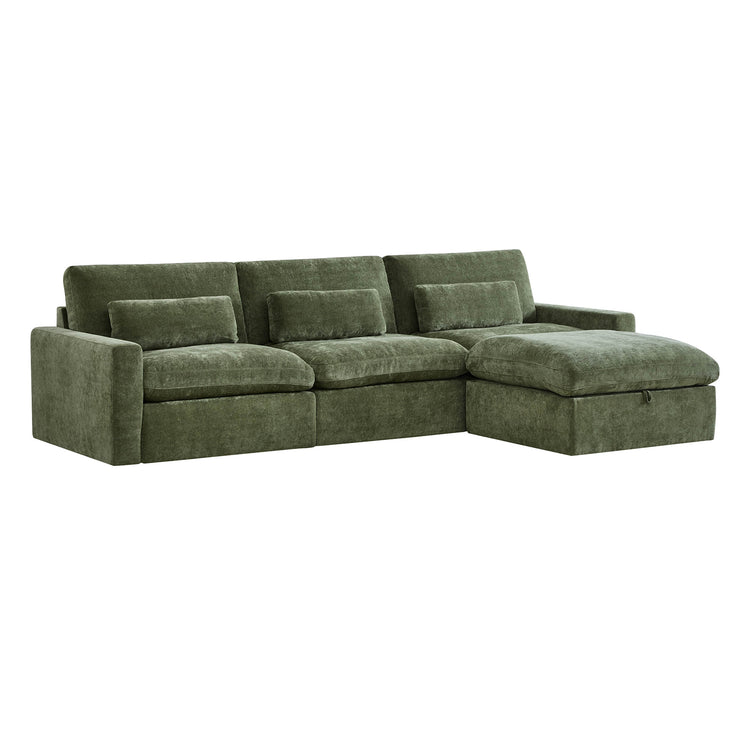
Modular sectionals shine here because individual pieces can be rearranged quickly to adapt to the dominant activity of the day. This is especially valuable in apartments or open-concept living rooms where one area serves as both media room and everyday lounge. The best setups treat high-spec features—power headrests, zero-gravity recline, built-in charging—not as luxury add-ons but as performance tools that maintain comfort and posture over multi-hour sessions.
Before selecting furniture, map your primary use cases and room constraints. A household that splits time evenly between VR and group console play needs faster mode-switching capability than one focused mainly on streaming. This early filtering prevents buying a beautiful pit-style sectional that later proves frustrating for active VR.
Layout Strategy: Balancing Social Pits with VR Clearance
Roomscale VR establishes a non-negotiable planning core: you need at least a 6.5 ft by 6.5 ft unobstructed play area. Even with advanced boundary sensors that detect objects up to 9 feet away, physical clearance remains the primary defense against collisions, as noted in Meta’s Quest safety guidelines.
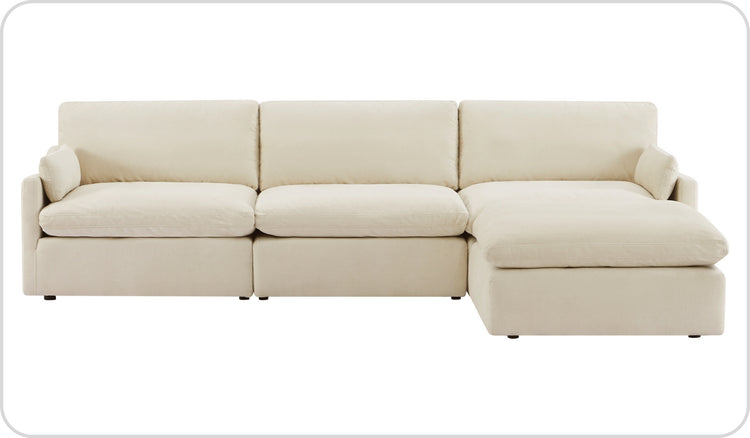
This requirement forces a choice between two layout families. L-shaped modular configurations generally preserve more open floor space, making them safer for hybrid rooms. U-shaped or true “pit” layouts create an immersive social cocoon ideal for streaming and group console play but often occupy the center of the room, eliminating quick VR access unless you treat ottomans and corner pieces as “swing” furniture that can be pushed to the perimeter in under a couple of minutes.
If reconfiguration consistently takes longer than a few minutes, the layout is effectively single-mode. For most shared media rooms, an L-shaped sectional positioned against two walls leaves the center clear while still providing ample seating. Permanent pit arrangements work well only when VR use is rare or when you have a secondary dedicated play zone.
The chart below visualizes these trade-offs across common room conditions and priorities.
When to Use a Social Pit or a VR Roomscale Layout
A scenario split view for choosing between a social-streaming-first pit and an active VR roomscale setup. The clearance band reflects a conservative fit range around 6.5 ft × 6.5 ft, so the chart shows decision zones rather than a hard cutoff.
View chart data
| Category | Social Pit | VR Roomscale Mode |
|---|---|---|
| Very small footprint | 1.0 | 0.0 |
| Around 6.5 ft × 6.5 ft | 2.0 | 4.0 |
| L-shaped layout fit | 3.0 | 4.0 |
| U-shaped layout fit | 2.0 | 5.0 |
| Social streaming priority | 5.0 | 1.0 |
| Active VR priority | 1.0 | 5.0 |
Configuring for Immersion: Viewing Angles and Screen Distance
Once the VR safety zone is protected, seating placement should optimize the visual experience. THX recommends a 36- to 40-degree field of view for cinematic immersion, while many viewers prefer the SMPTE 30-degree guideline for reduced neck strain during longer sessions.
For 4K screens, the optimal seating distance is typically 1.2 to 1.5 times the screen’s diagonal measurement, according to detailed size-to-distance modeling. A 65-inch 4K display, for example, works best viewed from roughly 6.5 to 8 feet. Modular sofas allow you to fine-tune this distance by adding or removing sections rather than moving the entire couch.
The center of the screen should also stay within roughly a 15-degree vertical viewing angle to avoid neck strain, per THX ergonomic guidance. Modular designs help here: adjustable chaise sections or floating ottomans can raise or lower the seated eye line to keep viewers in the optimal zone whether playing solo or hosting friends. Avoid dead zones by testing sightlines from every major seat before locking in the final configuration.
The Ergonomics of Play: High-Spec Seating Features for Long Sessions
Soft “cloud” style modular sofas can feel wonderful for the first hour but often create a slouch trap during sessions longer than four hours. When the body sinks too deeply, the eyes drop below the ideal 15-degree vertical window, forcing the neck to compensate and creating fatigue. High-spec support features become essential for maintaining posture.
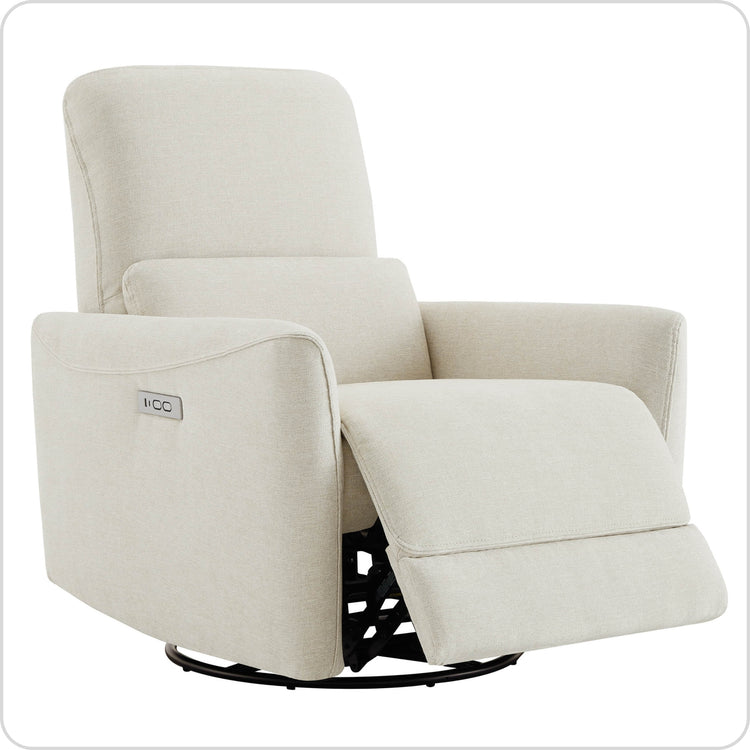
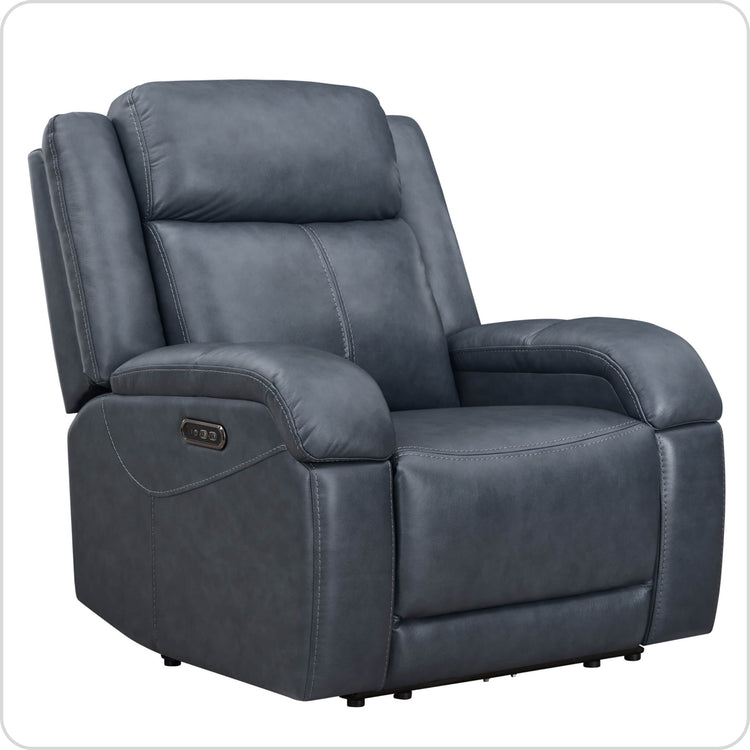
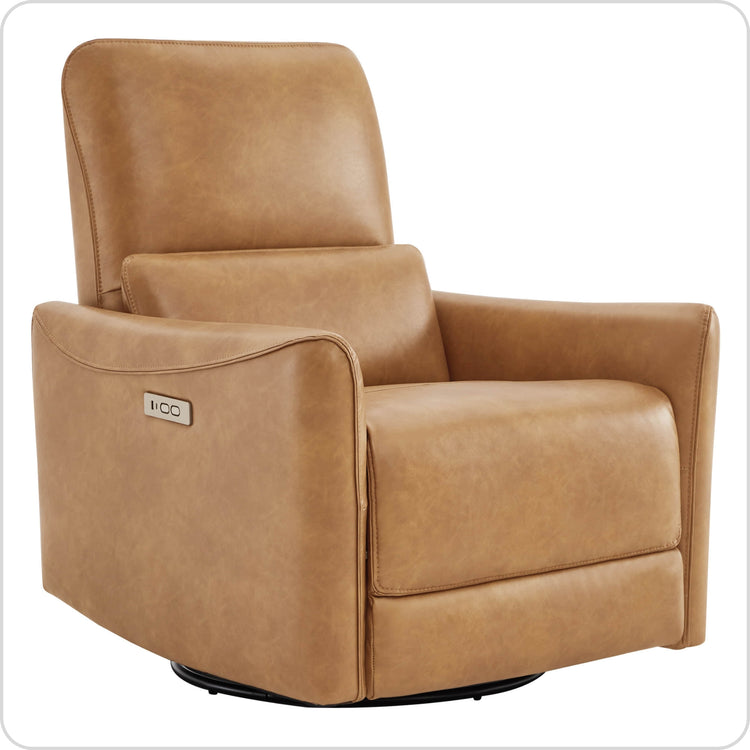
Power headrests let users raise the head independently of the recline angle, keeping the gaze aligned with the screen without sliding down. Zero-gravity positions, available on models such as the Skyline 5-Seat Zero Gravity Reclining Sectional and Ohana 5-Seat Zero Gravity Modular Reclining Sofa, distribute weight to reduce spinal pressure. These are comfort tools rather than medical devices, but they meaningfully extend comfortable play time for many users.
Built-in USB-C and Type-C charging ports on pieces like the Haley Buttery-Soft 4-Seat Modular Power Reclining Sofa eliminate cable clutter across the seating area. When choosing, prioritize support features over pure plushness if your typical session exceeds four hours.

Organization and Maintenance: Cables, Storage, and Fabric Realities
Unboxing a large modular set creates the “cardboard mountain”—substantial packaging waste and physical effort that renters and urban dwellers should anticipate. Plan disposal or recycling before delivery arrives.
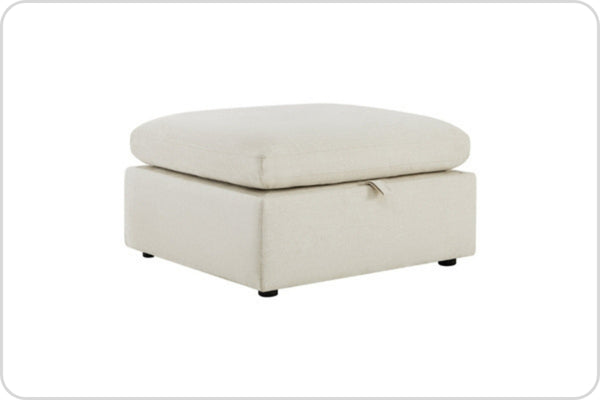
Performance fabrics resist stains effectively but require spot cleaning rather than machine washing. Storage ottomans, such as those in the Maisie 4-seat Modular Sofa with Storage Ottoman, hide controllers, headsets, and cables efficiently. For powered recliners, route cords through dedicated channels or under-rug conduits to prevent tripping hazards in the VR zone.
The Setup Checklist: Finalizing Your Modular Gaming Lounge
Use this practical sequence to avoid costly mistakes:
- Measure your intended VR core (minimum 6.5 ft × 6.5 ft) plus a safety buffer before selecting any furniture.
- Decide on primary mode—social streaming versus active VR—and choose L-shaped over U-shaped when fast switching matters.
- Match support features to session length: power headrests and zero-gravity recline for four-plus-hour play.
- Verify the seller’s return policy and potential restocking fees, because large modular configurations are expensive to exchange once assembled.
Check your room dimensions and typical play style against the decision zones above. When the layout supports quick transitions between social and roomscale modes while keeping viewers in ergonomic sweet spots, the modular sectional becomes the true centerpiece of a 2026 gaming lounge.
Frequently Asked Questions
How much clear space is truly needed for roomscale VR with a modular sofa nearby?
Meta’s official guidance calls for a minimum 6.5 ft × 6.5 ft unobstructed area. Maintain an additional physical safety buffer between the digital boundary and any furniture, even when using sensor-based guardian systems. Modular pieces should be movable to the perimeter within a minute or two.
Is an L-shaped or U-shaped modular sectional better for a gaming lounge?
L-shaped layouts usually win for hybrid rooms because they leave more open floor space for VR. U-shaped pits deliver superior immersion for group streaming but can block the center of the room, making them less practical when active VR is a regular activity.
Can a soft modular sofa still work for long gaming sessions without causing back pain?
Soft cloud-style cushions often lead to slouching that drops the eyes below the optimal 15-degree vertical screen angle. Look for power-adjustable headrests or zero-gravity recline options that help maintain posture once the initial plush feel wears off.
What fabric is best for a gaming lounge that sees snacks, drinks, and frequent use?
Performance fabrics with strong stain resistance are practical, but they still require prompt spot cleaning rather than machine washing. Storage ottomans and removable cushion covers further simplify maintenance.
How do I calculate the right distance between my modular sofa and a 4K screen?
Multiply the screen’s diagonal by 1.2 to 1.5 to find the ideal viewing range. Modular designs let you add or remove sections to fine-tune this distance without moving the entire sofa or the television.
What should I check before buying a large modular sectional for a shared media room?
Confirm that the configuration can be rearranged quickly enough for your VR schedule, that support features match your longest typical session, and that you understand the restocking fees in case the layout does not work in practice.