






















End-of-Bed Bench Size Guide: Length, Height, and Clearance

A bed-end bench can provide a place to sit, set down a blanket, or store spare bedding. Choose its footprint around those uses and the route through your bedroom. Measure the bed frame and the room before comparing styles.
Measure the bed frame and available floor space
Measure the bed's widest point, including an upholstered frame, projecting rails, or a footboard. Then measure from the foot of the bed to the nearest opposing wall or furniture. Note doors, dresser drawers, and the path you use at night.
Use removable tape to mark a possible bench footprint. Walk past it and open the nearby furniture. If the proposed position interrupts a route you use often, try a shallower or shorter bench, or reconsider the placement. The CDC's home fall-prevention checklist also calls for clear furniture routes and light along the path from the bed to the bathroom.

Calculate a starting bench length
A bench shorter than the bed frame leaves visible space at both ends. Calculate that space with this simple formula:
Space on each side = (bed-frame width − bench length) ÷ 2.
The following are layout examples using measured frame widths. Use your actual bed measurements, including any frame wider than the mattress.
| Example | Measured frame width | Bench length to test | Space on each side |
|---|---|---|---|
| Queen bedroom layout | 64 inches | 48 inches | 8 inches |
| King bedroom layout | 80 inches | 60 inches | 10 inches |
| A narrower option for the same King layout | 80 inches | 56 inches | 12 inches |
These examples show how to compare proportions. Test the bench depth and walking route as well. A long, shallow bench and a shorter, deeper storage bench can affect the room differently.
Choose a height you can sit on comfortably
If you will use the bench to put on shoes, check the seat height with your feet on the floor and your usual footwear. Notice how easily you can sit down and stand. Cushion compression can change the seated height. Check foot support with the cushion compressed under you.
Compare the bench with the mattress and footboard for the appearance you want. Bed heights vary, so choose seating comfort and stability alongside the visual relationship. Check the bench's intended use and stated capacity before using it as regular seating.

Compare seating and storage designs
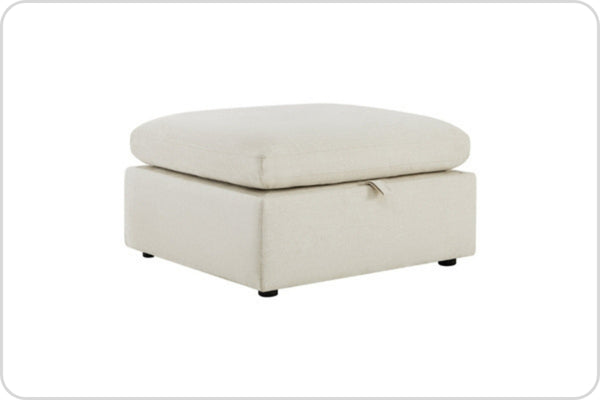
Our bench-ottoman and cube-ottoman comparison covers the trade-off between one continuous seat and separate pieces that can be moved individually.
| Design | Useful for | Space and use checks |
|---|---|---|
| Open or upholstered seating bench | Sitting, setting down clothing, or holding a folded throw | Seat height, capacity, stable feet, and access around the ends. |
| Lift-top storage bench | Blankets or other items reached from above | Clearance for the lid and the product's hinge and closing instructions. |
| Drawer storage bench | Items you want to reach without lifting a lid | Enough room for the drawers and a person using them. |
Measure the interior storage dimensions if you have specific items to put inside. Follow the product instructions for loading, opening, and closing. Keep fingers clear of moving lids and hinges. For an example with separate interior and exterior measurements, our Vault rectangular storage ottoman lists both and uses reversible tops. CPSC's storage-chest lid and latch guidance covers child-entrapment risks, including those associated with storage benches; check the opening design and keep children out of the storage space.

Test doors, drawers, and the walking route
Calculate the remaining route using the actual furniture edges:
Remaining route = bed-to-obstruction distance − bed-to-bench gap − bench depth.
For example, with 58 inches from the bed to a dresser, a 4-inch gap and an 18-inch-deep bench leave 36 inches before the dresser opens. Pull out the drawer and test the usable space again. Our bed-to-dresser clearance guide explains how drawer travel changes the remaining passage.
A 30–36-inch passage can be a starting range to test for an ordinary bedroom layout. Adjust for your household's access needs, mobility aids, and the way nearby furniture opens. Measure the narrowest part of the route and walk it in both directions.
To coordinate the bench with your room, repeat a finish or color from an existing piece. A wood-legged bench can relate to nightstands; upholstery can pick up a rug or headboard color. Compare our ottoman collection by dimensions and intended use as well as appearance.
FAQs
What size bench should I use with a Queen bed?
Measure the actual bed frame first. In the example above, a 48-inch bench beside a 64-inch frame leaves 8 inches at each side. Use the same calculation for other widths.
What size bench works with a King bed?
Start with your measured frame width and test a shorter bench footprint. An 80-inch frame and 60-inch bench leave 10 inches at each side; the room's depth still determines whether the setup is usable.
Should the bench be lower than the mattress?
It can be for the appearance you prefer. For sitting, also check foot support, cushion compression, and ease of standing.
Can I use an ottoman at the end of the bed?
Check its dimensions, capacity, stability, and intended seating use. Include the same walking and opening clearances you would for a bench.
Does the bench need to match the bed?
Choose a shared color, material, or finish to connect it with the room. A different base or upholstery texture can work within that choice.
Recommended Products

More to Read
 7 Sofa Trends That Actually Improve Comfort in 2026
Upgrade your living room with furniture that supports your body. Here are 7 modern sofa features designed to maximize your daily comfort...
7 Sofa Trends That Actually Improve Comfort in 2026
Upgrade your living room with furniture that supports your body. Here are 7 modern sofa features designed to maximize your daily comfort...
 Mother's Day Gift Guide: Cozy and Stylish Furniture Picks for Modern Moms
Make Mother's Day more meaningful with furniture gifts that bring comfort, smart features, storage, and quiet luxury into her everyday routine.
Mother's Day Gift Guide: Cozy and Stylish Furniture Picks for Modern Moms
Make Mother's Day more meaningful with furniture gifts that bring comfort, smart features, storage, and quiet luxury into her everyday routine.
 Performance Fabric Reality Check: Does It Really Repel Pet Hair and Stains?
Performance fabric is often marketed as a miracle solution for homes with pets and kids, but the reality is more nuanced. It...
Performance Fabric Reality Check: Does It Really Repel Pet Hair and Stains?
Performance fabric is often marketed as a miracle solution for homes with pets and kids, but the reality is more nuanced. It...