

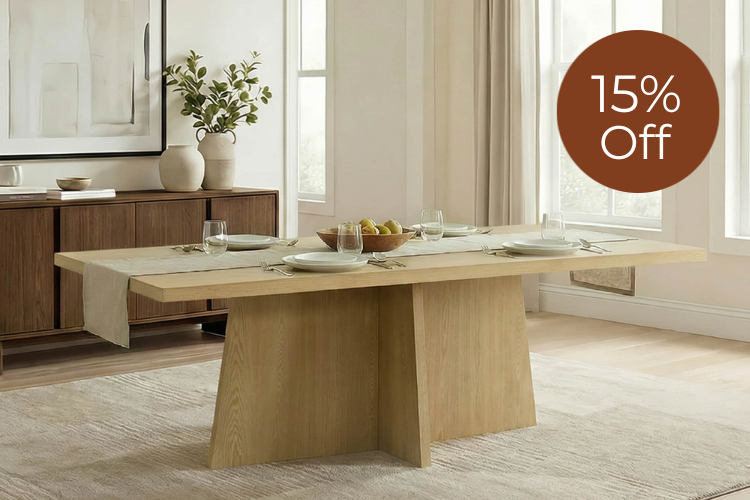













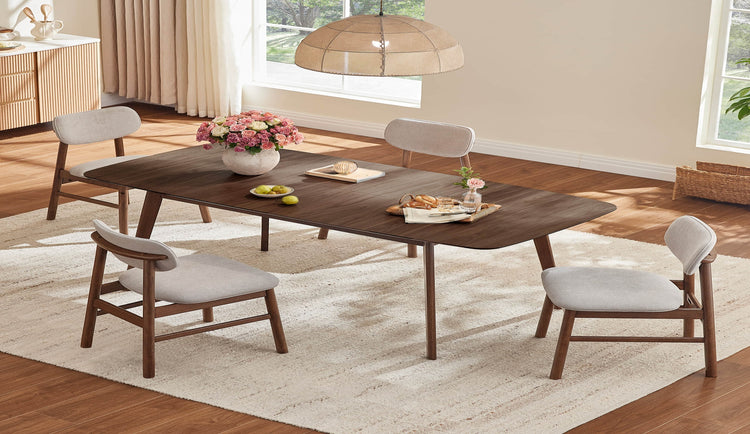
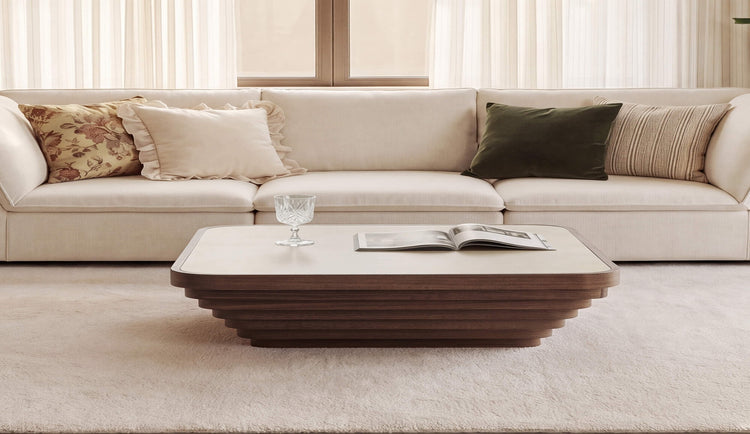
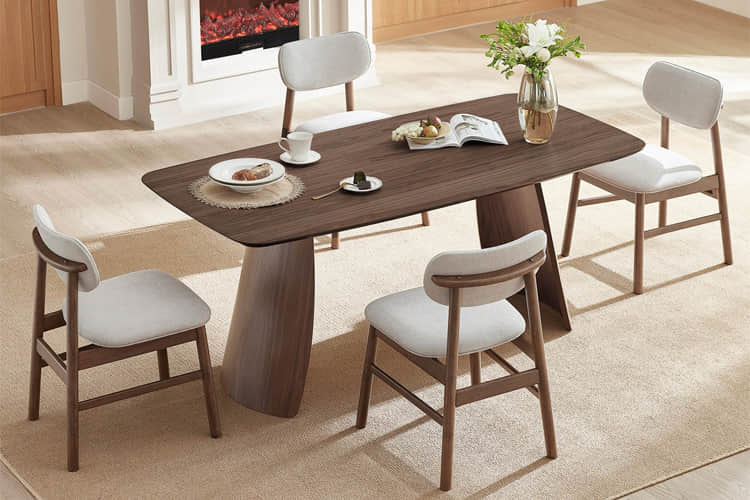









For most homes, the right choice is the one that fits your closed-day footprint, opens safely, and leaves comfortable circulation. If you are comparing an extendable dining table in 2026, start with room measurements, then match shape, extension style, and surface durability to how you actually eat, work, and host.

What an Extendable Dining Table Solves
An extendable dining table solves a simple problem: everyday space is limited, but occasional seating needs are not. In compact homes, open-plan apartments, and multipurpose rooms, a smaller closed size keeps circulation easier on normal days, while extension leaves room for guests on special occasions. That makes it a practical fit for buyers who want flexibility without committing to a permanently oversized table.
ASID's 2026 outlook leans toward adaptive, multifunctional living, which fits this category well as a planning lens rather than a rule. Use the trend context as a reminder that furniture is often expected to work harder in 2026, but let room fit and daily comfort decide the final choice.
For shoppers who want a broader starting point, dining tables are a useful place to compare shapes and sizes before narrowing to one layout. If you are still sorting through table-and-chair basics, the dining table and chair selection guide gives a helpful planning backdrop.
How to Measure Space for Closed and Extended Sizes
Measure twice: once for the closed position and once for the fully extended position. A table that looks right in a showroom can still fail at home if drawers, chairs, doors, or circulation paths collide with the leaves.
Start with these measurements:
- Room length and width
- Distance from table edges to walls, islands, buffets, or door swings
- Chair depth, especially if arms are involved
- The full extended length, not just the closed footprint
- Traffic paths through the room
NKBA guidance says to allow 36 inches of clearance between the table edge and a wall or obstacle, with 44 inches preferred on major walkways where people frequently pass behind seated guests. That is the right starting point for a residential dining layout. An accessible walking surface is often discussed at 36 inches as a broader universal-design baseline, but that is background context, not the main shopping rule for a dining room. NKBA kitchen planning guidelines ADA National Network accessibility factsheet
What this means in practice is simple: if the table barely fits when closed, it is unlikely to feel easy once extended. That is why an extendable dining table should be judged by both footprints, not the prettier one.
| Fit check | What to verify | Why it matters |
|---|---|---|
| Closed footprint | Table length and width with everyday chairs | Confirms the room works most of the time |
| Extended footprint | Full length with every leaf or panel installed | Prevents holiday setups from crowding the room |
| Chair pull-out room | Space behind each chair when someone stands up | Keeps seats usable instead of decorative |
| Walkway clearance | Main circulation routes through the dining area | Reduces collisions during meals and hosting |
| Door and furniture conflicts | Swings, corners, and nearby storage | Avoids a table that blocks normal movement |

If your room is tight, the safest approach is to prioritize the closed layout first and treat the extended mode as a guest-day bonus. That keeps the table useful every day instead of only on paper.
Which Shape and Capacity Fit Your Household?
Capacity should be based on real use, not just marketing language. A table labeled for more people may still feel cramped if the chairs are wide or the place settings are large. NKBA's seating guideline recommends 24 inches of table width per person as a comfortable baseline, which is a better planning number than a maximum seat count on a product page. NKBA kitchen planning guidelines
Shape changes how that capacity feels. Rectangular tables usually give the most predictable seating growth as the table extends. Round and oval tables can feel friendlier and softer in smaller rooms, but they do not always scale as cleanly when more seats are added. In 2026 style terms, warm minimalism and softer silhouettes are still visible in market trend coverage, but the shape decision should still start with circulation and comfort. High Point Market trends
| Shape | Best for | Daily seating feel | Guest seating flexibility | Room-fit tradeoff |
|---|---|---|---|---|
| Rectangular | Long, narrow, or frequently hosted rooms | Predictable and easy to plan | Usually strong with leaves | Can feel visually long when extended |
| Oval | Families who want softer edges | Comfortable and less boxy | Good, though less rigid than rectangular | Slightly less crisp for buffets and chair alignment |
| Round | Smaller rooms and conversational dining | Intimate and balanced | Moderate, depending on the extension design | Can take up more visual space as it grows |
| Soft-edged rectangular | Buyers who want a mix of flow and capacity | Familiar but less rigid | Often a good middle ground | Depends heavily on the actual leaf design |
A useful decision sentence here is this: if your household eats together every day and hosts only occasionally, choose for everyday comfort first, then let extension handle the rare larger meal. If hosting is frequent, a larger base with a smaller extension may be easier to live with.
For broader shopping comparisons, dining room options can help you compare layout and style before narrowing to one table shape. If you are comparing multiple table sizes at once, return to dining tables and filter by the room you actually have, not the one you wish you had.
Extension Types and Daily Trade-Offs
Extension mechanisms affect daily convenience as much as size does. The right choice depends on how often the table changes, how much effort that change takes, and whether the table needs one person or two to operate smoothly.
Common trade-offs:
- Drop-in leaves: Often familiar and straightforward, but leaf storage can be separate and inconvenient.
- Butterfly or self-storing leaves: Convenient for frequent changes because the leaf lives in the table, though the mechanism adds complexity.
- Draw-leaf systems: Useful when the table only needs a modest increase, but they may provide less dramatic expansion.
- Removable extension panels: Flexible, but daily use depends on how easy the panels are to store and align.
The best way to compare them is to ask where the inconvenience lands. If you want the least storage hassle, self-storing leaves usually reduce separate parts to manage. If you do not want extra hardware complexity, a simpler removable-leaf setup may be easier to understand, even if it asks more of you on guest days.
That is why there is no universal "best" mechanism. A table used every weekend for family dinners may benefit from a faster, more repeatable extension process. A table extended only for holidays can tolerate more setup friction if the closed form is better for everyday life.
The real friction point is not the label on the mechanism. It is whether you will actually extend the table when you need to, or avoid doing it because the process feels annoying.
Materials and Everyday Durability Choices
Material choice should match how hard the table will work. For a household that eats on the table, hosts often, or lets kids use it for projects, easy maintenance matters more than a delicate finish.
Wood remains a common choice because it can offer warmth and a repair-friendly ownership path. Veneered construction can be visually appealing and may reduce weight, but edge wear and surface protection matter more when the table is extended often. Engineered surfaces can also be practical for busy homes if the finish and edge treatment are solid.
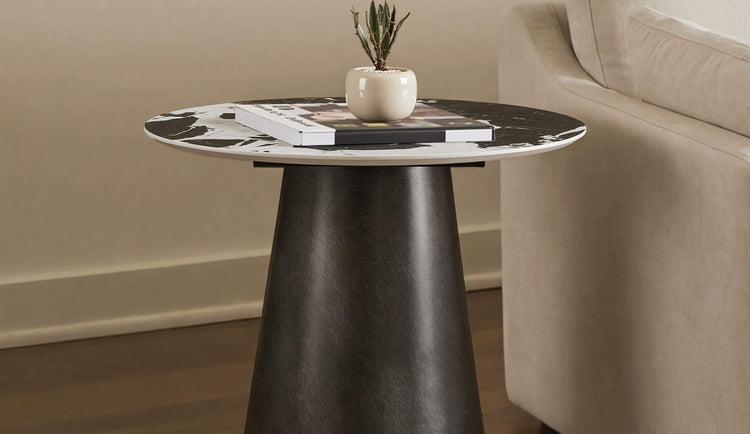
Stone and stone-look tops need a more careful read. The Natural Stone Institute's comparison of natural stone and sintered surfaces notes that sintered stone can resist heat and scratches well, while its dense structure can still leave edges more vulnerable if struck. That is a useful reminder not to treat hard surfaces as indestructible.
Use this lens:
- Choose wood if you want warmth and long-term repair potential.
- Choose an engineered surface if you prioritize low-fuss daily cleaning.
- Choose stone only if you are comfortable with weight and material-specific care.
- Check edge durability, not just the top surface, because corners and extension seams often take the most abuse.
For buyers comparing finishes, the solid wood dining table guide is a useful background read on long-term ownership mindset. If you want to compare a stone-top option with current product browsing, the extendable dining table selection can serve as a check-current-details path, but the care and fit questions still need to be verified before checkout.
Final Buying Checklist for 2026
- Measure the room in both closed and extended modes
- Confirm clearance with NKBA-style planning, not guesswork
- Map chair pull-out room on all seated sides
- Decide the most common daily seating count
- Test whether the extension mechanism is easy for one person to use
- Check how leaf storage works when the table is closed
- Verify the finish and edge durability for your household's wear level
- If using stone, confirm material-specific care steps
- Avoid judging the table only by its maximum seat count
- Keep style inspiration separate from fit and function
If you want to shortlist options efficiently, compare tables in your real room dimensions first, then sort by mechanism and surface care. That order prevents the most common regret: buying a table that looks flexible online but feels awkward in daily use. For a fast comparison, start with the best extendable dining table for your room, then narrow by care and setup effort; an expandable dining table should still fit your everyday layout before you think about holidays.
FAQs
How Do I Measure for an Extendable Dining Table?
Measure the closed footprint, then measure the full extended footprint with every leaf or panel installed. After that, add chair pull-out room and walkway clearance around the table. The table should work in both modes without blocking doors, major traffic paths, or nearby storage.
What Size Extendable Dining Table Fits a Family of Four to Six?
There is no universal size that fits every family of four to six. A comfortable fit depends on chair width, how often you host, and whether the table needs to support serving dishes or homework at the same time. Use 24 inches per person as the seating baseline, then confirm the room still feels open.
Which Extension Mechanism Is Easiest to Use?
Self-storing or butterfly-style leaves often feel easiest for frequent use because the leaf stays with the table. But ease also depends on weight, alignment, and whether one person can operate it comfortably. If the table extends rarely, a simpler removable-leaf setup may be perfectly fine.
Can an Extendable Dining Table Work in a Small Apartment?
Yes, if the closed size fits cleanly and the extended mode still leaves enough circulation room. Small apartments usually benefit most when the table is sized for everyday living first and guest mode second. The deciding factor is not just square footage, but how chairs and walkways behave in the room.
What Material Is Best for Everyday Family Meals?
The best material is usually the one that matches your cleaning habits and wear tolerance. Wood offers warmth and repair potential, while engineered surfaces can reduce daily care. Stone or sintered stone may look impressive, but weight, edge care, and material-specific maintenance should be part of the decision.
Final Takeaway
Pick the table that works closed every day, then verify it still works fully extended. Use clearance measurements, not optimism, and match shape, extension type, and material to how your household actually eats and hosts. If the room feels easy in both modes, you likely found the right extendable dining table for 2026.