


























Are nursery glider recliners Worth It for tall parents?

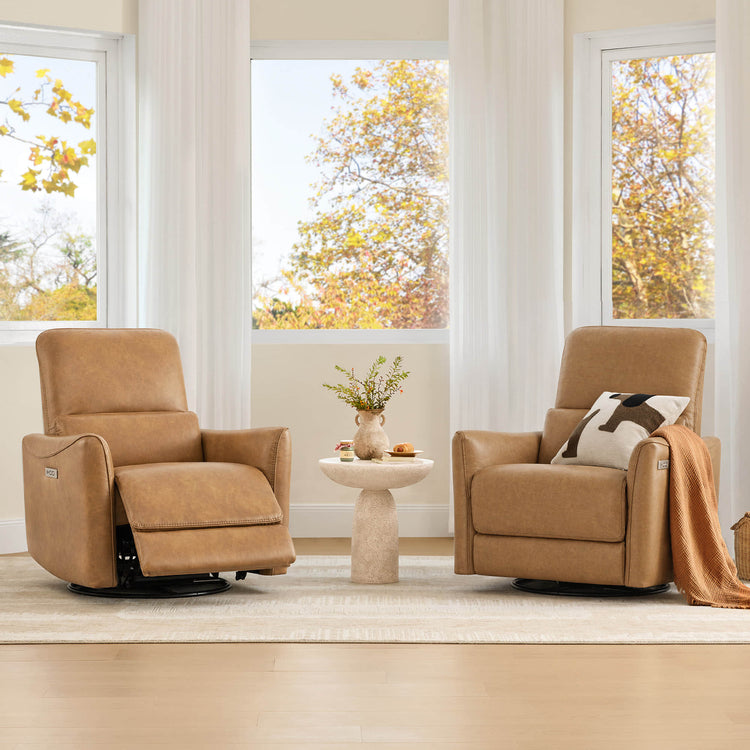
A nursery glider recliner can be worth it for a tall parent, but height alone is not the deciding factor. Buy the upgrade when a simpler chair leaves your head, upper back, thighs, feet, or arms unsupported during repeated feeding or soothing sessions, and when the chair can operate without crowding the nursery. Skip it when a standard glider already fits or when the added mechanism and clearance create more hassle than value. Start by measuring your seated fit, then compare chair types and the full operating footprint.

When Is a Nursery Glider Recliner Worth the Upgrade?
For tall parents, the upgrade is usually justified only when it solves a repeated, measurable fit problem. A high-back or powered label is not proof that a chair will support your body, and a larger overall frame does not automatically mean a deeper or more usable seat.
Think about the decision through three gates:

- Body support: Your head, upper back, thighs, feet, and arms remain supported in the upright and reclined positions you actually use.
- Room operation: The chair can swivel, glide, or recline without blocking a crib, doorway, walkway, or nearby furniture, with a practical outlet and cord route if it is powered.
- Feature value: Reclining, headrest adjustment, or other powered controls solve a frequent positioning need rather than simply adding features.
If all three pass, a nursery glider recliner may earn its extra footprint and cost. If the first gate fails, more power will not fix the fit. If the second fails, a simpler glider may be the better choice even when the recliner feels comfortable in isolation.
Measure Your Seated Fit Before Comparing Nursery Chairs
Use the primary caregiver's seated proportions and real feeding or soothing positions, not standing height alone. There is no supported universal backrest, seat-depth, or seat-height cutoff for tall parents, so compare your measurements with the chair's published usable dimensions and treat missing details as unresolved.
A parent-tested comparison highlights a 28.5-inch backrest on one tested glider. This is a market example, not a guarantee or universal target. You can use the 28.5-inch backrest example as a reminder to compare back support directly rather than trusting a "high-back" description.
Use this same sequence for every nursery glider recliner you consider:
- Measure seated torso and head position. Sit with your back in the position you expect during feeding or soothing. Note whether the chair supports your upper back and head without forcing your neck forward or leaving your head unsupported. Compare the usable back and head-support dimensions, not only the chair's total height.
- Check seat depth against your thighs. In your normal upright position, look for steady thigh support without sliding forward or having your knees pushed upward. A deep-seat nursery recliner is not automatically better if its depth prevents stable foot placement or makes your arms reach awkwardly.
- Record seat height and foot placement. Your feet should rest in the position you intend to use, whether that is on the floor or on an extended footrest. Compare the listed seat height with your own seated leg position instead of assuming a taller chair will provide better support.
- Check arm height and width while holding or feeding. Keep your shoulders relaxed and your elbows in a natural position. A chair can have enough seat width but still feel wrong if the arms are too low, too high, or too far apart for the way you hold the baby.
- Repeat the check upright and reclined. A chair that feels acceptable for a short upright sit may change substantially when the back or footrest moves. Record where your head, lower back, thighs, feet, and arms land in both positions.
For a concrete specification example, the Janice page publishes a 22.2-inch seat depth, 20.9-inch seat height, 26.8-inch back height, 25.2-inch arm height, and a 28.6-inch doorway requirement. You can view the published fit dimensions as a model for the information to seek. Those figures describe one product; they do not prove that it fits every tall parent.
Choose Between a Standard Glider, High-Back Recliner, and Power Glider
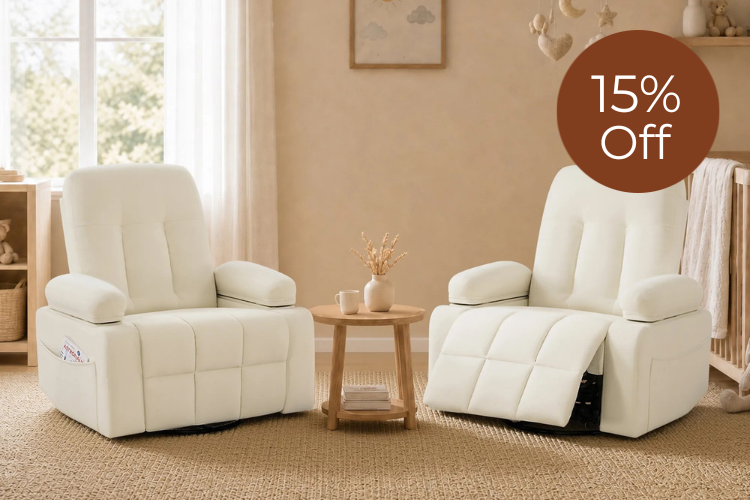
Choose the simplest chair that passes your seated-fit test. A standard glider is the value choice when it supports your head, back, thighs, feet, and arms without adjustment features. A high-back recliner is more appropriate when usable back or head support solves a demonstrated short-back problem. Choose a power glider when frequent position changes justify the mechanism, outlet, and operating space.
| Chair type | Choose it when | Main tradeoff |
|---|---|---|
| Standard glider | It already supports your body in the positions you use and you want a simpler setup. | Less adjustment if your preferred position changes during feeding or soothing. |
| High-back recliner | A simpler chair leaves your upper back or head unsupported, and the taller usable support passes your seated test. | A higher back or recline function does not guarantee fit and may require more operating space. |
| Power glider recliner | You expect frequent position changes and easier control has clear value after the fit test passes. | The mechanism adds clearance and outlet requirements; power does not create a better fit by itself. |
Independent comparison coverage provides useful context for the high-back category: Forbes Vetted names Carter's by DaVinci Arlo as a tall-parent pick and reports a seat-back height of almost 28 inches. That editorial comparison is not a universal comfort standard or a ranking against the products below.
Product pages also show why manufacturer-listed height ranges must be read conservatively. Elysian lists a 21.3-inch seat depth, 19.3-inch seat height, 25.6-inch back height to seat, 12.2-inch wall clearance, and a recommended range of 5 feet 1 inch to 6 feet. You can check Elysian dimensions before comparing those figures with your seated measurements. The listed range does not establish fit for someone over 6 feet.
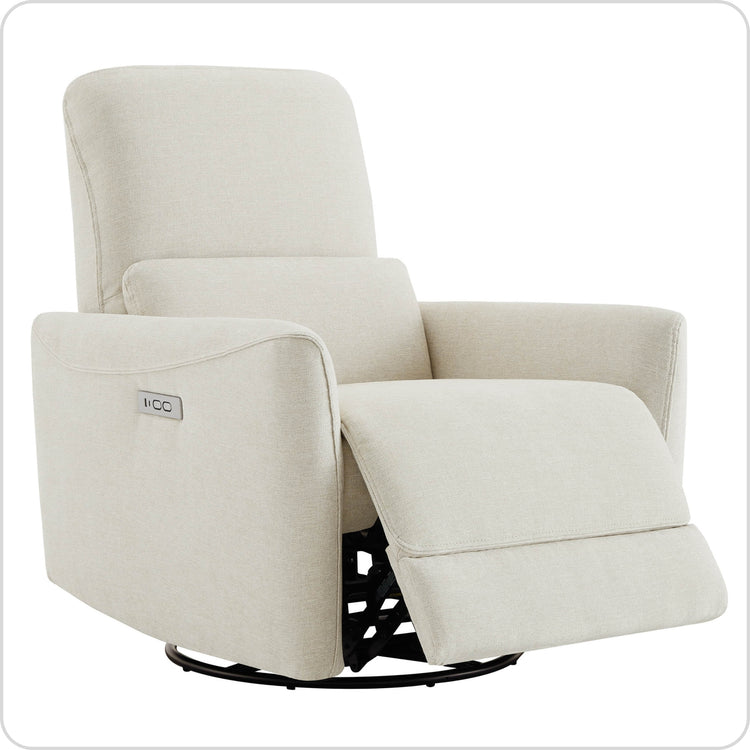
Vinca lists a 21.3-inch seat depth, 22.4-inch seat width, 20.1-inch seat height, 10.6-inch wall clearance, and a recommended seater range of 5 feet 1 inch to 6 feet. Its power headrest, power lumbar support, electric recline, swivel, and glide are listed features, but none proves that the chair will fit a particular body. You can review Vinca dimensions as specification data, not as a tall-parent guarantee.
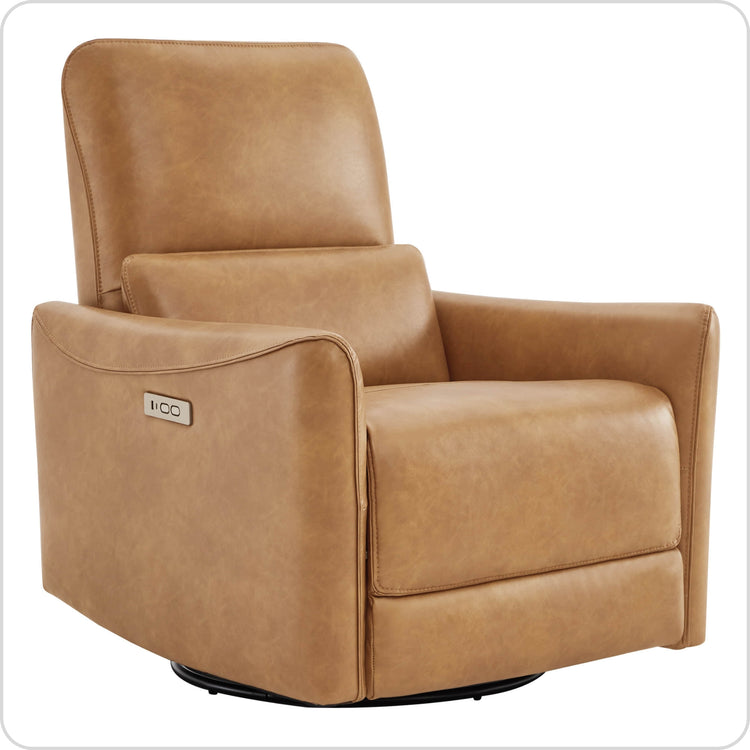
Aurora lists a 22.4-inch seat depth, 20.9-inch seat height, 25.6-inch back height to seat, and 11.4-inch wall clearance. Its power recline, 270-degree swivel, gliding motion, and charging ports may be convenient during repeated position changes, but convenience matters only after body fit and room operation pass. You can see Aurora specifications when building your comparison.
The same caution applies to a listed range that ends lower. Theo's supplied product information lists a recommended height range of 5 feet 1 inch to 5 feet 10 inches. Treat that as a product-specific range, then compare the current dimensions with your seated torso, thighs, feet, arms, and intended positions rather than assuming the range establishes fit.
Run This Nursery Glider Recliner Fit Test Before Checkout
Keep a chair on your shortlist only after it passes the body-fit test, the full operating-footprint check, and the current retailer-term check. Use this order so an attractive online outline does not substitute for a usable nursery setup.
- Compare your seated measurements with the current product page. Match torso, head, thigh, foot, and arm positions against the listed seat, back, arm, and recline information. If a critical usable dimension is missing, mark the fit as unresolved rather than filling the gap with an assumption.
- Test the upright position. Sit as you would during feeding or soothing. Check for supported upper back and head, stable feet, supported thighs, and a natural arm position. Do not use a brief showroom sit as the only test.
- Test the reclined position. Move the back and footrest through the positions you expect to use. Confirm that your head, back, thighs, and feet remain supported and that you do not slide forward or raise your shoulders to hold the baby.
- Measure the operating footprint. Account for the chair while reclined, swiveled, or gliding, not just its upright width and depth. Include walls, the crib, nearby furniture, walkways, and any clearance specified by the product page. Aurora's listed 11.4-inch wall clearance illustrates the kind of model-specific figure to check; it is not a universal requirement for every chair.
- Check delivery and outlet logistics. Measure the narrowest doorway and the route to the nursery. Confirm the package or doorway requirement where supplied, then plan the cord route for a powered model so the outlet is practical rather than an afterthought.
- Review current retailer terms. Before checkout, confirm the live dimensions, included mechanism or adjustment features, delivery timing, warranty, return window, and any current return conditions. Do not assume that one product's terms apply to another.
- Make the buy-or-skip decision. Buy the nursery glider recliner when seated support, room operation, and repeated-use value all pass. Choose a simpler glider or keep shopping when any one of those gates fails.
For tall parents, the clearest answer is conditional: a nursery glider recliner is worth it when it fixes a recurring support problem and works in the room as operated. Measure your seated fit first, then buy only the chair that passes both the body and space checks.
Frequently Asked Questions
What backrest height should a nursery glider have for a tall parent?
There is no supported universal height cutoff. Compare the chair's usable back and head support with your seated torso in upright and reclined positions. If that dimension is missing, treat the fit as unresolved before buying.
Is a power glider recliner better than a manual glider for tall parents?
Choose power when frequent position changes or easier adjustments matter and the room supports the mechanism. Choose manual when the simpler chair already fits and power would add space or outlet requirements without solving a recurring problem.
How can I tell if a nursery recliner seat is too shallow for my legs?
In the intended position, look for unsupported thighs, knees pushed upward, sliding forward, or unstable feet. Compare the published seat depth with a real seated test rather than judging depth from the chair's overall size.
Does a nursery glider recliner need more space than a regular glider?
Plan around the model's operating requirements, not just its upright outline. Check recline, swivel, glide, wall, furniture, doorway, and outlet clearance on the current product page before checkout.
Recommended Products


More to Read
 7 Sofa Trends That Actually Improve Comfort in 2026
Upgrade your living room with furniture that supports your body. Here are 7 modern sofa features designed to maximize your daily comfort...
7 Sofa Trends That Actually Improve Comfort in 2026
Upgrade your living room with furniture that supports your body. Here are 7 modern sofa features designed to maximize your daily comfort...
 Mother's Day Gift Guide: Cozy and Stylish Furniture Picks for Modern Moms
Make Mother's Day more meaningful with furniture gifts that bring comfort, smart features, storage, and quiet luxury into her everyday routine.
Mother's Day Gift Guide: Cozy and Stylish Furniture Picks for Modern Moms
Make Mother's Day more meaningful with furniture gifts that bring comfort, smart features, storage, and quiet luxury into her everyday routine.
 Performance Fabric Reality Check: Does It Really Repel Pet Hair and Stains?
Performance fabric is often marketed as a miracle solution for homes with pets and kids, but the reality is more nuanced. It...
Performance Fabric Reality Check: Does It Really Repel Pet Hair and Stains?
Performance fabric is often marketed as a miracle solution for homes with pets and kids, but the reality is more nuanced. It...