























A compact patio bistro set fits a small balcony only when the table, every chair's full footprint, and the door swing all clear the same measured space at once. Start by mapping that complete layout instead of matching a 24 to 30 inch tabletop label to your balcony's wall-to-wall width. Once the footprint passes, the right table diameter depends on how you'll use it, and the right chair style depends on how you'll store it.

Measure the Balcony Before Comparing Sets
Measure the usable floor area left after railings, posts, and built-in storage, not the outer wall-to-wall width. That number, plus the door swing and chair movement, decides whether any patio furniture sets will actually work here.
- Measure width and depth after boxing out railings, support posts, and any built-in storage.
- Mark the entry door's full open swing and the path you need to reach it comfortably.
- Record each chair's listed width and depth, not just the tabletop diameter, since chairs usually stick out further than the table itself.
- Lay out painter's tape or paper cutouts for the table and every chair, then test pull-out or swivel movement and a storage spot.
- If the balcony also serves as a required accessible route, check the applicable rule before assuming any width is enough. Federal guidance for public accessible routes uses a 36-inch accessible-route reference, which is a stricter benchmark than most private balconies must meet but useful for judging generous clearance.
The set passes only when the table, every chair, the door swing, and a storage spot all fit inside your marked space at the same time. If any piece blocks the door or a required route, reject that configuration and try a smaller table or a different chair style before you shop by size alone.
Choose a 24–30-Inch Round Table by Activity
Start at the smaller end of the 24 to 30 inch range for coffee or occasional seating, since it protects circulation on a tight balcony. Move to the larger end only for everyday dining, and only if your measured layout still leaves a clear path once the chairs are pulled out.
Table diameter alone doesn't set seating capacity. The base style, edge shape, and the exact chairs you pair with it change how much usable space the table actually takes up, so check the product's own dimensions and chair compatibility before assuming a size seats a specific number of people.
| Activity | Better-fit diameter |
|---|---|
| Coffee, drinks, or one occasional guest | 24 to 26 inches |
| Everyday dining for two | 27 to 30 inches, only if the full chair footprint still clears the door and railing |
A pedestal or single-post base can free up legroom compared with four individual legs, but that benefit depends on the specific table, not the diameter category. Confirm the base width and any listed capacity before treating a 30-inch table as a guaranteed two-person dining spot.
Stackable or Tuck-In Chairs: Match Storage to the Balcony
Choose stackable chairs only when the product specifically lists stacking as a feature, and choose tuck-in chairs only when the table base and chair depth leave verified clearance underneath it. Without that confirmation, plan around each chair's full footprint and a separate storage spot instead.
- Stackable chairs work when the listing states a stacking capability and you have a safe place to store the stack, indoors or in a covered area.
- Tuck-in chairs work when the table base, arms, and seat depth leave real clearance beneath or beside the table once pushed in.
- Swivel chairs change how much room you need to enter and exit, but swivel motion by itself doesn't prove a chair stacks or tucks away.
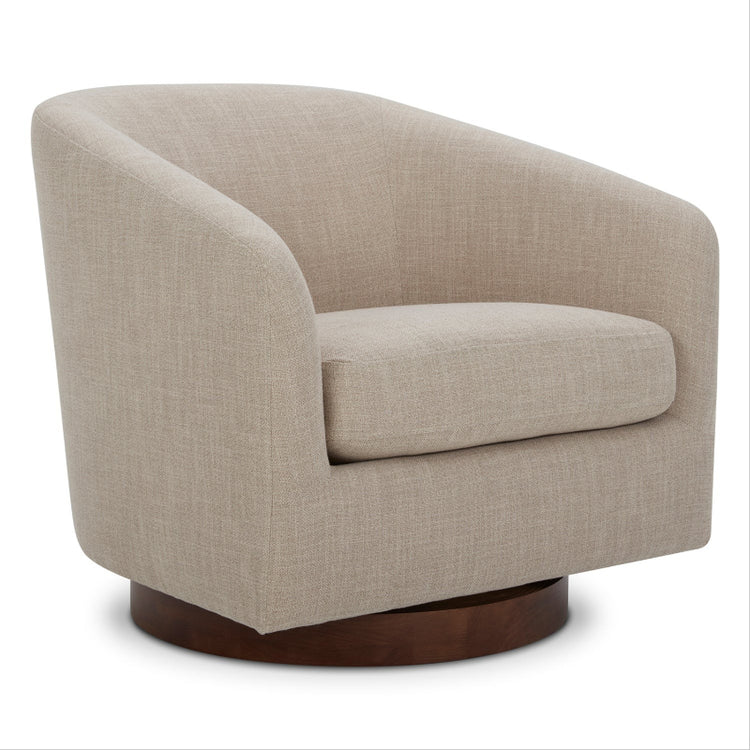
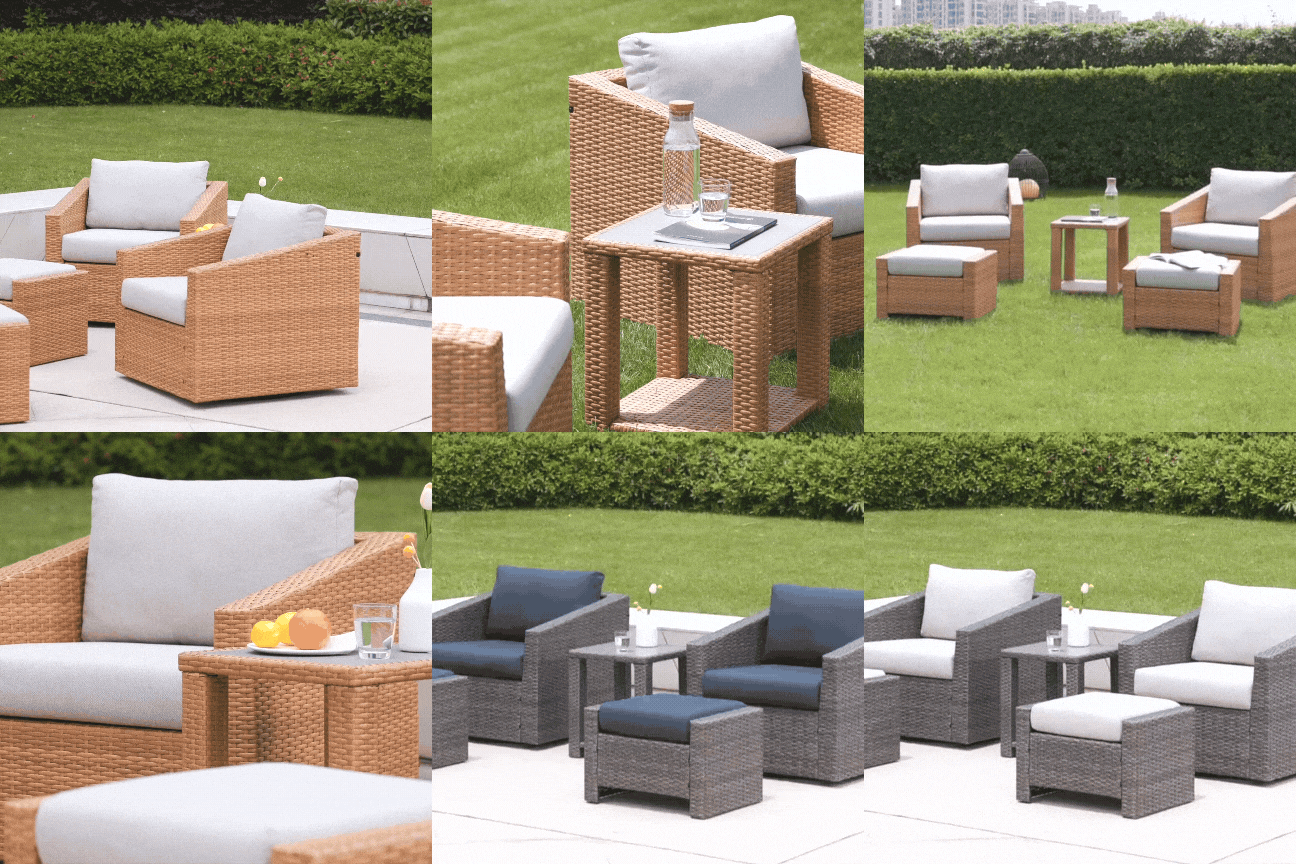
Our Dylan bistro set shows this gap clearly. Its swivel chair measures 30.7 inches wide by 29.5 inches deep with a 360-degree swivel base and a 400-pound weight capacity per seat, but the listing doesn't specify stacking or tuck-under storage. That swivel motion needs its own clearance ring, so budget a separate storage location rather than assuming the chair nests away on its own.
Weather-Resistant Materials Need Product-Specific Proof
A weather-resistant label tells you the material category, not whether this exact chair, cushion, and cover will handle your balcony's actual exposure. Verify the frame metal, woven material, fabric, cushion fill, and care instructions for the specific product before you buy.
Covered balconies still need these checks, since sun and humidity reach covered spaces even when rain doesn't. Uncovered or wind-exposed balconies add a second layer: confirm cover or storage instructions and decide ahead of time where cushions and chairs will go when weather turns.
Our Liana bistro set pairs powder-coated steel and PE resin wicker with machine-washable, water-resistant olefin cushion covers, details worth confirming before you order. Its chairs measure 31.9 inches wide by 33.5 inches deep, though, so recheck that footprint against your balcony before choosing it for a genuinely tight space.
When high winds or a tropical storm are forecast, bring loose furniture indoors or secure balcony furniture before high winds rather than trusting a weather-resistant label to keep it in place on its own.
Run One Condo and Purchase Verification Check
Confirm your property's rules and the product's exact facts before you order, because there's no universal balcony weight limit to fall back on. Building load capacity and placement rules are specific to your property, not a number you can look up generically.
- Read your condo, HOA, or lease rules for balcony furniture placement, anchoring, and storage.
- Verify any balcony load information directly with your property manager or governing documents, not an online estimate.
- Compare the product's listed weight and per-seat capacity with that guidance, treating it as one input rather than a substitute for it.
- Confirm assembled dimensions and delivery-box size against your doorway width so the set can actually get inside.
- Check the return window and warranty terms before ordering.
- Pause and get written confirmation if any rule or load answer stays unclear.
Once those checks are clear, we're glad to help you compare our supported dimensions, materials, and warranty and return terms for the Dylan and Liana bistro sets against your measured balcony.
FAQs
Does a 30-inch round patio table automatically seat two people on a balcony?
No. A 30-inch diameter doesn't set seating capacity on its own. Check the table's stated capacity, the exact chair widths you plan to pair with it, and how much clearance remains once both chairs are in place before assuming it seats two comfortably.
Is weather-resistant balcony furniture safe to leave out in every storm?
No. A weather-resistant material claim describes the fabric or frame, not storm performance. Check the product's own care and cover instructions, and bring loose furniture indoors or secure it whenever high winds or a storm are forecast.
What should I do if my condo rules or the furniture's capacity information is unclear?
Don't guess. Pause the order and get confirmation from your property manager or governing documents on placement and load rules first. Once you have that answer, compare it against the product's listed weight and capacity information before you buy.
Sources
- National Weather Service. Tropical Preparedness.
- National Weather Service. High Wind Safety Rules.
- U.S. Department of Justice. 2010 ADA Standards for Accessible Design.
Recommended Products


More to Read
 7 Sofa Trends That Actually Improve Comfort in 2026
Upgrade your living room with furniture that supports your body. Here are 7 modern sofa features designed to maximize your daily comfort...
7 Sofa Trends That Actually Improve Comfort in 2026
Upgrade your living room with furniture that supports your body. Here are 7 modern sofa features designed to maximize your daily comfort...
 Mother's Day Gift Guide: Cozy and Stylish Furniture Picks for Modern Moms
Make Mother's Day more meaningful with furniture gifts that bring comfort, smart features, storage, and quiet luxury into her everyday routine.
Mother's Day Gift Guide: Cozy and Stylish Furniture Picks for Modern Moms
Make Mother's Day more meaningful with furniture gifts that bring comfort, smart features, storage, and quiet luxury into her everyday routine.
 Performance Fabric Reality Check: Does It Really Repel Pet Hair and Stains?
Performance fabric is often marketed as a miracle solution for homes with pets and kids, but the reality is more nuanced. It...
Performance Fabric Reality Check: Does It Really Repel Pet Hair and Stains?
Performance fabric is often marketed as a miracle solution for homes with pets and kids, but the reality is more nuanced. It...