
















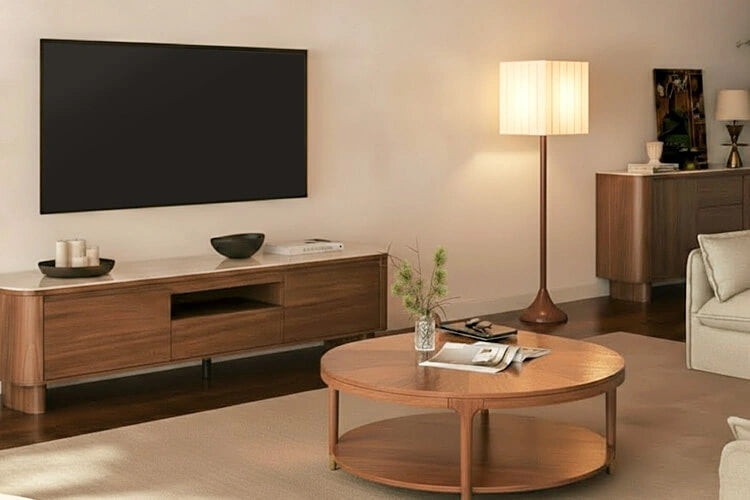










Sideboard vs. TV Stand: Which Storage Piece Is Right for Your Room?

If your television and streaming gear are the main job in the room, start with a TV stand or media console built for that purpose. If you need flexible, concealed storage that can also work in a dining room or entryway, a sideboard stays in the running, but only if the exact model you pick can safely and physically support your TV. Neither label guarantees the other job. The right answer depends on your room's dominant task, the specific product's documented capacity and dimensions, and how the finished screen height lines up with your seated eye level.

Sideboard or TV Stand: The Short Answer
Start with the room's dominant job, not the furniture name on the listing. A television-centered room points toward a TV stand or media console; a storage-first room keeps a sideboard on the table.
Choose the TV-First Path When Media Use Dominates
When the television, streaming box, game console, and sound bar are the room's central task, lead with a TV stand or media console. Prioritize models whose listings document TV support, equipment access, and cable features, then verify those details for the exact model before you buy.
Keep a Sideboard in Consideration When Storage Must Do More
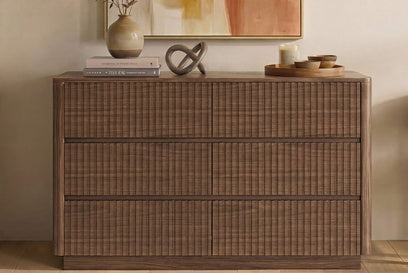
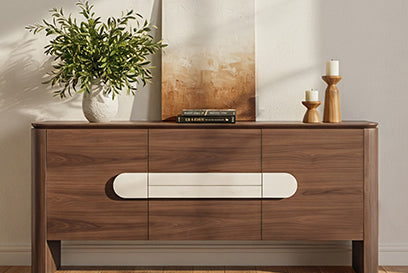
A sideboard earns a spot on your shortlist when concealed general storage, dining-room linens, or an entryway catch-all matter as much as the TV. Keep the choice conditional and use the TV-fit checks below before placing a TV on it.
What Each Piece Is Built to Do
A sideboard, TV stand, and media console are usually chosen for different jobs, even though all three can look similar in a showroom photo. The table below compares the role each piece is meant to play and flags which details still depend on the exact product you're considering.
| Piece | Primary Job | TV Support Status | Choice Implication |
|---|---|---|---|
| Sideboard | General concealed storage; dining, entry, or living room versatility | Not assumed; verify per model | Keep only if the specific product passes a TV-fit check |
| TV stand | Television display and basic equipment storage | Verify per model | Investigate models with documented TV support and the media features you need |
| Media console | Television display plus equipment storage | Verify per model | Investigate models whose listings document the required equipment and cable features |
This table is a starting map, not a guarantee. Height, cable openings, and ventilation still depend on the specific product listing, so treat every row as a lead worth checking rather than a settled fact.
Which Room Scenario Should Drive the Choice?
Match your room's real constraints to one of three common scenarios before you shop by style alone. Each path favors a different starting point, and one condition can move you to the other option.
Dedicated Media Setup
If your TV, streaming devices, a game console, and a sound bar are the main equipment in the room, start your search with a TV stand or media console. Our TV stand buying guide walks through sizing for larger screens and cable routing, which matters most in an equipment-heavy setup. Still verify the exact model's stated capacity and cable openings rather than assuming every media console handles the same gear.
Multipurpose or Open-Plan Storage
If the piece needs to hold table linens, serveware, or general household items, and might move to another room later, a sideboard can be the stronger long-term pick. For TV use, apply the TV-fit sequence in the next section before making the switch.
An Existing Sideboard You Already Own
If you already own a sideboard and want to repurpose it, treat it as a candidate to test, not an automatic TV stand. Test it against the next section before changing the setup. If a required specification cannot be confirmed, keep the TV off that piece and look at a stand designed for the job instead.
Can a Sideboard Be Used as a TV Stand?
Yes, but only after the specific sideboard passes a short support-and-fit sequence. Looks and sturdiness on their own don't prove a piece is TV-ready.
Run the TV-Support Check Before the Style Check
Confirm these three things in order before you consider a sideboard for your TV:
- Check whether the product is designed or documented as suitable for holding a television. The CPSC's AnchorIt guidance states that televisions should only be placed on furniture designed to hold a television, such as TV stands or media centers, and that non-wall-mounted TVs should still be anchored and secured following manufacturer instructions.
- Match your TV and equipment's dimensions and weight against the product's listed surface capacity and footprint.
- Follow both the TV manufacturer's and the furniture's instructions for stability and anchoring; stop and choose another solution if either set of instructions can't be followed as directed.
Plan your cable and equipment routes before you order. A cable-management feature on one sideboard doesn't mean another model has it.
Use Product Specs as Examples, Not Category Rules
Listed specifications vary widely between individual sideboards and TV consoles, so treat the following as illustrations of what to check, not category averages.
| Model | Dimensions (W x D x H) | Surface/Weight Capacity | Documented Cable Feature |
|---|---|---|---|
| Bowen sideboard specifications | 61.4" x 15.7" x 34.5" | 66 lbs surface capacity | Not documented |
| Clara sideboard specifications | 62.2" x 15.7" x 31.5" | 110 lbs surface capacity | Concealed cable-management holes |
| Aaron TV console specifications | 78.74" x 15.75" x 17.72" | 400 lbs weight capacity | Rear cable port |
These three models show why a listed capacity or cable feature on one product can't be assumed for another. Clara lists a 110-pound surface capacity, while Aaron lists a 400-pound weight capacity and a rear cable port. Those differences illustrate why you should check the exact listing for your candidate piece rather than infer compatibility from its category or capacity alone.
How to Choose Sideboard or TV Stand Height
There is no single ideal height that works for every sideboard or TV stand. The measurement that actually matters is where the screen's center lands relative to your seated eye level.
Use the Screen-Center Check
Test the finished setup before you commit to a height:
- Sit in the seat where you normally watch TV.
- Note your seated eye level, then compare it with where the center of the screen will land once the TV sits on the furniture.
- Judge the complete setup, including the TV's own height above its base and the furniture's installed height, not just the furniture alone.
Why a Universal Furniture Height Does Not Work
Sofa height, your usual seating posture, screen size, and whether the TV will be raised or wall-mounted all change where the screen ends up. Ergonomic guidance for flat-panel televisions recommends setting the display so the viewer's eyes sit level with the screen's center, a relationship that the Japan Ergonomics Society's screen-height guideline reports holds regardless of screen size or viewing distance. That's a relationship to check on your own furniture and seating, not a fixed inch measurement to shop for.
Final Decision Checklist Before You Buy
Use these six checks to decide whether the piece belongs in your cart.
- Room location: Confirm that the piece fits its intended room and any future move. If it does not, choose another piece.
- TV and furniture dimensions: Match the TV's width, weight, and stand footprint to the product's listed limits. If they do not match, do not add it to your cart.
- Storage contents: Make sure the storage fits your linens, media gear, or other intended items. If it does not, choose a better storage match.
- Equipment and cables: Confirm that your streaming box, console, and sound bar have the documented access and cable route they need. If not, choose a model with the required features.
- Viewing comfort: Check the finished screen position from your normal seat. If it feels too high or low, adjust the setup or keep shopping.
- Style and versatility: Decide whether the piece suits the room now and any future room it may serve. If not, choose the option with the better long-term fit.
If all six checks pass, choose the TV stand or media console when media use leads, choose the sideboard when storage flexibility leads, or keep shopping when neither option fits. Our guide to TV stands with cable management can help when cable access is the deciding gap.
The short version is simple: choose a TV stand or media console for a media-first room when the exact model documents the support and access you need. Choose a sideboard when flexible storage leads and the exact model passes the TV-fit checks. If neither path meets those conditions, keep shopping.
FAQs
Can a sideboard be used as a TV stand?
Yes, but only if the exact sideboard is designed or documented as suitable for holding a TV, has enough listed capacity and matching dimensions, stays stable, allows practical cable and equipment access, and is secured as directed. Looks alone don't confirm compatibility.
What height should a TV stand or sideboard be for comfortable viewing?
There's no single furniture height that fits every room. From your normal seat, check whether the screen's center lands close to your seated eye level, then account for the TV's own height and the furniture's installed height together.
When is a media console or TV stand the better choice?
Choose a TV stand or media console when documented TV support, equipment access, or cable routing is your main requirement. Choose a sideboard when broader concealed storage or reuse in another room matters more, provided the exact model passes the TV-fit check.
What should I check before buying a sideboard for my TV?
Measure your wall space, walking clearance, TV, furniture footprint, and equipment first. Then confirm the product's listed capacity, TV-support instructions, cable access, and how the final screen position lines up with your seated eye level.
Recommended Products


More to Read
 7 Sofa Trends That Actually Improve Comfort in 2026
Upgrade your living room with furniture that supports your body. Here are 7 modern sofa features designed to maximize your daily comfort...
7 Sofa Trends That Actually Improve Comfort in 2026
Upgrade your living room with furniture that supports your body. Here are 7 modern sofa features designed to maximize your daily comfort...
 Mother's Day Gift Guide: Cozy and Stylish Furniture Picks for Modern Moms
Make Mother's Day more meaningful with furniture gifts that bring comfort, smart features, storage, and quiet luxury into her everyday routine.
Mother's Day Gift Guide: Cozy and Stylish Furniture Picks for Modern Moms
Make Mother's Day more meaningful with furniture gifts that bring comfort, smart features, storage, and quiet luxury into her everyday routine.
 Performance Fabric Reality Check: Does It Really Repel Pet Hair and Stains?
Performance fabric is often marketed as a miracle solution for homes with pets and kids, but the reality is more nuanced. It...
Performance Fabric Reality Check: Does It Really Repel Pet Hair and Stains?
Performance fabric is often marketed as a miracle solution for homes with pets and kids, but the reality is more nuanced. It...