






















Storage Needs Layout Ideas with coffee tables

Choose the storage role before you choose the coffee table. In a compact room, protect circulation and keep small essentials contained. In an open-concept room, use the table to anchor the seating zone without blocking routes or sightlines. In a family room, keep daily-use items in the easiest-to-reach compartment and contain the rest. In every case, test the footprint and opening movement with your existing furniture before comparing products.

Which Storage Coffee Table Layout Fits Your Room?
Start with the room constraint that fails first: blocked circulation, unclear zoning, or inconvenient daily access. Let that constraint determine the layout; consider shape, finish, and styling afterward.
| Room situation | Layout priority | Storage direction and placement caution |
|---|---|---|
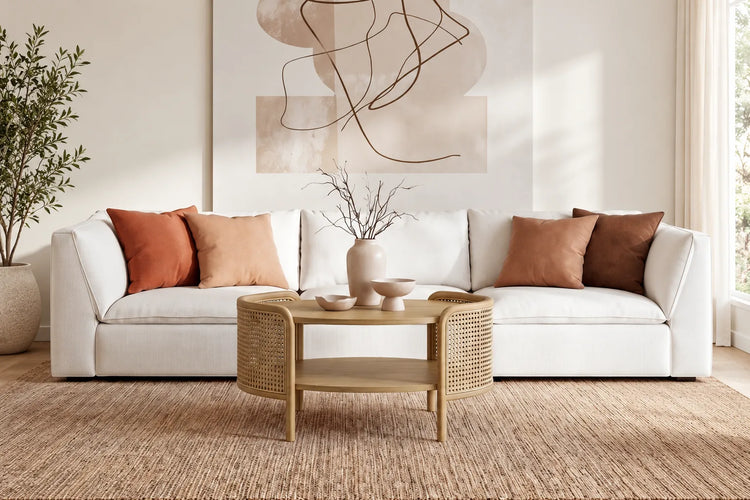
| Compact studio or small living room | Protect the usable footprint and main walking paths. A round shape may be worth testing if its footprint works with the seating. | Consider contained storage for small everyday items, but do not assume hidden storage or a round table will fit. Use this compact-room layout example as a starting point; the marked footprint decides. |
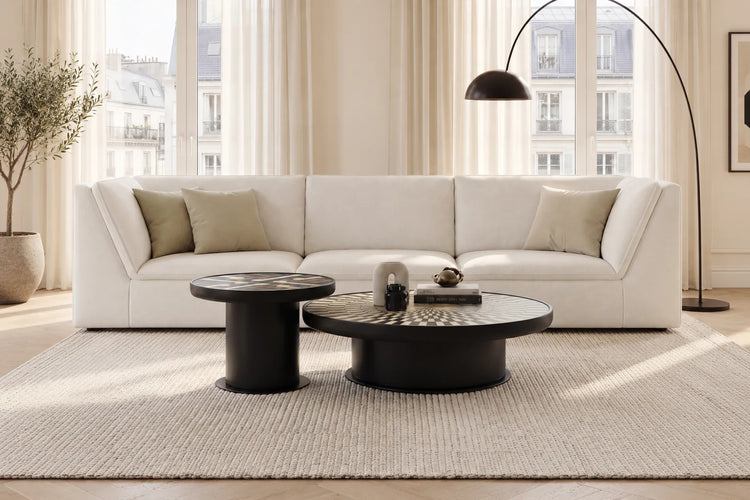
| Open-concept or spacious living room | Place the table within the sofa-and-chair grouping so it helps define the living zone while keeping routes and sightlines open. | Use storage furniture as part of the seating zone, not as an obstacle between zones. Test whether the table anchors the grouping without interrupting movement through the larger room. |
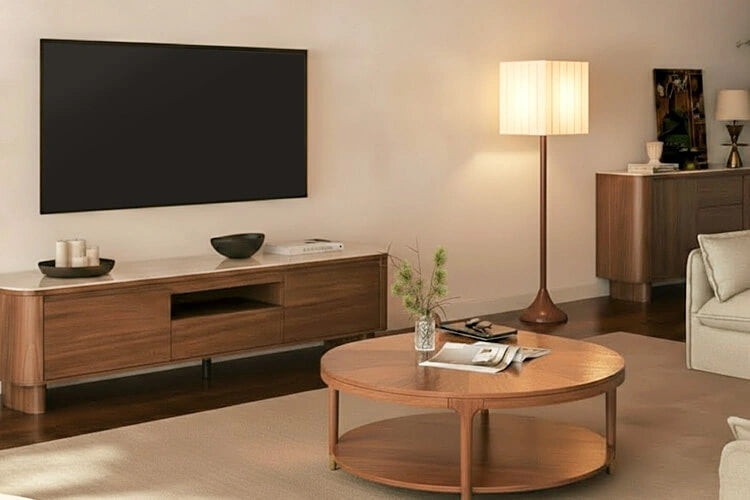
| Family living room | Balance quick access to frequently used items with containment for clutter that should stay off the visible surface. | Keep daily-use storage reachable from the primary seats. Test drawers, shelves, lids, or other openings during a busy routine so access does not conflict with seating or nearby furniture. |
For an appearance-first refresh, treat style as the final layer. Once circulation and access work, choose a shape that follows the room's geometry and concealed storage that blends into the setting rather than looking like a separate organizer. Appearance can guide your styling choice, but it does not establish that a table fits the room.

How Do You Test a Coffee Table Placement Before Buying?
Start by marking the proposed footprint with removable household items while the sofa and chairs remain where you use them. This turns a product-page image into a room test. Approve the footprint only after people can move, sit, and use the storage without awkward contact or blocked access.
- Mark the candidate length and width on the floor with painter's tape, boxes, or other removable items. Include the full footprint, not just the top visible in a product image.
- Walk the entry, exit, seating, and busiest household routes. Include the path to a door, adjacent seating, or another zone. If you have to sidestep or shuffle, revise the footprint or seating before evaluating storage.
- Sit in the primary seats and reach toward the proposed storage location. Then imitate the complete movement for each format you are considering: pull a drawer, reach into a shelf, raise a lid, or open a lift-top or cavity.
- Look for collisions with chair legs, the sofa, doors, and nearby furniture. The closed table may appear workable while an open drawer or raised top makes the access side unusable.
- View the staged layout from the room's main sightlines. In an open room, check whether the table supports the seating zone rather than drifting into a walkway. Repeat the test during a busy routine before carrying the approved requirements to a product page.
This walk-through follows the practical advice to walk the proposed layout before committing. Use common planning references as starting points, not pass-or-fail rules: roughly 14 to 18 inches from sofa to table and about 30 inches for a main walking route. Actual furniture geometry, door locations, personal movement, and storage-opening motion determine the result.
Which Storage Access Fits What You Keep Nearby?
Match the mechanism to household behavior. The easiest access from the primary seats belongs to items used every day; less frequent items can use storage that takes more effort to open or is intentionally concealed. Compare drawers, shelves, lift-tops, and cavities by access, visibility, and opening space rather than treating one format as universally better.
Choose Easy-to-Reach Storage for Daily-Use Items
Open shelves suit items that need visible, quick access, such as a book or a frequently used accessory. Reachable drawers keep remotes and similar essentials contained while leaving the tabletop clearer. The best choice is the one you can reach from the primary seats without moving the table or interrupting a route.
A lift-top or cavity can keep items nearby while changing how the surface is used, but test the raised or extended position. Check the entire opening movement against seating, doors, and nearby furniture. Do not assume that a closed feature remains convenient when it is open. These storage access comparisons can help you identify the mechanism to test, but the room test remains decisive.
Choose Concealed Storage for a Calmer Room
Concealed drawers or compartments suit remotes, books, and other everyday essentials when you want a less visibly crowded surface. Reserve the easiest concealed access for items used often; place occasional-use items in a compartment that requires more deliberate opening only when that tradeoff is acceptable.
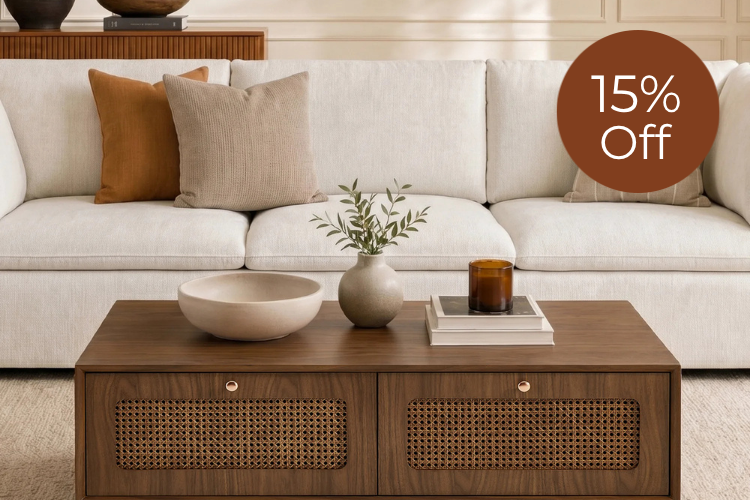
The Vanessa Cube with two hidden drawers has two hidden drawers, opposite-side access, rounded corners, and listed dimensions of 39.37 by 39.37 by 11.81 inches. The Lamont concealed-drawer coffee table has one concealed drawer, rounded edges, and listed dimensions of 39.4 by 39.4 by 12.6 inches. These product details describe the examples; they do not establish storage capacity, operating clearance, or compatibility with a particular room.
If access frequency and visual preference conflict, prioritize the compartment you can reach from the primary seat without moving the table. Then use concealed storage for less frequent items. This keeps organization tied to real household behavior instead of appearance alone.
What Should You Verify on a Storage Coffee-Table Product Page?
Carry the approved footprint from the room test to the product page. Compare the product's listed overall length, width, and height with that footprint, then verify how every storage feature opens. Do not judge scale, clearance, or compatibility from a product photograph alone.
First, compare the table's dimensions with the taped footprint and the existing sofa and chairs. Use the sofa length and seat height as scale references. Roughly two-thirds of the sofa length and a table level with or slightly below the seat can serve as starting points, but they are not standards. The coffee-table scale guidance still needs to be tested against your room's geometry and movement.
Next, check the shape against the seating arrangement and routes. A square, round, or curved outline may change how people approach the seats, but no shape can be approved without the actual footprint test. In a compact room, a shape that appears efficient on paper may still interfere with a door or the route to a chair.
Finally, verify the access details that affect the approved layout: drawer position and pull movement, shelf reach, lid or lift-top travel, cavity opening, and the side from which each compartment is intended to be used. If the product page does not state the dimensions or operating details needed for your approved layout, treat that information as unresolved rather than claiming compatibility. Add a candidate to your cart only when its listed dimensions and access movement match the tested footprint.
FAQs
These questions apply the same room test and storage-behavior choices to common planning situations.
1. Can storage furniture work in a small living room without feeling crowded?
It can work when the marked footprint preserves the main routes and the storage opening remains usable from the seating. Test the table with existing furniture before choosing a round shape, concealed compartment, or any specific product.
2. How can the table help define an open-concept living room?
Place it inside the sofa-and-chair grouping so the table supports a recognizable living zone. Keep routes and important sightlines open, then adjust the grouping if the table pulls people into a walkway or separates the seating from the rest of the room.
3. Which storage type suits items I reach for every day?
Use the easiest access available from the primary seats. A reachable drawer or visible shelf may suit daily essentials, while a concealed compartment can hold less frequently used items when opening it does not disrupt movement.
4. What is the first thing to do before ordering?
Mark the proposed footprint with removable items, walk the routes, and test the storage movement in place. Carry the approved length, width, height, shape, and access requirements into product-page comparisons before ordering.
Recommended Products

More to Read
 7 Sofa Trends That Actually Improve Comfort in 2026
Upgrade your living room with furniture that supports your body. Here are 7 modern sofa features designed to maximize your daily comfort...
7 Sofa Trends That Actually Improve Comfort in 2026
Upgrade your living room with furniture that supports your body. Here are 7 modern sofa features designed to maximize your daily comfort...
 Mother's Day Gift Guide: Cozy and Stylish Furniture Picks for Modern Moms
Make Mother's Day more meaningful with furniture gifts that bring comfort, smart features, storage, and quiet luxury into her everyday routine.
Mother's Day Gift Guide: Cozy and Stylish Furniture Picks for Modern Moms
Make Mother's Day more meaningful with furniture gifts that bring comfort, smart features, storage, and quiet luxury into her everyday routine.
 Performance Fabric Reality Check: Does It Really Repel Pet Hair and Stains?
Performance fabric is often marketed as a miracle solution for homes with pets and kids, but the reality is more nuanced. It...
Performance Fabric Reality Check: Does It Really Repel Pet Hair and Stains?
Performance fabric is often marketed as a miracle solution for homes with pets and kids, but the reality is more nuanced. It...