























Sleek and Grounded: Why Low-Profile Media Consoles Are the Ultimate Minimalist Choice
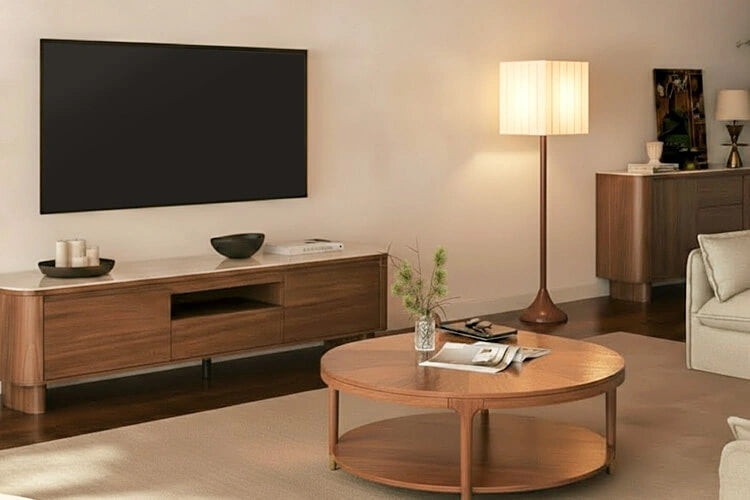
A low-profile media console brings visual lightness to modern and Japandi living rooms by keeping the furniture scale restrained while still delivering practical storage and cable organization. When chosen with the right proportions, materials, and features, it anchors the TV wall without making the space feel bulky or cluttered.

Why Low-Profile Proportions Matter Visually in Minimalist Rooms
Low-profile media consoles help a room feel visually lighter because proportion and scale shape how furniture reads in the space, according to design fundamentals from UC Berkeley. In minimalist interiors, tall or deep cabinets often compete with the room's clean lines and create a "heavy" footprint. By contrast, a console that sits low to the ground and extends horizontally maintains an open sightline across the room.
This approach relies on the designer's heuristic of "visual breathing room." By keeping the furniture height low, you maximize the negative space on the wall, which is a core tenet of Japandi and contemporary design. This is particularly effective in small apartments or open-plan areas where preserving a lighter visual footprint prevents the room from feeling cramped.
How to Choose Size, Height, and Wall-to-Screen Proportion
Getting the dimensions right is essential for both comfort and aesthetics. As NIH ergonomics guidance explains, height and placement should support comfortable viewing angles rather than forcing the screen too high or too low.
While individual needs vary based on your specific furniture, a common starting point for a low-profile aesthetic is a console body height of approximately 18 inches or lower. For visual balance, many designers suggest selecting a console that is roughly 20 to 30 percent wider than the TV screen. This proportion helps the furniture feel grounded and prevents the TV from looking "top-heavy."
Note: These figures are illustrative guidelines. Your final choice should be based on a precise measurement of your screen’s center height relative to your seated eye level and the depth of your media equipment.
The following chart illustrates these planning guidelines for common TV sizes.
| TV Size (Diagonal) | Suggested Console Width (Starting Range) | Suggested Console Height (Illustrative) |
|---|---|---|
| 55" | 55" – 62" | 12" – 18" |
| 65" | 65" – 75" | 12" – 18" |
| 75" | 75" – 85" | 10" – 16" |
Values are illustrative heuristics for visual planning and do not replace personal measurements of seating height and device depth.
Low-Profile Console Fit by TV Size
Recommended proportions for a low-profile media console relative to common TV sizes. Values are illustrative planning ranges, not fixed product measurements.
View chart data
| Category | TV Screen Width (in) | Recommended Console Width (in) | Low-Profile Console Height (in) |
|---|---|---|---|
| 55in TV | 48.0 | 58.0 | 16.0 |
| 65in TV | 57.0 | 69.0 | 18.0 |
| 75in TV | 66.0 | 80.0 | 20.0 |
When the TV is wall-mounted, the setup can feel even less imposing. However, always verify that the screen center aligns with your seated eye level to avoid neck strain.

Avoiding Common Mistakes: Why Some Minimalist Setups Feel "Heavy"
Even a "slim" console can look cluttered if the proportions or details are off. Here are common pitfalls and how to correct them:
-
The "Top-Heavy" Look: Choosing a console that is the same width as (or narrower than) the TV.
- Correction: Ensure the console extends at least several inches beyond the TV edges to create a stable visual base.
-
Excessive Depth: Using a console that is 20+ inches deep in a narrow room.
- Correction: Aim for a shallower profile (14–16 inches) if your equipment allows, which preserves floor space.
-
Visible Cable Chaos: Exposed wires breaking the clean horizontal lines of the console.
- Correction: Prioritize models with integrated cable management or use wall-mounted raceways.
-
Open-Shelf Overload: Filling every open compartment with mismatched items.
- Correction: Use a "70/30 rule"—keep 70% of storage hidden behind doors or drawers and use the remaining 30% for curated, intentional display.
Comparing Hidden Storage, Open Shelving, and Cable Management
The right console balances concealed storage and cable organization to reduce visible clutter. Many modern consoles combine drawers, open compartments, and rear cutouts to manage devices, which is essential for maintaining a minimalist "zen."
- Hidden Drawers: Best for remotes, manuals, and small media players you want out of sight.
- Open Shelving: Offers easy access for frequently used devices but requires careful editing to avoid a messy look.
- Cable Management: Rear cutouts or internal channels are non-negotiable in minimalist rooms where exposed cords immediately disrupt the aesthetic.
Low-profile does not have to mean storage-poor. By choosing designs with efficient internal dividers, you can often fit the same amount of gear as a taller, bulkier unit without the visual weight.
Material and Finish Choices for Japandi and Modern Interiors
Minimalist-friendly consoles usually rely on clean lines and restrained finishes. Light oak, ash, or walnut finishes blend seamlessly with Japandi palettes, while matte neutral tones (whites, greys, or blacks) support a more industrial modern look.
Material choices should prioritize "visual quiet." Avoid high-gloss surfaces that reflect TV glare harshly or busy, high-contrast wood grains that draw too much attention. Instead, look for matte or lightly textured woods that add warmth without noise. Metal bases or "floating" wall-mount designs can further enhance the sense of airiness by exposing more of the floor underneath the unit.
How to Choose the Right Low-Profile Media Console for Your Space
To ensure a successful setup, follow these practical steps:
- Measure the "Golden Triangle": Measure your TV width, your seating distance, and the height of your eyes when seated. The goal is to have the middle of the TV screen at or slightly below eye level.
- Audit Your Gear: List every device (receivers, consoles, routers). Ensure the internal shelf depth of the console can accommodate your largest piece of equipment.
- Check the Wall Ratio: In small rooms, a floating-style console helps maintain openness. In larger rooms, a grounded, extra-wide console (80+ inches) can act as a sophisticated architectural anchor.
- Verify Cable Paths: Look for models with "pass-through" holes between internal compartments, not just a single hole in the back. This allows you to run wires between devices internally.
Finally, match the finish to your existing palette. A slim TV stand in light wood can unify a Japandi scheme, while darker tones add grounding contrast in modern interiors. Focus on proportion first, then storage functionality, and finally the aesthetic finish to ensure the piece feels like a natural extension of your home.
This article discusses design and ergonomic setup advice for living spaces; it does not constitute medical advice. If you experience persistent eye strain, consult a qualified professional.
FAQs
What height should a low-profile media console be? A common target is 18 inches or lower. However, the "correct" height is whatever keeps the center of your TV at seated eye level. If you have a very large TV (75"+), you may need an even lower console (10–12 inches) to prevent the screen from being too high.
Can a low-profile console provide enough storage? Yes, if the design prioritizes horizontal width over vertical height. Look for models with deep drawers or wide cabinets. If you have bulky AV receivers, check the internal clearance dimensions specifically, as some ultra-slim models may be too shallow.
Should I wall-mount the TV or use a low-profile console? Wall-mounting creates the most "airy" look, but a low-profile console is often still necessary to hide wires and house hardware. Many minimalist setups combine both: a wall-mounted TV with a floating console underneath for a clean, floor-free aesthetic.
What materials work best for Japandi or Minimalist TV stands? Natural, matte-finished woods like oak and walnut are staples. For a more modern edge, consider matte lacquered finishes or consoles with slim metal legs that "lift" the piece off the ground visually.
How wide should a minimalist TV stand be relative to the TV? Aim for the console to be at least 20% wider than the TV. This creates a balanced "pedestal" effect. If the console is the same width as the TV, the setup can feel unstable and cramped.
Do low-profile consoles work well in small living rooms? They are often the best choice for small spaces. Because they sit lower, they leave more wall space visible, which tricks the eye into perceiving the room as larger and less cluttered.
Recommended Products

More to Read
 7 Sofa Trends That Actually Improve Comfort in 2026
Upgrade your living room with furniture that supports your body. Here are 7 modern sofa features designed to maximize your daily comfort...
7 Sofa Trends That Actually Improve Comfort in 2026
Upgrade your living room with furniture that supports your body. Here are 7 modern sofa features designed to maximize your daily comfort...
 Mother's Day Gift Guide: Cozy and Stylish Furniture Picks for Modern Moms
Make Mother's Day more meaningful with furniture gifts that bring comfort, smart features, storage, and quiet luxury into her everyday routine.
Mother's Day Gift Guide: Cozy and Stylish Furniture Picks for Modern Moms
Make Mother's Day more meaningful with furniture gifts that bring comfort, smart features, storage, and quiet luxury into her everyday routine.
 Performance Fabric Reality Check: Does It Really Repel Pet Hair and Stains?
Performance fabric is often marketed as a miracle solution for homes with pets and kids, but the reality is more nuanced. It...
Performance Fabric Reality Check: Does It Really Repel Pet Hair and Stains?
Performance fabric is often marketed as a miracle solution for homes with pets and kids, but the reality is more nuanced. It...