










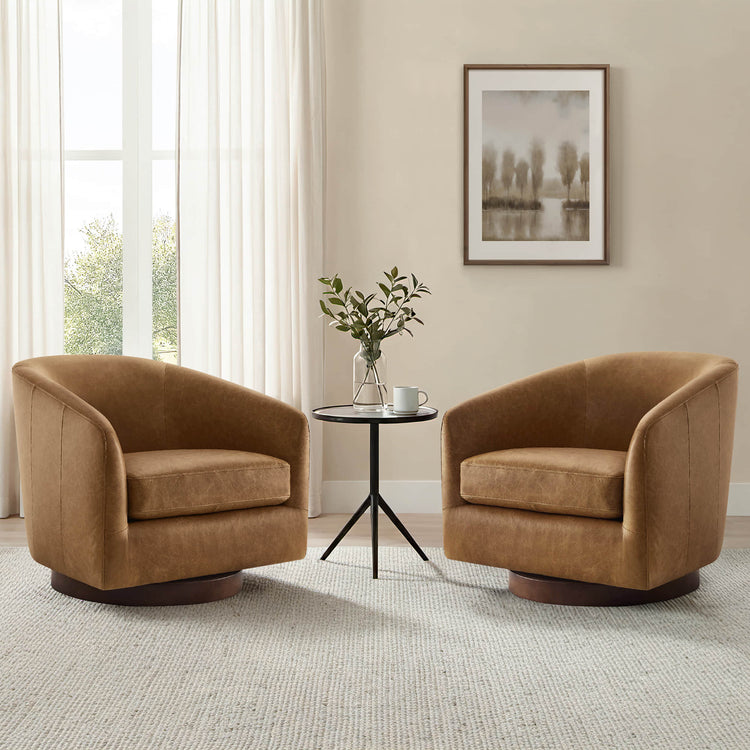
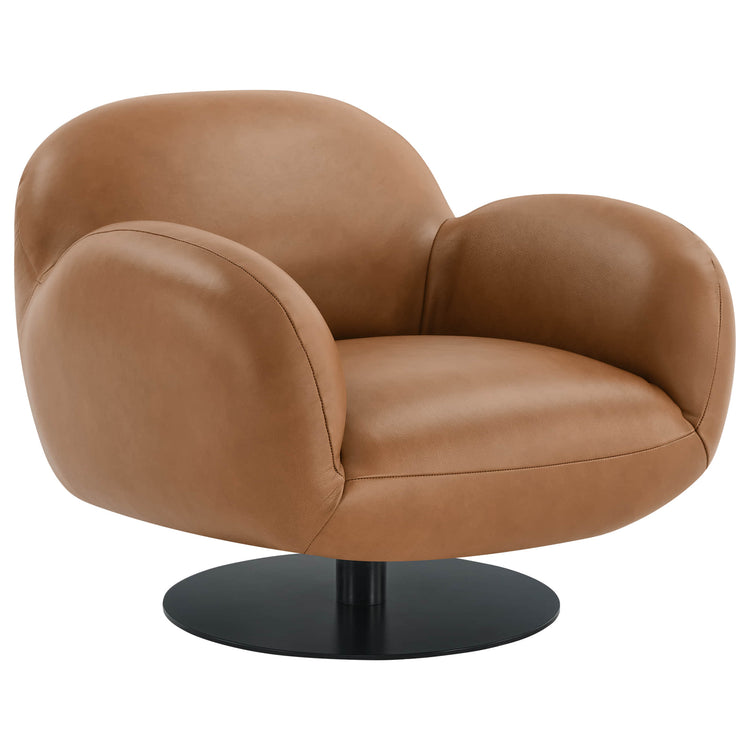
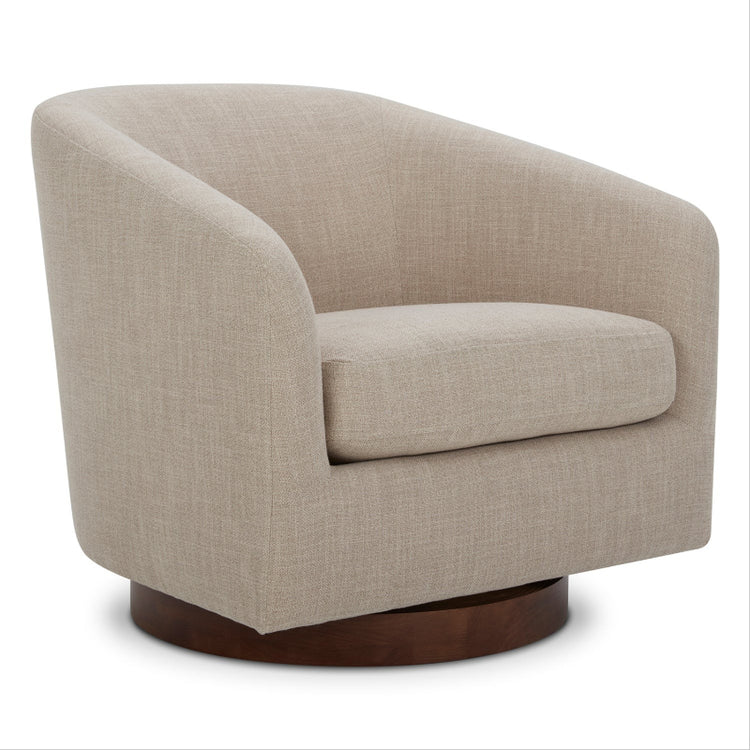

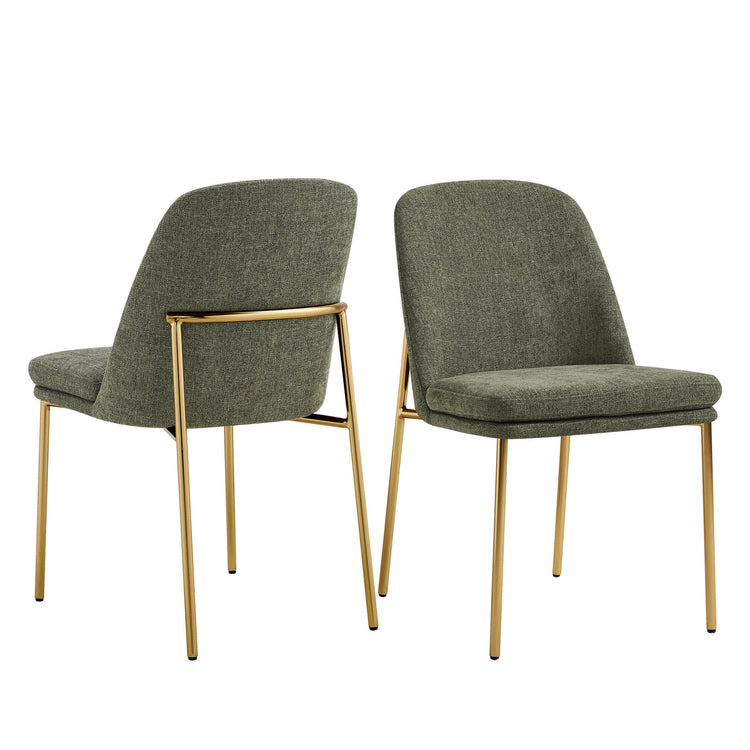











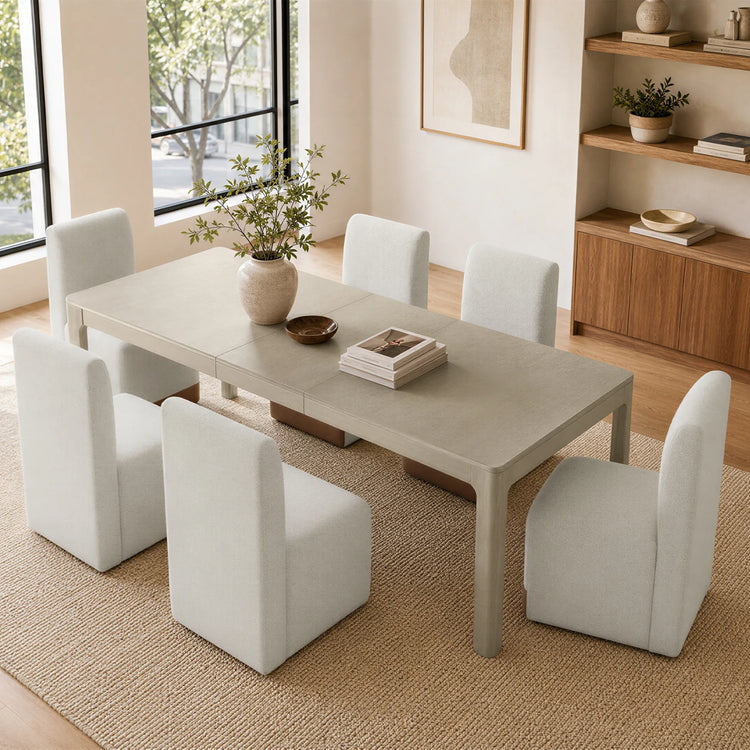
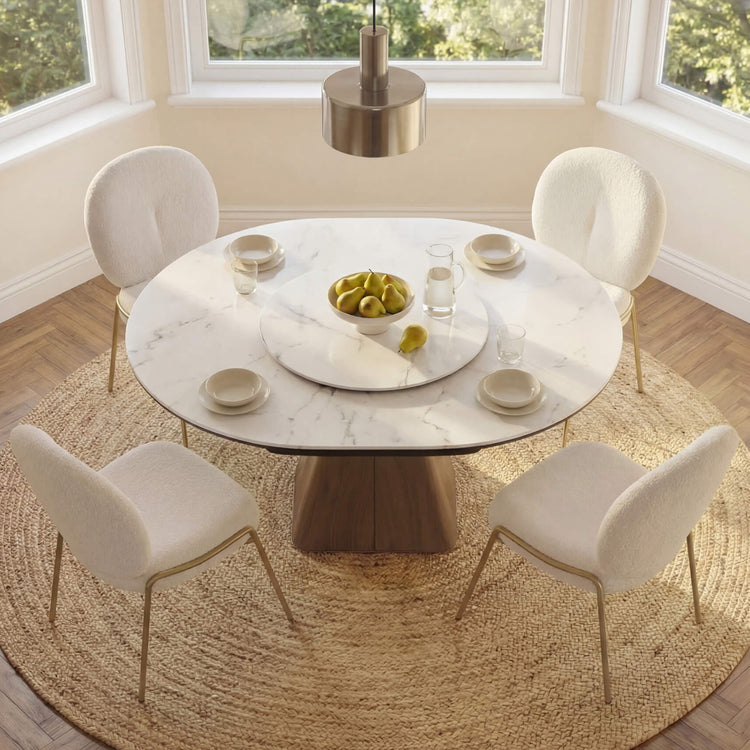

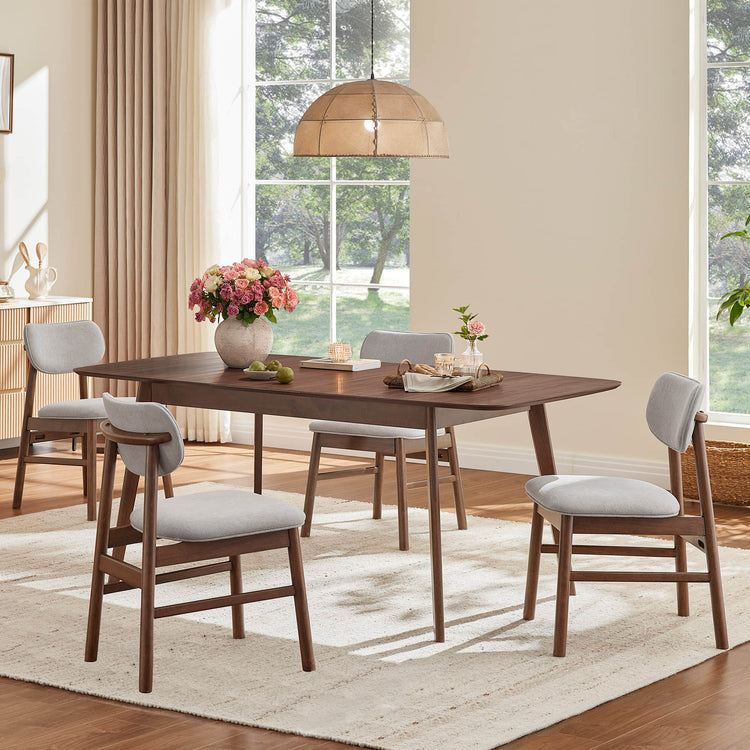
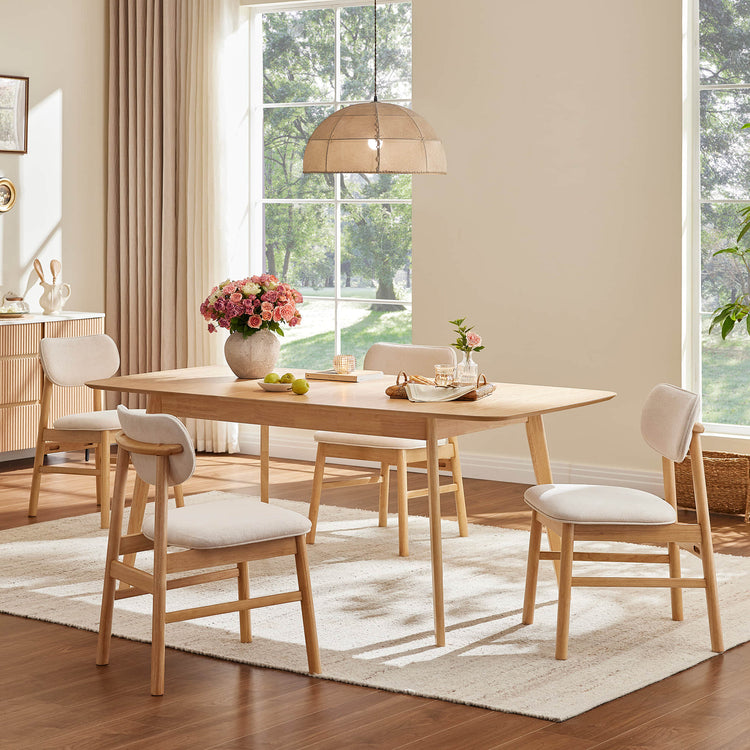
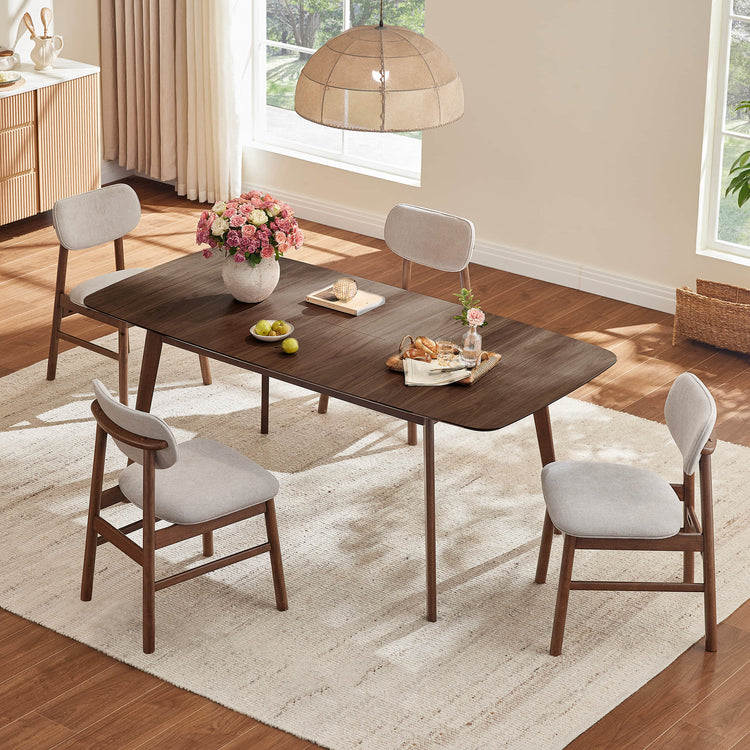


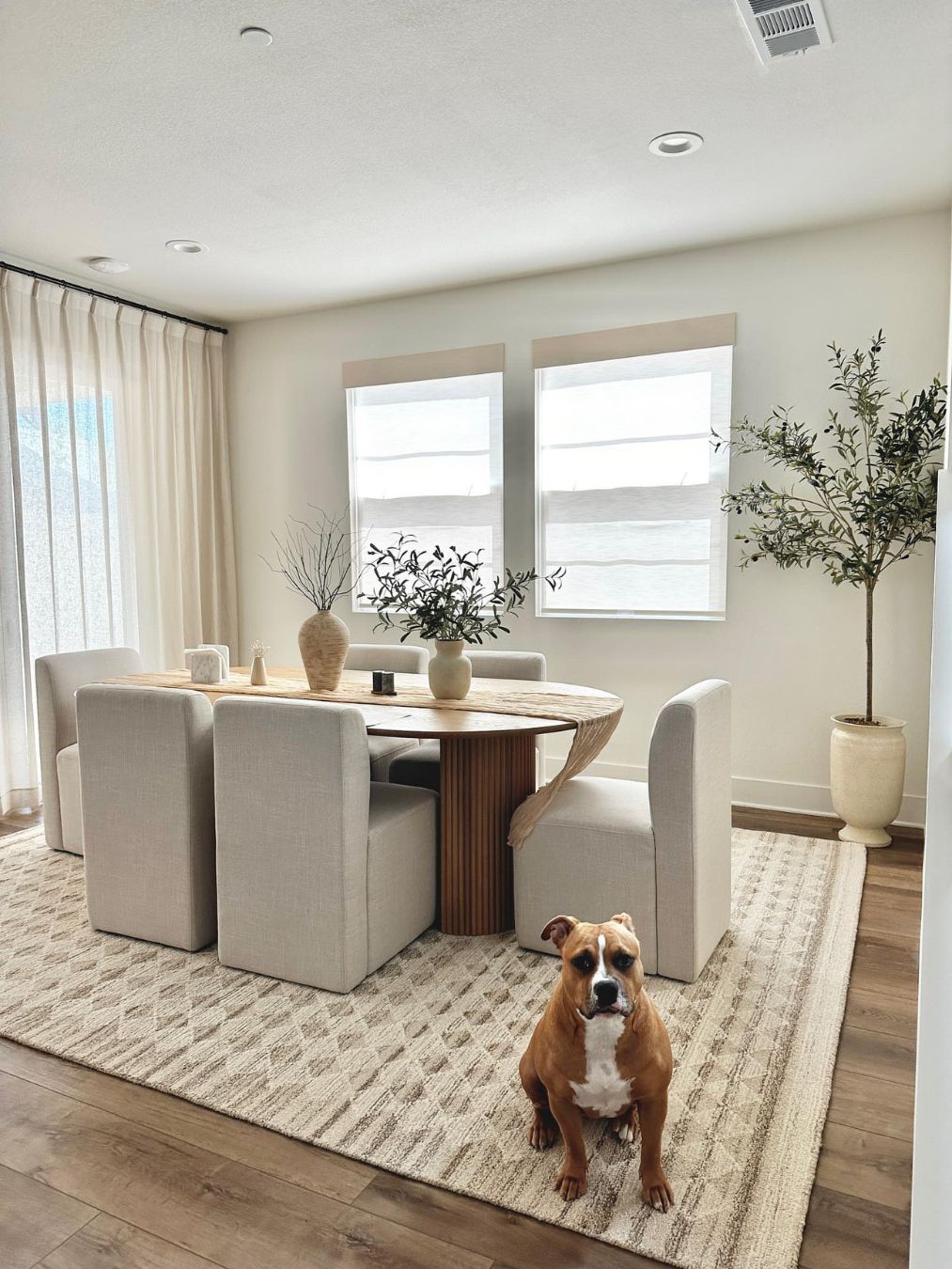


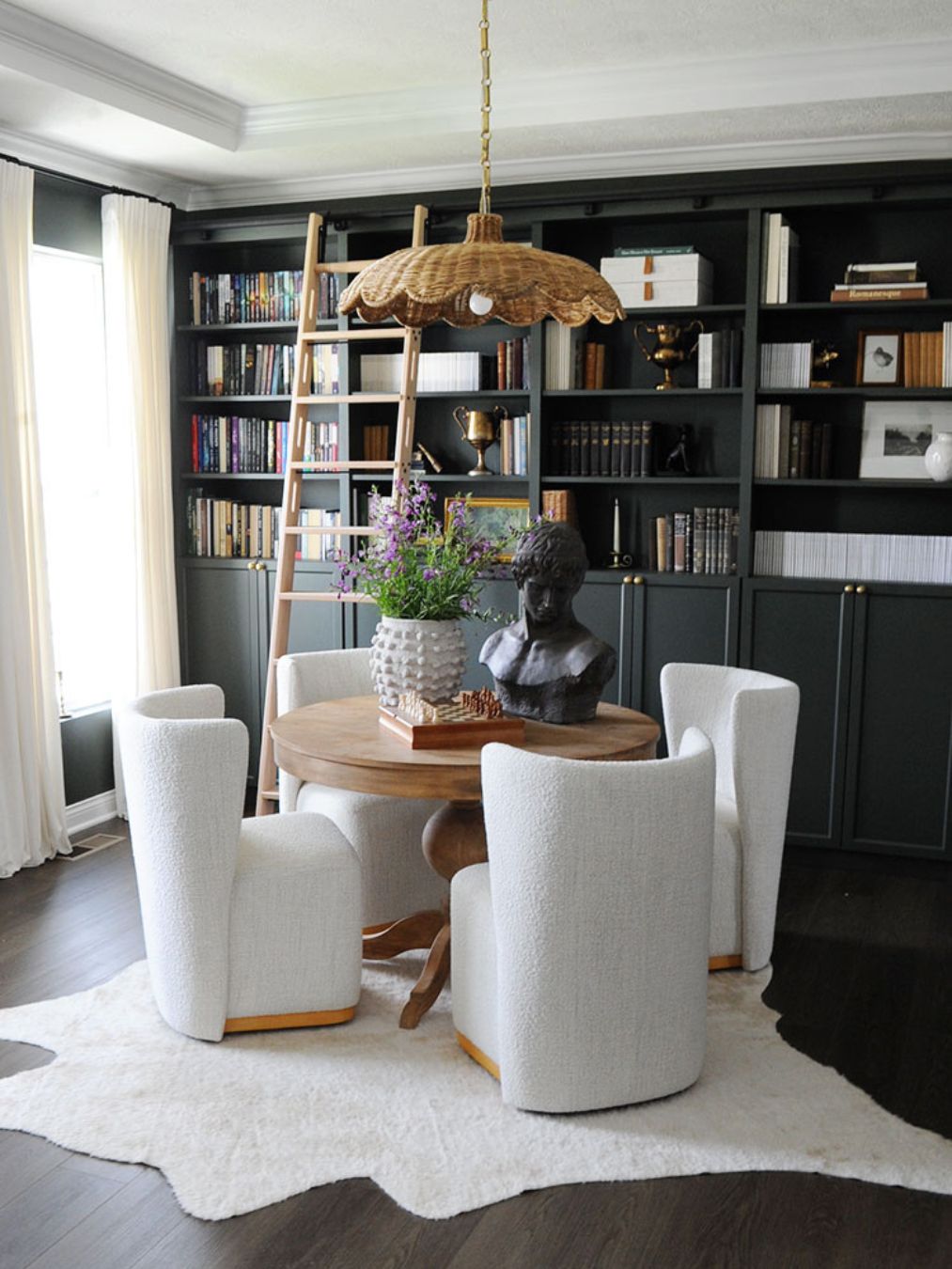


The right dining table has to fit the room before it fits a style board. Shoppers usually worry about chair clearance, daily cleanup, guest seating, and whether a statement table will overpower the room once it arrives. This dining table collection helps you compare compact tables, extendable designs, round gathering pieces, and durable tabletop materials with those everyday decisions in mind.
Start with the Dining Room Decision That Matters Most
| If You Need | Start With | Why It Helps |
|---|---|---|
| A table for a smaller kitchen or apartment | Round tables or four-seat rectangular tables | They protect circulation and reduce sharp corner conflicts. |
| Room for guests without a large table every day | Extendable dining tables | They keep a smaller daily footprint and expand when needed. |
| Easier cleanup after family meals | Sintered stone or scratch-resistant tabletops | They are better candidates for spills, sauces, and hot serving pieces. |
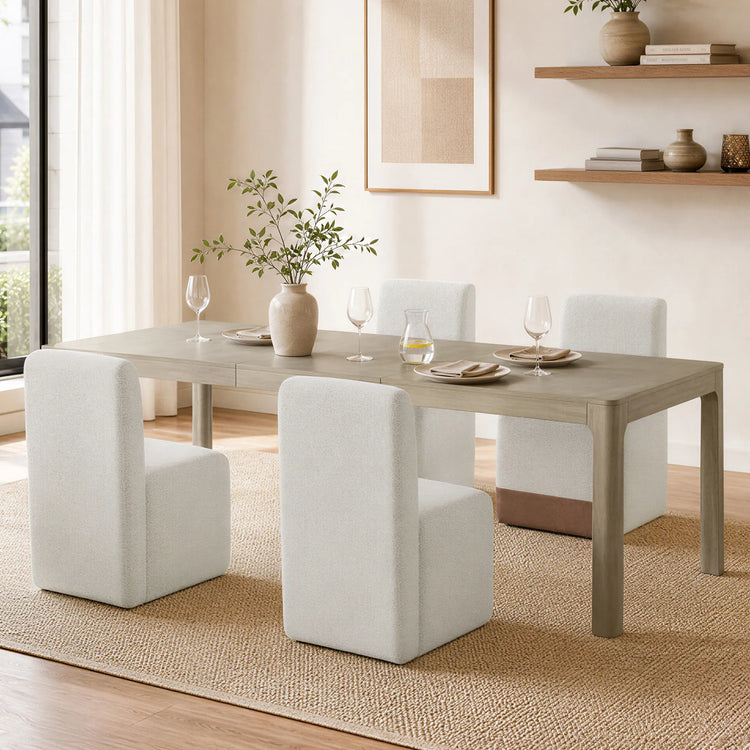
| A warmer furniture look | Wood, fluted, or pedestal dining tables | They add texture while pairing naturally with upholstered dining chairs. |

Measure the Dining Table Footprint Before Style
Size is the first decision because it affects comfort every time the table is used. Tape the footprint on the floor, then check whether chairs can pull out and people can pass behind them. A four-seat table can work well in apartments or breakfast areas, while six-seat and extendable tables suit homes where dinner often includes guests.
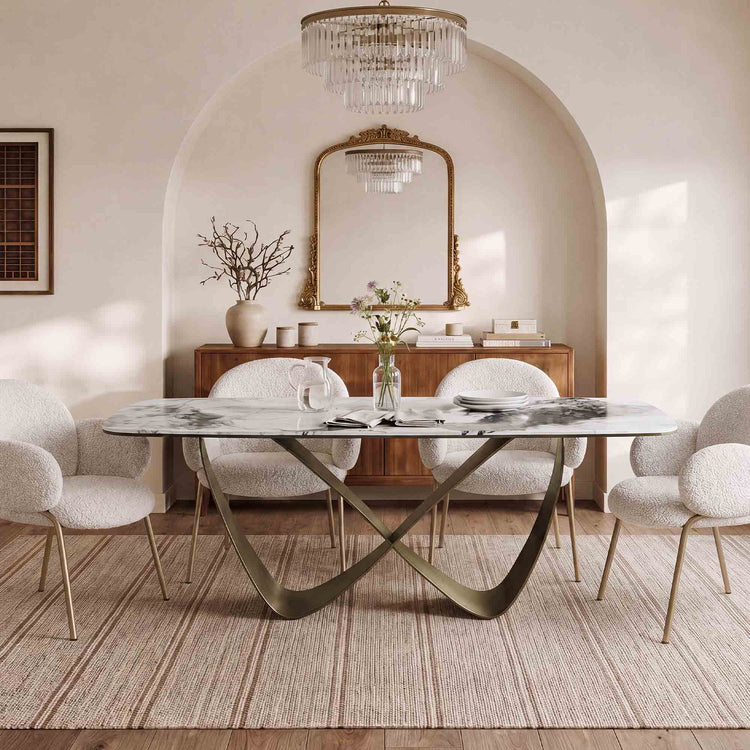
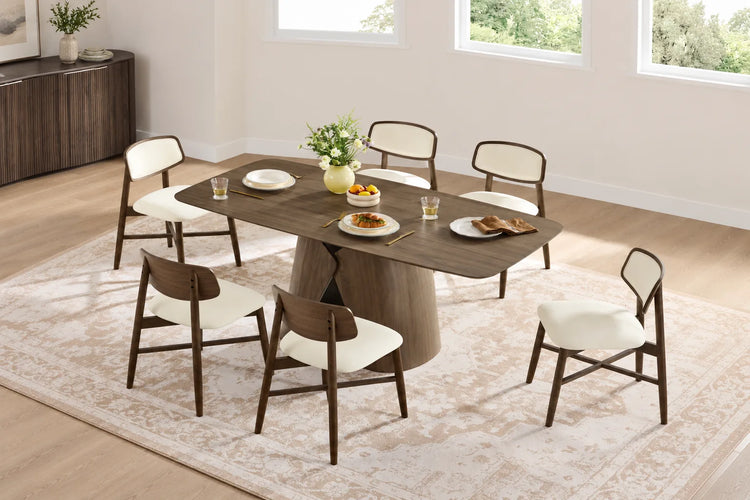
For a highly durable and modern centerpiece, the 71" Layla Sintered Stone Dining Table provides a flawless, scratch-resistant surface with family-friendly soft corners and a sturdy bronze pedestal. If you want a larger rectangular wood table with a softer edge profile, 64.6" Nala Rectangular Fluted Wood Dining Table adds fluted apron detail, rounded corners, and a solid rubberwood base.
Round Dining Tables Help Conversation and Flow
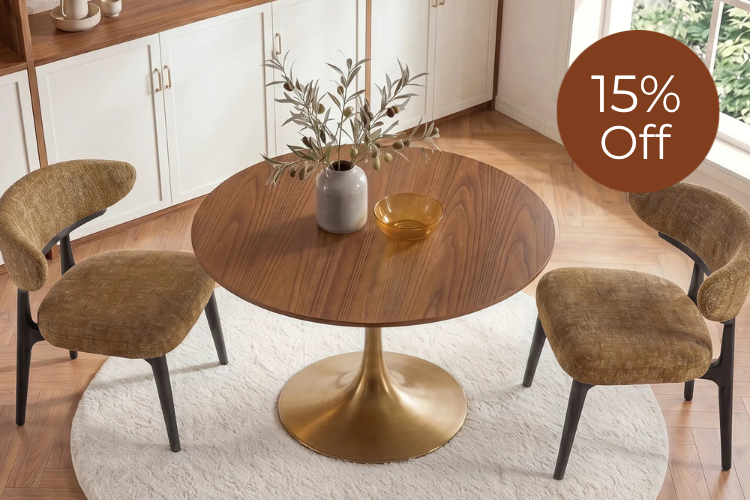
Round dining tables make sense when the room needs softer movement or a more connected seating group. Without long sides, a round table can help diners see each other more easily and feel less formal in open kitchens. This shape is also useful when corners would make a tight room harder to navigate.
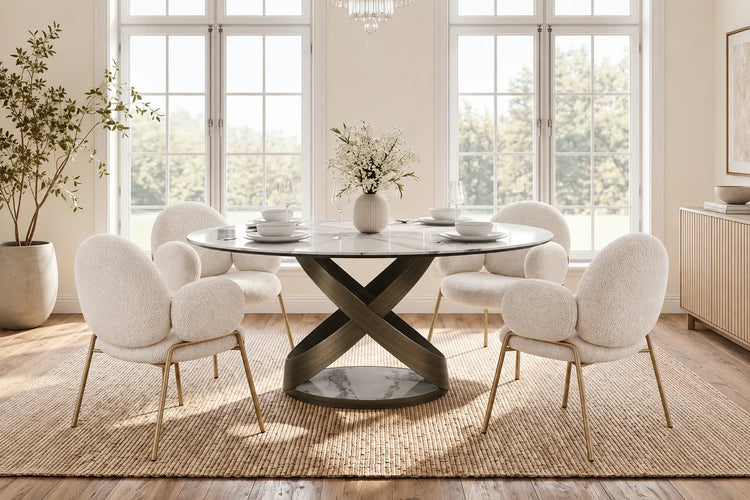
The Evan Round Mobius Sintered Stone Dining Table works for shoppers who want a sculptural base and a polished surface in one piece. It is available in 51-inch and 59-inch sizes, so it can fit different dining footprints without changing the design direction.


Extendable Dining Tables Make Hosting Less Awkward
An extendable dining table is often the better choice when you host, but not every day. Look for a design that can stay compact for weeknight meals and expand without requiring a separate storage plan. The smoother that transition feels, the less your dining room has to compromise between daily comfort and special occasions.
Margie U-Shaped Wood Extendable Dining Table, 78"-95.9" uses an integrated butterfly leaf and extends from 78 inches to 95.9 inches. Its ash veneer MDF top and solid wood frame give it a warm furniture look, while the U-shaped base keeps the design visually open. For shared dishes, Camila Extendable Sintered Stone Dining Table with Lazy Susan, 24.8"-52.9" adds a rotating center and extends from 47.24 inches to 61.02 inches.
Match Dining Table Materials to Daily Cleanup
Material choice should follow how the table will be used. Wood dining tables bring warmth and visible grain, especially when paired with upholstered chairs or sideboards. Sintered stone tables are better to compare when spills, hot dishes, and a polished modern surface are high priorities.
Nala is a stronger fit when you want a scratch-resistant oak veneer tabletop and rounded corners for a family dining area. Camila and Evan are better comparison points when a glossy sintered stone surface, rounded edges, and a more contemporary base matter more than a traditional wood look. If the table itself is the boldest piece, plan the rug, chairs, lighting, and wall art around it before deciding the room feels wrong.

Compare Dining Tables by Size, Shape, and Material
Use this collection to narrow dining tables by seating count, room footprint, surface material, and hosting needs. Once those decisions are clear, compare product dimensions, extension range, color options, and the base style that fits your chairs.
FAQ
What Size Dining Table Should I Choose?
Start with the room, not the maximum guest count. Measure the table area, then leave space for chairs to pull out and people to pass behind them. If the room is narrow, a compact rectangular table may work better. If movement around corners feels tight, a round table can be easier to live with.
Is an Extendable Dining Table Worth It?
An extendable table is worth considering when your daily household is smaller than your occasional guest list. It can keep the room comfortable most days while adding seating for holidays, birthdays, or shared dinners. Check the extension range, leaf storage, and how the base affects legroom before choosing.
Should I Choose a Wood or Sintered Stone Dining Table?
Choose wood when warmth, visible grain, and easy style pairing matter most. Choose sintered stone when you prefer a sleek surface and want cleanup to feel more practical after frequent meals. The better choice depends on your room style, seating needs, and how often the table handles spills or hot serving pieces.