






















2026 Media Storage Furniture Trends for open-concept homes

The best place to start with 2026 furniture trends in an open-concept home is visually quiet, low-profile, adaptable media storage. That does not make one format universally best: choose based on the room’s limiting constraint, whether it’s circulation, flexibility, visible clutter, storage capacity, or equipment access. These are planning directions, not a verified market ranking.

Which Media Storage Direction Fits Your Open-Concept Room?
A low-profile console is the first format to consider when flow and sightlines matter most. Choose modular storage when the room or technology may change, wall-mounted storage when a clear floor plane and concealed wiring are priorities, and substantial enclosed storage when capacity and clutter control matter more than visual lightness. Each option has a different tradeoff and a different first-fit check, so treat the choice as conditional rather than as a market forecast.
| Format | Best fit | Tradeoff and first check |
|---|---|---|
| Low-profile console | A connected living area where sightlines and circulation drive the decision | A lighter silhouette may provide less enclosed volume or device capacity. Compare width, depth, and height with the TV, openings, viewing position, and walking route. |
| Modular storage | A room or technology setup likely to change | Multiple pieces can create seams or mismatched proportions. Map the wall, outlets, module alignment, and realistic rearrangement options. |
| Wall-mounted storage | A clear floor plane and a planned cable or service path are priorities | Wall, mounting, and access requirements become part of the installation. Confirm wall conditions, mounting requirements, cable path, and service access. |
| Substantial enclosed storage | Visible clutter or storage capacity is the limiting problem | Greater visual mass can overwhelm a compact or highly connected room. Compare storage volume, compartment access, and scale with the room as a whole. |
The least visually heavy choice is a useful starting rule, not a substitute for checking fit. A low-profile media console may preserve an airy composition, while enclosed or modular media storage may better solve the actual problem when equipment, accessories, or changing layouts require more support.

How 2026 Furniture Trends Solve Open-Concept Layout Problems
The most relevant 2026 furniture trends here are practical design lenses: lower profiles, adaptable arrangements, concealed storage, cable-aware planning, and tactile finishes. Each direction addresses a different open-concept problem, and each has a limitation to consider before purchase.
Low-Profile Scale Protects Sightlines and Circulation
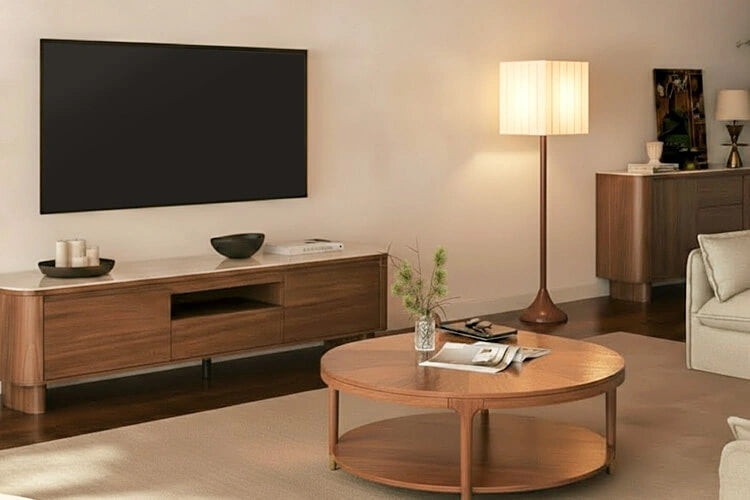
A low, horizontally proportioned console can support the living zone without creating a tall visual stop between the seating area and the kitchen or dining area. This direction is especially relevant when flow is the room’s main constraint. An Architectural Digest roundup of TV stands and media consoles provides editorial context for considering low-profile forms; it does not establish a market ranking or prove open-concept fit. When a low profile is the priority, a low-profile console guide can help frame sizing and storage questions.
The tradeoff is reduced enclosed volume or device capacity in some designs. Check the furniture’s actual width, depth, and height against the TV footprint, viewing position, nearby openings, baseboards, and walking route. Judge the complete arrangement rather than the console’s profile alone.
Modular Storage Adapts to Changing Layouts and Equipment
Modular TV storage makes sense when the room may be rearranged or the equipment and storage inventory may change. Separate components can help you plan around connected zones instead of committing to one uninterrupted block of furniture.
The limitation is composition and continuity. Multiple pieces may introduce seams, mismatched proportions, or an unresolved arrangement if they are not planned together. Check the wall envelope, outlet access, module alignment, realistic rearrangement options, and any stated expansion path before treating modularity as a benefit.
Concealed Storage and Visual Zoning Reduce Media Clutter
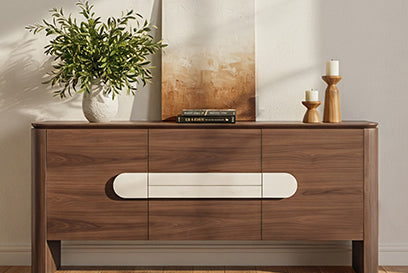
Closed doors, drawers, or a carefully scaled sideboard-like form can keep remotes, accessories, books, and selected equipment out of sight. In an open-concept living room, that concealment can help the media wall read as part of the living zone rather than as a display of technology.
More substantial storage can also add visual weight. Check which items need daily access, how much compartment space they require, and whether the furniture defines the living zone without becoming a divider. If open shelving looks lighter but leaves the actual clutter exposed, it may not solve the room’s limiting problem.
Cable Access and Ventilation Keep Minimalist Storage Usable
Evaluate cable routing, outlet access, device access, and ventilation against the actual equipment and the manufacturer’s guidance. A clean exterior does not by itself show that a piece provides suitable cable management, airflow, device fit, or access.
Tighter or fully enclosed compartments may look quieter while making connections, service, or future device changes harder. Check cable-entry locations, compartment dimensions, rear access, device placement, and published guidance. Do not assume that a cable hole or closed door addresses every setup’s requirements.
Materials and Tactile Fronts Connect the Media Wall to Adjacent Zones
Finish, texture, and proportion can coordinate media furniture with flooring, cabinetry, dining furniture, upholstery, and daylight. Broad 2026 living-room trend commentary includes tactile finishes as design context, but it does not establish a media-storage market trend or prove that a finish will suit every open-concept room.
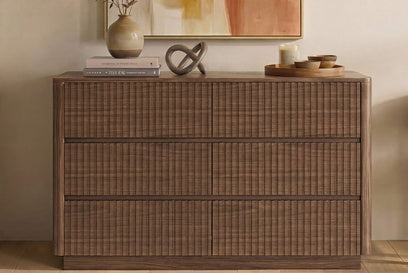
Fluted, wood, stone-look, and other tactile fronts can become strong focal points and feel heavy when their scale or color is unbalanced. Check the complete wall composition with the TV, speakers, decor, and adjacent zones in place rather than judging the furniture on its own.
Measure the Open-Concept Room and Equipment Before You Shop
The first shopping step is to create one measurement brief covering the room, screen, equipment, circulation, and connections. Use it to eliminate formats that cannot support the setup before comparing finishes or adding products to your cart.
- 1. Map the usable wall and connected zones. Record wall length and available depth, openings, baseboards, windows, doors, nearby furniture, and the relationship to kitchen or dining circulation. Note where a piece would visually or physically narrow the route.
- 2. Record the TV and viewing position. Measure the TV itself and note whether it will sit on furniture or be mounted. Mark the intended screen position and viewing locations so you can compare the unit’s dimensions with the actual arrangement.
- 3. Trace walking routes and sightlines. View the proposed media wall from the living room and connected zones. Identify the routes and visual relationships that must remain open instead of assuming that a low profile will automatically preserve them.
- 4. Inventory equipment and storage items. List consoles, streaming devices, speakers, remotes, games, books, and everyday items. Separate frequently accessed items from those that can be stored behind doors, then match the list to the compartments and access style you need.
- 5. Map outlets and cable routes. Mark outlet locations, cable entry and exit points, connection paths, and any equipment guidance that applies to the setup. Treat missing product information as an unresolved fit question rather than assuming a universal clearance or ventilation requirement.
- 6. Compare the complete brief with exact product facts. Check published width, depth, height, internal layout, access details, assembly state, mounting requirements, and any cable or equipment guidance. Keep a product under consideration only when its documented details match the measured room and setup.
Verify Construction, Access, and Retailer Terms Before Adding a Candidate to Your Cart
Before adding a fashionable piece to your cart, verify the facts that determine whether it can work in the measured setup. Review dimensions, materials, doors or drawers, internal layout, cable openings, rear access, ventilation guidance, assembly, mounting requirements, device reachability, shipping, returns, and warranty terms. Trend language cannot establish durability, compatibility, safety, or availability.
The 79-inch fluted TV stand details provide a concrete example of how specific this review should be. The CHITA Coral TV Stand is listed at 78.74 inches wide by 19.69 inches deep by 19.69 inches high, with four doors, a walnut finish, and fully assembled construction. Its listed materials are a solid oak wood body and oak veneer + MDF. Those facts describe this product only; they do not establish fit for a particular wall, TV, device inventory, cable route, or ventilation need.
The supplied product terms list a one-year furniture warranty, a 30-day return policy, and oversized-truck delivery options to the 48 contiguous states and Washington, D.C. Treat those as product-specific terms and review the live listing before purchase. Do not infer current inventory, compatibility, or access suitability from the finish, four-door configuration, or product dimensions alone.
Use the measurement brief to narrow the decision to one or two formats, then compare each candidate’s exact product facts and retailer terms. If a needed fit or technical detail is missing, keep that candidate out of your cart until the information is resolved.
Frequently Asked Questions
These answers apply the same constraint-based approach to common open-concept media-storage decisions.
What Media Storage Suits an Open-Concept Home?
Start with the constraint that is hardest to compromise on in your room. Circulation points toward a low-profile piece, changing layouts toward modular storage, visible clutter toward enclosed storage, and a planned clear floor plane toward wall-mounted storage.
Are Low-Profile Media Consoles Practical for Open-Concept Living Rooms?
They can be practical when sightlines and circulation drive the decision without compromising the TV position, device access, storage needs, or cable route. A low silhouette is a design advantage only when the rest of the setup works with it.
How Can I Hide or Manage TV Cables Without Adding Visual Bulk?
Plan the outlet and cable route before choosing the furniture. Cable-entry points, accessible compartments, rear access, and the equipment manufacturer’s guidance matter more than closed doors alone.
What Finish Works Across Connected Open-Concept Zones?
Choose a finish and texture that relate to nearby flooring, cabinetry, dining furniture, upholstery, and daylight. Fluting, wood, or stone-look surfaces can coordinate the zones, but judge their scale and color as part of the complete wall composition.
Recommended Products

More to Read
 7 Sofa Trends That Actually Improve Comfort in 2026
Upgrade your living room with furniture that supports your body. Here are 7 modern sofa features designed to maximize your daily comfort...
7 Sofa Trends That Actually Improve Comfort in 2026
Upgrade your living room with furniture that supports your body. Here are 7 modern sofa features designed to maximize your daily comfort...
 Mother's Day Gift Guide: Cozy and Stylish Furniture Picks for Modern Moms
Make Mother's Day more meaningful with furniture gifts that bring comfort, smart features, storage, and quiet luxury into her everyday routine.
Mother's Day Gift Guide: Cozy and Stylish Furniture Picks for Modern Moms
Make Mother's Day more meaningful with furniture gifts that bring comfort, smart features, storage, and quiet luxury into her everyday routine.
 Performance Fabric Reality Check: Does It Really Repel Pet Hair and Stains?
Performance fabric is often marketed as a miracle solution for homes with pets and kids, but the reality is more nuanced. It...
Performance Fabric Reality Check: Does It Really Repel Pet Hair and Stains?
Performance fabric is often marketed as a miracle solution for homes with pets and kids, but the reality is more nuanced. It...