






















Accent Chair Seat Height and Depth: Comfort and Fit Guide

When choosing accent chair seat height and depth, start with the posture you use most, then check the dimensions against your own body. There is no single "right" size. A bounded starting range works for upright reading and conversation seating: roughly 16 to 18 inches of finished seat height and 15 to 18 inches of seat depth for an average adult sitting upright. Deeper lounge chairs do not have a supported universal range, so that choice depends on a personal fit check instead of a fixed number. The rest of this guide shows you how to create a personal sitting reference, measure an existing chair, and assess a listing before it arrives.

What Seat Height and Depth Should an Accent Chair Have?
For accent chair seat height and depth, start with the scope that matches your use, not one all-purpose number. Upright residential seating, workstation seating, and relaxed lounging each have a different reference point, and only one of them applies to your situation.
For upright seating, 16 to 18 inches of finished seat height and 15 to 18 inches of seat depth are useful starting references for an average 5-foot-10-inch adult, accounting for cushion compression. A separate workstation benchmark allows seat height to adjust from 15 to 22 inches and seat-pan length from 15 to 17 inches, but that range describes office task chairs, not accent chairs, and its own purchasing guidance recommends an extended comfort trial for individual body types. No numeric range is established for deeper lounge seating, so treat that as a posture-based decision rather than a target number.
The chart below lines up these bounded references side by side. Use it to confirm which scope applies to you, then move to the measuring steps.
Seat-Dimension Starting References by Scope
Bounded starting references only: the residential figures assume an average 5-foot-10-inch adult sitting upright and account for cushion compression; OSHA figures are workstation benchmarks, not universal accent-chair standards. No numeric deep-lounging range is established.
View chart data
| Category | Lower bound (in) | Upper bound (in) |
|---|---|---|
| Upright residential height | 16.0 | 18.0 |
| Upright residential depth | 15.0 | 18.0 |
| OSHA workstation height | 15.0 | 22.0 |
| OSHA workstation pan length | 15.0 | 17.0 |
Two dimension pairs matter here, and they are not the same as what a listing headline shows. Finished seat height is the floor-to-seat distance once the cushion is compressed by a sitting adult, not the uncompressed cushion height. Usable seat depth is the supported distance between the back cushion and the point where your thigh stops getting support, not the chair's overall front-to-back footprint. Confirm both with a personal check: your feet should stay flat, your knees should clear the front edge slightly, and your thighs should be supported without pressure behind the knee.
How to Measure Seat Height for Your Body and Existing Furniture
Create a personal height reference first, then measure the chair in the condition you will actually sit in. Confirm the fit with your feet and knees before comparing it with nearby furniture.
Create a personal height reference
Sit with your back supported on a firm, stable surface at a height you can reproduce. Keep both feet flat and your knees comfortable, then have someone measure from the floor to the top of that surface. If you cannot use a stable surface at the needed height, mark the target height on a firm, level mock-up rather than guessing from your leg length alone. This gives you a personal comparison point; it does not replace testing a chair's compressed cushion.
Measure the finished sitting height
- Set the tape measure on a level floor next to the chair.
- Sit in the chair normally so the cushion compresses under your weight.
- Measure from the floor straight up to the point on the seat where your body actually rests.
- Compare that number with a nearby sofa, desk, or table you plan to use with the chair, checking the two heights against each other rather than assuming they match.
Run the foot and knee check
Sit all the way back with your back against the support and check two things: do both feet rest flat on the floor, and is there a small gap behind your knee instead of pressure against the seat edge? The chair height is appropriate when the entire sole of the foot rests on the floor with the back of the knee slightly higher than the seat. If your feet dangle or press hard behind the knee, treat that as a signal to try a different height rather than a preference to ignore.
How to Measure Usable Seat Depth for Reading or Lounging
Measure from the back support to the point where your thigh stops being supported, not from the chair's outer back panel. That distance, not the listed overall depth, is what you should use for a posture-specific fit check.
Measure from back support to usable front edge
Sit fully back against the cushion and place the tape measure at the point where your back meets the support, not at the chair's outer frame. Run the tape forward to the point where your thigh loses support or where the cushion's usable surface ends. Record that number as your usable depth, separate from any overall or listed depth shown online.
Test upright and relaxed positions separately
In an upright reading position, check that your thighs stay supported the full length of the usable seat without your knees touching the front edge. Then test your intended relaxed posture separately. A deeper result is fine for lounging only if you can still reach the back support comfortably without sliding forward or slumping to compensate. OSHA's workstation-chair guidance also describes thigh support without knee contact at the front edge, but that source is limited to task seating. For an accent chair, use those observable conditions as practical seat-depth checks, not as proof that the chair has the same suitability as a workstation chair.
Choose Dimensions by How You Will Use the Chair
Match the dimensions to the posture you use most, then verify a second posture only if you genuinely need both.
Reading and Desk-Adjacent Use
Favor the upright reference range and the foot-and-knee check from the sections above. Reject any seat depth that pushes you forward on the cushion or invites slumping to reach the back support, since that undercuts the stable, supported position reading needs.
Conversation and Everyday Seating
Prioritize easy entry and exit and a seat height that feels natural next to your existing sofa or coffee table. A chair that looks proportionate in photos can still feel off if its height doesn't match nearby furniture you use in the same sitting. Test by actually sitting down and standing up, not by comparing dimensions on a screen.
Relaxed Lounging
More depth can suit a reclined posture, but no supported numeric range marks where "deep enough" becomes "too deep." Judge it by whether you can still reach the back support without slumping and whether your feet stay in a stable position. Deeper is not automatically more comfortable; it only helps if the rest of your posture still checks out.
Common Accent-Chair Dimension Mistakes to Avoid
Most sizing regrets trace back to comparing the wrong number or trusting a range outside its scope.
Mistaking Overall Depth for Usable Seat Depth
Compare the supported seating area, the distance from back support to the point your thigh loses contact, not the chair's total front-to-back footprint. If a listing does not identify which measurement it shows, that is a reason to check further before buying, not to estimate.
Ignoring Cushion Compression
A chair's finished seat height changes once a person sits down and the cushion compresses. Frame or uncompressed cushion measurements will not tell you the real sitting height. Test the compressed height in person, or ask for that specific figure, rather than working from frame dimensions.
Treating a Reference Range as a Rule
The 16-to-18-inch and 15-to-18-inch residential figures assume an average 5-foot-10-inch adult sitting upright. If your height, weight, or intended posture differs meaningfully from that assumption, run the foot, knee, and thigh checks yourself instead of trusting the range unchanged.
Apply the Fit Check Before You Add a Chita Living Chair to Your Cart
Run one short sequence to confirm fit before you buy, using the checks from earlier sections rather than a new set of rules.
Use One Final Fit Sequence Before Adding to Cart
- Write down your tested seat-height and usable-depth numbers from the measuring steps above.
- Compare those numbers with the chair's current listed specifications, including seat height and seat depth.
- Confirm the listed depth is not being treated as usable depth, especially on chairs with a fixed cushion that cannot be adjusted or removed.
- Move forward only if your posture, foot support, and knee clearance still check out against the listing.
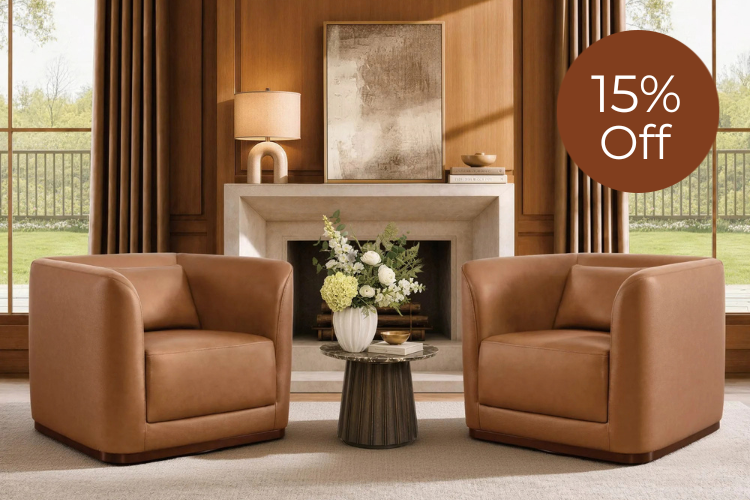
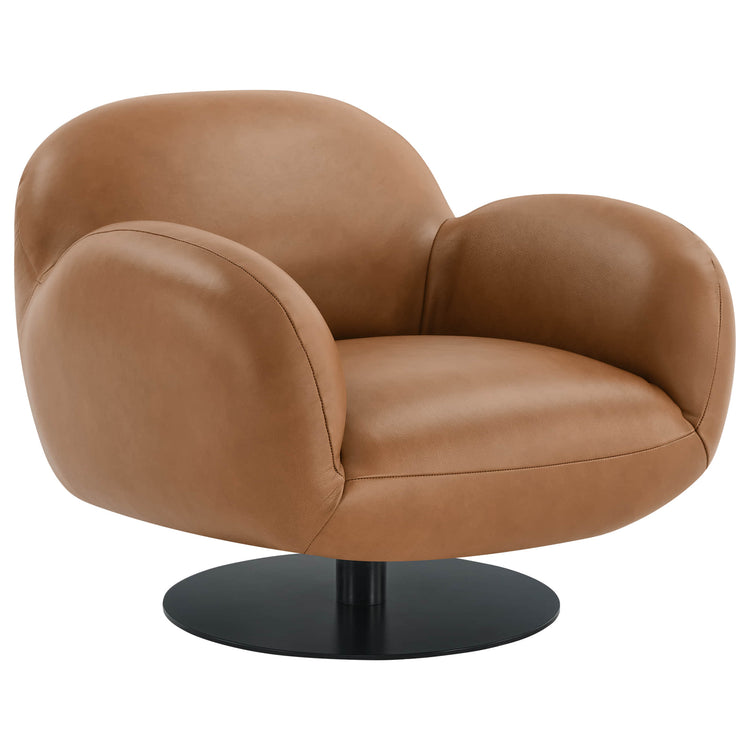
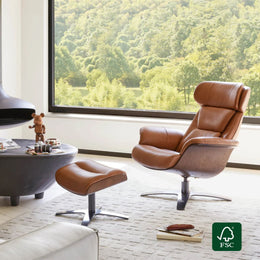
Our Maverick Genuine Leather Sculptural Wood Base Accent Chair lists a 17.5-inch seat height and a 21.7-inch seat depth, with a fixed high-resilient polyfoam cushion topped with a polyester fiber layer. That 21.7-inch figure is the listed depth, not a confirmed usable depth, since the fixed cushion means you should verify usable seating space against your own measurements rather than assume the listed number matches your fit.

Explore Only the Product Fit That Remains Supported
If your posture checks still hold against those figures, we invite you to look at the Maverick or browse our accent chair collection for other seat-height and depth options. If your checks do not hold, that is useful information too. It means this particular chair, or this posture, needs a different size rather than a different color or style.
FAQs
What Is the Standard Seat Height for an Accent Chair?
There is no single industry standard. A bounded residential starting reference is 16 to 18 inches of finished seat height for an average 5-foot-10-inch adult sitting upright. A separate workstation benchmark allows 15 to 22 inches, but that applies to office task chairs, not accent chairs. Confirm either range against your own flat-foot and knee-clearance check before treating it as your answer.
How Deep Should an Accent Chair Be for Reading?
For upright reading, 15 to 18 inches of seat depth is a bounded starting reference, again assuming an average-size adult sitting upright. Treat it as a starting point only. Measure the usable depth, the supported distance from the back cushion to where your thigh loses contact, and confirm your thighs stay supported without your knees touching the front edge.
How Do I Know If a Chair Is Too Deep for Me?
A chair is too deep for you if you cannot reach the back support while keeping your feet flat and stable, if the seat front presses against the back of your knees, or if you find yourself sliding forward or slumping to compensate. If any of those happen during a seated test, try a physical tape-measure mock-up or sit in the chair in person before buying.
Recommended Products

More to Read
 7 Sofa Trends That Actually Improve Comfort in 2026
Upgrade your living room with furniture that supports your body. Here are 7 modern sofa features designed to maximize your daily comfort...
7 Sofa Trends That Actually Improve Comfort in 2026
Upgrade your living room with furniture that supports your body. Here are 7 modern sofa features designed to maximize your daily comfort...
 Mother's Day Gift Guide: Cozy and Stylish Furniture Picks for Modern Moms
Make Mother's Day more meaningful with furniture gifts that bring comfort, smart features, storage, and quiet luxury into her everyday routine.
Mother's Day Gift Guide: Cozy and Stylish Furniture Picks for Modern Moms
Make Mother's Day more meaningful with furniture gifts that bring comfort, smart features, storage, and quiet luxury into her everyday routine.
 Performance Fabric Reality Check: Does It Really Repel Pet Hair and Stains?
Performance fabric is often marketed as a miracle solution for homes with pets and kids, but the reality is more nuanced. It...
Performance Fabric Reality Check: Does It Really Repel Pet Hair and Stains?
Performance fabric is often marketed as a miracle solution for homes with pets and kids, but the reality is more nuanced. It...