
























Upholstered vs. Wood Dining Chairs: Comfort, Care, and Durability

There is no single winner between upholstered and wood dining chairs. Upholstered chairs generally add cushioning and fabric texture, which suits people who linger at the table. Wood chairs generally offer a simpler exposed-surface routine, which suits people who want fast cleanup. The right pick depends on the specific chair's padding and support, the exact care instructions, and how much wear your dining room creates. Read on for the trade-offs behind comfort, care, and durability, plus a scenario guide for your household.

Upholstered vs. Wood Dining Chairs: Which Fits Your Home?
Neither category wins in every category below. The table gives you a quick reference, while the sections below explain which chair details should decide your choice.
| Factor | Upholstered chairs | Wood chairs |
|---|---|---|
| Comfort | Adds cushioning and texture; comfort still depends on the seat's padding and support | Firmer exposed seat; comfort depends on the shape and dimensions |
| Spill response | Needs the fabric's care code and prompt blotting | Usually a quicker wipe, but finish-dependent |
| Routine care | Fabric-specific cleaning method | Generally simpler surface care |
| Visible wear | Tied to weave, yarn, sunlight, and abrasion | Tied to finish condition and construction |
| Best-fit scenario | Long dinners, texture preference, manageable care routine | Spill-heavy homes, simplest maintenance preference |
Use this table as a starting point, not a final answer. The next sections explain what actually drives each row so you can check the chair you're considering, not just its category.
How Comfortable Are Upholstered and Wood Dining Chairs for Long Meals?
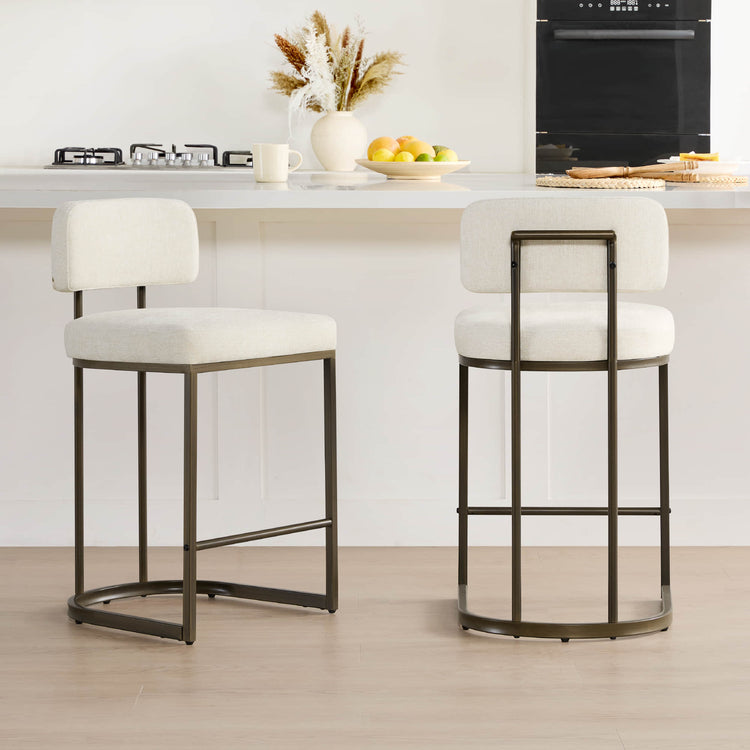
Neither material guarantees comfort by itself. Upholstery can add cushioning and a softer feel, while wood tends to offer a firmer, exposed seat. What actually determines comfort during a long dinner is the seat's padding, its support, the back shape, and its dimensions, not the wood-versus-fabric label.
If you host frequent dinners or spend a long time at the table, test or verify four things before buying: seat depth, seat height, back shape, and how the padding is described. A wood chair with a well-shaped seat and back can feel comfortable for an hour-long meal, while an upholstered chair with thin foam may not. Look at listed seat dimensions and padding materials rather than assuming the fabric alone will solve the comfort question.

For working at the table or hosting guests who linger, check whether the chair's back height and curve support an upright, relaxed posture. This is a fit boundary, not a guarantee: the specific chair's support and dimensions decide comfort, not its material category.
What Is the Difference in Care After Spills?
Upholstery requires you to check the exact cleaning code, while wood usually allows a quicker surface wipe that still depends on the finish. Fabric care codes such as W, S, S-W, and X represent different permitted methods, from water-based cleaners to solvent-only treatment or vacuuming alone. There is no single method that works across all upholstery, so identify the code on your specific chair before you buy it.
When a spill happens on upholstery, blot it promptly instead of rubbing, since rubbing can push liquid deeper into the fibers. A stain-resistant or water-resistant fabric finish helps reduce absorption, but it is a maintenance aid, not spill-proof protection. You still need to respond quickly and follow the code.
Wood chairs generally offer a more straightforward routine: wipe the surface and dry it. That said, wood is not maintenance-free. Veneer and inlaid surfaces need limited moisture, and you should follow the finish's specific instructions rather than assuming any cleaner is safe. If a listing states a care method like a damp cloth with mild soap and immediate drying, follow that exactly rather than substituting a stronger cleaner.
Which Chair Type Shows Wear More Clearly?
Visible wear depends on documented construction and finish details, not on the word "upholstered" or "wood" alone. A high-use dining room, a home with children, or a home with pets changes what you should inspect before buying either type.
What to Inspect on Upholstered Chairs
Check the weave and yarn construction, since tighter weaves and tightly twisted yarns generally resist abrasion better. Also check any stated resistance to sunlight and heat, which matter if the chair sits near a window or a heat source. Stain-resistant treatments reduce staining risk but are not permanent, so continue to follow the care code even on treated fabric.
What to Inspect on Wood Chairs
Look for an even, intact finish rather than assuming solid wood construction alone prevents wear. Confirm the construction is built for repeated use, such as reinforced joints or a stated weight capacity. Check the finish's moisture and cleaner limits, since excess water or harsh chemicals can damage the surface over time regardless of how sturdy the frame is.
Match the room's exposure to the chair's documented resistance. A sunny breakfast nook with young children creates different risks than a formal dining room used a few times a month, and the safer pick depends on which risks apply to you, not on a fixed material ranking.
What Should You Verify Before Buying?
Before ordering, identify the material and care code, inspect wear or finish factors, and confirm the documented construction, dimensions, and configuration. Then compare those facts with your household scenario, such as long dinners, frequent spills, or daily high-use seating. If a key fact, such as a care code or moisture limit, is not stated, treat it as missing information rather than assuming a capability.
Check the exact version you are ordering when a chair offers both all-wood and upholstered configurations, because seat dimensions and care instructions can differ. Use the documented details for that configuration when comparing it with your household's needs.
Which Chair Fits Your Household Scenario?
Your dominant household friction, not a universal material ranking, should decide your pick. The matrix below maps common scenarios to a preferred branch and the one fact that should confirm your choice.
| Household scenario | Dominant friction | Better-fit branch | Confirmation check |
|---|---|---|---|
| Long dinners and hosting | Sitting duration and support | Verify the specific chair's padding, back shape, and seat dimensions | Seat depth, seat height, and padding description match your table's use |
| Children, pets, frequent spills | Spill and cleaning tolerance | Upholstery only if the care code fits; otherwise wood | Fabric care code, or wood finish's moisture and cleaner limits |
| Daily high-use dining | Abrasion, sunlight, heat exposure | Whichever material has documented resistance for your room | Weave and yarn resistance, or finish and construction quality |
| Simplest maintenance preference | Routine care effort | Wood, if the finish instructions are manageable | Wood care method matches your household's habits |
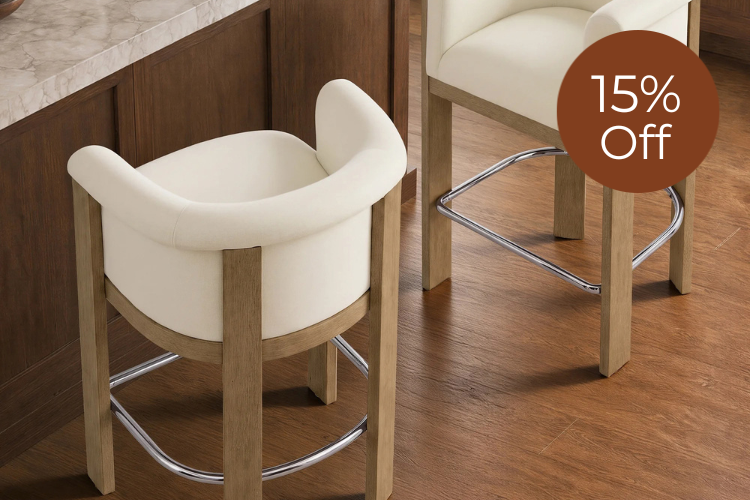
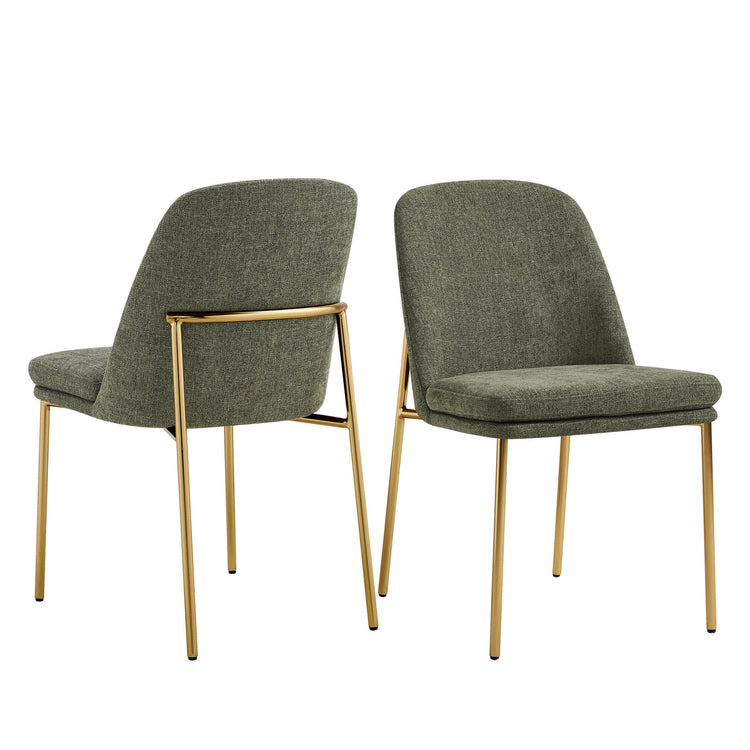
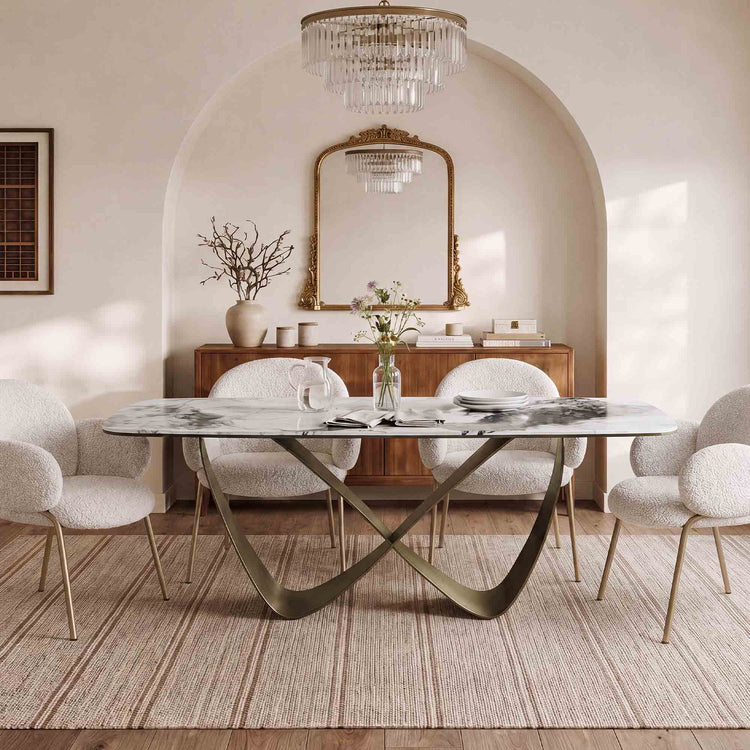
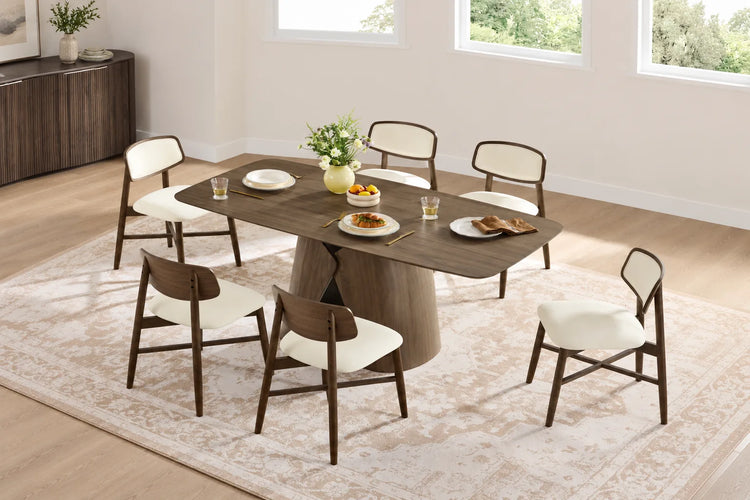
For long meals, our Talia upholstered dining chairs may fit if you want cushioning and a softer textile surface. The listing describes high-resilience foam, water-resistant bouclé, curved armrests, and a tall back. Confirm the exact care information before ordering. If you prefer an exposed wood seat, our Wyatt wood dining chair offers an all-wood configuration made from multilayered plywood with real wood veneer. Confirm the configuration and its dimensions before ordering. For a closer look at upholstery durability terms, our upholstery durability guide explains Martindale, Wyzenbeek, and double-rub ratings.
FAQ
Are Upholstered Dining Chairs More Comfortable Than Wood Dining Chairs?
Not automatically. Upholstery can add cushioning, but comfort for long meals depends on the specific chair's seat support, back shape, padding, and dimensions. A well-shaped wood seat can feel more comfortable than a thinly padded upholstered one, so check the actual specs rather than the material label.
Are Wood Dining Chairs Easier to Clean After Spills?
Usually, yes, for a quick wipe-down. Wood generally allows a more straightforward surface routine, but you still need to follow the finish's instructions and avoid excess moisture. Upholstery requires checking the fabric's care code and blotting spills promptly rather than rubbing them.
Which Dining Chair Type Holds Up Better With Children or Pets?
Neither type wins by default. Match the documented upholstery weave and exposure resistance, or the wood finish and construction quality, to your household's actual wear conditions, including sunlight, spills, and daily contact.
What Should I Check Before Buying Upholstered or Wood Dining Chairs?
Confirm the upholstery composition and exact care code, or the wood finish and care method. Then check fabric wear factors or wood construction quality, confirm the listed dimensions and configuration, and compare all of it against how your household actually uses the chairs.
Recommended Products


More to Read
 7 Sofa Trends That Actually Improve Comfort in 2026
Upgrade your living room with furniture that supports your body. Here are 7 modern sofa features designed to maximize your daily comfort...
7 Sofa Trends That Actually Improve Comfort in 2026
Upgrade your living room with furniture that supports your body. Here are 7 modern sofa features designed to maximize your daily comfort...
 Mother's Day Gift Guide: Cozy and Stylish Furniture Picks for Modern Moms
Make Mother's Day more meaningful with furniture gifts that bring comfort, smart features, storage, and quiet luxury into her everyday routine.
Mother's Day Gift Guide: Cozy and Stylish Furniture Picks for Modern Moms
Make Mother's Day more meaningful with furniture gifts that bring comfort, smart features, storage, and quiet luxury into her everyday routine.
 Performance Fabric Reality Check: Does It Really Repel Pet Hair and Stains?
Performance fabric is often marketed as a miracle solution for homes with pets and kids, but the reality is more nuanced. It...
Performance Fabric Reality Check: Does It Really Repel Pet Hair and Stains?
Performance fabric is often marketed as a miracle solution for homes with pets and kids, but the reality is more nuanced. It...