
























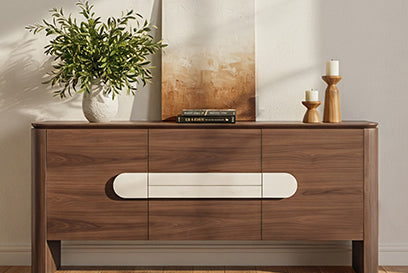










For value-conscious audiophiles in 2026, the right sideboard serves as a true performance platform rather than generic storage. It must deliver vibration control for stable turntable playback, sufficient ventilation to protect amplifiers from overheating, and smart cable routing plus record capacity without sacrificing living-room aesthetics. The difference between a standard buffet and an audiophile sideboard often comes down to material density, rear depth, and load ratings that ordinary furniture rarely meets. Checking these three factors first helps you avoid common regrets like rumble in the stylus, thermal shutdowns, or warped records.

Why Your Hi-Fi Setup Needs More Than Just a Standard Sideboard
Most living-room sideboards prioritize looks and general storage, but audiophile setups demand furniture that actively supports sensitive components. Turntables pick up floor vibrations that translate into low-frequency rumble through the stylus, while amplifiers generate heat that can trigger protective circuits or reduce component lifespan when airflow is blocked. Vinyl collections add substantial weight that can sag shelves over time, and high-end cables need extra rear space to avoid strain on expensive connectors.
The ongoing trend toward furniture-first audio avoids the industrial look of dedicated racks, yet many buyers discover too late that a beautiful sideboard lacks the mass, ventilation path, or depth their gear requires. In small apartments or multi-use media walls, this mismatch becomes especially noticeable. The three core pillars—vibration control, thermal safety, and practical capacity—separate pieces that simply hold gear from those that help it perform at its best.
Vibration Dampening and Structural Stability: The Turntable Platform
Turntables require a massive, heavy, and perfectly level surface to prevent footfall noise and low-frequency rumble from reaching the stylus. As the Pro-Ject Debut PRO manual emphasizes, even minor unevenness or transmitted vibration can degrade playback stability. A spirit level is the simplest self-check before placing your turntable.
Material choice directly influences how well the sideboard dissipates energy. High-density MDF or solid wood typically outperforms lightweight particle board because they absorb rather than reflect vibrational energy. Ceramic-on-wood composites, such as those used in several Chita designs, add beneficial mass and stiffness for a stable platform; however, the underlying substrate determines whether that stiffness translates into better damping or simply reflects energy higher up the frequency range. This is a stability upgrade that works best when paired with dense wood construction rather than an automatic guarantee of quieter playback.
For real-world verification, place a spirit level on the sideboard surface in both directions and check for rocking on your floor. If the piece flexes under hand pressure, it will likely transmit vibration to your turntable. This guide to vibration isolation offers useful background on why dense materials remain the preferred choice for audio furniture.
Thermal Management: Preventing Overheating in Enclosed Hi-Fi Cabinets
High-performance amplifiers and receivers typically require a minimum of 6 inches of clearance above the unit and 2 inches on each side to prevent overheating and circuit tripping, according to Marantz official guidance. In a sideboard, this “6-inch rule” often rules out placing powerful amps inside enclosed cabinets unless the design includes deliberate airflow modifications.
Tube amplifiers are especially sensitive and generally belong on an open top surface where heat can rise freely. Class D designs run cooler but still benefit from the same clearance targets. When a closed look is preferred, the most practical stealth compromise is often a floating or removable rear panel that creates a vertical exhaust path. Active cooling fans or perforated shelves can help in marginal cases, yet they cannot fully substitute for adequate open space.
The chart below visualizes typical safety tiers based on amplifier type and enclosure design. It helps clarify when a sideboard cabinet remains a safe home for your gear versus when it is wiser to keep the amplifier on top.
Can This Amplifier Live Inside a Sideboard?
A practical fit check for amplifier ventilation: top clearance matters most, side clearance helps, and sealed cabinets are the riskiest setup. Marantz guidance points to at least 6 inches above and 2 inches on each side as a safer baseline; less space or blocked airflow moves the setup into caution or not recommended territory.
View chart data
| Scenario | Sealed cabinet | Modified with vents/fan | Open shelf |
|---|---|---|---|
| Tube amplifier | 3.0 | 2.0 | 1.0 |
| Class D amplifier | 2.0 | 1.0 | 1.0 |
If your sideboard cannot provide the required vertical exhaust path, move the amplifier to the top surface. This single decision often prevents the majority of thermal issues in furniture-integrated hi-fi systems.

Vinyl Record Storage Capacity: Managing Weight and Vertical Alignment
A collection of 100 standard 12-inch vinyl records weighs approximately 45-50 lbs. This sustained load is significantly heavier than typical books or décor, which is why many standard sideboards eventually show shelf sag when used for serious vinyl storage. Always verify the manufacturer’s load rating for adjustable shelves before filling them with records.
Vertical orientation remains non-negotiable to prevent warping. Compartments should be at least 13 inches deep and tall to allow easy retrieval without scuffing sleeves or forcing records into tight spaces. In practice, this often means choosing a sideboard with dedicated record bays or deeper lower cabinets rather than trying to adapt shallow drawers.
For apartment dwellers or those with growing collections, calculate your total weight and compare it against the sideboard’s published shelf capacity. If the numbers are close, consider distributing records across multiple shelves or opting for a reinforced model.
Cable Management and Rear Access: Solving the 'Tech-Rack' Clutter
Even a 17-inch deep component often needs an additional 2–3 inches of rear clearance for RCA interconnects, speaker wire, and power cords. Without that depth gap, connectors press against the back panel, creating strain that can damage expensive terminals over time. The McIntosh MA6600 installation notes highlight this clearance as essential for safe custom setups.
Rear cutouts or fully open backs make routing far simpler and reduce visible clutter. Fully assembled sideboards, such as the Samuel or Kyle series, typically maintain better structural rigidity under cable tension than flat-pack alternatives that rely on consumer assembly. When shopping, measure from the front of the intended shelf to the back panel and subtract your component depth; the remainder should comfortably exceed 2 inches.
Thoughtful cable management also improves long-term access for upgrades or maintenance. Look for models with removable panels or generous grommets that keep wires organized without pinching.
How to Choose the Right Audiophile Sideboard for Your Setup
Start by listing your core gear dimensions and requirements: turntable footprint, amplifier height and heat class, total record count, and desired cable depth. Then match those numbers against sideboard specifications rather than aesthetics alone. A 63-inch or 71-inch width often provides the best balance for a turntable, amplifier, and 100–200 records while leaving room for decorative elements.
Material selection matters. Solid wood constructions like the 71" Kyle 4-Door Black Solid Wood Display Sideboard offer excellent natural damping, while ceramic-top models such as the 63" Hazel Vintage Curved Edge Sideboard add mass and modern style when the substrate is dense. Avoid lightweight particle-board pieces for heavy audio use.
Use this quick checklist before purchase:
- Surface is perfectly level (test with a spirit level)
- Shelf load rating exceeds your calculated vinyl weight plus components
- At least 6 inches of clear vertical space above any internal amplifier location, or plan to keep the amp on top
- Rear depth provides 2–3 inches beyond your deepest component
- Ventilation path exists or can be created without compromising structure
When these conditions cannot be met, a dedicated low-profile audio rack may be the more reliable choice despite its utilitarian appearance. For most living-room setups, however, a properly selected sideboard delivers both performance and refined design. Explore Chita Living’s current storage collection to compare fully assembled options that already address many of these audiophile requirements.
FAQs
Can any sideboard safely support a turntable and amplifier together?
Only if it meets the combined requirements of levelness, sufficient load rating (at least 50–60 lbs per shelf for a serious vinyl collection), and ventilation. Most standard sideboards lack the mass or clearance needed; verify specifications against your specific gear rather than assuming any attractive cabinet will work.
How much clearance do amplifiers actually need inside a cabinet?
High-performance amplifiers generally require at least 6 inches of open space above the top cover and 2 inches on the sides, per manufacturer guidelines such as Marantz. Tube amps are especially intolerant of restriction and usually perform best when left on an open surface.
Is a ceramic top better than solid wood for turntable vibration control?
Ceramic adds beneficial mass and rigidity, but its acoustic benefit depends on the damping properties of the wood substrate beneath it. Dense MDF or solid wood remain the reliable choice for energy dissipation; ceramic-on-wood works well when the composite is engineered to avoid reflecting vibration.
How many vinyl records can a typical sideboard hold without sagging?
Roughly 100 standard LPs weigh 45–50 lbs. Check the manufacturer’s shelf load rating; many sideboards are rated for lighter household items. Distribute weight across multiple reinforced shelves and store records vertically in at least 13-inch deep compartments to avoid warping or sleeve damage.
What is the most important feature for cable management in an audiophile sideboard?
Adequate rear depth (2–3 inches beyond component size) combined with open or removable back panels. This prevents connector strain and makes routing RCA, speaker, and power cables far easier while keeping the front view clean.
Should I choose a fully assembled sideboard or flat-pack for hi-fi use?
Fully assembled models usually maintain tighter tolerances and better long-term rigidity, which matters when supporting sensitive audio gear and cable tension. Flat-pack convenience can come at the cost of flex that transmits vibration or reduces load capacity over time.
Recommended Products



More to Read
 7 Sofa Trends That Actually Improve Comfort in 2026
Upgrade your living room with furniture that supports your body. Here are 7 modern sofa features designed to maximize your daily comfort...
7 Sofa Trends That Actually Improve Comfort in 2026
Upgrade your living room with furniture that supports your body. Here are 7 modern sofa features designed to maximize your daily comfort...
 Mother's Day Gift Guide: Cozy and Stylish Furniture Picks for Modern Moms
Make Mother's Day more meaningful with furniture gifts that bring comfort, smart features, storage, and quiet luxury into her everyday routine.
Mother's Day Gift Guide: Cozy and Stylish Furniture Picks for Modern Moms
Make Mother's Day more meaningful with furniture gifts that bring comfort, smart features, storage, and quiet luxury into her everyday routine.
 Performance Fabric Reality Check: Does It Really Repel Pet Hair and Stains?
Performance fabric is often marketed as a miracle solution for homes with pets and kids, but the reality is more nuanced. It...
Performance Fabric Reality Check: Does It Really Repel Pet Hair and Stains?
Performance fabric is often marketed as a miracle solution for homes with pets and kids, but the reality is more nuanced. It...