



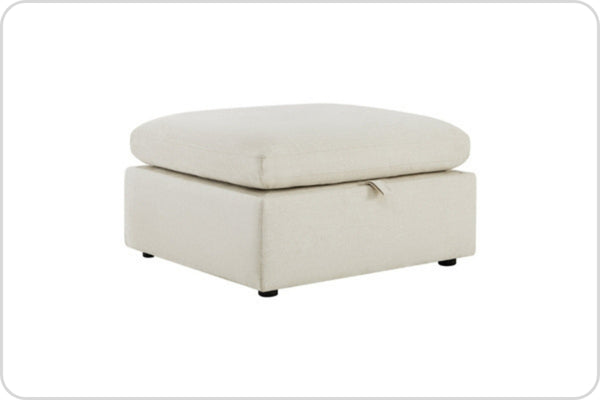

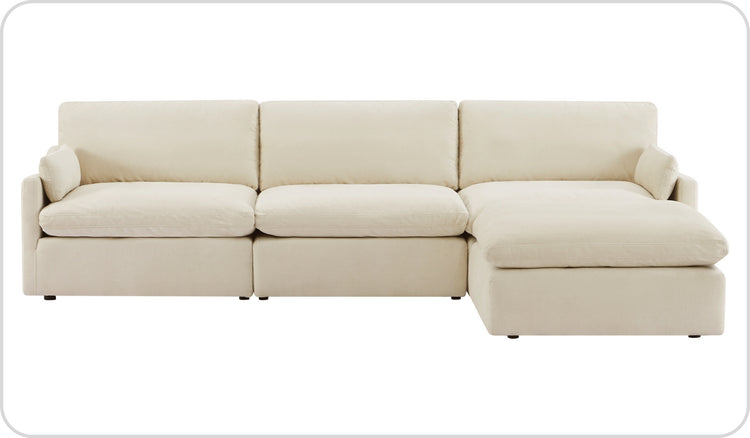


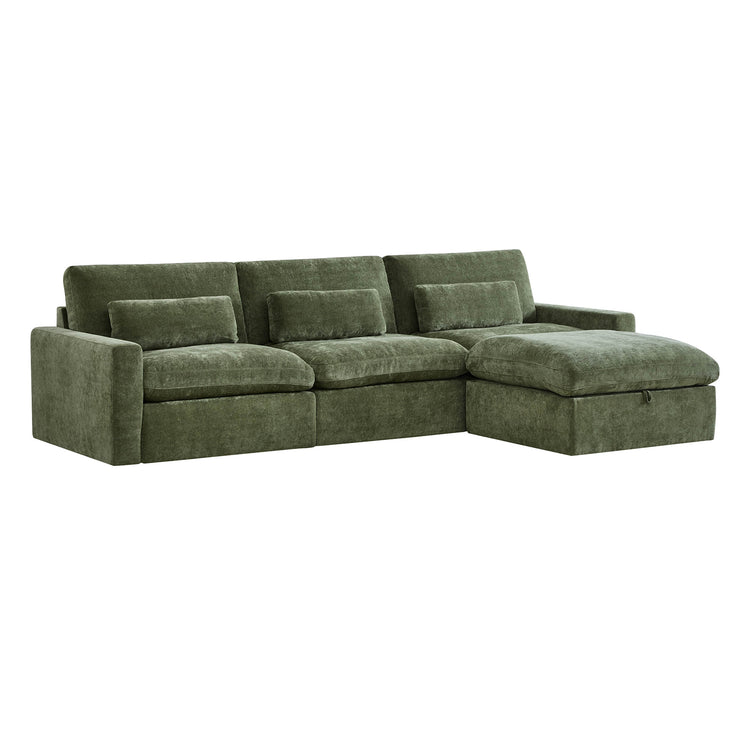


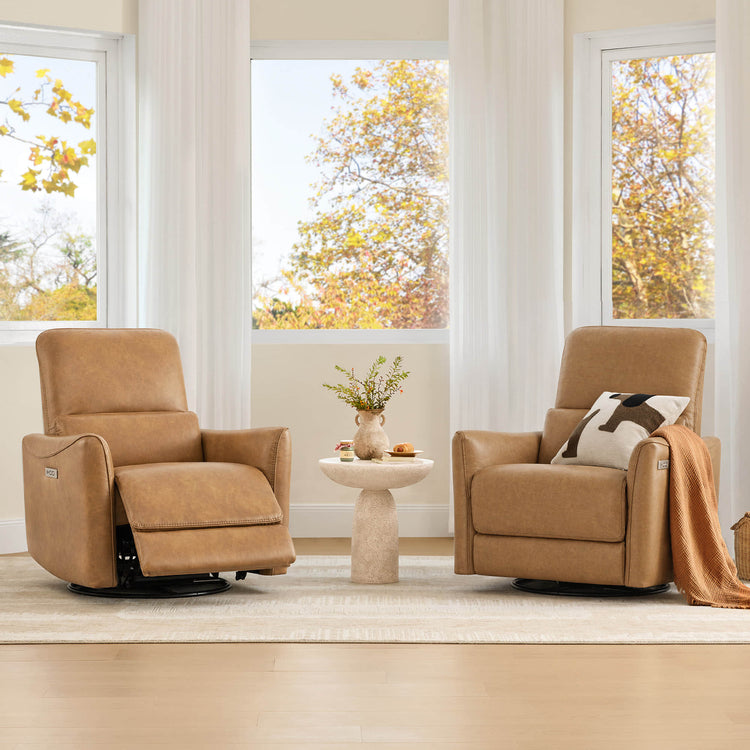
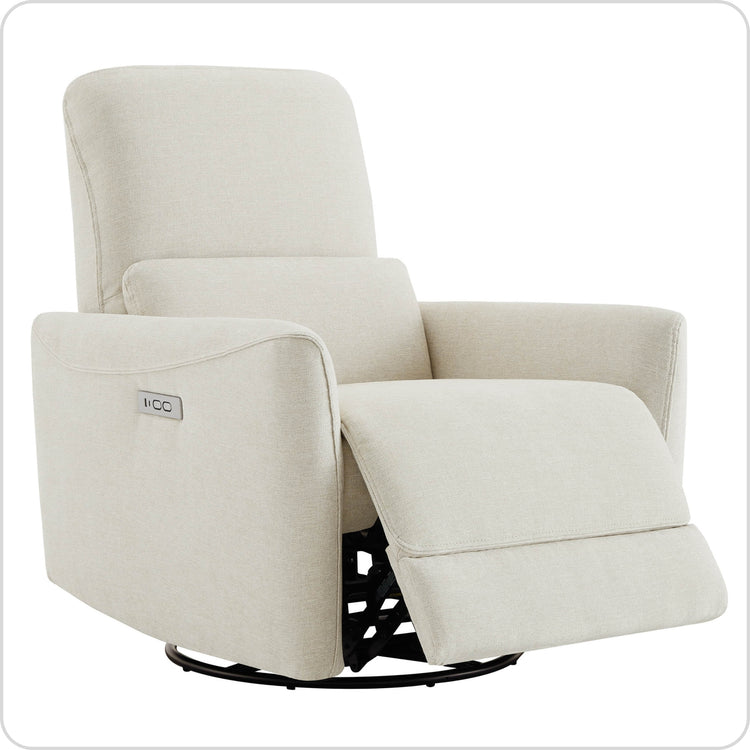
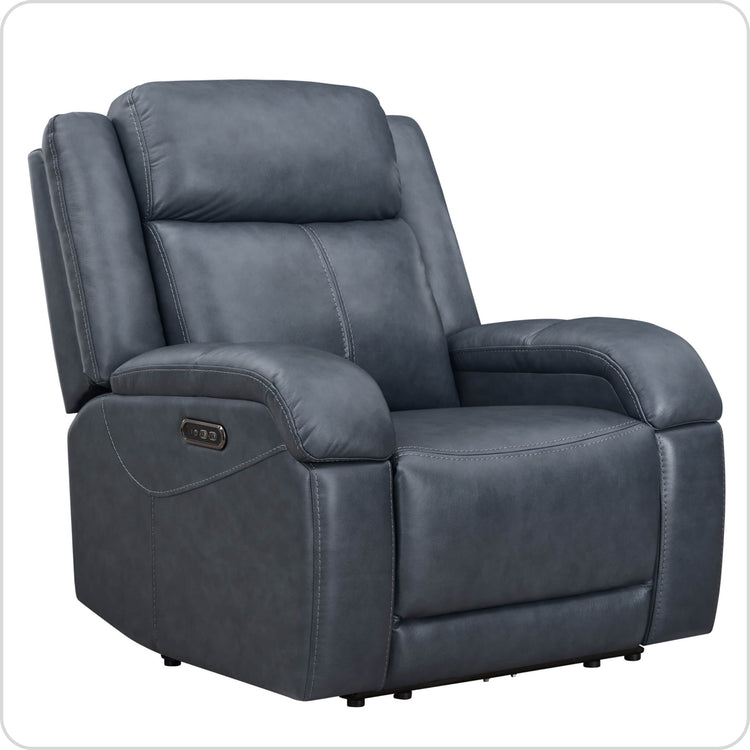
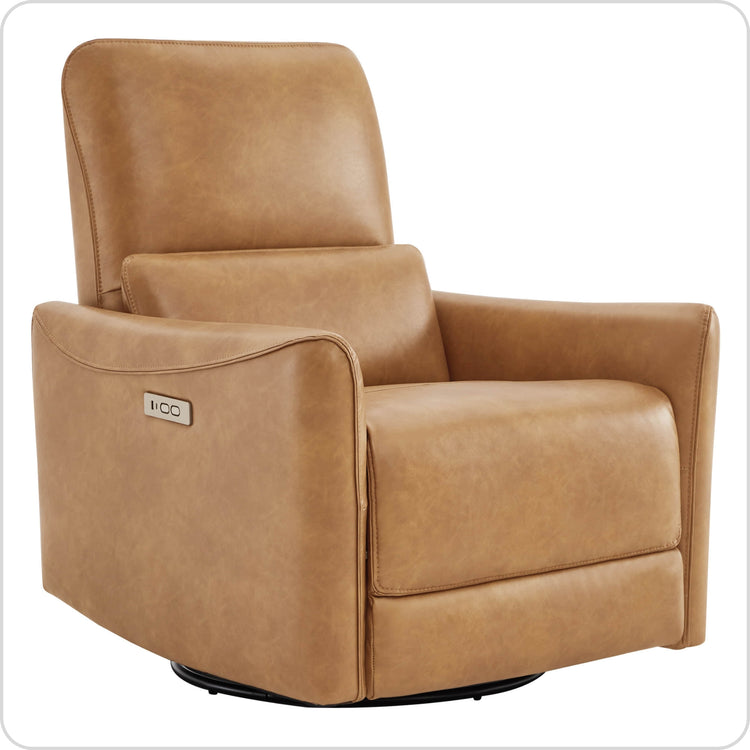







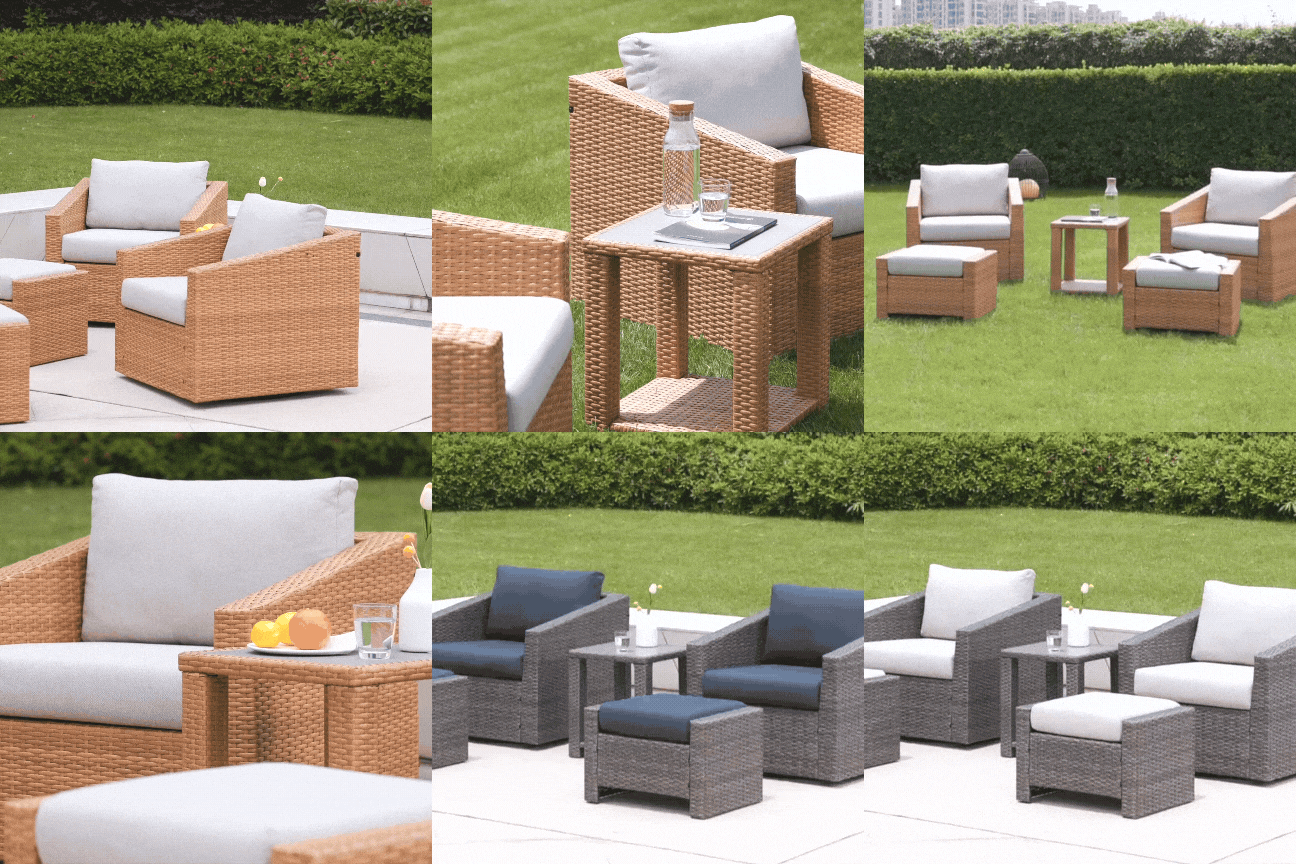








Choose a chair and a half with a matching ottoman when you want a movable arrangement that can be reshaped for guests, cleaning, or a different room layout. Choose a small chaise lounge when you want one fixed, dedicated spot to stretch out and you don't plan to reconfigure the room often.

Both formats get marketed as space savers, but neither wins automatically. The right pick depends on your room's active footprint and the path furniture has to travel to get there, so measure before you decide.
The quick choice: movable flexibility vs. dedicated lounging
A chair and ottoman lounger works best when the room changes function often and the ottoman has somewhere to go when it's not lined up for lounging. A chaise works best when you want one settled reclining position and don't mind its fixed shape and orientation.
- Reconfiguration: The ottoman format adapts to guests, cleaning days, or a rearranged layout; the chaise stays in one orientation unless you move the whole piece.
- Foot-extension comfort: A chaise gives one continuous leg-support surface; the ottoman format lets you pull support closer or push it away as needed.
- Moving through doors: Two smaller pieces can sometimes pass through tighter openings one at a time, but a fixed chaise may travel as a single, more predictable shape. Neither wins without measuring the actual route.
When a chair-and-a-half with ottoman is the better fit
A chair and a half with a matching ottoman is the stronger pick for a room that periodically changes function, such as a living room that becomes a guest space, a cleaning-day floor, or a multipurpose reading nook. Because the ottoman is a separate piece, you can slide it aside, tuck it under a console, or use it as extra seating when the room needs to serve another purpose for a while.
That flexibility comes with a catch: the ottoman still needs somewhere to go. If your room has no realistic spot to park it once it's separated from the chair, the advantage disappears and you're left with an extra obstacle in the walkway. Before you commit to this format, sketch both the aligned arrangement, where the ottoman sits in front of the chair, and the separated arrangement, where it's pushed to the side. If both fit your room comfortably, the ottoman format earns its flexibility claim.
When a small chaise lounge is the better fit
A small chaise lounge is the stronger pick when you want one dedicated place to stretch out without repositioning a second piece every time. The seat and leg rest are built as a single reclining surface, so there's no ottoman to align, adjust, or store elsewhere.
The trade-off is adaptability. A chair-and-ottoman set lets you move leg support toward or away from the seat, or remove it from the main seating area entirely; a chaise keeps that support built in and fixed. If your room's layout is unlikely to change and you value one settled lounging spot over rearranging options, the chaise format is the more direct fit. Either way, test the actual seat depth and width of the model you're considering rather than assuming comfort from the category name alone, since chairs and chaises within the same category vary in scale.
Compare the working footprint and clearance
Compare each option in the position you'll actually use it, not just the bare chair or chaise sitting empty. An ottoman pulled up for foot support adds length to the arrangement, and a chaise's full reclining shape needs its own clear stretch of floor.
Older planning guidance from HUD's House Planning offers a useful reference point for these comparisons: it treats roughly 5 feet as a near-minimum for an easy chair used with an ottoman, 6 to 6.5 feet for someone who stretches out fully, and about 5.5 by 2 feet for a chaise lounge. Treat these as starting lounge-space estimates, not modern product specifications, and replace them with your selected model's actual finished dimensions once you've picked one.
Footprint alone doesn't tell you whether the room still works. Map the door opening, the door's swing, and the room's main traffic path before deciding either arrangement counts as compact. One commonly cited planning approach uses a 36-inch door-opening example and adds clearance for an inward-swinging door, which is a reasonable starting method to apply to your own space rather than a fixed code requirement. If either arrangement eats into that swing space or blocks the main path across the room, look for a smaller model or a different placement before you order. A related guide on wall-hugger recliner clearance walks through similar wall and walkway math if your room has limited depth against a wall.
Measure the moving route before you order
Before you order either format, walk the exact path the furniture will travel and measure it the same way delivery or moving day will use it.
- Map the full route from the truck or curb to the final room, including every hallway, turn, and doorway along the way.
- Measure the narrowest door opening with the door held fully open, plus the space needed for its swing.
- Record hallway width, tight turns, stair dimensions, and elevator door width if any of those apply to your home.
- Compare those route measurements against both the finished piece dimensions and the package dimensions, since a folded or boxed piece can be larger than the assembled furniture.
- Confirm the final room placement only after the route and the active-use footprint both check out.
A separated ottoman may be easier to angle through a tight turn than a single fixed chaise, but that isn't guaranteed for every model or hallway, so measure rather than assume. If you're planning a move around this purchase, our moving-season measurement tips cover the same route-check approach in more depth for larger modular pieces.
FAQs
Should I measure the furniture, the shipping box, or both?
Check both whenever the product listing gives you the numbers. Finished dimensions tell you whether the chair, ottoman, or chaise will actually fit and function in your room, including the space needed for full recline or foot extension. Package dimensions tell you whether the item can get through your door, hallway, or stairwell during delivery or a future move, since a boxed piece is often bulkier than the assembled furniture. Skipping either check is how a piece that "fits on paper" ends up stuck at the front door.
Can a chair and ottoman lounger fit the same footprint as a small chaise?
In active use with the ottoman pulled up for full leg extension, both options take up a similar floor length of roughly 5.5 to 6.5 feet. The main difference is flexibility: a chair and ottoman lounger lets you push the ottoman aside or tuck it away to free up floor space, while a chaise keeps its extended footprint permanently in place.
When should I choose a lounger and chair set over a chaise for a multi-use room?
Choose a lounger and chair set if the room regularly shifts between relaxing, entertaining, and everyday chores, allowing you to repurpose the ottoman as extra seating or clear pathways. Pick a chaise lounge only when you have a dedicated corner or wall that does not need to adapt to changing floor layouts.
Recommended Products

More to Read
 7 Sofa Trends That Actually Improve Comfort in 2026
Upgrade your living room with furniture that supports your body. Here are 7 modern sofa features designed to maximize your daily comfort...
7 Sofa Trends That Actually Improve Comfort in 2026
Upgrade your living room with furniture that supports your body. Here are 7 modern sofa features designed to maximize your daily comfort...
 Mother's Day Gift Guide: Cozy and Stylish Furniture Picks for Modern Moms
Make Mother's Day more meaningful with furniture gifts that bring comfort, smart features, storage, and quiet luxury into her everyday routine.
Mother's Day Gift Guide: Cozy and Stylish Furniture Picks for Modern Moms
Make Mother's Day more meaningful with furniture gifts that bring comfort, smart features, storage, and quiet luxury into her everyday routine.
 Performance Fabric Reality Check: Does It Really Repel Pet Hair and Stains?
Performance fabric is often marketed as a miracle solution for homes with pets and kids, but the reality is more nuanced. It...
Performance Fabric Reality Check: Does It Really Repel Pet Hair and Stains?
Performance fabric is often marketed as a miracle solution for homes with pets and kids, but the reality is more nuanced. It...