














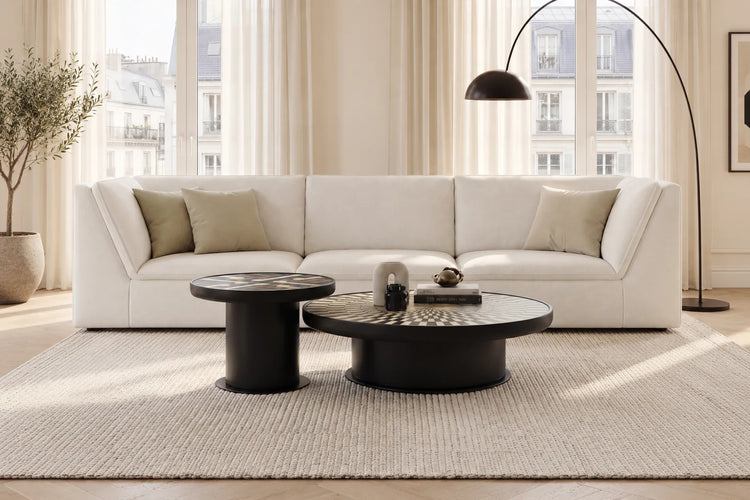










Are modular sectional sofas Worth It for moving season?

A modular sectional sofa is often worth it for moving season if you expect tight hallways, stair turns, or a new floor plan later. It is less compelling if you move rarely and already know the room layout. The real question is not whether modular is trendy, but whether flexibility is worth the extra upfront planning.

Why Moving Season Changes the Sofa Equation
Moving season makes a bad sofa choice more expensive to live with. A bulky one-piece sectional can be harder to return, resell, or simply get through a narrow route once it is already on the truck. A modular sectional sofa reduces some of that pressure because the pieces are easier to handle and can be rearranged later instead of replaced.
That does not mean modular is automatically better. It means the decision shifts from "What looks best in this room today?" to "What will still work after the move?" For renters, young professionals, and downsizers, that second question usually matters more.
If you want a renter-focused deep dive, the modular sofa guide for renters is a useful next stop. For a broad shopping comparison, see modular sofas vs. traditional sofas.
What Makes a Modular Sectional Easier to Move
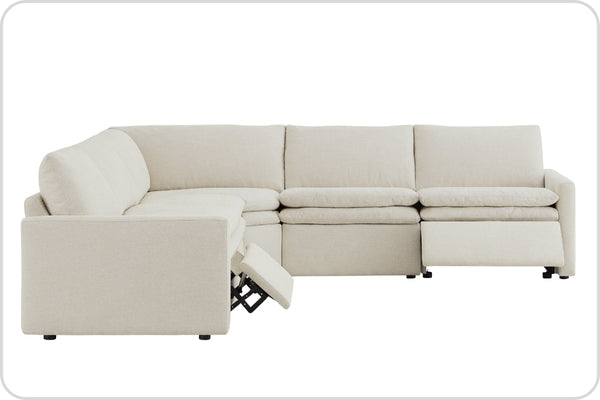
Smaller modules are the main advantage. Instead of wrestling one oversized frame through a doorway, you move separate pieces that are easier to angle through hallways, stairwells, and elevator openings. That is why modular sectionals often feel less stressful during delivery and move-in.
For most buyers, the practical benefit is not a faster move in the abstract. It is fewer "will this fit?" surprises. The HUD fair housing doorway guidance is a reminder that nominal door sizes and clear openings are not the same thing, so you should measure the usable path, not just the label on the door.
Tool-free or low-tool assembly can also reduce move-in friction, but it is not a promise of quick setup in every home. If the boxes are heavy, the elevator is small, or the stair landing is tight, modular still takes effort. The advantage is that effort is usually spread across smaller pieces.

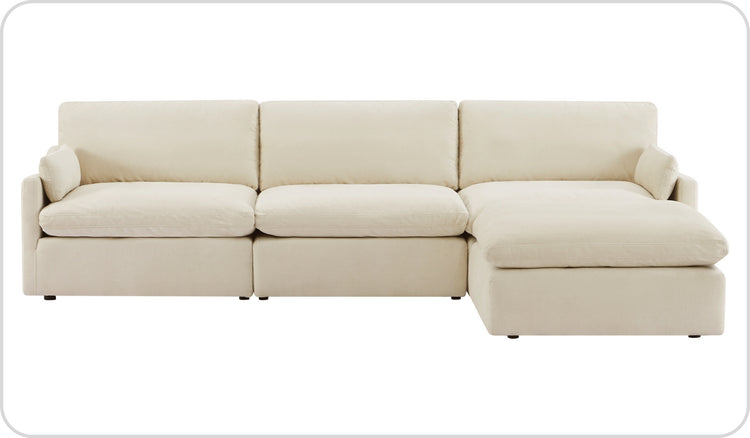
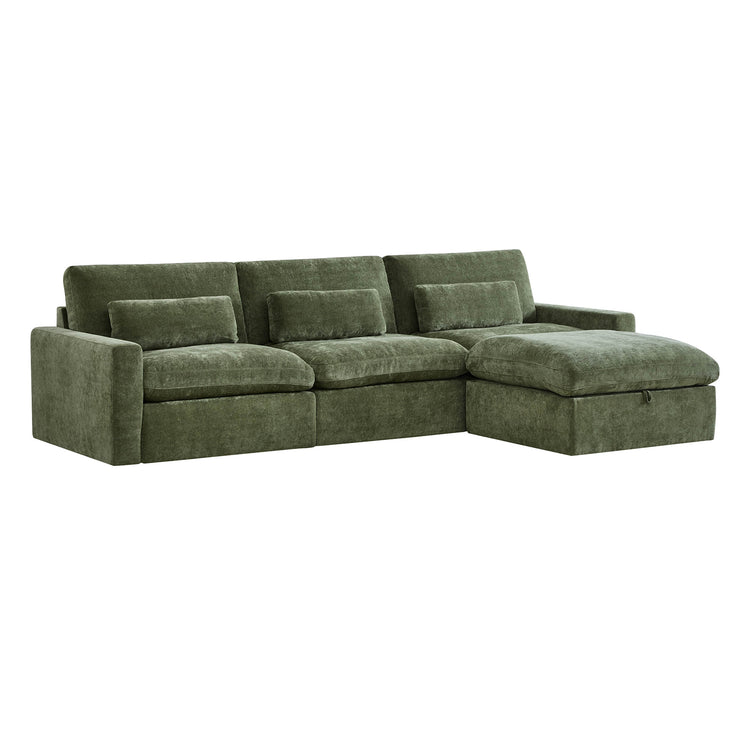
Reconfiguration is the longer-term win. After the move, you can often change from an L-shape to a shorter layout, or separate pieces for a wider room. That makes the sofa less likely to feel obsolete when the next apartment or home has a different footprint. For open-plan homes, see this 2026 guide to modular layouts.
A good way to think about it: modular helps most when the route is awkward now and the room will change later. If neither of those is true, the benefit shrinks fast.
Modular Versus Traditional Sectionals
| Factor | Modular Sectional | Traditional Sectional |
|---|---|---|
| Moving ease | Usually better because pieces are smaller and easier to carry | Often harder because the frame is less forgiving in tight spaces |
| Room adaptability | Strong, since layouts can change after the move | Limited, since the shape is usually fixed |
| Setup stress | Can be lower, but depends on box count and connectors | Can be lower in one stable room, but harder to maneuver first |
| Replacement risk after relocation | Lower if the new room is different | Higher if the next layout does not suit the original shape |
| Best use case | Frequent movers, renters, and changing floor plans | Stable homes with simple access and a fixed layout |
In real moving-season use, modular wins when you value flexibility more than a single locked-in shape. A traditional sectional can still be the better fit if the room is stable, the route is generous, and you do not expect to move again soon.
Who Gets the Most Value
Renters usually get the most value because they are more likely to deal with apartment access, lease changes, and another move later. Young professionals also benefit because job relocations and temporary housing make reconfiguration useful.
New homeowners and downsizers have a different advantage: they can test a room before committing to a final layout. Families may also like the option to expand, split, or simplify seating as the household changes. For example, a couple moving into their first owned home can start with a compact configuration and add modules as children arrive or guests increase.
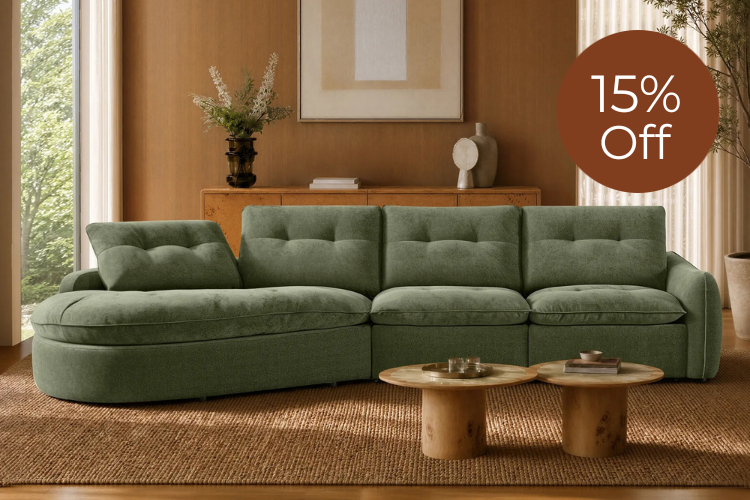
If you are browsing options, start with the Modular Sofas collection. For a more specific browsing path, consider the Delaney 5-seat modular sofa or the Grace curved modular sofa. That said, this category is not always the best fit for every mover. If you have a stable layout, hate visible connectors, or want the simplest possible setup, a fixed sectional may feel easier to live with.
What to Check Before You Buy
- Measure the doorway, hallway, stairwell, and elevator path before you order. A sofa that fits the room can still fail at the turn into the apartment.
- Check each module's size and packaging, not just the assembled sofa dimensions. The box shape is often what determines whether delivery is smooth or stressful.
- Confirm the assembly method. Tool-free setup can be convenient, but it does not remove the need to line up connectors and fit pieces correctly.
- Compare the next room first, not the current one. The whole point of a modular sectional is long-term flexibility after the move.
- Treat retailer photos as a reference, not proof. Your building, your route, and your floor plan are the real test.
For buyers who also care about fabric durability during repeated moves, performance fabric guidance can help you judge whether the upholstery will hold up to daily use after relocation. A separate modular sofa stability guide covers connectors and grips that keep sections aligned on hard floors.
A practical decision sentence: if you cannot measure the path and each module, do not assume modular will solve the move. Another useful boundary: if your new room is the same size and shape as the old one, the flexibility premium may not pay off.
Best Fit and Final Takeaway
A modular sectional sofa is worth it for moving season when the move itself is part of the problem. If you expect stairs, tight access, rental turnover, or changing room layouts, modular usually gives you more control and fewer regrets later. If your home is stable and access is easy, a traditional sectional can still be the simpler buy.
The safest rule is simple: choose modular for flexibility, not for magic. Measure first, then buy the shape that fits both the move and the next room.
Related Resources
FAQs
Q1. How Do You Know If a Modular Sectional Will Fit Your New Home?
Measure the route, not just the room. Check the doorway width, hallway turns, stair landings, elevator size, and each module's package dimensions. If any one of those points is too tight, the sofa may fit in theory but still be difficult in practice.
Q2. What Makes a Modular Sofa Better for Renters?
Renters often move more often, so the value comes from flexibility. Modular pieces are easier to carry, easier to rearrange, and less likely to become a bad fit if the next apartment has a different layout or smaller entry points.
Q3. Can a Modular Sectional Be Reconfigured After Moving?
Usually yes, but only within the module set you own. That means the range of layouts depends on the pieces included, the connectors, and the room shape. A modular sectional can adapt, but it cannot create every possible seating arrangement.
Q4. Why Do Some Modular Sectionals Still Feel Hard to Move?
Modular does not mean effortless. Heavy boxes, narrow stairs, long hallways, and awkward corners can still create moving-day friction. The pieces may be smaller, but you still have to carry, align, and connect them correctly.
Q5. What Should You Prioritize If You Move Every Few Years?
Prioritize transport flexibility, module size, and reconfiguration options. If you know your room will change again, those factors usually matter more than a perfectly fixed layout or a style choice that only works in one home.
Recommended Products



More to Read
 7 Sofa Trends That Actually Improve Comfort in 2026
Upgrade your living room with furniture that supports your body. Here are 7 modern sofa features designed to maximize your daily comfort...
7 Sofa Trends That Actually Improve Comfort in 2026
Upgrade your living room with furniture that supports your body. Here are 7 modern sofa features designed to maximize your daily comfort...
 Mother's Day Gift Guide: Cozy and Stylish Furniture Picks for Modern Moms
Make Mother's Day more meaningful with furniture gifts that bring comfort, smart features, storage, and quiet luxury into her everyday routine.
Mother's Day Gift Guide: Cozy and Stylish Furniture Picks for Modern Moms
Make Mother's Day more meaningful with furniture gifts that bring comfort, smart features, storage, and quiet luxury into her everyday routine.
 Performance Fabric Reality Check: Does It Really Repel Pet Hair and Stains?
Performance fabric is often marketed as a miracle solution for homes with pets and kids, but the reality is more nuanced. It...
Performance Fabric Reality Check: Does It Really Repel Pet Hair and Stains?
Performance fabric is often marketed as a miracle solution for homes with pets and kids, but the reality is more nuanced. It...