




















How to Choose media storage furniture for robot vacuum storage

The right tv stand is determined by the robot vacuum and dock’s complete operating envelope—not by the furniture’s exterior width alone. Measure the vacuum, dock, approach path, cable route, and maintenance space first. Then consider only furniture whose usable opening or underside preserves those conditions. Your vacuum’s manual sets the exact clearance and placement rules, so style and concealment come after fit.

Measure the Dock’s Full Operating Envelope Before Choosing a TV Stand
Start by treating the dock, robot, and surrounding movement area as one usable footprint. A media console can be wide enough for the dock yet unusable if a leg, cabinet side, rug, or nearby wall blocks the return path.
- Measure the vacuum and dock separately. Record the robot’s width, depth, and height, then measure the dock’s full base and any attached components. Note whether the robot docks beneath furniture, from the front, or from the side.
- Copy the exact requirements from the manual. Record the required front, side, top, airflow, placement, and communication clearances for your model. As a manufacturer-specific illustration, a Roborock clearance example specifies about 20 inches on each side and 59 inches in front of the dock. Those figures are not a universal robot-vacuum standard.
- Map the operating and service paths. Include the robot’s approach, departure, return, cleaning, emptying, and manual-removal space. Account for the furniture’s final position, including legs, doors, drawers, thresholds, and nearby pieces.
- Trace the power route. Measure the cable’s path to the outlet, including plug depth, bend room, and the space needed to reach the charging connection without pinching the cable. The iRobot placement guidance also illustrates that manual placement can involve a specified gap between the dock and bumper. That point applies to manual placement, not autonomous docking or furniture clearance.
- Mark the envelope before shopping. Use painter’s tape on the floor to outline the dock and its required operating area. Compare that outline with the listing’s usable underside, opening, leg spacing, rear clearance, and interior dimensions. If the listing gives only overall furniture dimensions, the fit remains unverified.
The selection rule is simple: reject any media console, sideboard, or tv stand whose usable space or surrounding path is smaller than the measured operating envelope, or whose cable and maintenance access would be impractical.
Choose the Furniture Layout That Matches the Docking Approach
Choose the layout based on how your robot reaches and leaves its dock. Open, raised, and enclosed furniture are conditional options, not compatibility categories; any design that interrupts the verified path is unsuitable.
| Furniture layout | Best when | Must-confirm fit condition |
|---|---|---|
| Open lower bay | The dock needs a clear front approach, visible access, or easy service | The open height, depth, side space, cable route, and nearby floor area preserve the full envelope specified in the manual |
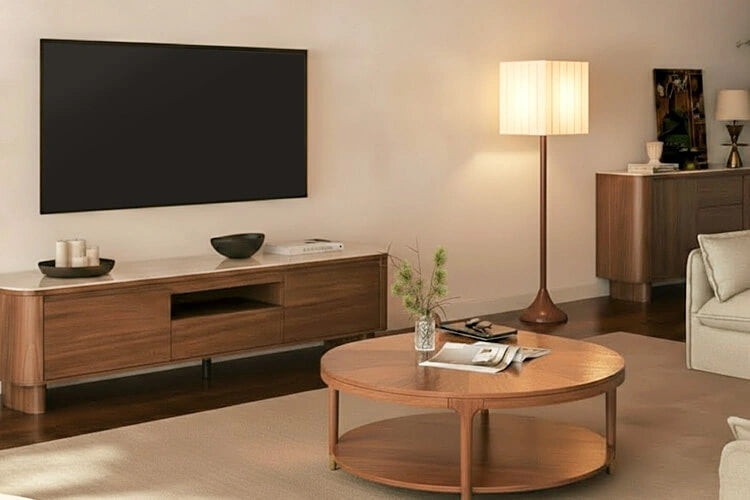
| Raised tv stand | You want the dock beneath the unit and the robot can approach from an open floor area | Underside height, depth, leg spacing, side clearance, and rear cable access all match the measured setup |
| Enclosed cabinet or garage | Concealment is a priority and the manufacturer permits this placement | Doors, airflow, communication, charging, approach, cable routing, and maintenance remain workable during normal use |
An open lower bay is usually the least restrictive design when the dock needs a broad approach or frequent hands-on access. It may leave the equipment visible, but it puts fewer furniture components in the robot’s path.

A raised tv stand can provide a cleaner look when its legs create a genuinely usable bay. Do not use the stand’s total height as proof of fit. Measure from the floor to the actual underside and account for leg placement and side obstructions.
An enclosed cabinet hides the dock most effectively, but it introduces the most conditions. A door or panel can obstruct entry, while the interior may limit cable access, airflow, communication, or maintenance. The iRobot manual-placement example does not establish that autonomous docking will work inside a cabinet. When a layout passes the measured boundary, you can browse media storage and compare openings, legs, and access details instead of shopping by appearance alone.
Verify Charging, Airflow, Cables, and Maintenance Access
Physical fit is only the first gate. Use an open or manufacturer-approved arrangement when the manual does not clearly support enclosed placement or when a critical operating condition cannot be confirmed.
First, confirm that the dock can remain at its intended charging location after the furniture is installed. The cable should reach the outlet without being pinched, sharply bent, or made inaccessible. A cable port may help with routing, but its presence alone does not prove that the dock can charge correctly in its final position.
Next, apply the model-specific airflow, ventilation, communication, enclosure, and placement requirements you recorded earlier. Cabinet doors, holes, or an under-furniture opening do not by themselves establish approval, reliable communication, or charging performance.
Inspect the complete floor path after placement. Legs, doors, drawers, rugs, thresholds, and nearby furniture can narrow the route even when the cabinet opening appears large enough. The dock should not need to move for the robot to return, and the robot should not need to pass through a door that must be opened for every cycle unless the manufacturer specifically supports that arrangement.
Finally, plan for routine access. You should be able to lift out the robot, clean the dock area, empty or service the vacuum, and reach the charging connection without moving the entire media console or sideboard. If that access is missing, the furniture is a poor operational fit even when its measurements look acceptable.
Check TV Support, Storage, and Room Fit After the Dock Passes
Compare TV support, storage, and styling only among furniture options that already pass the dock test. These details can help you choose between two eligible pieces, but they cannot fix a blocked approach or missing usable dimension.
Confirm the listing’s stated TV width and load guidance, then follow its installation and stability instructions. The furniture should remain stable in its final position, particularly when doors, drawers, media equipment, or a concealed dock affect how it is used. Use the manufacturer’s anchoring instructions where provided rather than assuming a heavy piece is automatically secure.
Review usable media-cabinet depth, shelf height, drawer access, and openings for streaming devices and other electronics. Keep media-device cable routing separate from the robot dock’s power route so one installation does not crowd or displace the other. A cable-management feature is useful only if it leaves the dock’s connection and service path reachable.
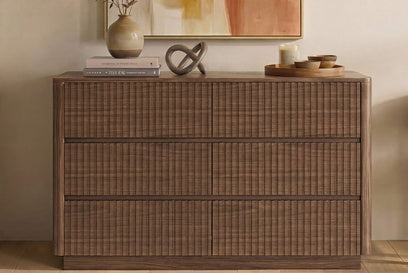
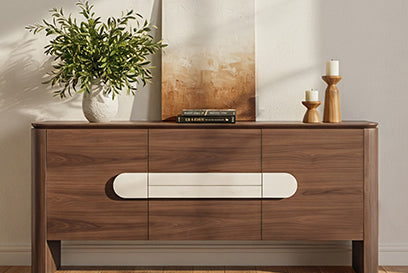
Then judge room proportion, finish, leg profile, doors, and visual weight. A sideboard may suit the room better than a traditional media console, while an open lower bay may preserve the dock’s path better than a visually cleaner cabinet. If interior, underside, opening, leg-spacing, or cable-access dimensions are missing, ask the seller for them before treating the listing as eligible.
Make the Final Cart Decision From the Verified Fit
Use the vacuum manual and the furniture listing together for the final verification. Buy only an option whose usable dimensions and operating conditions pass. If a critical fact is missing, pause the order and ask for it.
- Place the manual beside the listing. Mark the model-specific clearance, placement, airflow, communication, and access requirements.
- Match usable space, not advertised footprint. Compare the marked envelope with the actual opening or underside height, depth, leg spacing, rear clearance, cable route, and charging location.
- Eliminate obstructed designs. Remove options that require moving the dock, blocking the return path, compressing the cable, or opening a door for each docking cycle without manufacturer support.
- Apply the remaining furniture criteria. Compare TV support, stability, media storage, room proportions, finish, assembly, delivery, and return terms only among layouts that pass the dock check.
- Resolve missing facts before adding to the cart. Ask the seller for any omitted usable dimension or access detail. Do not infer compatibility for a named robot vacuum from overall furniture dimensions alone.
The best choice is the piece that preserves the model-specific dock envelope while meeting your TV and storage needs. Once that fit is documented, compare suitable media-storage options or ask the seller for the one missing dimension that determines whether the furniture belongs in your cart.
Frequently Asked Questions
These answers address common fit questions that come up when comparing media consoles, TV stands, and sideboards for robot vacuum storage.
Can a robot vacuum dock go under a TV stand?
Yes, when the usable underside, front approach, charging location, cable route, and model-specific placement requirements all pass. Check the actual underside and surrounding floor area, not just the stand’s exterior dimensions.
How much clearance does a robot vacuum need around its dock?
There is no universal number. Use the vacuum and dock manual for front, side, top, cable, and placement requirements. One Roborock support example specifies about 20 inches on each side and 59 inches in front, but that is a manufacturer-specific example, not a general standard.
Is it safe to put a robot vacuum in an enclosed cabinet?
Only when the manufacturer permits the arrangement and the cabinet preserves stated airflow or other requirements, charging access, communication, door movement, cable routing, and maintenance access. If those conditions are unclear, choose an open or manufacturer-approved position.
What should I measure before buying a media console for a robot vacuum?
Measure the vacuum and dock footprints, manual-specified clearances, approach and return path, cable and outlet route, maintenance space, and the furniture’s usable opening or underside. Exterior width, depth, and height are not enough.
Recommended Products


More to Read
 7 Sofa Trends That Actually Improve Comfort in 2026
Upgrade your living room with furniture that supports your body. Here are 7 modern sofa features designed to maximize your daily comfort...
7 Sofa Trends That Actually Improve Comfort in 2026
Upgrade your living room with furniture that supports your body. Here are 7 modern sofa features designed to maximize your daily comfort...
 Mother's Day Gift Guide: Cozy and Stylish Furniture Picks for Modern Moms
Make Mother's Day more meaningful with furniture gifts that bring comfort, smart features, storage, and quiet luxury into her everyday routine.
Mother's Day Gift Guide: Cozy and Stylish Furniture Picks for Modern Moms
Make Mother's Day more meaningful with furniture gifts that bring comfort, smart features, storage, and quiet luxury into her everyday routine.
 Performance Fabric Reality Check: Does It Really Repel Pet Hair and Stains?
Performance fabric is often marketed as a miracle solution for homes with pets and kids, but the reality is more nuanced. It...
Performance Fabric Reality Check: Does It Really Repel Pet Hair and Stains?
Performance fabric is often marketed as a miracle solution for homes with pets and kids, but the reality is more nuanced. It...