
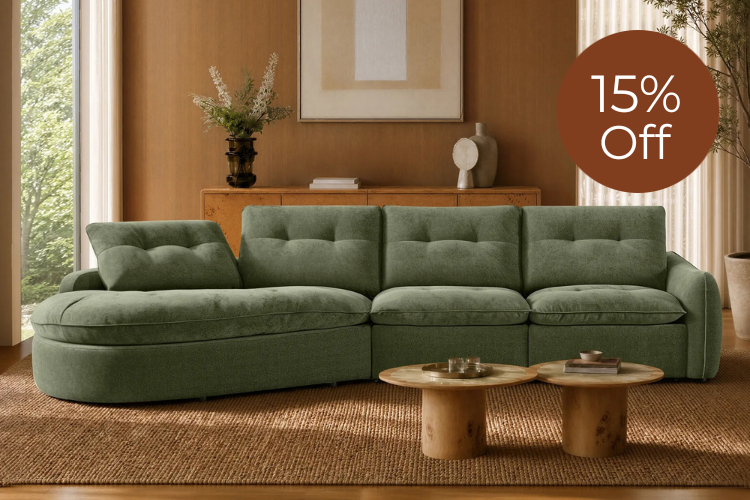























Coffee Tables Mistakes to Avoid in sectional sofas

Coffee Table Mistakes to Avoid With a Sectional Sofa
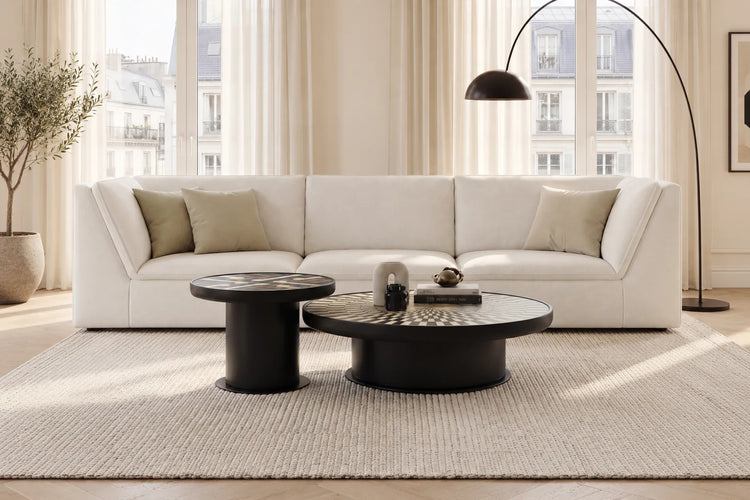
A coffee table works with a sectional sofa only when its footprint leaves enough room for comfortable reach, seat access, everyday traffic, and any moving recliner parts. Start by taping the empty center of the room before comparing finishes or adding a table to your cart. If the taped footprint forces people to squeeze through, blocks access to the chaise, or overlaps a recliner's movement, choose a smaller, movable, side-access, or no-table solution instead.

Measure the Sectional Sofa Area Before You Shop
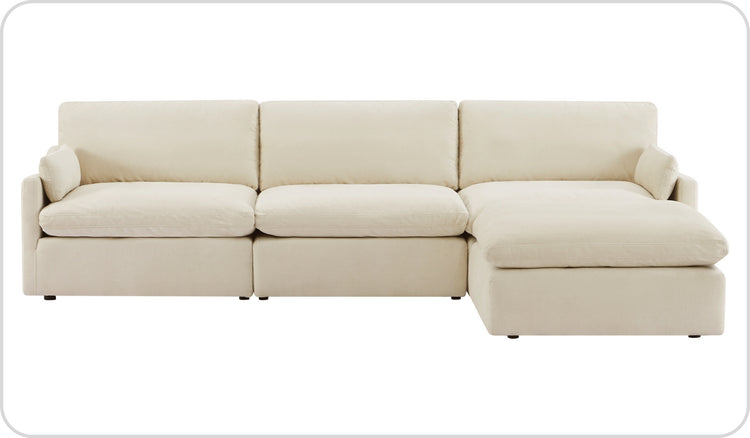
First, map the assembled sectional and the open area it creates. Room size alone cannot tell you whether a coffee table will fit a particular sectional sofa layout.
- Record the boundaries. Measure the sectional as it sits today, including the chaise, corner, ottoman, and any modules that change the seating edge. Note the open center the table would serve instead of measuring only the room's outside walls.
- Mark movement and access. Use painter's tape to mark the room entry, door swings, routes to nearby rooms, approaches to the seats and chaise, and the full movement area of any power-reclining seats.
- Tape the candidate footprint. Mark the table's listed length and width on the floor. Test access from each usable seat, including the main seat, corner, and chaise. Walk the routes while the footprint is in place.
- Make a category decision. Keep a conventional coffee table only when its footprint preserves reach, seat access, the usable center, and normal routes. Otherwise, change the footprint, choose a movable or side-access surface, or leave the center open. A coffee table scale guide can help with style decisions after the floor area passes this test.
Use the taped test before shopping so the layout—not a product photo or attractive listing—determines the table category.
Mistake: Choosing Coffee Table Height Without Checking Seated Reach
Compare the table with the occupied sectional seat, then test reach from the actual seats. As a starting design guideline, the tabletop can sit about level with the occupied seat or 1–2 inches lower, but the occupied seats and taped layout determine whether that relationship works.
Measure the top of the cushion while someone is seated instead of judging an empty cushion or showroom photo. Then check the main seat, corner, and chaise separately. A table can be a reasonable height and still be too far away from one seating position, or close enough to reach while crowding another.

Use roughly 14–18 inches from the front edge of the seat to the table as a starting test for reach and legroom. Widen or narrow that distance when the layout calls for it. This is a starting point for seated use, not a walkway or power-recliner clearance measurement.
When height and reach do not work together, stop trying to make the same central table work. Try a different profile or footprint, reposition it only if routes remain usable, or switch to a side-access surface. The right coffee table for sectional sofa use is the one that serves the seats people actually use.
Mistake: Choosing Table Dimensions and Shape Before Mapping the Open Area
Choose the footprint based on the usable space formed by the sectional, doors, nearby furniture, and walking routes. For a chaise sectional, use the longest seating run the table actually serves as a starting reference rather than treating the full outside perimeter as one straight sofa. A rough half-to-two-thirds proportion can be a useful starting guideline, but the taped footprint and live test control the decision.
Rectangular footprints tend to suit elongated open areas. Round or oval footprints can reduce corner conflicts in tighter or corner-sensitive layouts, while a square footprint may suit a relatively even center surrounded by seating.
| Usable layout | Shape to test first | Corrective choice if it fails |
|---|---|---|
| Elongated open area | Rectangular | Rotate or reduce the rectangle while keeping its corners inside the usable area. |
| Enclosed or even center | Square, round, or oval | Reduce the footprint if it consumes the center or narrows the opening. |
| Compact or corner-sensitive area | Round or oval | Choose a smaller, movable, or side-access surface, or leave the center open. |
If you are ready to compare table categories, browse coffee tables only after you have an approved floor footprint. The collection is a shopping destination, not proof that a listed table fits your room.
Mistake: Letting the Coffee Table Break Walking Routes
A table fails the room when it interrupts the routes people use to enter, sit, stand, reach the chaise, pass through a doorway, or move toward an adjacent room. Trace those routes with the candidate footprint marked instead of judging the table as a static centerpiece.
If someone instinctively turns sideways, angles their shoulders, squeezes through, or loses a needed approach, move, reduce, replace, or remove the table. The fix may be a different orientation, a shallower footprint, a movable surface, or no central table at all.
L-Shaped and U-Shaped Layouts
An L-shaped sectional needs to serve both seating legs, the corner, and the chaise approach. Test the table from each position rather than centering it solely in the room. If one run is too far from the surface or a rectangular corner reaches into a route, change the orientation or footprint.
A U-shaped sectional needs a usable center and an entry route into it. Measure the opening and enclosed area before shopping, because a room may look large while its usable interior remains limited. Keep the center accessible; a table that fills the enclosure or blocks its entry does not fit the layout. When comparing configurations, use the taped floor plan to make the table decision.
Modular and Power-Reclining Layouts
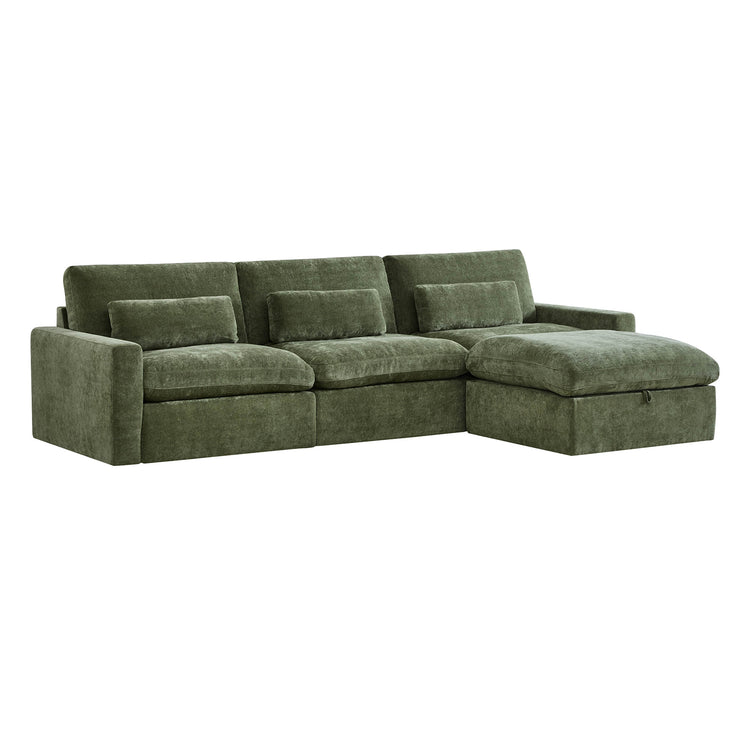
A modular sectional sofa can change the usable center when its modules move. Test the current arrangement and any realistic configuration your household expects to use. If a new arrangement pushes the table into an access route, choose a smaller, movable, side-access, or no central surface rather than approving a fixed table based on one arrangement alone.
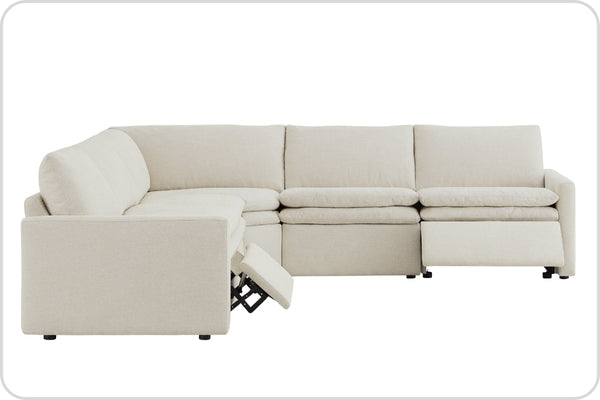
For a power-reclining sectional, mark the proposed table footprint and operate every recliner through its intended movement. Check the specific sectional manual for exact placement requirements. Reject any placement where the footrest or back movement meets the table or where operation removes access. No universal power-reclining clearance number can safely replace a model-specific check.
Approve the Layout With a Live Floor Test Before Ordering
The final decision is to keep, change, or reject the table. Leave the footprint marked, walk normal routes, sit in the main seat, corner, and chaise positions, test actual reach, and operate every moving seat before ordering.
Compare the candidate's listed length and width with the approved tape outline. Account for door swings, pathways, nearby furniture, and any realistic modular reconfiguration. If the table passes only when people avoid a route, recliners remain parked, or one seating position goes unused, it has not passed the test.
Keep the candidate only when access, reach, circulation, and moving-seat operation work in the current arrangement. If it fails, change the size or shape, reposition it, choose a side-access or movable surface, or leave the center open. Tape the layout today, then add a table to the cart only after it passes the live test.
Frequently Asked Questions
Should a Coffee Table Be Higher or Lower Than a Sectional Sofa Seat?
Start by comparing the tabletop with the occupied seat cushion. About the same height or 1–2 inches lower is a useful starting point; then test reach from the main seat, corner, and chaise before keeping that height.
Is a Round or Rectangular Coffee Table Better for an L-Shaped Sectional?
Choose based on the usable open area. A rectangle often suits an elongated seating run, while a round or oval footprint may reduce corner conflicts. Tape both options and keep the one that preserves access to both seating legs and the chaise approach.
What Should I Check Before Placing a Coffee Table in Front of a Power-Reclining Sectional?
Use the model-specific operating check described above: keep a table only if the seats move as intended and access remains available.
Do I Need a Coffee Table With a Compact Sectional Sofa?
No. If a conventional table interrupts routes or seat access, a smaller table, movable side surface, or open center may work better. Use the taped floor test instead of forcing a centerpiece into the room.
Recommended Products

More to Read
 7 Sofa Trends That Actually Improve Comfort in 2026
Upgrade your living room with furniture that supports your body. Here are 7 modern sofa features designed to maximize your daily comfort...
7 Sofa Trends That Actually Improve Comfort in 2026
Upgrade your living room with furniture that supports your body. Here are 7 modern sofa features designed to maximize your daily comfort...
 Mother's Day Gift Guide: Cozy and Stylish Furniture Picks for Modern Moms
Make Mother's Day more meaningful with furniture gifts that bring comfort, smart features, storage, and quiet luxury into her everyday routine.
Mother's Day Gift Guide: Cozy and Stylish Furniture Picks for Modern Moms
Make Mother's Day more meaningful with furniture gifts that bring comfort, smart features, storage, and quiet luxury into her everyday routine.
 Performance Fabric Reality Check: Does It Really Repel Pet Hair and Stains?
Performance fabric is often marketed as a miracle solution for homes with pets and kids, but the reality is more nuanced. It...
Performance Fabric Reality Check: Does It Really Repel Pet Hair and Stains?
Performance fabric is often marketed as a miracle solution for homes with pets and kids, but the reality is more nuanced. It...