























Coffee Tables: round shape vs Alternatives for small living rooms

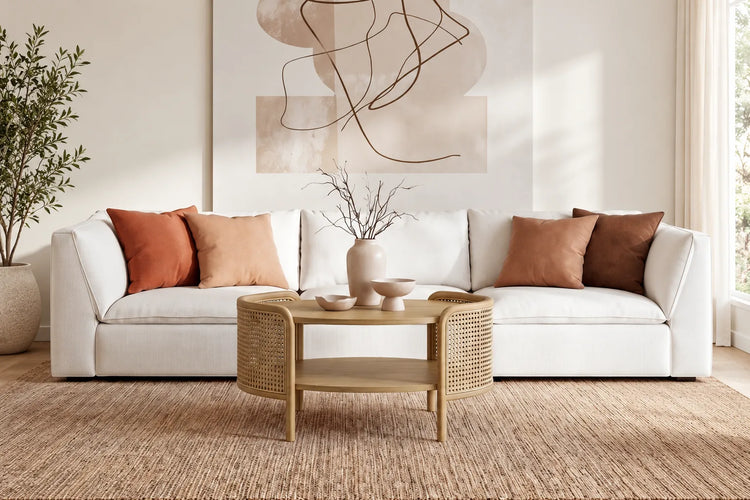
A round coffee table is the first shape to test when people approach the center from several directions and clear movement is the main constraint. A rectangular option may fit better in front of a long sofa, a square option can suit balanced seating, nesting tables help when surface needs change, and a storage ottoman makes more sense when concealed storage or foot support matters most. The right choice is the one whose full footprint preserves your routes and supports daily use.

Which Coffee Table Shape Fits a Small Living Room?
Start with the room’s main constraint, then choose the category that addresses it. Living room measurement guidance recommends starting with the room’s footprint and circulation rather than choosing by shape alone. Every option still needs a full-footprint and walk-path test.
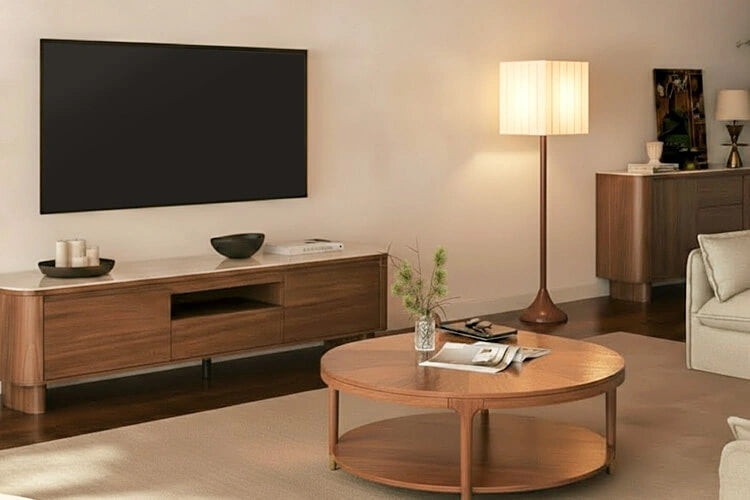
A round option is a strong starting point for a central arrangement with seating on more than one side. Its curved perimeter can make movement from several directions easier, but it may provide less uninterrupted tabletop length than a rectangular option with a similar overall footprint. Tape out the full circle before deciding that it works.

A rectangular option is the first category to test when a long sofa creates a defined area in front of it. Its continuous length can give several people access to drinks, remotes, or books along the sofa, but its corners need particular attention near a doorway, chair approach, or crossing route.
A square option can work well when the seating and usable floor area are relatively balanced. It offers a centered surface for seating arranged around a focal point, though all four corners become part of the circulation test. A square footprint that looks centered on paper can still interfere with one seat or passage.
Choose nesting tables when your surface needs change between everyday living and hosting. Test the pieces together for a smaller daily footprint and separately when guests need more surface, but remember that the expanded arrangement may crowd the room. Both configurations must pass the walk-path test.
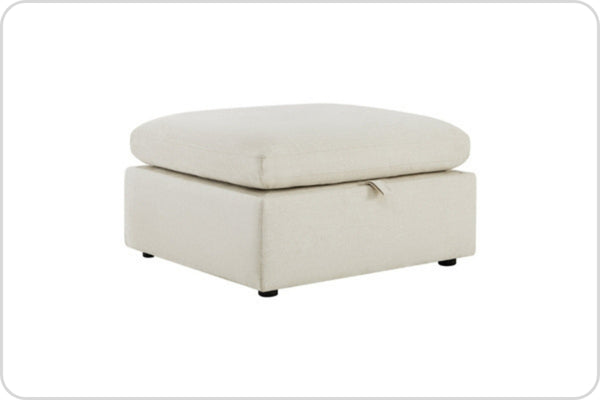
Choose a storage ottoman when concealed storage and foot support are more valuable than a conventional hard tabletop. This category can combine table use with a softer central surface, but drinks, remotes, books, and laptops still need a practical place to land. Treat these as starting categories, not a universal ranking: mark the full footprint, test the routes, and keep the option that supports how the room is actually used.
Round, Rectangular, Square, Nesting, or Storage Ottoman: Compare the Trade-Offs
The first three rows describe shape, while nesting and storage ottoman describe configuration or function. They are separate filters, not mutually exclusive categories: for example, Grace is both round and a storage ottoman. Use the table to identify the first category to test, then confirm its trade-off with a taped footprint and your household’s daily tasks.
| Option | Strongest fit for a small living room | Trade-off or check before purchase |
|---|---|---|
| Round | Multi-directional seating where a curved perimeter suits the central route and access comes from several sides | Compare the full diameter with the narrowest path. You may give up some uninterrupted tabletop length compared with a rectangular option. |
| Rectangular | A long sofa or defined area in front of the sofa where continuous tabletop length matters | Check both corners, the sofa-to-table approach, and any route that crosses the short ends. |
| Square | Balanced seating and a relatively even central footprint | Test every corner near a passage or chair. A centered shape still needs enough room for each seat approach. |
| Nesting tables | Changing surface needs, such as everyday use followed by occasional hosting | Measure and tape both nested and separated layouts. The expanded arrangement may use more floor area than the room can spare. |
| Storage ottoman | Storage-first or lounge-oriented rooms where hidden storage and foot support matter more than a rigid tabletop | Confirm that the surface works for drinks, remotes, books, and laptops. Do not assume storage capacity or room fit from the category alone. |
For a product example, the Grace round storage ottoman is described as doubling as a coffee table with hidden storage and footrest use. Its listed dimensions are 38.2 inches in diameter and 16.1 inches high. Those details make it possible to tape-test a specific footprint, but they do not establish that it fits every small living room or reveal how much storage the compartment holds.
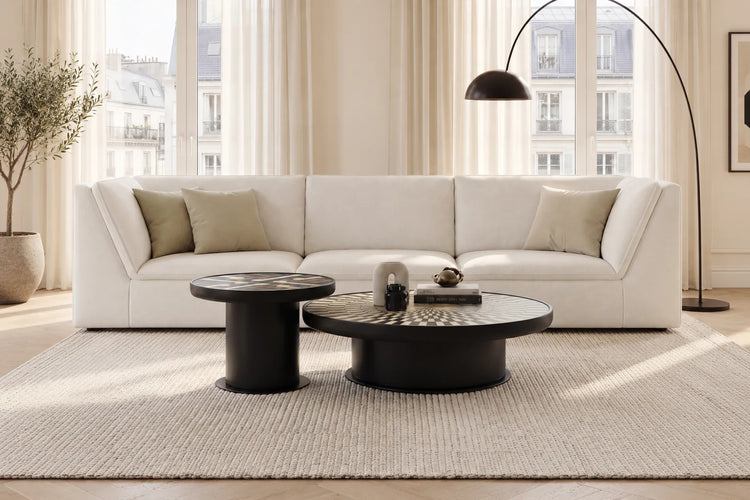
For flexible surface area, the Chess nesting table set uses a two-piece nesting configuration with separate-use functionality. The listing gives the larger piece as 35.4 by 35.4 by 12.2 inches and the side piece as 23.6 by 23.6 by 16.9 inches. It does not provide an exact nested overall footprint, so test the actual arrangement rather than calculating one from the individual dimensions.
These examples illustrate functions, not room-wide recommendations. Before comparing finishes or style, decide whether the selected category passes the circulation, seat-access, surface-function, and primary-purpose checks.
Measure the Layout, Verify the Listing, and Make the Purchase Decision
Begin with painter’s tape or cardboard, not the shopping cart. Mark the full assembled footprint, test the room with that shape in place, and compare your usable measurements with the current product listing before ordering. Published furniture-arrangement guidance and living room layout guidance can provide practical planning context, but neither replaces a room-specific test.
- Map the fixed and moving elements. Mark the sofa, accent chairs, walls, doors, vents, recliners, drawers, and furniture that must open, turn, or move. Note the narrowest route into the room and the path from each main seat.
- Mark the complete proposed footprint. Use the maximum assembled length and width, or the full diameter for a round option. For nesting tables, mark the nested arrangement and the separated arrangement as two different layouts. For an ottoman, include the entire outside edge rather than only the usable top.
- Walk the narrowest route. Move through the room normally, approach the marked footprint from every main seat, and test the route to the doorway. Any published spacing figure should be treated as a starting point, not a code, accessibility threshold, or safety requirement. Adjust the layout when your furniture, route, or household movement calls for more space.
- Test ordinary reach and surface use. Place a drink, remote, book, and laptop where they would normally go. Sit in each main seat and check whether the surface is reachable without leaning around another piece. If the item is also meant for foot support or storage, test that primary function instead of judging only the top surface.
- Operate nearby furniture. Open drawers, move a recliner through its full-use position, swing doors, and check that vents are not covered by the proposed footprint. Repeat this with the separated nesting tables if that is one of your planned layouts.
- Record the usable maximums. Write down the greatest length, width, and height the room can accept while preserving the routes and seat approaches that matter. For a round option, record the maximum diameter. For an ottoman, record the height that works with the seating and daily surface tasks.
- Compare the complete listing. Match your measurements against the current assembled dimensions, not just the headline tabletop size. Confirm assembly details and account for legs, bases, cushions, or other parts that affect the final footprint.
- Check the delivery route and purchase terms. Measure the entry door, hallway turns, elevator or stair path, and room doorway against the packaged or assembled requirements shown on the live listing. Review the current assembly, delivery, returns, and warranty information before ordering, since these terms can vary by product.
- Keep only a passing option. Add the selected piece to the cart only when it preserves the narrowest walk path, allows access from the main seats, supports the required surface tasks, performs its primary function, matches the live assembled dimensions, and can reach the room through the delivery path. If it fails one of those checks, return to the next category rather than forcing the preferred shape.
Frequently Asked Questions
Use these questions for edge cases that can arise after the main footprint test, especially when a category or listing appears to fit but the purchase decision is still unclear.
Can One Piece Fit More Than One Category?
Yes. Shape and function are separate filters, so a round piece can also be a storage ottoman, while a nesting set is defined by its two-piece configuration. Classify the item by the feature that drives your decision, then apply the relevant footprint and daily-use checks.
What If the Piece Fits the Room but Not the Delivery Route?
Do not add it to the cart yet. Compare the packaged dimensions and route requirements shown on the live listing with the entry, turns, stairs, elevator, and doorway measurements. If the path fails, choose another option that passes both the room test and the delivery test.
Which Listing Details Can Change the Final Decision?
Assembly, delivery conditions, returns, and warranty terms can affect whether a seemingly suitable option is practical to order. Review those details on the current product page after the room test, and keep a record of the dimensions and terms you used for the decision.
Recommended Products

More to Read
 7 Sofa Trends That Actually Improve Comfort in 2026
Upgrade your living room with furniture that supports your body. Here are 7 modern sofa features designed to maximize your daily comfort...
7 Sofa Trends That Actually Improve Comfort in 2026
Upgrade your living room with furniture that supports your body. Here are 7 modern sofa features designed to maximize your daily comfort...
 Mother's Day Gift Guide: Cozy and Stylish Furniture Picks for Modern Moms
Make Mother's Day more meaningful with furniture gifts that bring comfort, smart features, storage, and quiet luxury into her everyday routine.
Mother's Day Gift Guide: Cozy and Stylish Furniture Picks for Modern Moms
Make Mother's Day more meaningful with furniture gifts that bring comfort, smart features, storage, and quiet luxury into her everyday routine.
 Performance Fabric Reality Check: Does It Really Repel Pet Hair and Stains?
Performance fabric is often marketed as a miracle solution for homes with pets and kids, but the reality is more nuanced. It...
Performance Fabric Reality Check: Does It Really Repel Pet Hair and Stains?
Performance fabric is often marketed as a miracle solution for homes with pets and kids, but the reality is more nuanced. It...