


























Beyond the Cloud: How to Choose a Deep-Seat Sectional That Won't Sag in 2026

The Deep Seat Dilemma: Why Your Dream Sofa Might Be a Slouch Trap
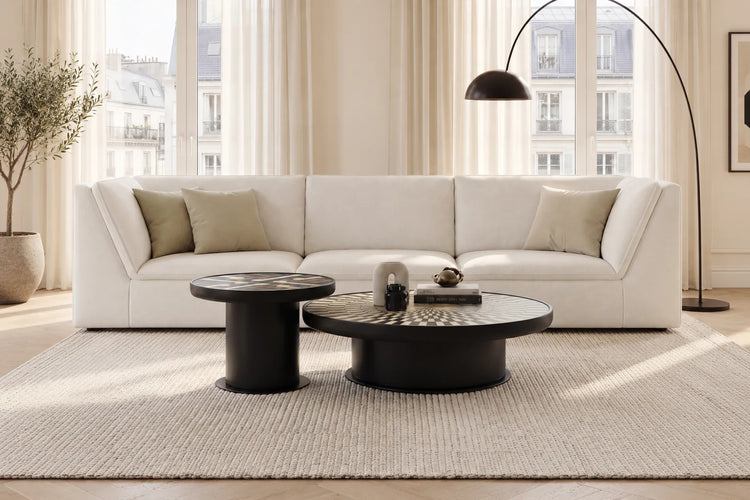
The appeal of a deep-seat sectional sofa is easy to understand: those oversized, sink-in cushions promise movie-night luxury and full-body lounging. Yet many buyers discover that the dream can turn into a "slouch trap," with cushions flattening and frames shifting faster than expected. Choosing a deep seat sectional sofa that resists sag in 2026 means focusing on foam density, frame construction, and realistic maintenance needs rather than chasing the softest cloud-like feel alone.

Deep seat sectionals deliver the oversized, casual aesthetic seen across social media, typically offering seat depths of 25 to 28 inches. For users 6'0" and taller, this extra depth provides necessary thigh support that standard 21- to 24-inch seats often lack.
However, these generous proportions create specific ergonomic challenges. Users under 5'10" frequently experience a "lumbar gap" when sitting upright, which can lead to slumping. If your primary activities involve reading or formal seating, a deep-seat sectional may actually encourage poor posture. We've found it is best viewed as a lounge-first choice rather than an all-purpose upright sofa. Value-conscious buyers should evaluate their household's dominant sitting style—tall loungers often thrive here, while average-height families may need to plan for additional structured lumbar pillows.
The Anatomy of Sag: Why Cheap Cloud Dupes Flatten Fast
Cushion sag is rarely a mystery; it is usually the result of specific material trade-offs. Industry heuristics often point to 1.8 lb/ft³ foam as a common residential baseline, but for deep-seat designs where the foam is under more "spread" tension, higher densities are generally required to maintain shape.

In our observations, structural differences between entry-level and high-performance models often become noticeable within 12 to 24 months of daily use, depending on household weight and activity levels. To mitigate this, look for these specific indicators:
- Foam Density: While 1.8 lb is standard, 2.0 lb high-density foam (used in CHITA modular lines) offers a more resilient "rebound" that resists the permanent compression common in deep seats.
- Frame Integrity: Kiln-dried hardwood or FSC-certified engineered wood helps prevent warping. Avoid frames that don't specify the drying process, as moisture in the wood can lead to squeaks and bowing (https://stampshomefurniture.com/blogs/furniture-guide/sofa-frame-materials-whats-inside-your-couch-and-why-it-matters).
- Suspension: High-gauge sinuous springs (no-sag springs) provide consistent support. Webbing-only systems in deep-seat configurations may eventually stretch, leading to that "sinking into a hole" feeling.
Foam Support Tiers and Deep-Seat Sectional Fit
Higher foam support generally lowers sag risk and strengthens the value signal for deeper seating, while low support raises the chance of visible softening over time.
Show data
| Foam support tier | Sag risk (inverse) | Value signal |
|---|---|---|
| Low support | 25 | 35 |
| Mid support | 60 | 70 |
| High support | 85 | 80 |
This chart helps visualize how foam support levels influence likely sag risk. Higher-density foam reduces the need for frequent fluffing while maintaining the plush feel that makes deep seats attractive.
The Durability Audit: A Field Guide for Comparison
When comparing modular sectionals online or in-store, use this checklist to move beyond marketing "cloud" buzzwords and identify actual build quality.
| Feature | What to Look For (The "Green Flags") | Why It Matters |
|---|---|---|
| Foam Density | 1.8 lb/ft³ (Minimum) to 2.0 lb/ft³+ | Higher density = slower cell breakdown and less "bottoming out." |
| Suspension | Sinuous Springs or Pocket Coils | Provides a mechanical "push back" that foam alone cannot sustain. |
| Frame | Kiln-Dried Hardwood / Corner-Blocked | Prevents the frame from shifting or "racking" when modules are moved. |
| Connectors | Steel U-Clips or Alligator Clips | Keeps modules from drifting apart on hardwood floors. |
| Care Code | Code "W" or "W-S" | Indicates the fabric can handle water-based cleaning (essential for families). |
Beyond the Cloud: Comparing CHITA to High-Maintenance Alternatives
Many cloud-style sectionals prioritize extreme softness that looks impressive in photos but demands daily "fluffing" to stay presentable. In contrast, engineered foam approaches, like those in CHITA's modular designs, aim to deliver a comfortable sink-in feel with less constant reshaping.
Our guide on cloud couch maintenance explores how these pieces perform in real households. We've noted that the combination of 2.0 density foam and sinuous spring suspension significantly reduces the frequency of maintenance compared to fiber-fill-only alternatives.
Practical ownership also involves logistics. Modular sectionals often arrive in multiple large boxes. Before ordering, confirm the return policy; many brands charge restocking fees that make sizing mistakes expensive.
The Reality of Washable Fabrics in a Busy Household
Removable covers are a major convenience, but "removable" does not always mean "machine washable." You must check the care label for the specific code:
- Code W: Water-based cleaners only. Usually safe for gentle machine washing.
- Code S: Solvent-based cleaners only. Do not put these in the washing machine; it can shrink the fabric or destroy the backing.
- Code W-S: Can handle both.
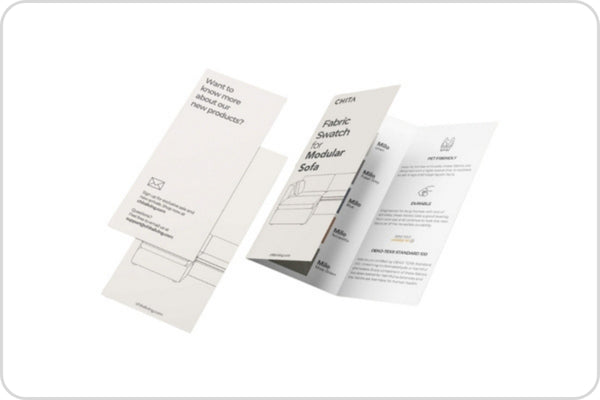
Performance treatments improve stain resistance but don't change the underlying fabric's reaction to water. Our experience with cloud couch cleaning suggests that chenille and textured fabrics (like those in the Kenna and Ace collections) offer the best balance of durability and "cleanability" for households with pets.
Budget and Value Signals: Judging Durability Under $2,000
In the $1,500 to $2,500 price bracket, you are looking for "value signals." A $1,500 sectional may look identical to a $4,000 designer piece in a photo, but the weight of the modules is often a giveaway. Heavier modules typically indicate denser foam and solid wood frames.
Modular sofa collections in this range deliver the best ROI when they prioritize the internal "skeleton" (springs and foam) over high-fashion upholstery. The modular format also allows for gradual expansion, which is a smarter long-term investment than buying a cheap, non-modular "disposable" sofa.
Final Check: Is a Deep-Seat Sectional Right for You?
Before you click "buy," perform these three final checks:
- The Path Check: Measure your doorways. Most modular boxes require at least a 30-inch opening.
- The Connector Check: Ensure the modules use steel connectors. Basic plastic clips often fail, causing the sectional to "leak" apart during use.
- The Layout Check: Consider left-facing vs right-facing sectionals to ensure the deep seats don't block natural traffic flow.
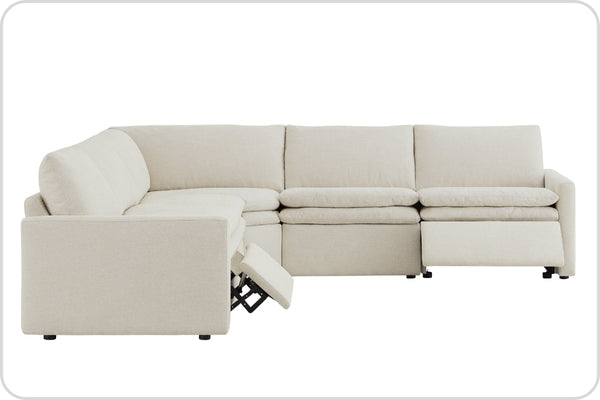
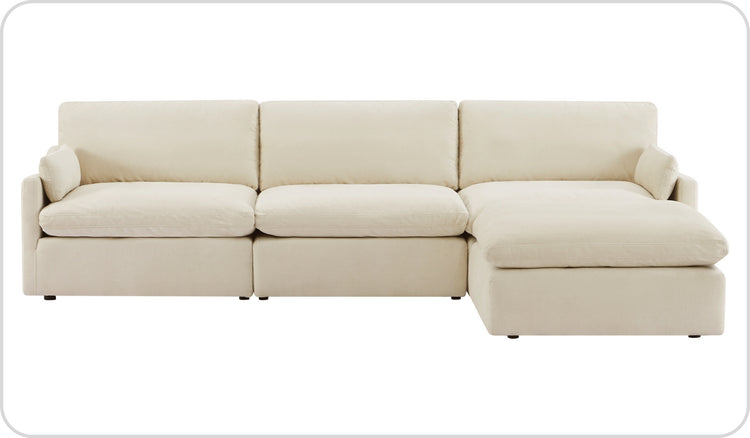
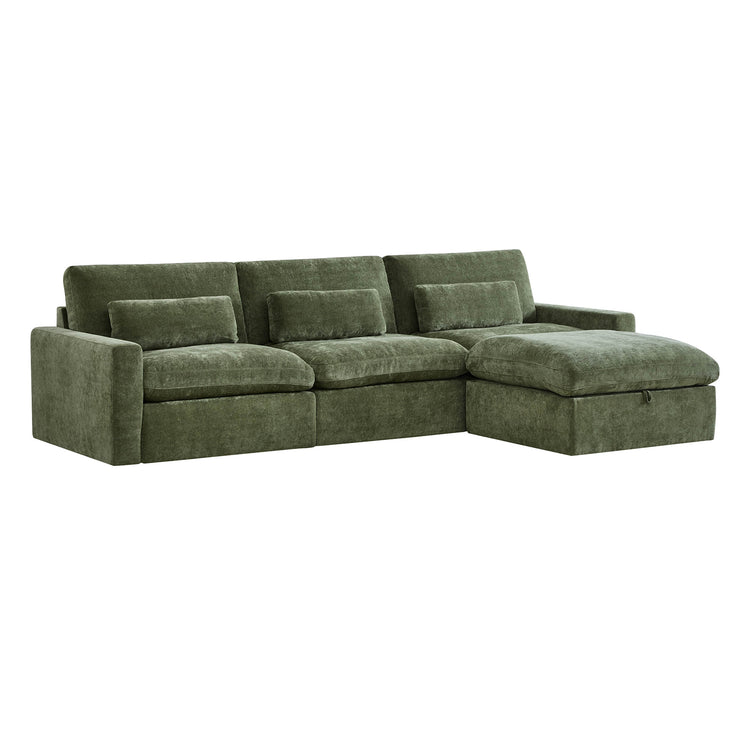
The Kenna collection and Ace modular options illustrate configurations that address these durability and layout concerns.
FAQs
Do deep seat sectional sofas work well for tall people? Yes. Individuals 6'0" and taller generally find 25- to 28-inch seat depths provide superior thigh support. Shorter users may find their feet don't touch the floor, necessitating lumbar pillows.
Are washable covers truly machine washable? Only if they are marked with Code W. If the label says Code S, machine washing will likely ruin the covers. Always verify the code before the first wash.
What causes cushions to sag in cloud-style sectionals? The primary culprits are low-density foam (under 1.8 lb), lack of a spring suspension system, and the natural settling of down/fiber fills. High-density foam (2.0 lb+) is the best defense against permanent sagging.
How much should I spend for a durable deep seat sectional under $2000? In this range, look for brands that explicitly list "kiln-dried frames" and "high-density foam." Be wary of "all-foam" sofas without internal spring systems, as these are most prone to sagging.
What maintenance do deep seat sectionals require? Expect to "flip and rotate" cushions every 2–3 months and fluff fiber-filled back cushions weekly to maintain the loft. High-density foam cores require significantly less maintenance than pure down-filled options.
Recommended Products


More to Read
 7 Sofa Trends That Actually Improve Comfort in 2026
Upgrade your living room with furniture that supports your body. Here are 7 modern sofa features designed to maximize your daily comfort...
7 Sofa Trends That Actually Improve Comfort in 2026
Upgrade your living room with furniture that supports your body. Here are 7 modern sofa features designed to maximize your daily comfort...
 Mother's Day Gift Guide: Cozy and Stylish Furniture Picks for Modern Moms
Make Mother's Day more meaningful with furniture gifts that bring comfort, smart features, storage, and quiet luxury into her everyday routine.
Mother's Day Gift Guide: Cozy and Stylish Furniture Picks for Modern Moms
Make Mother's Day more meaningful with furniture gifts that bring comfort, smart features, storage, and quiet luxury into her everyday routine.
 Performance Fabric Reality Check: Does It Really Repel Pet Hair and Stains?
Performance fabric is often marketed as a miracle solution for homes with pets and kids, but the reality is more nuanced. It...
Performance Fabric Reality Check: Does It Really Repel Pet Hair and Stains?
Performance fabric is often marketed as a miracle solution for homes with pets and kids, but the reality is more nuanced. It...