

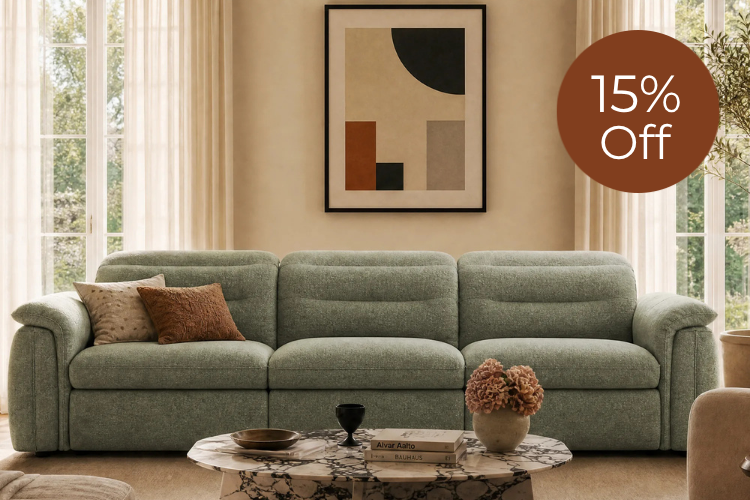



























Modular sofa pieces can shift or separate, but usually only when a connector isn't fully engaged, the modules don't match the layout they were built for, assembly was incomplete, or the floor underneath isn't level. A sturdy modular sectional isn't defined by the word "modular" itself. It comes down to documented connection hardware, solid frame and suspension construction, and a proper setup check after you place it.

If you want a sectional that stays put through daily use, judge it by what the maker actually discloses about how the pieces lock together and what happens if one ever comes loose.
Do Modular Sofas Shift? the Short Answer
Yes, modular pieces can move, but only under specific conditions you can check before and after buying. The label "modular" tells you the sofa breaks into separate sections; it says nothing on its own about how firmly those sections stay connected.

Movement usually traces back to one of four things: a connector that isn't seated correctly, modules paired in a configuration they weren't designed for, assembly that skipped a step, or a floor that isn't reasonably level. None of those are quirks you have to accept as normal. Each one has a fix, starting with checking the connection and finishing with a level-surface placement check.
If a module still rocks, separates, or feels loose after you've gone through those checks, that's no longer a setup issue. At that point, treat it as a support matter and contact the seller or manufacturer before continuing to use it.
What Do Modular Sofa Connectors Actually Need to Do?
A connector's only job is to keep two modules aligned and locked together under normal sitting and standing pressure. Before buying, confirm the listing or manual actually describes how the pieces connect, rather than leaving it to a photo or the word "modular" alone.
Start by checking whether the specific modules you're ordering are built to pair with each other. Some sectional lines use configuration-specific connectors, so a piece from one collection may not lock into a piece from another, even if they look similar. The listing or included instructions should state which configurations are supported.
Once the sofa arrives, follow the assembly sequence in the order given rather than skipping steps to save time. A connector that's only partially seated can look fine but shift under weight. After placing the sectional, push gently along each seam where two modules meet. You should feel a firm, even connection with no separate give on either side.
If you've followed the instructions and a seam still doesn't feel secure, don't force additional hardware or try to compensate with furniture pads. Our guide to joining modular couches walks through the connection step in more detail, and a connector that won't seat properly after that process is a case for contacting support rather than continuing to use the piece as-is.
Which Construction Details Make a Modular Sofa Feel Sturdy?
Frame construction, cushion support, and connector performance answer three different questions, and shoppers often mix them up. A sturdy frame and dense cushion tell you how the sofa holds weight and feels to sit on. Neither one tells you whether the modules will stay locked together.
Look at frame construction first. A corner-blocked frame reinforces the joints where the frame's sides meet, which affects how well the piece resists wobbling under a person's weight over time. We document a corner-blocked, FSC-certified engineered-wood frame with tool-free assembly in our sturdy modular sofa designs, along with CertiPUR-US certified foam construction. Those are the kind of construction and assembly facts worth checking on any listing, and they answer frame quality, not connector strength.
Cushion specs are a separate line item. Seat firmness ratings, foam density, and suspension type (webbing versus coil, for example) describe how supportive and comfortable the seat feels and how much weight it's rated to hold per seat. A soft, plush cushion feel and a firm, supportive one can both sit on an equally well-connected frame, so don't let a soft cushion rating stand in for a stability judgment.
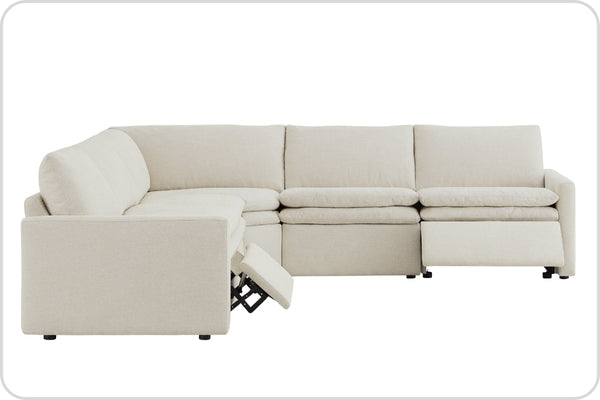
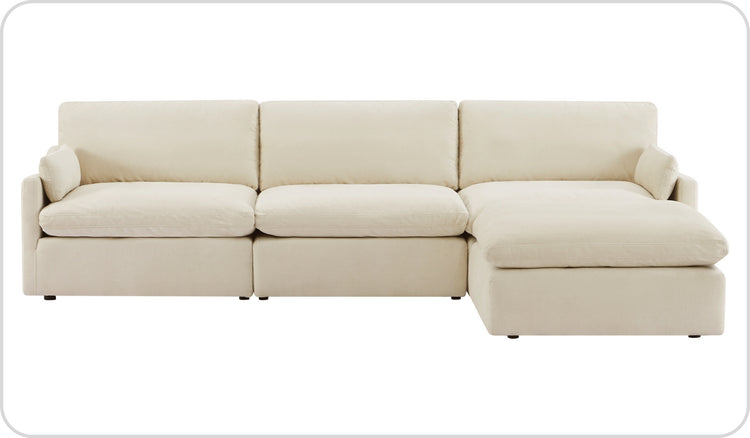
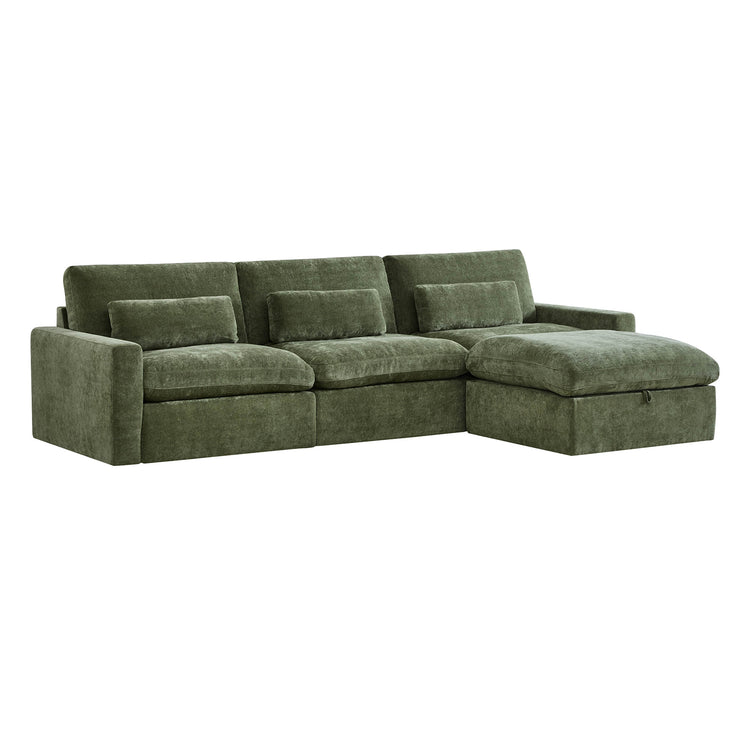
If you're comparing options, our Ivy modular sectional is a useful example of how these specs are typically listed side by side: rearrangeable modules, a stated per-seat weight capacity, and documented frame and foam materials. Treat that information as what you're checking, not as a substitute for confirming the connector details covered above.
How Should You Set Up a Modular Sofa for Daily Use?
Correct setup prevents most movement that gets mistaken for a defect. Assemble the sectional exactly as instructed, place it on a reasonably level surface, and check that every seam is fully engaged before you use it regularly.
Hard Floors and Area Rugs
Check that all of the sofa's feet or base sit evenly on the surface, whether that's hardwood, tile, or carpet. If part of the base rests on a rug and part rests on bare floor, that height difference can create a rocking feeling that has nothing to do with the connectors. Neither hard flooring nor a rug guarantees or prevents movement on its own; it's the evenness underneath the whole base that matters.
Uneven Floors and Module Alignment
Before blaming a connector, confirm the floor itself is reasonably level and that the modules are meeting exactly as the instructions show. An older home or an area with a slight slope can throw off alignment even when every connector is seated correctly. If you suspect the floor is the issue, use the adjustment process in your product instructions rather than improvising a fix with shims or furniture pads.
Children, Pets, Guests, and Rearranging
Frequent sitting, jumping, or standing from a sectional adds repeated stress to every connection point, so a quick visual and hands-on check every so often is worth the minute it takes. Any time you rearrange the layout, treat it as a fresh setup: reassemble the connections and recheck alignment before returning to regular use, since a connector that was fine in one configuration needs to be reseated in a new one.
If a module still rocks, separates, or stays loose after you've completed the assembly, alignment, and level-surface checks above, stop using it in that condition and contact the seller or manufacturer for support before continuing.
Sturdy Modular Sofa Buying Checklist
Use this checklist to compare documented evidence across listings instead of relying on marketing words like "sturdy" or "heavy-duty." Missing information on any point is a question to ask before buying, not automatic proof the sofa is unstable.
- Is the connector or locking mechanism actually described, not just implied by the word "modular"?
- Do the specific modules you're ordering pair together, or are they built for different configurations?
- Are assembly instructions included and specific to your exact configuration?
- Is the frame material and construction method (like corner-blocking) stated?
- Is the suspension type (webbing, coil, etc.) documented?
- Is a per-seat or overall weight capacity listed?
- Are placement requirements, like a level-surface recommendation, included?
- Is there a clear warranty and support process for a module that stays loose after setup?
For a broader rundown of what separates well-built upholstered furniture from short-lived pieces, our sofa quality checks guide covers frame, fabric, and padding evaluation in more depth.
Modular vs. Fixed Sectional: Which Fits Your Stability Priority?
Choose a modular sectional when you actually need to rearrange the layout, move pieces between rooms, or reconfigure for a new space, and you're willing to verify and recheck the connection system as described above. That flexibility is the entire reason to choose modular in the first place.
Choose a fixed sectional when your layout is settled and you'd rather minimize connection points altogether. A one-piece or two-piece fixed sectional removes the module-pairing and connector-engagement questions from the equation, since there's no seam to check in the first place.
Neither format should be picked on looks alone. If you can't verify the connector system on a modular option, or you know you won't want to do any setup checking after delivery, a fixed sectional removes that variable. If rearrangement is a real, recurring need in your home, a modular sectional with documented construction and a straightforward support path is the better fit.
FAQs
Can a modular sofa shift more on hardwood or an area rug?
The flooring type itself doesn't decide this; an uneven surface or a rug edge that only supports part of the base does. Check that all feet sit at the same level, and if part of the sectional rests on a rug, confirm the whole base is even before assuming a connector is at fault.
Does a soft modular sofa mean it is less sturdy?
No. Seat firmness describes comfort, not structural stability. A soft cushion rating comes from foam density and fill choice, while stability comes from the frame, suspension, module fit, and connectors, which need to be checked separately from how the seat feels.
What should I do if one modular sofa piece is still loose after assembly?
Go through the assembly, connection, and level-surface checks first. If the module still rocks or stays loose after that, stop using it in that condition and contact the seller or manufacturer's support process rather than continuing to sit on it as-is.
Do sofa safety labels prove that modular pieces will stay together?
No. In the US, upholstered furniture that meets CPSC's flammability requirements carries a compliance label addressing fire performance, not mechanical connection strength. Check connector and construction details separately from any compliance label you see on the tag.
Sources
- Consumer Product Safety Commission. Upholstered Furniture.
Recommended Products




More to Read
 7 Sofa Trends That Actually Improve Comfort in 2026
Upgrade your living room with furniture that supports your body. Here are 7 modern sofa features designed to maximize your daily comfort...
7 Sofa Trends That Actually Improve Comfort in 2026
Upgrade your living room with furniture that supports your body. Here are 7 modern sofa features designed to maximize your daily comfort...
 Mother's Day Gift Guide: Cozy and Stylish Furniture Picks for Modern Moms
Make Mother's Day more meaningful with furniture gifts that bring comfort, smart features, storage, and quiet luxury into her everyday routine.
Mother's Day Gift Guide: Cozy and Stylish Furniture Picks for Modern Moms
Make Mother's Day more meaningful with furniture gifts that bring comfort, smart features, storage, and quiet luxury into her everyday routine.
 Performance Fabric Reality Check: Does It Really Repel Pet Hair and Stains?
Performance fabric is often marketed as a miracle solution for homes with pets and kids, but the reality is more nuanced. It...
Performance Fabric Reality Check: Does It Really Repel Pet Hair and Stains?
Performance fabric is often marketed as a miracle solution for homes with pets and kids, but the reality is more nuanced. It...