Choose a wall-hugger recliner when your main constraint is rear clearance against a wall, and choose a zero gravity recliner when your priority is a documented feet-above-heart reclining position. The two terms describe different design goals, not competing versions of the same chair. Some models combine both features, so check the exact specifications before you shop by label alone.

Zero Gravity vs. Wall-Hugger: The Short Answer
A zero gravity recliner is named for its reclined body position, while a wall-hugger recliner is named for how little space it needs behind it. Neither term guarantees the other feature is included.
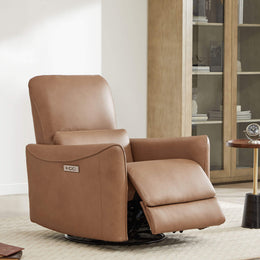
Our Leif Zero Gravity Recliner lists a Super Zero-Gravity mode that lifts the feet above heart level, independent headrest and footrest adjustment, and a 140-degree maximum recline. It needs 6.9 inches of wall clearance and measures 37.0 inches wide by 37.8 inches deep upright. Our Hadley Zero Wall-Hugger Recliner is built for the opposite priority: it's rated for 0 inches of wall clearance and measures 34.3 inches wide by 38.0 inches deep, with a 90-to-140-degree multi-position recline but no listed zero-gravity mode.
| Model | Rear clearance | Upright width x depth | Reclined position | Back-comfort controls | Best fit |
|---|---|---|---|---|---|
| Leif (zero gravity) | 6.9 in | 37.0" x 37.8" | Feet-above-heart, 140° | Independent headrest/footrest | Rear gap available, wants elevated legs |
| Hadley (wall-hugger) | 0 in | 34.3" x 38.0" | 90°-140° multi-position | Power headrest and lumbar | Chair must sit flush against a wall |
If your intended spot leaves no room behind the chair, the Hadley's 0-inch clearance solves that problem directly. If you can spare roughly 7 inches and want the specific elevated-leg position, the Leif fits that request, provided its width also clears your room.
Measure More Than the Chair's Upright Footprint
A chair that passes the width and depth check on paper can still fail once it's fully reclined. The number that actually matters is the operational footprint: the space the chair needs in every position you'll use, not just sitting upright.
Start by measuring the available wall gap and the clear width at your intended spot. Then check the chair's upright dimensions against that space. Next, confirm the fully reclined projection, since the footrest and seat can extend well past the upright depth, and some designs also slide the seat forward as they recline. Use the manufacturer's reclined dimension when it's listed, or trace a floor outline with tape if it isn't.

Finally, walk the room with that outline in place. Check door swings, crib access if it's nearby, main walkways, side tables, and where the power cord will run. A recliner that clears your tape measure but blocks a doorway when reclined isn't actually a fit. Our guide on small-space recliner measurements walks through this process in more detail if you want a second pass before ordering.
Use Either Recliner in a Nursery Only as Adult Seating
Either recliner type can work in a nursery, but only as a seat for a supervised adult during feeding or soothing. Neither is an infant sleep surface, and the choice between zero gravity and wall-hugger doesn't change that boundary.
Placement matters more here than in a living room. Check that the reclined chair doesn't block the crib, the doorway, or your main path across the room, especially in dim light. If the chair uses power controls, make sure the cord and remote stay reachable without crossing a walkway. Upholstery material is a starting point, not a promise: read the exact care instructions for faux leather or top-grain leather rather than assuming either one resists spills or cleans easily on its own.
The safe-sleep guidance is separate from furniture choice and doesn't bend for either mechanism. The American Academy of Pediatrics advises against feeding on an armchair or couch, and if a caregiver falls asleep while feeding, the baby should be moved to a firm, flat, noninclined crib or bassinet as soon as the caregiver wakes. A recliner, reclined or upright, is not a substitute for that surface. For layout ideas beyond the chair itself, our piece on nursery recliner placement covers common room arrangements.
Evaluate Reclined Comfort and Back Support Without Medical Promises
Neither "zero gravity" nor "wall-hugger" is evidence that a chair improves back health; they describe design priorities, not medical outcomes. What you can evaluate is whether the available controls fit your body and how you actually plan to sit.
A study tracking in vivo spinal posture in five healthy adults found that reclined sitting changes spinal curvature, but the amount of change varied significantly between individuals. That variation is the practical takeaway: a reclined position that feels supportive to one person may not feel the same to another, so test it rather than trust the label. Our Leif model offers independent headrest and footrest adjustment but no listed power lumbar control, while our Hadley model lists both power headrest and power lumbar adjustment. If you want to fine-tune lower-back support specifically, the lumbar control is the feature to check for. If persistent or significant back pain is the real issue, treat furniture as a comfort choice and talk to a qualified provider about treatment, since no recliner substitutes for that guidance. For general sitting posture tips, see our notes on healthier recliner posture.
Before You Order, Run the Model-and-Room Fit Check
Place an order only after the specific model's numbers match your measured room, not before. If you're leaning toward the wall-hugger path, confirm the Hadley's 0-inch rear clearance and 34.3-inch width actually fit your wall spot and leave the walkway clear. If you're leaning toward zero gravity, confirm the Leif's 6.9-inch rear gap and 37.0-inch width fit, and that the elevated-leg position is the feature you actually want.
Either way, resolve any detail the specifications don't cover before you buy: the fully reclined projection in your room, door access, cord routing, and the exact upholstery-care instructions for your chosen material. If one of those facts is missing and it could change whether the chair fits, pause and get that answer first rather than assuming it will work out once it arrives.
FAQs
How much wall clearance does a wall-hugger recliner need?
Wall-hugger describes a placement strategy, not one fixed measurement across every recliner. Our Hadley model is specified for 0 inches of rear clearance, but always check the exact listing for the model you're considering, since other wall-hugger designs may need a small gap.
Is a zero-gravity recliner the same as a wall-hugger recliner?
No. Zero gravity describes a reclined body position with the feet above heart level, while wall-hugger describes how a chair manages the space behind it. A chair can have one feature, both, or neither, so check the specific model's listing instead of assuming from the name.
Can I use a recliner in a nursery for feeding or soothing?
Yes, as supervised adult seating for feeding or soothing, but not as a place for an infant to sleep. If you fall asleep while feeding, move the baby to a separate firm, flat crib or bassinet as soon as you wake.
Does a zero-gravity recliner help with back pain?
There's no evidence that either recliner type treats or prevents back pain. Test the seat depth, head and foot positioning, and any lumbar control for your own comfort, and see a qualified provider if pain is persistent or significant.
Sources
- PMC. Spinal Posture during Reclined Sitting.
- HealthyChildren.org. Safe Sleep Tips for Sleep-Deprived Parents.
- HealthyChildren.org. Safe Sleep: Back Is Best.
Recommended Products

More to Read
 7 Sofa Trends That Actually Improve Comfort in 2026
Upgrade your living room with furniture that supports your body. Here are 7 modern sofa features designed to maximize your daily comfort...
 Mother's Day Gift Guide: Cozy and Stylish Furniture Picks for Modern Moms
Make Mother's Day more meaningful with furniture gifts that bring comfort, smart features, storage, and quiet luxury into her everyday routine.
 Performance Fabric Reality Check: Does It Really Repel Pet Hair and Stains?
Performance fabric is often marketed as a miracle solution for homes with pets and kids, but the reality is more nuanced. It...