
























The Durable Sofa Buying Guide: How to Choose a Couch That Lasts
A high-quality sofa is a significant investment, often expected to anchor a living room for over a decade. However, durability is rarely visible from the surface. A durable sofa is defined by its internal engineering—specifically the moisture content of its wood, the density of its foam, and the tensile strength of its suspension. To choose a couch that resists sagging, warping, and upholstery failure, you must look beyond the silhouette and evaluate the technical specifications of its construction.
This guide breaks down the four pillars of furniture longevity: structural frames, internal support systems, cushion composition, and high-performance upholstery. Whether you are shopping for a standalone piece or a modular sectional sofa, understanding these benchmarks will ensure your furniture survives the rigors of daily life.
The Foundation: Why Kiln-Dried Hardwood and Joinery Matter
The frame is the skeleton of the sofa. If the frame fails, the entire piece becomes junk. The gold standard for a long-lasting frame is kiln-dried hardwood. Kiln-drying is a process where wood is placed in a temperature-controlled oven to reduce its moisture content to between 6% and 8%. This is critical because changes in moisture content can cause wood to shrink or swell, leading to cracks, warping, and joint failure.
While budget furniture often utilizes particle board or thin plywood, a durable sofa requires hardwoods such as oak, maple, or ash. These woods have dense cellular structures that hold screws more securely and resist the heavy impact of daily use. Research indicates that when a person sits down with force, the frame must withstand a load up to 213% of the person's body weight, emphasizing why structural integrity is non-negotiable.
Frame Material Comparison
| Material | Durability Level | Expected Lifespan | Common Issues |
|---|---|---|---|
| Kiln-Dried Hardwood | Maximum | 15 - 25 Years | High initial cost |
| Furniture-Grade Plywood | Moderate | 7 - 10 Years | Potential for delamination |
| Particle Board / MDF | Low | 2 - 5 Years | Warping, cracking, cannot be repaired |
| Metal Frames | High | 10 - 20 Years | Can be heavy; joint welds may snap |
Support Systems: Comparing Sinuous Springs and 8-Way Hand-Tied Coils
A sofa’s suspension prevents it from bottoming out. The suspension sits between the frame and the cushions, absorbing the weight and providing "bounce."
8-Way Hand-Tied Coils
This is widely considered the "gold standard." In this system, each coil is manually tied to the adjacent coils and the frame with high-quality twine in eight directions. This prevents any single coil from bearing too much stress and offers the longest lifespan.
Sinuous Springs
Consisting of heavy-gauge steel wires bent into a zig-zag shape, these are highly durable if the steel is 8-gauge or thicker. If you hear your sectional couch squeaking, it is often due to loose clips or thin-gauge springs rubbing against the frame.
Cushion Quality: The Importance of High-Resiliency Foam Density

Cushion longevity is measured by foam density. For a sofa to remain supportive, the foam must have a density of at least 1.8 lbs, though the benchmark for high-end furniture is 2.5 lbs or higher, known as High-Resiliency (HR) foam.
Low-density polyfoam contains more air than material. Over 1–3 years, these air pockets collapse. HR foam is engineered to bounce back immediately. Many manufacturers use a high-density core wrapped in softer down or synthetic fiber for a balance of comfort and structure.
Selecting Upholstery for Longevity: Rub Counts and Leather Grades
Fabric durability is measured by the Wyzenbeek Rub Test. For a family home, look for a rub count of at least 25,000 to 50,000 double rubs.
Leather Quality: Full-Grain vs. Bonded
- Full Grain Leather Sofa: The highest quality, extremely durable, and develops a patina over time.
- Top-Grain Leather: Sanded to remove imperfections; softer but slightly less durable than full-grain.
- Bonded Leather (Avoid): Made from leather scraps glued to a backing. It is prone to peeling and cracking.
Note that materials can affect air quality. Leather and composite wood furniture are known sources of VOCs, so Greenguard Gold certification is recommended.
Modular Support: Connectors and Stability for Sectionals
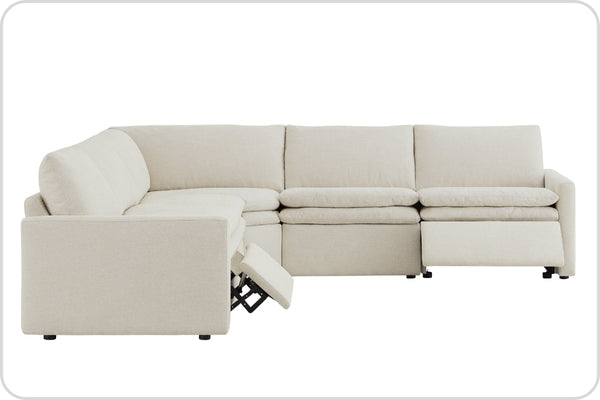
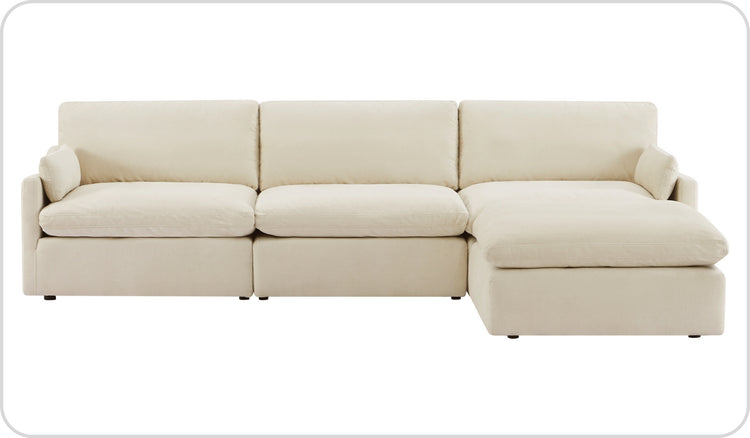
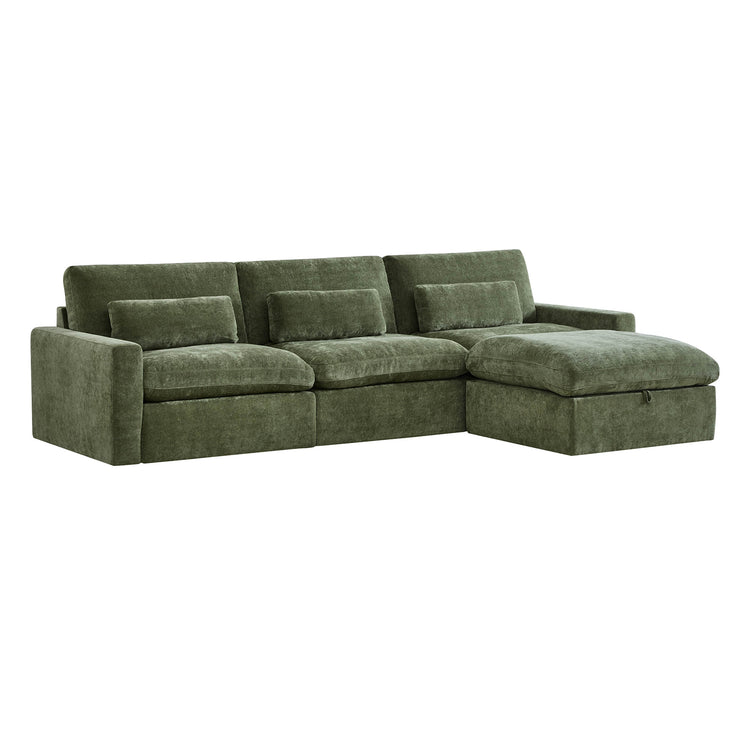
A modular sectional sofa offers versatility but requires strong connectors to prevent modules from sliding apart. Check for Alligator Clips, which lock into a pin for a secure hold, or Slide-In Brackets. Additionally, ensure each module has a full 4-sided frame for structural rigidity.
The 5-Minute Showroom Test: How to Inspect Quality In-Person

- The Heft Test: Lift one corner. Hardwood is heavy; if the frame twists, the joinery is weak.
- The Armrest Test: Apply pressure. Armrests provide essential support for standing up and should not wobble.
- The Squeeze Test: You shouldn't feel the wood frame through the padding.
- The Pattern Match: Stripes should align at the seams.
Conclusion: Investing in a Durable Sofa
Finding a truly durable sofa requires a shift in perspective from aesthetics to engineering. By prioritizing a kiln-dried hardwood frame, a high-density HR foam core, and a high-rub-count performance fabric, you ensure your furniture remains a functional part of your home for years. Use this Durable Sofa Buying Guide to select a piece that stands the test of time.
Safety Notice
This article provides general guidance only. Always follow the manufacturer's instructions and safety practices. For installations involving fire safety or structural loads, consult a professional. Fire in upholstered furniture can release high heat and toxic smoke very quickly.
FAQs
How many double rubs should a family sofa have?
For heavy daily use in a family home, seek fabrics rated between 25,000 and 50,000 double rubs on the Wyzenbeek scale.
Why is my new leather sofa already peeling?
Peeling is usually a sign of bonded leather. Unlike top-grain leather, bonded leather is made of scraps glued to a backing, which eventually loses its bond and flakes off.
Is a heavier sofa always better quality?
Generally, yes. Weight typically indicates the presence of a kiln-dried solid hardwood frame and high-density foam cores, both of which are markers of long-term durability.
Recommended Products

More to Read
 7 Sofa Trends That Actually Improve Comfort in 2026
Upgrade your living room with furniture that supports your body. Here are 7 modern sofa features designed to maximize your daily comfort...
7 Sofa Trends That Actually Improve Comfort in 2026
Upgrade your living room with furniture that supports your body. Here are 7 modern sofa features designed to maximize your daily comfort...
 Mother's Day Gift Guide: Cozy and Stylish Furniture Picks for Modern Moms
Make Mother's Day more meaningful with furniture gifts that bring comfort, smart features, storage, and quiet luxury into her everyday routine.
Mother's Day Gift Guide: Cozy and Stylish Furniture Picks for Modern Moms
Make Mother's Day more meaningful with furniture gifts that bring comfort, smart features, storage, and quiet luxury into her everyday routine.
 Performance Fabric Reality Check: Does It Really Repel Pet Hair and Stains?
Performance fabric is often marketed as a miracle solution for homes with pets and kids, but the reality is more nuanced. It...
Performance Fabric Reality Check: Does It Really Repel Pet Hair and Stains?
Performance fabric is often marketed as a miracle solution for homes with pets and kids, but the reality is more nuanced. It...