










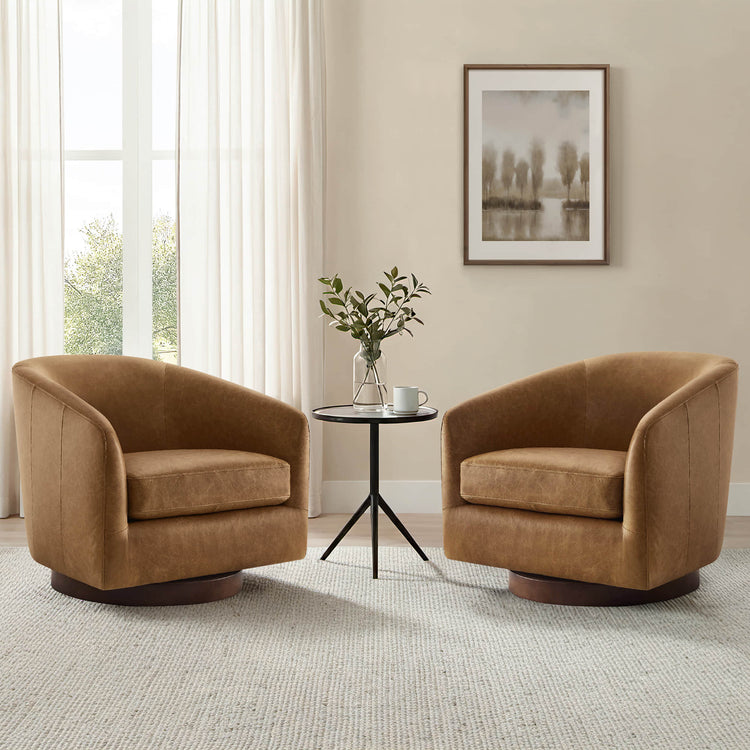
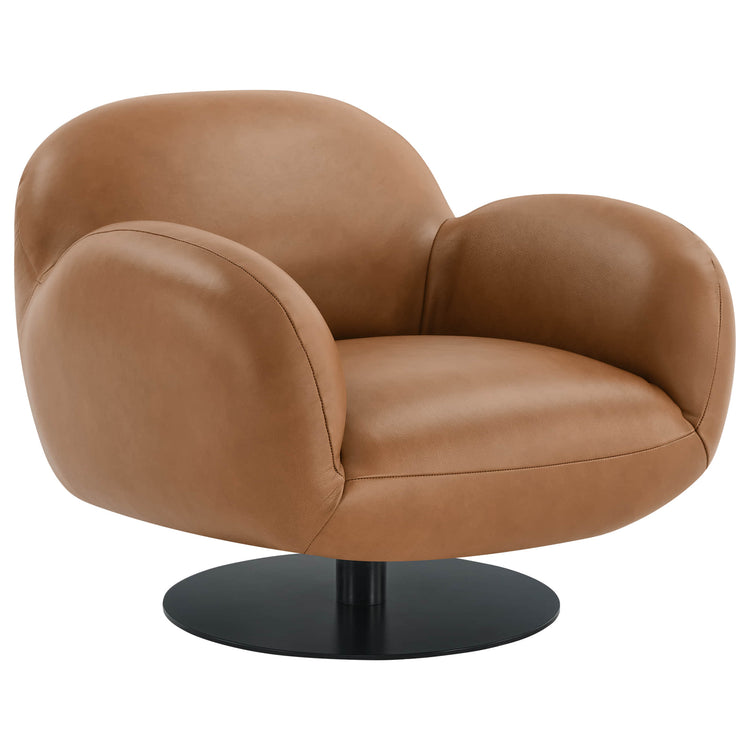
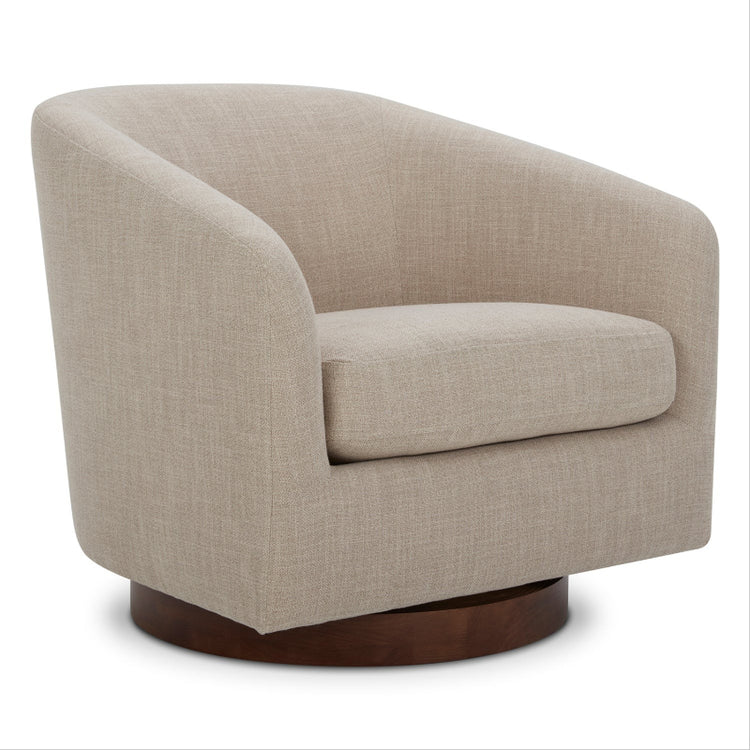

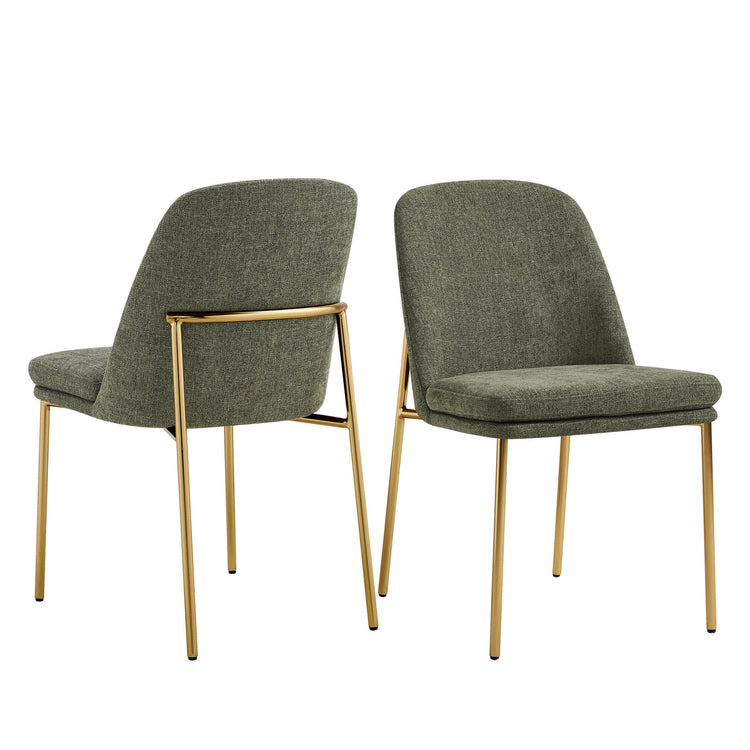
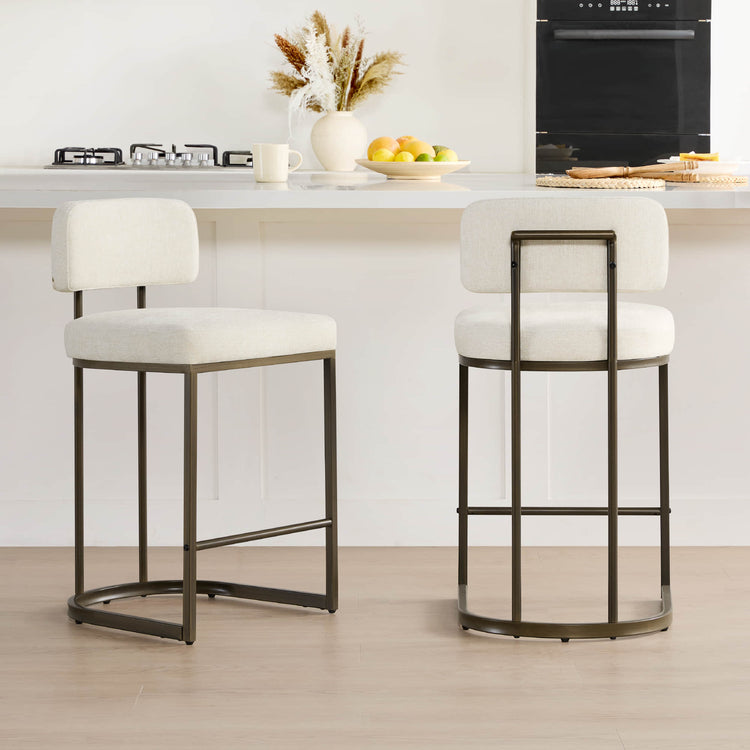


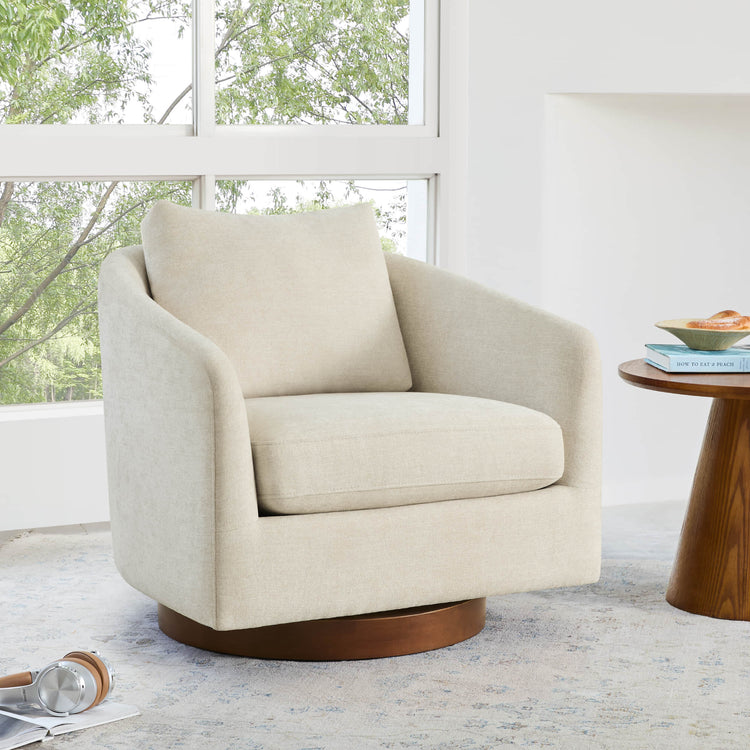
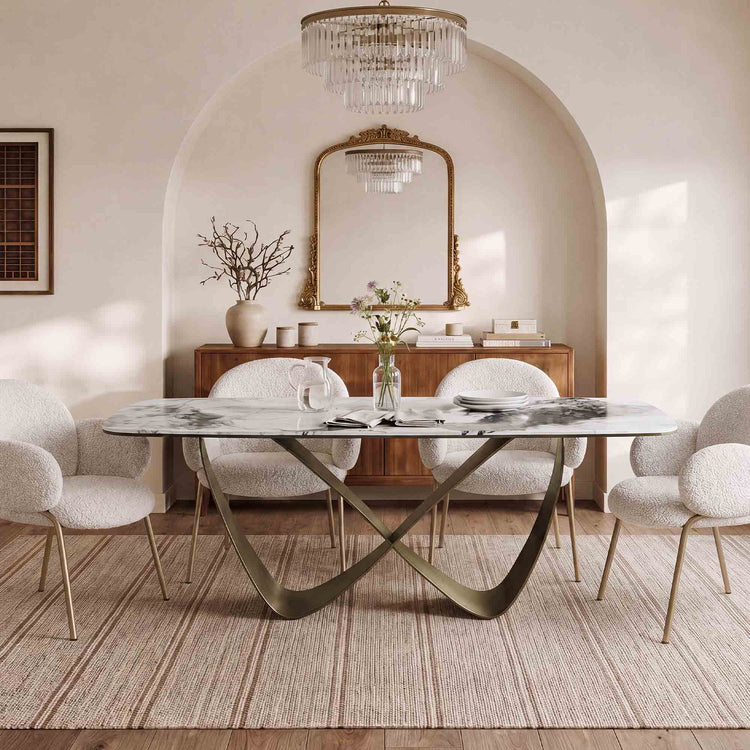
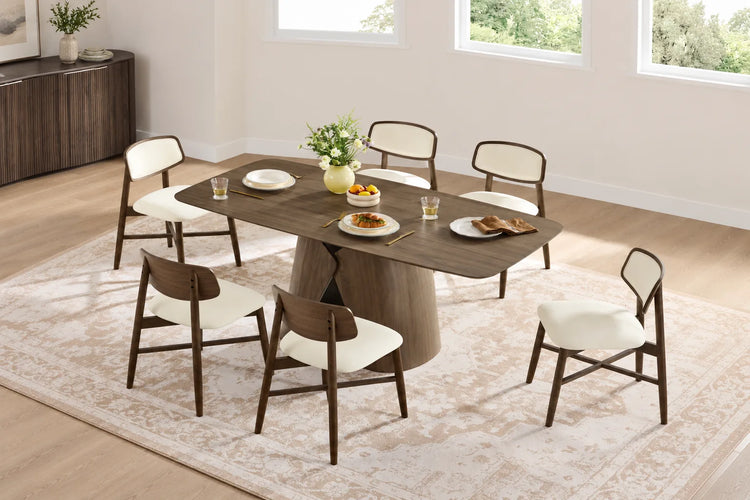
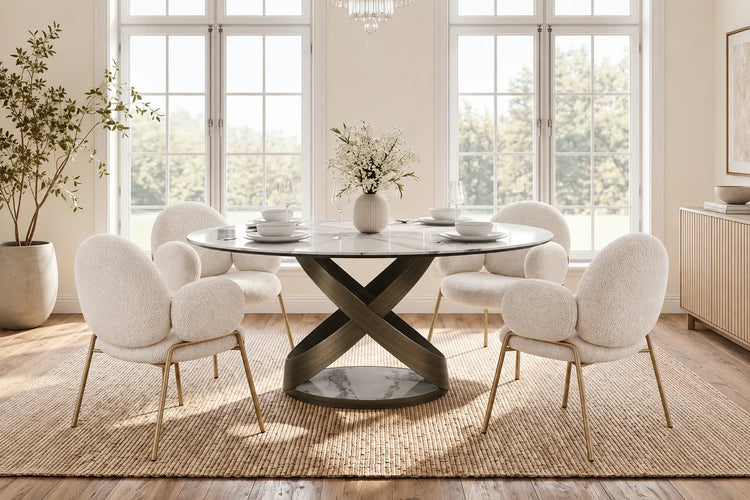











In 2026, dining rooms have evolved from formal eating spaces into lively social hubs where conversation flows freely between the table, kitchen, and living areas. Swivel dining chairs support this shift by letting people rotate smoothly to face different directions without dragging heavy furniture across the floor, while still delivering the ergonomic back support and seat depth needed for comfortable, extended gatherings.
This practical advantage becomes especially clear in open-plan homes and multi-use rooms where movement and conversation matter as much as the meal itself. Yet swivel is not the right choice for every situation. The chart below and the guidance that follows will help you decide when swivel dining chairs improve your space and when stationary chairs remain the safer, more stable option.

The 2026 Social Hub: Why Swivel Dining Chairs are Defining Modern Spaces
Dining rooms in 2026 are no longer reserved for meals alone. Designers describe them as “social hubs” where families and guests move easily between dining, working, and entertaining. 2026 furniture and design trends from High Point Market highlight “chameleon furniture” that adapts to multiple roles without disrupting the room’s flow. Swivel dining chairs fit this trend perfectly because they eliminate the clatter and effort of pulling chairs in and out.
In open-concept homes, guests can swivel to chat with someone in the kitchen or turn toward a nearby workspace without standing up. This seamless movement reduces friction during weekend brunches or casual dinners and makes the space feel more connected. For homeowners updating older dining rooms, adding swivel seating is one of the quickest ways to improve both comfort and social ease. See our guide on Time for a Change: Tips for Updating Your Old Dining Room for more renovation ideas that pair well with new seating.
Mechanical Comfort: The Science Behind Ergonomic Swivel Seating
Swivel dining chairs must withstand repeated daily use, which is why industry standards matter. Chairs that meet ANSI/BIFMA X5.1 and X5.4 have been tested for durability, stability, and safety under conditions that simulate years of heavy use. These benchmarks give buyers confidence that the rotation mechanism and base will remain smooth and quiet rather than developing wobble or noise over time.
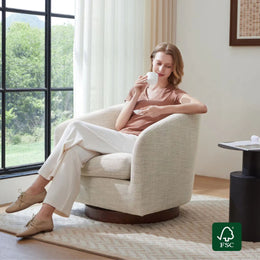
High-resilience foam combined with a sturdy metal base further supports the ergonomic experience. The Leda Upholstered Swivel Dining Chair, for example, uses these materials to deliver consistent cushioning and 360-degree rotation that feels controlled rather than loose. When the mechanical components are built to BIFMA standards, the chair can handle the frequent small movements that occur during lively conversations without sacrificing long-term comfort.
Swivel vs. Stationary Dining Chairs: Navigating the Practical Tradeoffs
The choice between swivel and stationary dining chairs usually comes down to how your dining space is actually used. Swivel chairs shine in social, high-turnover settings because they let people pivot toward different conversation partners or tasks without standing. Stationary chairs provide greater lateral stability, which many people prefer during long, uninterrupted meals.
When Swivel Helps More Than It Hurts: Dining Chair Fit by Scenario
Swivel chairs tend to be the stronger fit in social, tight, or multi-use dining setups, while stationary chairs usually stay better for long, stability-first meals.
View chart data
| Category | Swivel benefit level | Stationary fit level |
|---|---|---|
| Social hub / multi-use | 3.0 | 1.0 |
| Small space / high turnover | 3.0 | 1.0 |
| Formal long meals | 1.0 | 3.0 |
| Open-plan tidy | 2.0 | 2.0 |
This pattern holds across common scenarios. In social hubs or small spaces with frequent guest turnover, swivel typically reduces the physical effort of moving and improves circulation. For formal dinners that last two hours or more, many people find stationary chairs feel more stable and less likely to encourage constant small adjustments that can lead to fatigue. Return-to-center mechanisms on swivel models help maintain a tidy appearance in open-plan rooms, addressing one common concern about chairs left at odd angles.
If your room is primarily used for long, seated meals with minimal movement, stationary options such as the Alfred Modern Dining Chair (Set of 2) or the Wyatt Minimalist Wood Dining Chair often provide the most reliable support. Our article on Host with Ease: The Ultimate Guide to Modern Extendable Dining Tables explores how table choice can influence seating decisions in flexible spaces.
Ergonomic Cues: Evaluating Back Support and Seat Depth Before You Buy
Comfort in a dining chair depends more on fit than on whether it swivels. According to established anthropometric data for office and institutional seating, most adults sit comfortably with a seat height of 18–20 inches and a seat depth of 16–18 inches. These dimensions help maintain proper leg circulation and reduce pressure on the thighs during meals that can stretch beyond an hour.
Look for a curved or contoured backrest that offers lumbar support without forcing the spine into an unnatural curve. The Alfred and Wyatt chairs, for instance, use gentle curvature to cradle the lower back, which many users find helpful during extended family dinners. Armrests should clear the table apron and allow easy sliding in and out. When trying chairs in person or reviewing measurements online, sit for at least five minutes and check whether your feet rest flat on the floor and your knees form a roughly 90-degree angle.
Our Spring Cleaning Upgrade Guide: The Best Seating Furniture for Your Home provides additional tips on evaluating support across different furniture categories.

Layout and Flow: How Swivel Seating Solves Tight Dining Room Clearances
Standard dining layouts often call for 36 inches of clearance behind each chair to allow comfortable entry and exit. Swivel models can reduce that requirement in practice because users can rotate into position rather than pulling the entire chair backward. This advantage proves especially useful in narrow apartments or open-plan areas where every inch counts, as noted in 2026 dining room trend reports.
Swivel motion also improves guest circulation by letting people face the kitchen or living zone without leaving their seat. However, the rotating base can create new friction on hardwood or tile floors. Felt pads or specialized glides designed for swivel use help protect surfaces and keep movement quiet. Always verify that your floor type and chair weight rating are compatible before finalizing a purchase. For more advice on small-space planning, read How to Choose a Dining Table for a Small Dining Area.
Choosing Your Match: How to Pick the Right Swivel Chair for Your Lifestyle
Start by matching the chair to your primary use. Prioritize swivel with return-to-center when your dining area doubles as a social or work zone and visual order matters. Choose models with performance fabrics from our Performance Fabric collection if spills or frequent cleaning are concerns; these weaves emphasize durability and easier spot cleaning, though no fabric is completely immune to heavy staining.
For rooms that also serve as home offices, rolling bases such as those on the Soren Leather Rolling Dining Chair with Caster Base (Set of 2) or the Elsa Rolling Dining Chair with Hidden Storage add mobility between tasks. In tighter layouts, verify that the swivel radius will not hit nearby walls or furniture.
The Leda Upholstered Swivel Dining Chair offers a balanced starting point for many modern rooms because it combines smooth rotation, supportive foam, and a compact footprint. Measure your existing clearance and typical meal length, then use the decision thresholds above to narrow your options. When in doubt, test the chair in person for at least ten minutes to confirm it feels stable rather than overly active during normal movement.
By focusing on your actual usage patterns—social flow versus long static meals, tight clearance versus formal stability—you can select swivel dining chairs that genuinely improve daily life instead of adding unnecessary motion or maintenance.
Recommended Products

More to Read
 7 Sofa Trends That Actually Improve Comfort in 2026
Upgrade your living room with furniture that supports your body. Here are 7 modern sofa features designed to maximize your daily comfort...
7 Sofa Trends That Actually Improve Comfort in 2026
Upgrade your living room with furniture that supports your body. Here are 7 modern sofa features designed to maximize your daily comfort...
 Mother's Day Gift Guide: Cozy and Stylish Furniture Picks for Modern Moms
Make Mother's Day more meaningful with furniture gifts that bring comfort, smart features, storage, and quiet luxury into her everyday routine.
Mother's Day Gift Guide: Cozy and Stylish Furniture Picks for Modern Moms
Make Mother's Day more meaningful with furniture gifts that bring comfort, smart features, storage, and quiet luxury into her everyday routine.
 Performance Fabric Reality Check: Does It Really Repel Pet Hair and Stains?
Performance fabric is often marketed as a miracle solution for homes with pets and kids, but the reality is more nuanced. It...
Performance Fabric Reality Check: Does It Really Repel Pet Hair and Stains?
Performance fabric is often marketed as a miracle solution for homes with pets and kids, but the reality is more nuanced. It...