






















How to Pair a Sideboard With Your Dining Table

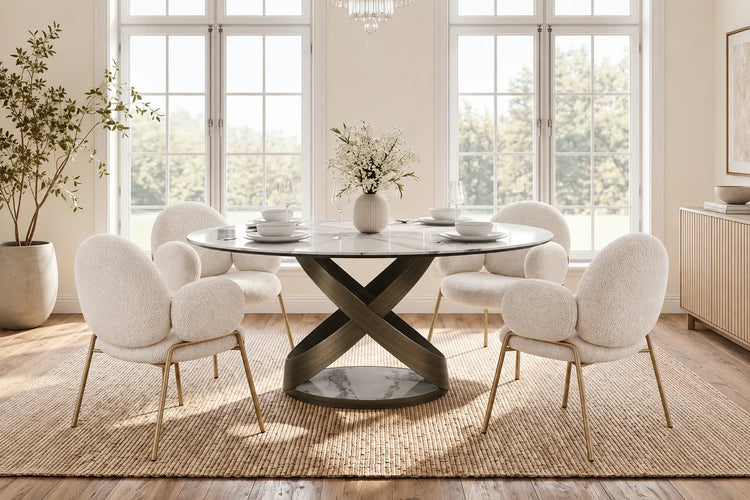
A strong sideboard dining room pairing starts with balance, storage, and room flow, not just style. When you figure out how to pair a sideboard with your dining table, the goal is to make the cabinet feel related to the table while still leaving room for chairs and walking paths. In some dining rooms, the best choice blends in quietly; in others, a little contrast looks more intentional.

Start With the Pairing Goal
When people search for dining room sideboard ideas, they usually want two things at once: a cabinet that looks good with the table and a piece that earns its footprint. Pairing is not only about matching finishes. It is also about deciding whether the sideboard should act like a quiet background piece or a more noticeable accent.
A useful first question is simple: do you want the sideboard to blend or contrast? Blending works when the room already has a lot going on, or when the table is the main focal point. Contrast can work better when you want the sideboard to add character without repeating every detail of the table. For practical style-mixing guidance, our mix furniture styles guide focuses on scale, color, and texture instead of forcing exact matches.
The table should stay the anchor. If you already own the dining table, start there and let its shape, tone, and visual weight guide the rest. A round table, long rectangle, or compact square all change how much presence the sideboard can safely have. Storage needs matter too. A sideboard that fits your serving pieces and linens is useful; one that only looks nice may become dead space.
Size the Sideboard to the Table
For most shoppers, this is the section that prevents regret. A sideboard should usually feel visually related to the dining table, but it does not need to copy it. In practice, that means looking at length, height, and depth as a set. If one dimension feels oversized, the whole pairing can look off even if the finish is beautiful.
Length and Visual Balance
A common heuristic is that a sideboard shorter than the dining table tends to read as more balanced, because it keeps the cabinet from competing with the table for attention. Houzz discussions reflect that same instinct, especially when shoppers are trying to avoid a buffet that overwhelms the room. That said, it is a guideline, not a law.
A longer table can support a broader sideboard, while a compact table usually looks better with a slimmer cabinet. In a small dining room, the shorter piece often feels lighter from the doorway and less crowded beside the seating zone. If the sideboard is nearly as long as the table, make sure the room has enough visual breathing room to handle it.
Height and Sightlines
Height matters because it changes what your eye reads across the room. A lower sideboard usually feels quieter, which can help in compact dining rooms or apartments. A taller piece can work in a larger room, especially if you want more storage or a stronger visual anchor.
What matters most is the relationship to the room, the table, and nearby wall decor. If the sideboard is tall, heavy, and dark, it may dominate the dining area. If it is low, light, and open-legged, it can sit back more easily. Think about art, mirrors, or lamps after the cabinet height feels right, not before.
Depth and Clearance
Depth is where a lot of sideboard dining room ideas break down in real use. A cabinet can look right online and still feel too deep once chairs, doors, and walking paths enter the picture. That is why clearance matters as much as style.
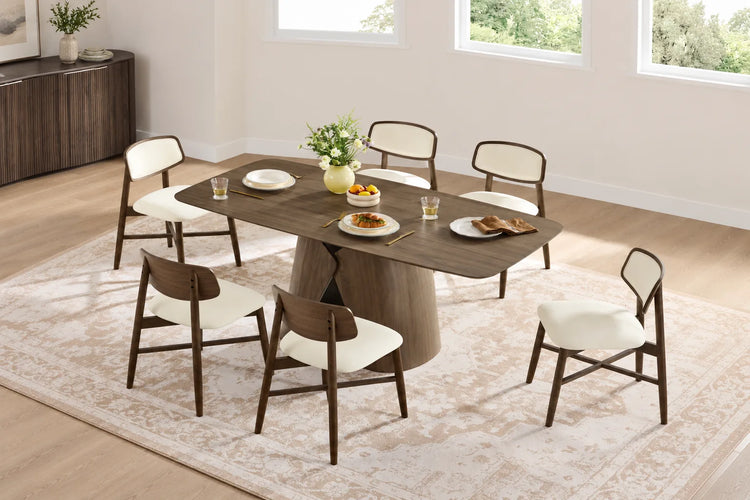
Dining room clearance guidance suggests about 36 to 60 inches between the table and the sideboard so the sitting zone and circulation zone both work. A separate spacing guide recommends at least 36 inches behind chairs for comfortable movement. In plain terms, if the room feels tight when you pull out a chair, the layout will annoy you every day.

Match or Contrast Style and Finish
Style coordination is less about exact matching and more about making the pieces look intentional together. Scale, color, texture, and repeated details do the heavy lifting. That is true whether you want the sideboard to disappear into the room or stand out as a featured piece.
| Pairing choice | When it works best | Watch outs | Styling cues |
|---|---|---|---|
| Match | The room already feels busy, or the table is the main feature | A too-perfect match can feel flat or overly staged | Repeat one or two details, like wood tone, leg shape, or hardware finish |
| Contrast | You want the sideboard to add interest without looking random | Contrast fails when the scale or texture feels disconnected | Link the pieces with a shared color family, material, or silhouette |
| Soft blend | You want a calm, flexible look in a small or open-plan room | Too many similar finishes can make the room feel washed out | Mix tone variations, but keep the visual weight balanced |
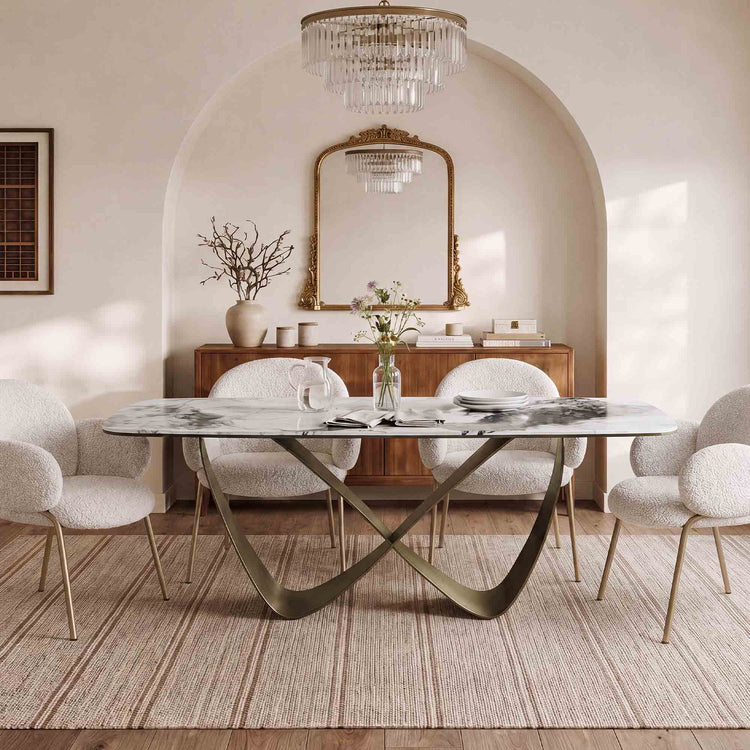
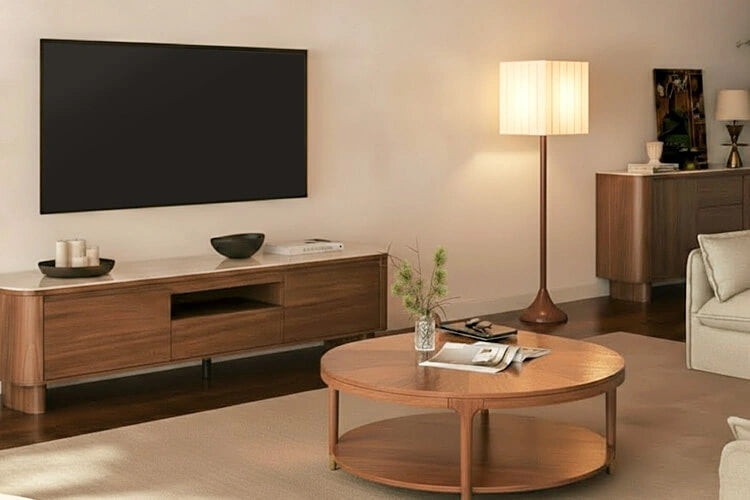
A good rule for how to style a sideboard is to look for one or two repeated cues, not a perfect duplicate of the table. For example, a warm wood table can pair well with a painted or lighter-tone sideboard if the shape and finish still feel related. Likewise, a more formal table can work with a cleaner sideboard if the profiles stay coordinated.
If the room has a lot of wood already, contrast becomes more useful. If the dining area already has strong colors, a sideboard that borrows one quieter tone often feels calmer. The goal is not sameness. The goal is continuity.
Place and Style the Surface
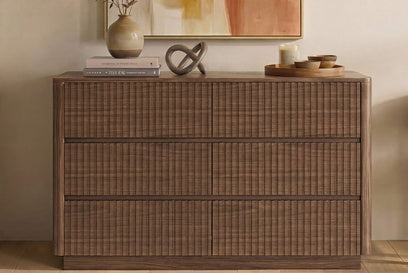
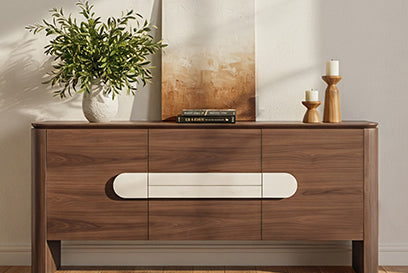
Once the cabinet fits the room, the top should support the dining space rather than fill every inch of it. The easiest way to avoid clutter is to start with one focal point and only a few supporting pieces. That can be a lamp, mirror, vase, tray, or a piece of art, depending on how much visual weight the room can handle.
Think in terms of balance, not a fixed formula. A symmetrical arrangement can feel right in a more formal room. A looser grouping can feel better in a relaxed space. Either way, leave negative space so the sideboard still reads as furniture, not a display shelf.
Closed storage helps here. If the cabinet holds serving pieces, table linens, or seasonal items, the surface can stay cleaner and easier to reset for guests. That is especially useful in compact homes, where a crowded top makes the whole room feel smaller.
The safest approach is to scale the styling to the cabinet itself. A long sideboard can handle a wider spread of objects; a smaller one usually looks better with a tighter, simpler group. If you want a soft contrast, use texture, such as wood with glass, stone, metal, or greenery, instead of packing on more items.
Choose the Right Layout for Your Room
- Measure the wall, the table footprint, and the path you need around both pieces. If the room has an awkward corner or a narrow passage, the sideboard may need to move to a different wall.
- Check chair pull-back and door swings before you commit. The 36-inch spacing rule is a good baseline for everyday movement, and overall clearance guidance points to a 36 to 60 inch comfort zone between the table and the sideboard.
- Decide whether the sideboard should sit beside the table, opposite it, or on a nearby transition wall. In open-plan rooms, the best spot is often where it can serve the dining zone without interrupting the living area.
- Test the serving path. If you cannot reach the cabinet easily during a meal or clean the area without moving chairs, the layout is probably too tight.
For a quick fit check, imagine the room in use on a normal weeknight, not just on a staged photo day. If the sideboard blocks traffic, it is too much furniture for the space. If it feels visually disconnected from the table, move it closer in style, scale, or placement.
Quick Checks Before You Buy
- Measure the dining table first, then shop for a sideboard that feels proportionate instead of oversized.
- Leave enough room for chair pull-out and walking paths, especially in compact dining rooms.
- Decide whether you want the cabinet to blend in or create contrast, then keep that choice consistent.
- Check finish, color, and shape together, not one at a time.
- Keep the top simple enough that the sideboard adds structure without creating clutter.
- If you are furnishing a smaller room, pay extra attention to visual weight and depth.
Before you add anything to cart, compare the room's wall length, traffic flow, and storage needs against the cabinet you like. Measure first, then browse a dining-table style that supports the same look, or compare seating options that keep the whole room visually balanced.
FAQs
How Far Should a Sideboard Be From a Dining Table?
Aim for enough space to move chairs and walk comfortably, not the tightest fit that still technically works. A practical baseline is at least 36 inches for chair movement, with total table-to-sideboard clearance often landing in the 36 to 60 inch range depending on the room. If your path feels cramped when you test it, the layout needs more space.
Should a Sideboard Match the Dining Table Exactly?
No. Matching is optional, and in many rooms a softer contrast looks more natural. The key is to keep one or two connections, such as wood tone, shape, or hardware finish, so the pieces feel coordinated. Exact matching can work, but it is not the only way to make the room feel intentional.
What Is the Best Sideboard Height for a Dining Room?
There is no one height that works in every dining room. Height should be judged against room scale, nearby wall decor, and the table's visual weight. In a smaller room, a lower profile often feels lighter. In a larger room, a taller cabinet can hold more visual presence without feeling crowded.
Can a Sideboard Work in a Small Dining Room?
Yes, if you keep the cabinet visually lighter and leave enough circulation space. Compact rooms usually do better with slimmer depth, shorter length, and simpler styling on top. If the sideboard blocks chair movement or makes the room feel pinched, it is probably too large for the space.
How Do You Style a Sideboard Without Making the Room Feel Crowded?
Use a small number of grouped pieces and leave open space around them. One focal point, plus one or two supporting items, usually looks cleaner than a crowded row of objects. Echo the room's materials or colors with a tray, lamp, vase, or art, but stop before the surface starts to compete with the dining table.
Recommended Products

More to Read
 7 Sofa Trends That Actually Improve Comfort in 2026
Upgrade your living room with furniture that supports your body. Here are 7 modern sofa features designed to maximize your daily comfort...
7 Sofa Trends That Actually Improve Comfort in 2026
Upgrade your living room with furniture that supports your body. Here are 7 modern sofa features designed to maximize your daily comfort...
 Mother's Day Gift Guide: Cozy and Stylish Furniture Picks for Modern Moms
Make Mother's Day more meaningful with furniture gifts that bring comfort, smart features, storage, and quiet luxury into her everyday routine.
Mother's Day Gift Guide: Cozy and Stylish Furniture Picks for Modern Moms
Make Mother's Day more meaningful with furniture gifts that bring comfort, smart features, storage, and quiet luxury into her everyday routine.
 Performance Fabric Reality Check: Does It Really Repel Pet Hair and Stains?
Performance fabric is often marketed as a miracle solution for homes with pets and kids, but the reality is more nuanced. It...
Performance Fabric Reality Check: Does It Really Repel Pet Hair and Stains?
Performance fabric is often marketed as a miracle solution for homes with pets and kids, but the reality is more nuanced. It...