


























Pairing a Lift-Top Coffee Table With a Reclining Sofa

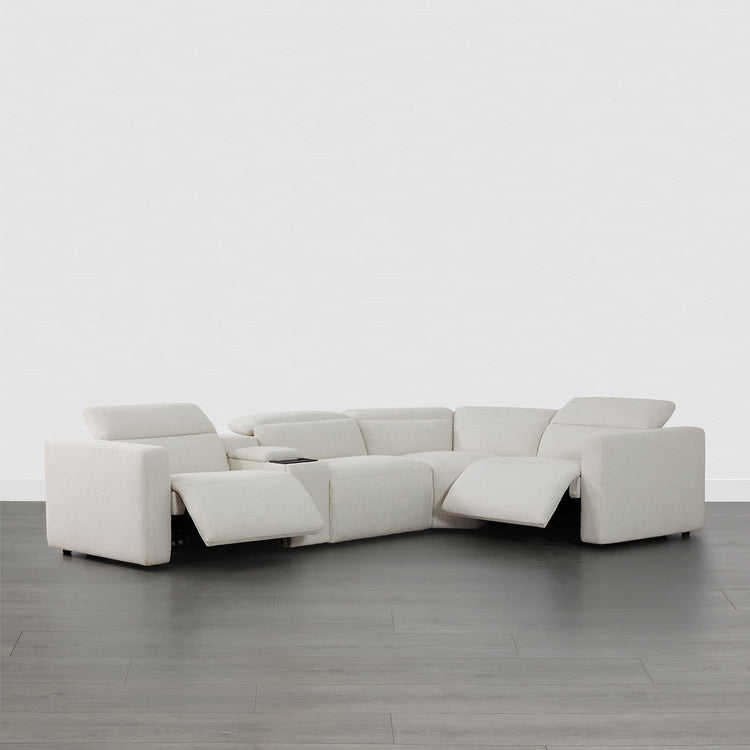
To pair a lift-top coffee table with a reclining sofa, test both pieces open at the same time. Fully recline every moving seat, raise the tabletop, and check two things together: can you comfortably reach the raised surface from your seat, and does the table stay clear of the footrest, the sofa, and the people using it?
No single clearance number settles this, because recline and footrest movement differ from one sofa model to the next. Use your actual sofa's open position as the benchmark, then decide whether to keep the layout, move the table, or pick a different footprint.
Test the Recliner and Lift-Top Table Together
The first real test is a paired one: sofa fully reclined, table raised, and you sitting in your usual spot. Checking the furniture only in its closed or upright positions can hide the problems that show up during everyday use, like a footrest that swings into the table's edge or a raised top that sits just out of reach.
Run the check in this order:
- Place both pieces where you plan to use them. Set the table at the distance and angle you intend to keep, not a temporary spot.
- Fully recline each moving seat. Go through the full range of motion for every recliner in the sofa, not just one. Each seat can extend differently.
- Raise the tabletop with the sofa still open. Watch for any contact between the lifting top, the table base, the footrest, or the sofa frame.
- Sit in the seats people actually use. From a reclined and an upright position, reach for the raised surface as if you were setting down a laptop or a plate. Note whether you have to lean far forward or twist.
- Lower and raise the top again. Confirm it moves through its full travel without bumping legs, knees, or the extended footrest.
Treat awkward reach or any contact as a failed check. A table that leaves a small gap on paper but forces you to stretch, or that brushes the footrest when the top lifts, does not pass just because the pieces technically fit in the room. The pair passes only when the sofa reclines fully, the table operates in both positions without interference, and seated users reach the raised top comfortably.
If you plan to type on a laptop at the raised table, check the UK Health and Safety Executive's laptop setup guidance: keep the keyboard just below elbow height, with relaxed shoulders. For prolonged use, it recommends a separate keyboard and mouse so the screen can be raised independently.

Use Actual Dimensions to Check Reach and Movement
If you're still shopping, compare the candidate table's real dimensions with the real movement of your sofa. Look at the table's footprint plus its lift travel, and measure how far each footrest extends when fully reclined. Measuring from the sofa front to the tip of the open footrest defines the clear zone the table must stay outside of.
One measurement alone won't tell you whether a lift top coffee table with storage will work. A table's closed height says little about whether its raised top lands within reach, and a narrow footprint does not help if the top lifts toward you and into the footrest's path. Compare the footprint and lift travel against the open sofa, then picture reach from the seat.
For laptop use, also check the space beneath the raised top. OSHA's work-surface clearance guidance explains why knees and feet need room for you to sit close to the keyboard and change posture. Include the table base and lifting hardware when checking that space.
Here's an example of the kind of figures to look for. On our Coral lift-top table listing, we list a height of 16.54 in. lowered and 25.98 in. raised. Numbers like these let you compare raised height against where your hands naturally land from your seated position. They can't tell you whether that table suits a particular sofa, because that depends on your sofa's recline path and where you place the table.
When the furniture isn't in the room yet, mark the sofa's open footprint and the table's footprint on the floor with removable painter's tape. That lets you see the overlap zone before anything arrives. Our coffee table height guide explains how lowered height relates to your sofa seat. For L-shaped layouts with several moving seats, our sectional table measuring tips cover recliner access in corner configurations. Once the actual pieces are in place, confirm the layout with the paired open-position test.
If the Pair Fails, Adjust the Layout or Table
Match the fix to what went wrong, then run the open-position test again. Keep the arrangement only when every check passes at the same time.
- The footrest or sofa hits the table. The current placement fails. Slide the table farther out or shift it sideways, then fully recline every seat again. If no placement clears the footrest, the footprint is the problem, so look at a smaller table or a movable surface.
- The table clears the recliner, but the raised top is too far away. Clearance alone is not success. A side table beside the recliner can put a surface within reach without sitting in the footrest's path.
- Both problems at once. Moving the table back to clear the footrest often pushes the top out of reach. Here, consider pairing a smaller center table with a side table, then retest reach and recline together.
- The top bumps knees or legs as it rises. Check where people sit when they use the lift, then adjust the table's position or angle and raise it again with someone seated.
Our list of sectional coffee table mistakes covers other layout traps worth checking before you order.
After moving the table, check the walking route again with every footrest open. The American Academy of Orthopaedic Surgeons' home fall-prevention guidance specifically advises keeping coffee tables and footrests out of walking paths.
FAQs
Does a wall hugger recliner change how I place the coffee table?
It can. A wall hugger recliner slides forward as it reclines so it can sit closer to the wall, which means the seat moves toward the coffee table instead of only tipping back. Measure its forward travel, not just its rear clearance. Our explainer on how wall hugger recliners work covers which dimensions to measure.

Is a round or rectangular lift-top table easier to fit near a recliner?
Neither shape works better automatically. Some decorating guides say round tables soften a room's angles, and a round table has no corners near the footrest. A rectangle may offer more surface along a long sofa. Tape out both shapes against the open recliner and choose the one that clears every footrest.
Can I rely on general sofa-to-table spacing rules?
Use them as a starting point only. Your sofa's actual fully reclined depth and extended footrest path determine the real spacing required in your room.
Who in the household should test the raised top?
Everyone who regularly uses the sofa. Arm length and seating posture vary, so a top that one person reaches easily may feel far away to someone else. Have each regular user try it from their usual seat, reclined and upright.
Recommended Products
More to Read
 7 Sofa Trends That Actually Improve Comfort in 2026
Upgrade your living room with furniture that supports your body. Here are 7 modern sofa features designed to maximize your daily comfort...
 Mother's Day Gift Guide: Cozy and Stylish Furniture Picks for Modern Moms
Make Mother's Day more meaningful with furniture gifts that bring comfort, smart features, storage, and quiet luxury into her everyday routine.
 Performance Fabric Reality Check: Does It Really Repel Pet Hair and Stains?
Performance fabric is often marketed as a miracle solution for homes with pets and kids, but the reality is more nuanced. It...