























How to Protect Hardwood Floors from Dining Chairs: Glides, Rug Rules, and Leg Maintenance

Dining chairs scratch hardwood floors when a hard, dirty, or worn chair foot presses down and drags across the finish with every meal. The fastest fix is a three-step routine: clean and inspect every chair leg, fit a protector that matches the floor and how the chair moves, then test the chair on your actual floor before it goes back into daily use. A rug can help too, but only when it's large enough to keep pulled-out chairs supported and paired with a pad your hardwood finish can tolerate.

How to Stop Dining Chairs From Scratching Hardwood Floors
Treat floor protection as a system, not a single product. The National Wood Flooring Association recommends floor-protector pads on furniture legs that touch hardwood, along with routine dry cleaning and prompt spill cleanup so grit doesn't damage the finish or the pad itself.
Inspect the Chair Feet and Floor Before Choosing Protection
A short inspection tells you whether you need cleaning, a new protector, a repaired leg, or a manufacturer check. Start with one chair, tip it up, and look closely at the foot and the floor underneath it.
- Leg shape and surface: smooth feet mainly need a compatible glide, while hard, rough, cracked, or uneven feet need repair or replacement first.
- Attachment: confirm the current protector sits flat, centered, and hasn't shifted.
- Exposed contact area: check whether bare wood, metal, or plastic still touches the floor.
- Floor condition: look for grit, scuff marks, or a change in the finish's sheen under the chair.
Clean the foot and protector if both are intact and just dusty. Replace the protector if it's worn, cracked, or still lets a hard edge touch down after cleaning. Repair or replace the chair leg itself if it's cracked, loose, or uneven. If a foot is still exposing hard material after cleaning, repair or replace it according to the chair and flooring manufacturers' instructions before you put the chair back into regular use.
Felt vs. Rubber vs. Plastic Glides: Choose by Movement and Floor Compatibility
Choose a glide by the job, not by a universal ranking. Ask whether the chair needs to slide quietly, stay in place, or move over a finish you're unsure about, then check the exact glide against your floor's care instructions.
| Glide material | Best-fit movement need | Decision-changing limitation | Verification before use |
|---|---|---|---|
| Felt or fabric-faced | Quiet, frequent sliding | Hardens and collects grit over time | Check for embedded soil often; replace when stiff |
| Rubber | Chairs that should resist movement | Compound and finish reaction vary; may mark some floors | Spot-test rubber on a hidden part of the finish |
| Plastic or nylon-type | No single job; depends on design | Fit is tied to the exact product and floor condition | Follow that product's specific instructions |
Pick a direction first. If a chair needs to glide across the room easily, felt glides for dining chairs are a reasonable starting point, but only when they're clean and unworn, since glide performance depends heavily on floor conditions and glide upkeep. If chairs tend to migrate or catch on a rug, a rubber pad may hold better, though it can mark certain finishes and deserves a spot test first. Plastic and nylon-type glides ship on many new chairs, but their fit depends entirely on the product design and your floor, so treat any packaging claim as conditional. Test the exact glide on your own hardwood, or follow the flooring and glide manufacturers' directions, before using it across the whole dining set.
Fit and Verify Each Glide Before Returning Chairs
A secure fit starts with a clean, dry contact point and ends with a real movement test. Run this five-step sequence on every leg, not just one.
- Wipe the leg clean and let it dry completely before attaching anything.
- Match the protector to the footprint of the leg so it doesn't overhang or leave an exposed edge.
- Center and attach it exactly as the product instructions describe; adhesive, nail-on, sleeve, and caster-style glides all mount differently.
- Run a finger around the edge to confirm no hard material or fastener is exposed.
- Move the chair gently across the actual floor, listening and looking for catching, shifting, noise, or new marks.
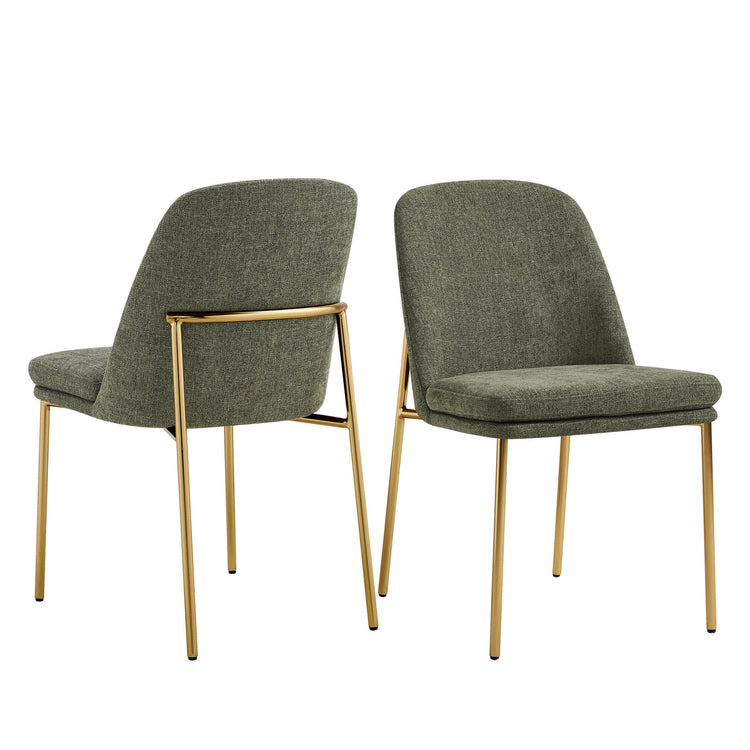
Stop using the chair if the glide shifts, exposes a hard edge, catches on the floor, or shows embedded debris or damage during that check. Fix the issue before the chair goes back into daily use. If you're comparing new hidden-caster dining chairs, still run this same fit-and-movement check on every glide before trusting it on hardwood.
Dining Rug Rules: Measure for Pulled-Out Chairs
Start by measuring the tabletop, not just eyeballing the rug. A workable starting point for dining room rug size for a table and chairs is 24 inches of rug beyond each edge of the table, which is roughly 24 inches past the table edge as a minimum so pulled-out chairs still have somewhere to sit.
For a 60-by-38-inch table, that starting math works out to a rug near 108 by 86 inches, before you test it against your actual chairs. Treat this as a bounded design starting point, not a fixed industry standard, since room scale and nearby furniture change the right size for your space. If you're still finalizing table dimensions, our table clearance guide walks through sizing an extendable table before you shop for a rug.
Dining rug starting-clearance calculation
Schematic starting rule: allow 24 inches beyond each table edge, giving 48 inches across the two edge clearances. Measure the actual tabletop and test pulled-out chairs and room circulation; this is not a standard rug-size chart.
View chart data
| Category | Distance from tabletop edge (inches) |
|---|---|
| Tabletop edge | 0.0 |
| Chair-support clearance | 24.0 |
| Opposite rug edge | 48.0 |
Once you have a candidate rug, pull every chair all the way out and confirm all four legs stay on the rug, not just the front two. Check that the rug still lies flat near doorways and walkways so foot traffic isn't blocked. Before you commit, verify that the rug pad is compatible with your hardwood's finish and that the rug itself is clean, dry, and stable under the dining set.
Maintain Chair Legs, Glides, and the Floor
Maintaining chair feet to reduce floor-scratch risk isn't a one-time job. Build three checks into your routine: right after installation, during regular cleaning, and whenever something about a chair's movement changes.
- After installation: recheck each glide a day or two later to confirm it's still centered and hasn't shifted.
- During regular cleaning: keep sweeping, dust-mopping, or vacuuming the bare floor, and wipe up spills right away so grit and moisture don't reach the glide or the finish.
- Contact-point check: run a hand around each glide monthly to feel for cracking, looseness, or a hard edge poking through.
- Problem-trigger check: whenever you hear new noise, feel new resistance, or spot a fresh mark on the floor, stop and inspect that chair right away instead of waiting for the next cleaning day.
Replace the glide or repair the chair foot when you find exposed hard material, embedded grit that won't brush out, cracking, looseness, or moisture damage. Follow the floor finish and chair manufacturer's care instructions for cleaning products and repairs, since the wrong cleaner can dull or damage a finish faster than an unprotected chair leg ever could.
FAQ
What Is the First Thing to Do When Dining Chairs Scratch Hardwood Floors?
Tip up each chair and clean grit off the foot and any existing protector. Fit a glide that matches how the chair moves, then push the chair gently across the floor to check for catching or new marks before it goes back into daily use. This lowers the risk of new scratches; it doesn't guarantee a scratch-free floor.
Are Felt, Rubber, or Plastic Glides Best for Hardwood Floors?
No single material wins for every chair. Felt suits quiet, frequent sliding but hardens and collects grit over time. Rubber grips better when you want a chair to stay put, though it can mark some finishes. Plastic or nylon-type glides depend entirely on the exact product and your floor, so check the manufacturer's instructions before relying on any of them.
How Much Larger Should a Dining Rug Be Than the Table?
Use 24 inches of rug beyond each side of the tabletop as a starting point, adding 48 inches to each tabletop dimension. Then pull every chair all the way out and confirm all four legs stay on the rug before you commit to that size.
How Often Should Chair-Floor Protectors Be Checked?
Check glides during your regular floor cleaning and anytime a chair sounds, feels, or moves differently than usual. Replace a glide that's cracked, loose, gritty, or worn through, and repair the chair foot itself if it's still exposed after cleaning.
Sources
- National Wood Flooring Association (n.d.). Homeowner's Handbook to Real Wood Floors.
- Iowa Prison Industries (n.d.). Chair Glide Selection Guidelines.
- Homes & Gardens (n.d.). The Ultimate Rug Size Guide.
Recommended Products


More to Read
 7 Sofa Trends That Actually Improve Comfort in 2026
Upgrade your living room with furniture that supports your body. Here are 7 modern sofa features designed to maximize your daily comfort...
7 Sofa Trends That Actually Improve Comfort in 2026
Upgrade your living room with furniture that supports your body. Here are 7 modern sofa features designed to maximize your daily comfort...
 Mother's Day Gift Guide: Cozy and Stylish Furniture Picks for Modern Moms
Make Mother's Day more meaningful with furniture gifts that bring comfort, smart features, storage, and quiet luxury into her everyday routine.
Mother's Day Gift Guide: Cozy and Stylish Furniture Picks for Modern Moms
Make Mother's Day more meaningful with furniture gifts that bring comfort, smart features, storage, and quiet luxury into her everyday routine.
 Performance Fabric Reality Check: Does It Really Repel Pet Hair and Stains?
Performance fabric is often marketed as a miracle solution for homes with pets and kids, but the reality is more nuanced. It...
Performance Fabric Reality Check: Does It Really Repel Pet Hair and Stains?
Performance fabric is often marketed as a miracle solution for homes with pets and kids, but the reality is more nuanced. It...