




































Sideboard Storage Strategies: How to Organize Serving Platters, Table Linens, and Stemware

A practical sideboard layout starts by sorting platters, linens, and stemware by weight, frequency of use, and fragility. Then assign each group a suitable zone. The steps below turn that plan into a usable setup and help you confirm that your furniture can support it.

The Sideboard Zoning Rule: Heavy Low, Frequent Items Within Reach
Before you move a single plate, decide which of three zones fits each category: a low, supported zone for platters; an accessible, dry compartment for linens; and a protected compartment for stemware. Sorting by weight, frequency of use, and fragility first keeps you from shuffling items twice.

This three-zone split is a practical organizing method, not proof that your sideboard can hold any particular load. Use it as a starting plan, then check it against your furniture's actual construction.
| Category | Default zone | Main fit check |
|---|---|---|
| Serving platters | Low, supported zone | Remove one piece without lifting an unstable stack. |
| Table linens | Accessible, dry compartment | The drawer or door still opens and closes normally. |
| Stemware | Protected compartment | Lift each glass out without contacting its neighbors. |
Measure the Interior Before You Load It
Empty the sideboard completely and measure the usable interior, not just the outside width. Doors, frames, and shelf lips can reduce available space compared with the exterior dimensions on a spec sheet.
For every compartment, create a written map that pairs its usable dimensions and opening clearance with the category it will hold: platters, linens, or stemware. Then work through this sequence:
- Record the usable width, depth, and height of each shelf, cabinet opening, and drawer.
- Measure your largest platter, biggest linen bundle, and fullest stemware grouping.
- Add enough clearance to lift or slide each item out without scraping a neighboring item.
- Note whether shelves are adjustable, whether dividers are included, how far doors and drawers travel, and any capacity figures listed by the manufacturer.
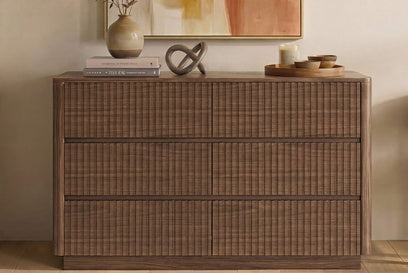
A mixed-storage piece like our 63-inch Hazel sideboard shows why this step matters. It has adjustable interior shelves and soft-close drawers, making it easier to separate platters, linens, and stemware into distinct compartments. Its listing states a 220-pound overall weight capacity, but that figure applies to the whole piece—not to any one shelf or drawer. Check the current product instructions for shelf, drawer, and surface limits before assigning your heaviest pieces.
Place Serving Platters in Low, Supported Zones
Serving platters and other oversized pieces belong in the lowest compartment that is designed to support them. Keep everyday serving pieces separate from holiday-only platters so you can pull out one item without disturbing the entire stack.
Store platters so you can remove them one at a time without lifting a stack or reaching over stemware. Group them by size and frequency of use, with the largest and heaviest pieces at the bottom. If a shelf flexes, a door or drawer stops closing normally, or removing a platter means balancing an unstable stack, move that piece to another compartment. The space is not a good fit, regardless of how the layout looked on paper.
Group Table Linens by Frequency and Season
Sort table linens by how often you use them, not just by size. Give everyday napkins, runners, and placemats the shortest, easiest path to the table. Keep holiday tablecloths and other occasional pieces in a separate group.
Label each group by use or event so you do not have to dig through one mixed pile before a weeknight dinner. Choose a drawer or compartment away from heavy platter stacks, since linens should not require you to move serving pieces first. Check the fit as you load: if the drawer no longer opens and closes normally, the group is too large for that space. Use another compartment or reduce the load.
Store Stemware in a Protected, Easy-to-Reach Zone
Stemware needs a compartment that protects it while letting you lift out one glass at a time. Choose a spot away from heavy platter stacks and from the path you use to retrieve bulky serving pieces.
A quick fit test works better than a fixed rule:
- Arrange glasses with enough space for each one to clear its neighbors on the way out.
- Use your actual glass dimensions and the compartment opening as the test, rather than guessing.
- If removing one glass means touching another or reaching across something heavier, move the group to a roomier spot.
- Follow the maker's care instructions for unusually delicate, antique, or specialty pieces instead of relying on a general storage rule.
Check Weight, Stability, and Manufacturer Limits
Before you rely on the layout, verify what your specific sideboard can hold and how it should be secured. An overall weight capacity in a product listing is not automatically a shelf or drawer limit. Treating it that way is a common overload mistake.
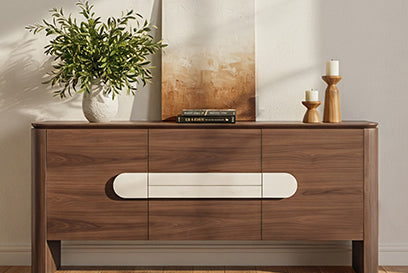
Our 70-inch Bowen sideboard illustrates the difference. Its listing states that the shelves measure 27.6 inches wide by 13 inches deep, with a 66-pound shelf capacity and a 66-pound surface capacity. Those figures apply only to this model. They also do not guarantee that a particular platter will fit, so measure it against the actual opening.
Run this check before loading anything heavy:
- Confirm the current manufacturer instructions for capacity, assembly, and anchoring.
- Keep each shelf or surface limit tied to your exact model, not a general assumption.
- Make sure the piece sits securely on the floor and that doors and drawers still move normally once loaded.
- Stop and redistribute the load if you see visible strain or sagging, or feel resistance anywhere.
The CPSC Anchor It campaign recommends anchoring furniture with drawers, doors, or shelves to the wall to help prevent tip-over injuries and deaths. Follow your sideboard's specific anchoring instructions and use an appropriate wall-anchor method before relying on a loaded layout, especially in a home with children.
Run a Retrieval Test for Daily Dining or Holiday Hosting
Daily dining and holiday hosting call for different priorities. Test your layout against the occasion before you need it. For daily use, keep frequently used linens and serving pieces on the shortest safe path so weeknight setup stays quick.
For holiday hosting, group the platters and linens for that event ahead of time instead of searching every compartment while guests wait. Once the layout is set, run this short sequence:
- Open every door and drawer in the order you plan to use them.
- Pull out each planned item and confirm that it does not disturb stemware or another category.
- Check that no retrieval requires an unstable stack or awkward reach.
- If any step fails, reduce the load in that compartment or move the item to another storage spot rather than forcing the fit.
Browsing our holiday entertaining furniture collection can help if this test shows that your current sideboard is too small for the platters and linens a big dinner requires.
FAQs
Can platters, linens, and stemware share the same sideboard?
Yes, if the interior provides separate compartments or enough clearance to retrieve each group without disturbing the others. If one category blocks another or forces an unstable stack, use a different compartment or store some items elsewhere.
What should I do if a shelf or drawer feels crowded?
Move some items to another compartment rather than forcing the fit. A shelf that flexes or a drawer that will not close normally indicates that the space is holding more than it should. Rearranging items within the same spot will not solve the problem.
Should I anchor my sideboard to the wall?
If it has drawers, doors, or shelves, follow the manufacturer's anchoring instructions and secure it with an appropriate wall-anchor kit. The CPSC's Anchor It campaign recommends this to help prevent tip-over injuries. Organizing the inside of the piece does not replace anchoring it.
How do I prepare my sideboard for a holiday dinner?
Group the platters and linens for the event, then open the doors and drawers in the order you will use them. Remove each planned item once before guests arrive. If one item disturbs another category or requires an awkward reach, move it or reduce that compartment's load.
A finished sideboard setup should make each category easier to reach without treating organization as a substitute for capacity or anchoring checks. Sort by weight, frequency, and fragility, confirm the model's limits, and run a retrieval test. These steps give you a more accessible, stable setup for daily meals and holiday hosting.
Recommended Products



More to Read
 7 Sofa Trends That Actually Improve Comfort in 2026
Upgrade your living room with furniture that supports your body. Here are 7 modern sofa features designed to maximize your daily comfort...
7 Sofa Trends That Actually Improve Comfort in 2026
Upgrade your living room with furniture that supports your body. Here are 7 modern sofa features designed to maximize your daily comfort...
 Mother's Day Gift Guide: Cozy and Stylish Furniture Picks for Modern Moms
Make Mother's Day more meaningful with furniture gifts that bring comfort, smart features, storage, and quiet luxury into her everyday routine.
Mother's Day Gift Guide: Cozy and Stylish Furniture Picks for Modern Moms
Make Mother's Day more meaningful with furniture gifts that bring comfort, smart features, storage, and quiet luxury into her everyday routine.
 Performance Fabric Reality Check: Does It Really Repel Pet Hair and Stains?
Performance fabric is often marketed as a miracle solution for homes with pets and kids, but the reality is more nuanced. It...
Performance Fabric Reality Check: Does It Really Repel Pet Hair and Stains?
Performance fabric is often marketed as a miracle solution for homes with pets and kids, but the reality is more nuanced. It...