

























The biggest sofa buying mistakes for first apartments usually start with price or looks, then show up later as a sofa that crowds the room, is hard to deliver, or wears out too soon. A smarter first buy fits your layout, fits your building, and fits how you actually live after move-in. Avoiding sofa buying mistakes for first apartments early saves the most money.
Why First Apartment Sofa Mistakes Cost More Later
A first apartment sofa often has a tougher job than people expect. It may be your main seat, guest seat, and work-from-home spot all at once. That means a bad choice can annoy you every day before it ever looks visibly worn.
The usual regret pattern is simple: the sofa was cheap enough, but the replacement, delivery hassle, or awkward fit made it expensive in practice. That is why the safest approach is not "buy the cheapest one," but "buy the one least likely to become a problem after week two."
One useful rule of thumb is this: if you are already worried about whether a sofa will fit, hold up, or move easily, that is a sign to slow down and check the basics first. For first apartment renters, the hidden costs usually come from friction, not just from the sticker price.
Measure the Room Before You Shop
Measure the space before you shop, not after you fall in love with a style. New York City's consumer furniture advice says to write down your room size, doorways, and narrow stairwells or elevators before buying, because the room is only part of the fit problem, and the path in matters too. Measure your space first
Start with the wall where the sofa will sit, then measure nearby walkways, coffee table clearance, and any swing space you need for doors or drawers. If the sofa makes the room feel "technically full but hard to live in," it is probably too large for daily use.

If you live in an older building, add the doorway, hallway corner, stair turn, and elevator depth to your notes. A delivery route can be tighter than the living room itself, and a sofa that looks perfect on a product page can still become a failed delivery day.
This is why the safe decision sentence is: If you cannot measure the path in and the path out, do not treat the sofa as a sure fit yet. For first apartment renters, that boundary matters more than style photos.
Map the Sofa Footprint and Walking Space
Think in terms of circulation, not just sofa length. You want enough room to walk past the sofa without turning the living area into an obstacle course. That matters even more in studios, where one blocked walkway can make the whole apartment feel cramped.
A good self-check is to trace the sofa footprint with painter's tape or a box outline on the floor. If the taped area leaves little room to move around a coffee table, reach outlets, or open nearby furniture, the sofa may be the wrong scale even if the number on paper looks manageable.
Check Doorways, Hallways, and Stair Turns
Apartment move-in problems often show up at the entrance, not in the living room. Consumer furniture advice from Maryland's attorney general notes that buyers should ask about stairs, delivery windows, assembly, and return terms before purchase, because delivery complications are common enough to create complaints. Furniture delivery questions to ask
Older buildings can make a sofa feel larger than it is. Tight turns, narrow landings, and door swings can force awkward angles, and that can be enough to rule out a piece that otherwise seemed ideal. If your route includes a small elevator or a sharp stair turn, be conservative.
Plan for Delivery and Assembly Day
Do not assume the packaged sofa will move like the assembled one. Packaging can add bulk, and assembly can add time, stress, and missed delivery risk if you are moving in on a narrow schedule.
A practical boundary is this: If the delivery team cannot reasonably carry the package through the building path you measured, the sofa is not a safe buy yet, even if the final dimensions look fine. That is one of the easiest first-apartment mistakes to avoid.
Choose Shape and Size for Daily Life
Apartment-sized sofas are usually narrower and shallower than standard three-seaters, which is why they often fit small living rooms better without taking over circulation. Club Furniture's small-space guide makes the same basic point: apartment-scale seating is designed to preserve usable floor space, not just seat count. Apartment-size sofa basics
The best shape depends on how the room will be used. If you host often, work from the couch, or need the sofa to act as your main hangout zone, seating depth and comfort matter more than squeezing in the largest possible frame. If the room is very narrow, preserving walking space matters more.
A compact sofa is usually the safest default for a first apartment, but that does not mean every compact sofa is right. The right choice is the one that keeps the room open enough to live in, while still giving you enough seating for your real routine.
| Option | Best Fit | Main Trade-Off | When It Starts To Break Down |
|---|---|---|---|
| Compact sofa | Studios and many one-bedrooms | Less seating than larger pieces | When you need frequent guest seating or extra lounging room |
| Loveseat | Very narrow rooms or paired seating setups | Limited seating capacity | When the sofa must function as your main shared seat |
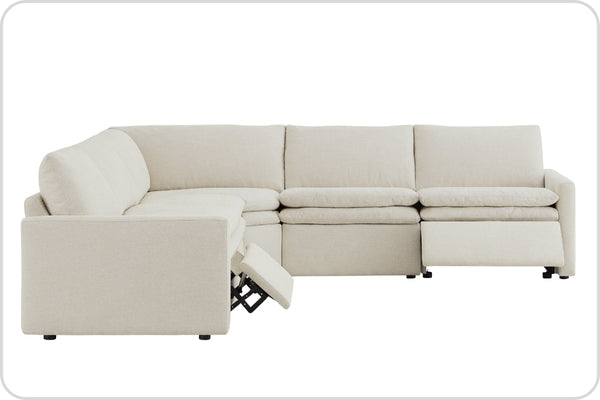
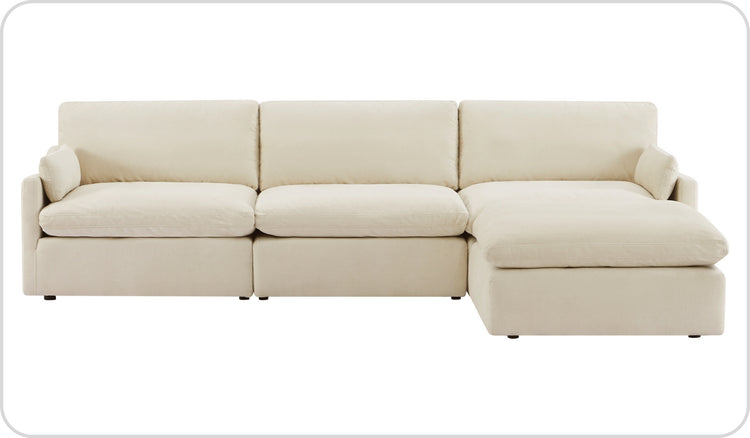
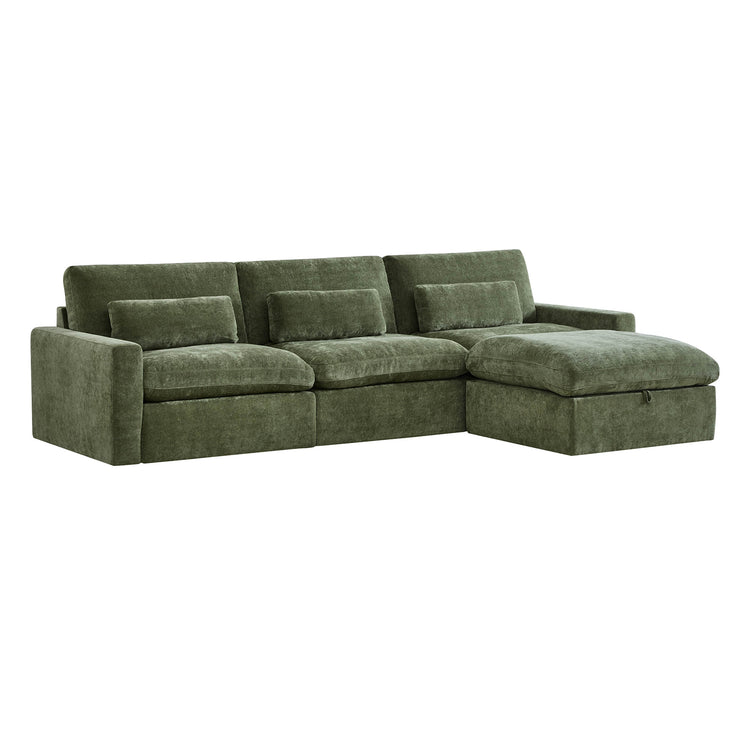
| Small sectional | Rooms with enough depth and flexible layouts | Uses more floor space | When circulation gets tight or delivery access is limited |
The decision sentence here is straightforward: If you need the room to feel open every day, choose the smaller shape; if you need more seating and the layout can absorb it, step up only when the footprint still leaves clean walkways.
If you want more small-space planning context, small-space sofa solutions can help you compare compact, modular, and storage-friendly setups before you decide.
Pick Fabrics That Can Handle Renters' Life
For a first apartment, fabric choice is mostly about stress reduction. A sofa that is easy to live with is one that does not make every spill, pet mark, or move-in scrape feel like a crisis.
Performance-oriented upholstery is often a practical choice for renters because it usually aims to make daily upkeep easier, especially when the sofa is used for lounging, working, and hosting. That is not a promise of stain resistance or maintenance-free ownership, just a more forgiving starting point for busy use.
Look for Easy-Clean Surfaces
Smooth, forgiving upholstery often makes day-to-day care simpler than delicate-looking finishes. That matters most in small apartments, where the sofa is often closer to the kitchen, entryway, or desk than it would be in a larger home.
The safer way to think about it is not "will this never stain?" but "will this be annoying to maintain after normal living?" That shift helps you avoid overpaying for appearance alone.
Match Fabric Choice to Traffic and Pets
If you expect guests, pets, or frequent use, prioritize a fabric that supports your routine instead of fighting it. A sofa in a first apartment usually sees more meals, more laptop time, and more casual lounging than people plan for.
That is why the real trade-off is between upkeep effort and style sensitivity. A more forgiving texture can hide everyday marks better than a delicate finish, but you still need to like how it looks in your room.
Avoid Materials That Show Wear Too Fast
The biggest fabric mistake is choosing something that looks elegant on day one but becomes stressful once it starts seeing regular life. If you already know the sofa will be used hard, do not let the first impression overpower the maintenance burden.
For a quick check, ask yourself: would this fabric still feel like a good idea after a move, a pizza night, and a few months of daily use? If the answer feels shaky, keep shopping.
Value Over Price: What Actually Lasts
If you buy only on price, you often push the cost into replacement, frustration, or early sagging. That is why value matters more than the lowest sticker price in a first apartment.
Chita's quality guide on upholstered furniture is useful here because it points buyers toward frame construction, fabric durability, padding quality, structural integrity, and warranty coverage as the things that help identify long-lasting pieces. How to spot good sofa quality
The first thing to check is support, not style. A sofa that feels fine in the store can still disappoint later if the frame or seat support is weak enough to sag early. That regret is usually more common than wishing you had picked a more dramatic color.
A good value sentence for first apartment shopping is this: If a sofa only looks affordable on day one, but you expect to replace it quickly, it is usually not the better deal.
Check Frame and Support Quality
Frame and support quality matter because they influence how the sofa feels after repeated use. That is especially important in rentals, where the sofa may be your main seat for meals, guests, and work.
You do not need to become a furniture engineer, but you should ask whether the sofa is built for regular use or just for first-impression comfort. If the seat already feels unstable, too soft, or uneven in the showroom, treat that as a warning sign.
Look Past Trendy Finishes
Trend-driven shapes can be fun, but they do not always age well when you move again. Simpler silhouettes are usually easier to carry into a second apartment, a larger living room, or a new layout.
Think in Cost per Year
A sofa that lasts through several leases can be the cheaper choice, even if it costs more upfront. That does not require a precise formula to be useful; it just means you should compare how long the sofa is likely to stay in your life against what it costs now.
If the cheaper option feels temporary the moment you sit on it, that is not true savings. For first apartment buyers, value usually comes from fit, support, and durability working together.
Final Checks Before You Click Buy
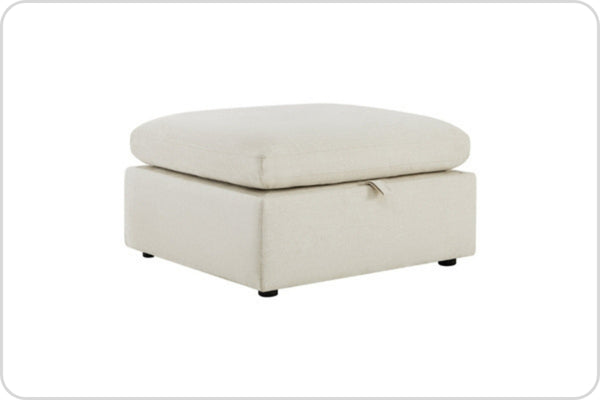
Before you order, remeasure the sofa width, depth, arm width, and any chaise or ottoman add-on. Then confirm the delivery path, assembly needs, and return terms so you are not guessing after checkout.
A practical final step is to compare the sofa to your actual routine: how often you host, whether you work from home, and how much open space you need to feel comfortable. If one of those answers is "more than the room can handle," keep looking.
The safest closing judgment is simple: Buy the sofa that fits your room, your delivery path, and your daily life, because the cheapest mistake is the one you avoid before move-in.

Related Resources
- seat depth and height
- modular seating planning
- Decoding Upholstery Standards: The 2026 Guide to Performance Fabric Durability
FAQs
Q1. How Do I Know If a Sofa Will Fit Through My Apartment Doorway?
Measure the doorway opening, hallway corners, elevator depth, and stair turns, then compare those numbers to the sofa's packed dimensions and any assembly constraints. If the route is tight, assume the sofa is harder to deliver than the product page suggests and ask the seller about access requirements before you buy.
Q2. What Sofa Size Works Best in a Studio Apartment?
A compact sofa or loveseat often works best in a studio because it usually preserves more walking space. The right answer depends on how much the sofa needs to do, though. If it must serve as your main seating area and guest seat, a slightly larger compact model may be better than the smallest possible option.
Q3. Can a Modular Sofa Make Sense for a First Apartment?
Yes, if you expect to move, reconfigure the layout, or add seats later. Modular pieces are most useful when flexibility matters more than getting the lowest upfront price. They make less sense if the room is already tight and the extra pieces would reduce circulation or complicate delivery.
Q4. Why Is Fabric Choice So Important for Renters?
Rental life usually means more daily use, more moving-day exposure, and a higher chance of spills or scuffs. That is why easy-clean upholstery can reduce stress, even though it is not a substitute for regular care. The goal is a sofa that is simpler to live with, not one that never needs attention.
Q5. What Should I Prioritize If I Am on a Tight Budget?
Prioritize fit, frame quality, and upholstery durability before extras like oversized arms or decorative details. Those are the features most likely to affect whether the sofa stays useful. A cheap sofa that is awkward to place or quick to sag usually costs more in the long run than a better-built one.
Choose the Sofa You Can Live With Long Term
First-apartment shopping works best when you treat the sofa as a daily-use decision, not a style purchase. Measure the room and the delivery path, choose a shape that keeps circulation open, and pay attention to fabric and support before extras. If a sofa passes those tests, it is much more likely to feel like a smart buy after move-in. Avoiding sofa buying mistakes for first apartments this way keeps the purchase useful for years.