













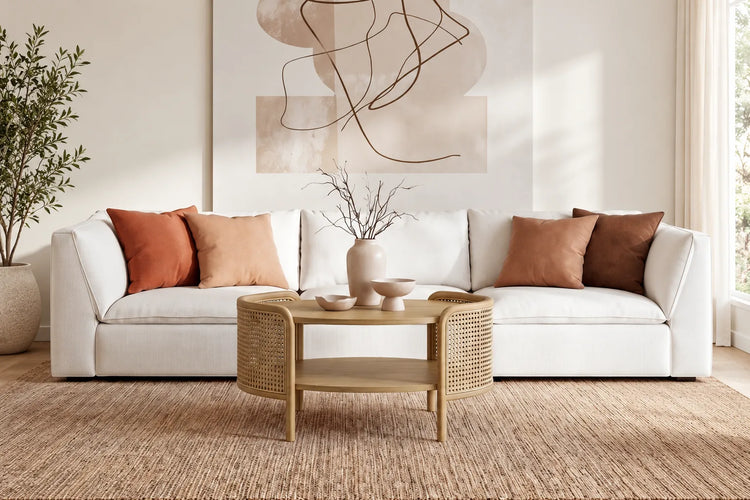
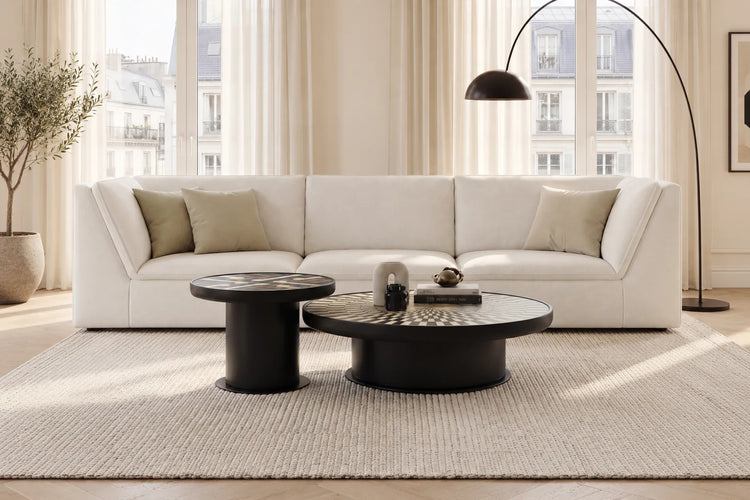









The 2026 Modular Living Manifesto: How to Design a 'Forever Home' with Reconfigurable Seating

Why the 'Forever Home' Starts with a Modular Mindset
In the context of a "forever home," furniture is no longer a disposable commodity but a form of soft architecture. A modular sofa system, when selected with a focus on splitability, circulation, and verified structural benchmarks, allows a living room to evolve from a toddler-proof playroom to a sophisticated social hub without requiring a full remodel.

The shift toward intentional, long-term living means moving away from "fast furniture" that may require replacement after only a few years of heavy use. The core of the modular living manifesto is treating your seating as infrastructure.
Modular sofas function as reconfigurable building blocks. They allow homeowners to adjust layouts as family dynamics shift—such as when children grow into teens or when adult children move out—without the need for structural renovations. By prioritizing adaptability over static, one-size-fits-all furniture, you future-proof your primary living space.
For those planning to stay in one residence for a decade or more, the goal is to select systems that preserve room flow and visual balance across multiple life stages. This turns the living room into a resilient centerpiece that supports, rather than constrains, your household’s evolution.
Spatial Planning: The 70% Heuristic and Circulation
To maintain visual "breathing room," a common design guideline is to have a modular sofa occupy roughly 70% or less of your primary wall length. While not a hard rule, this spatial planning guidance for modular sectionals serves as a reliable starting point to ensure space for side tables, lighting, and natural movement.
How to Verify Your Layout:
- The Tape Test: Before purchasing, use painter's tape to outline the configuration on your floor. This helps visualize the actual footprint in relation to your specific room volume.
- Circulation Buffers: Aim for comfortable circulation paths. In many residential settings, a clearance of approximately 36 inches between seating clusters and walls is recommended to avoid bottlenecks, as suggested by resources on adaptable living room design. However, in smaller "jewel box" rooms, you may choose to prioritize seating capacity over wide walkways.
- The "Start Small" Strategy: A common pattern we observe is over-filling a room too early. Many homeowners find better long-term satisfaction by starting with a compact L-shape and adding modules only after living in the space for several months to observe natural traffic patterns.
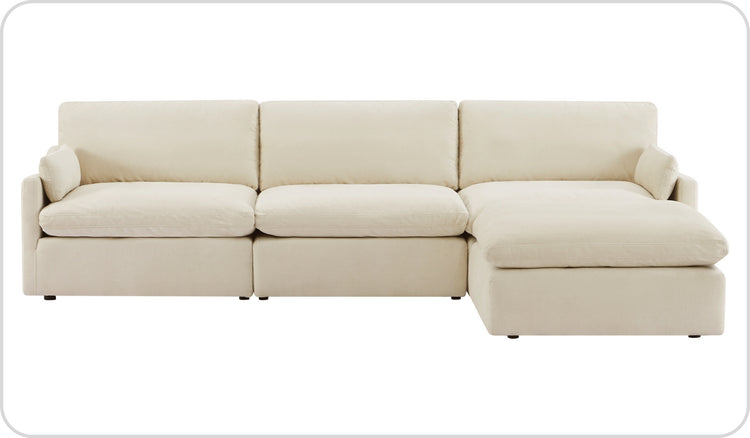
Our guide to modular sofa configurations explores how different starting shapes can scale gracefully while respecting these spatial boundaries.
Designing for the Life Cycle: How Your Seating Evolves
A truly adaptable sofa must pass the "splitability test": can the modules be separated into independent, attractive seating clusters?
- Early Family Years: Focus on a "pit" or large L-shape that maximizes floor space for play while keeping wide pass-lanes open for safety.
- The Social Teen Era: Reconfigure the modules into dual-facing zones or two separate conversational anchors. This supports social gatherings while maintaining a clear walkway between groups.
- The Empty Nester Pivot: Collapse the footprint into a simpler sofa-plus-accent-chair arrangement.
The key is that each resulting cluster must look intentional. When reviewing a modular system, check if the sides of the "middle" modules are fully upholstered. If they aren't, your reconfiguration options will be limited to specific joined layouts. Explore versatile modular sofa uses to see how one system supports these different life phases.
Technical Benchmarks: Evaluating Longevity and Standards
For furniture intended to serve a household for a decade, it is essential to look past the upholstery at the manufacturer's specifications. Use these benchmarks as a checklist for "forever-home" readiness, keeping in mind that performance varies based on frame construction and usage intensity.
- Structural Standards: Look for references to ANSI/BIFMA X5.4. While this is a commercial-grade standard for public lounge seating, it serves as an excellent proxy for durability in high-traffic homes. You can verify a manufacturer's claims by checking the GSA/BIFMA performance test requirements or requesting a testing summary.
- Foam Density: High-resiliency (HR) foam with a density between 1.8 and 2.5 lb/ft³ is a common industry benchmark for quality residential pieces. Lower densities (below 1.5 lb/ft³) are generally more susceptible to "bottoming out" or losing their shape over time, depending on the weight of the users and frequency of use.
- Connector Integrity: Metal connectors, such as alligator clips or mechanical U-clips, are typically preferred for preventing "modular drift." While plastic clips are common, they may be more prone to fatigue if you plan to rearrange the sofa frequently.
Forever-Home Readiness: Technical Floor Check
A quick audit of whether the system clears the core durability floor for a 10-year investment.
View chart data
| Category | Fail | Partial | Pass |
|---|---|---|---|
| Structural testing | 0 | 1 | 2 |
| Connector material | 0 | 1 | 2 |
| Foam density | 0 | 1 | 2 |
| Frame joinery | 0 | 1 | 2 |
Quality Checklist for Modular Systems:
- High Performance: Meets BIFMA-level structural benchmarks, utilizes 1.8+ lb foam, and features metal-to-metal connectors.
- Standard Residential: Uses high-quality foam but may lack formal commercial-grade testing or uses friction-based plastic connectors.
- Entry Level: Foam density is unlisted or low; no mechanical connectors provided (relies on weight/friction).
Our deep dive into upholstery standards explains how these structural checks pair with fabric durability metrics.
When a Modular System Might Not Be the Right Fit
While highly versatile, modular systems aren't the universal solution for every home. Consider these trade-offs:
- Ultra-Compact Spaces: In very small apartments, the "bulk" of individual modular frames can actually waste space compared to a single, streamlined apartment-scale sofa.
- The "Seamless" Preference: Because modules are separate units, there will always be small seams between cushions. If you prefer a completely uninterrupted "bench" feel, a traditional sofa is a better choice.
- Budget-Constrained Frequent Movers: High-quality modular systems are heavy. If you move every year and have a limited budget for professional movers, the assembly and disassembly of a large modular system can become a logistical burden.
The Compatibility Checklist: Avoiding Obsolescence
The biggest risk to a "forever" modular sofa is the inability to find matching parts years later. Before committing, run through this compatibility check:
- Interface Standard: Does the brand use a proprietary connector that might be discontinued? Systems with universal-style alligator clips are often easier to adapt.
- Dimensional Tolerances: Ask about "batch tolerance." If you buy a new module in three years, will it align with your current ones? Quality-focused brands typically aim for high consistency, though minor variances (often within 0.5 inches) can occur in upholstered goods.
- Collection Continuity: Check the brand’s history. Do they retire collections every season, or do they maintain "core" lines (like the Chita Living series) that remain available for years?
- Warranty & Repairability: Does the warranty cover the internal frame for a significant period (e.g., 5-10 years)? Can individual components like clips or legs be replaced?
The Modular Pitfalls: Practical Realities
Even the best systems have practical frictions. For instance, Chita Living applies a 20% restocking fee on returns, which makes most purchases final once the original packaging is discarded.
- Box Dimensions: Always measure your doorways against the box dimensions, not just the sofa dimensions.
- The "Cloud" Trade-off: Deep, feather-filled "cloud" style sofas are popular for lounging but may lack the lumbar support some users require for daily upright sitting. Look for "hybrid" fills that combine feathers with a supportive foam core for better balance.
- Batch Variance: If you add modules years later, be aware that fabric dye lots can vary. Choosing neutral, textured fabrics (like chenille or bouclé) helps mask these minor differences better than flat, solid velvets.
Learn more about why modular sofas are a smart investment for those seeking long-term value.
Investing in Adaptability: Your Move-In Checklist
- Measure for the Future: Sketch at least three different layouts for your room before buying.
- Prioritize Neutrals: Choose high-performance, neutral fabrics that can survive multiple decor updates.
- Verify Connectors: Ensure the system uses sturdy connections to handle repeated moves or reconfigurations.
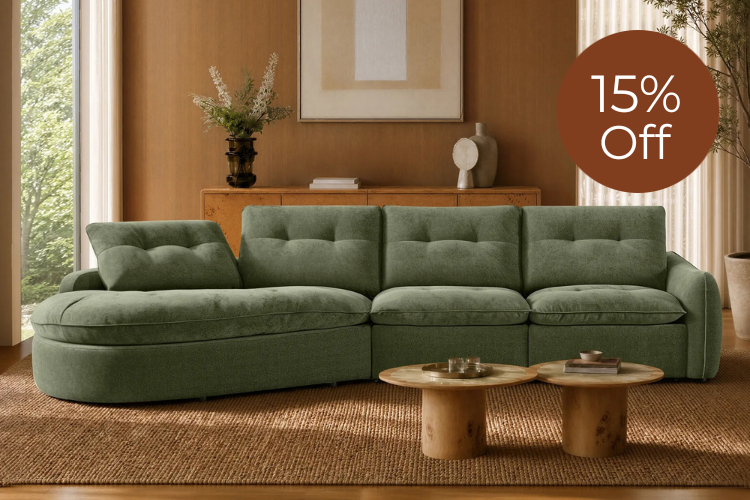
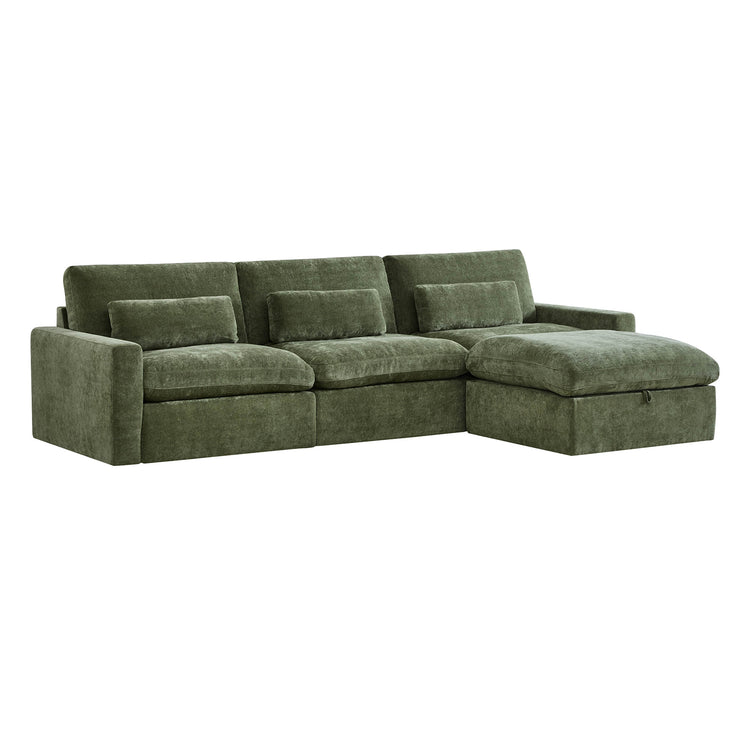
Our Modular Sofas collection includes several systems built with these structural considerations. Options like the Kenna 6 Seat Modular Sofa Pit Sectional are ideal for family-to-social transitions, while the Jonathan Modern Cozy Chenille 5-seat Modular Sofa offers hidden storage for long-term organization.
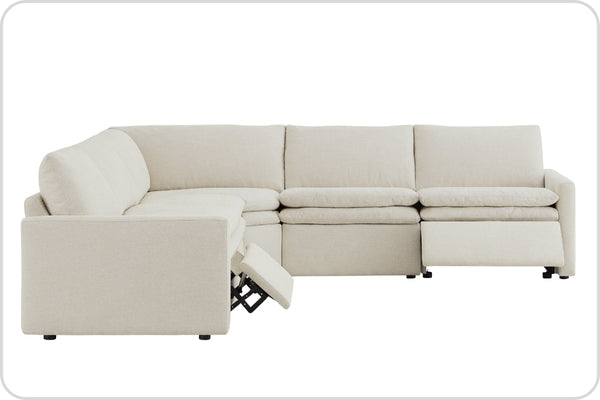
For motion-focused comfort, the Sophia 4-Piece Feather Power Modular Sofa provides electric footrests, while the Josie Modular Collection offers maximum mix-and-match flexibility.

FAQ: Designing for the Long Term
How much does a quality modular sofa cost?
For a system that meets "forever home" benchmarks (HR foam, sturdy connectors, durable frames), investments typically range from $2,000 to over $6,000 depending on the number of modules. While entry-level alternatives exist for under $1,000, they may not offer the same structural longevity or component availability for future expansion.
How do I know if a sofa will actually last?
Check the "Specifications" for three indicators: 1) A kiln-dried hardwood or reinforced metal frame; 2) High-resiliency foam (often 1.8 lb/ft³ or higher); and 3) A Martindale or Wyzenbeek fabric rub count (20,000+ is a common standard for heavy residential use).
What is the biggest mistake people make with modular sofas?
Ignoring circulation paths. A sofa that fits the wall but blocks the natural flow of the room will eventually cause "layout regret." Always prioritize a clear walkway—generally around 36 inches—over adding an extra seat if the space is tight.
Is modular seating worth it if I don't plan to move?
Yes. Even in a permanent residence, your lifestyle needs change. Modular furniture allows you to refresh your environment and adapt to different life stages—such as hosting large gatherings or creating more floor space for hobbies—without the cost and waste of replacing the entire piece.
Recommended Products

More to Read
 7 Sofa Trends That Actually Improve Comfort in 2026
Upgrade your living room with furniture that supports your body. Here are 7 modern sofa features designed to maximize your daily comfort...
7 Sofa Trends That Actually Improve Comfort in 2026
Upgrade your living room with furniture that supports your body. Here are 7 modern sofa features designed to maximize your daily comfort...
 Mother's Day Gift Guide: Cozy and Stylish Furniture Picks for Modern Moms
Make Mother's Day more meaningful with furniture gifts that bring comfort, smart features, storage, and quiet luxury into her everyday routine.
Mother's Day Gift Guide: Cozy and Stylish Furniture Picks for Modern Moms
Make Mother's Day more meaningful with furniture gifts that bring comfort, smart features, storage, and quiet luxury into her everyday routine.
 Performance Fabric Reality Check: Does It Really Repel Pet Hair and Stains?
Performance fabric is often marketed as a miracle solution for homes with pets and kids, but the reality is more nuanced. It...
Performance Fabric Reality Check: Does It Really Repel Pet Hair and Stains?
Performance fabric is often marketed as a miracle solution for homes with pets and kids, but the reality is more nuanced. It...