

























Swivel vs. Rocking Patio Chairs: Which Motion Fits Your Space?

For swivel vs rocking patio chairs, choose a swivel patio chair when you need to turn toward conversation, a view, or a table without standing up. Choose a rocking patio chair when a steady forward-and-back motion is what you actually want from your seating. Choose a swivel-rocker hybrid only when you will genuinely use both motions and your patio has room for both movement paths. This is a planning framework, not a universal winner, so the next step is comparing your chair's exact footprint with the space it needs to move.

Start with the motion your patio use requires
Pick your starting point by asking how you actually sit outside, not by how a chair looks in a photo.
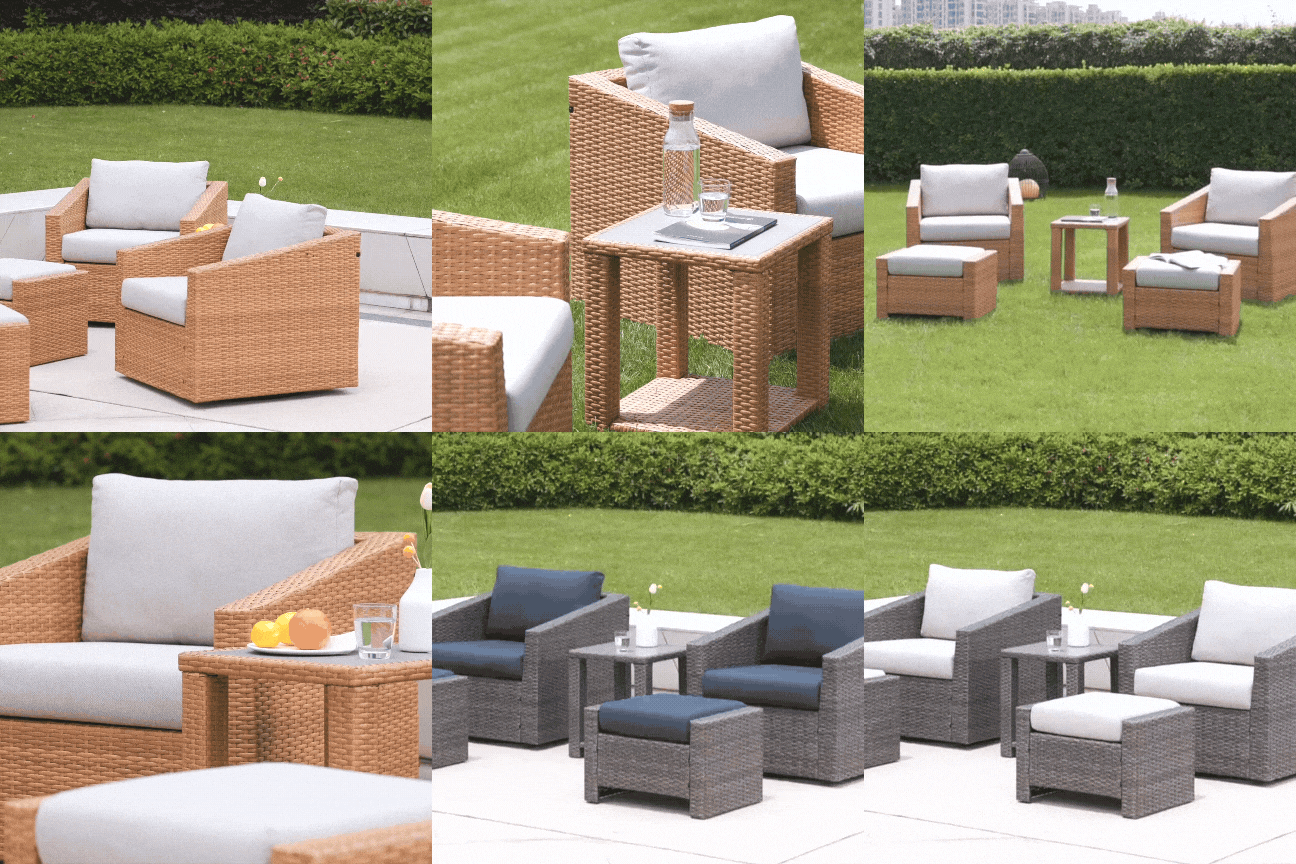
If you tend to face different directions during the day, toward a grill, a pool, or whoever just walked outside, a swivel base gives you that flexibility without dragging the chair around. If what you want is the classic back-and-forth sway while you read or watch the yard, a rocking chair delivers that motion directly and a swivel base would not add much value.
A swivel-rocker sits between the two, but it is a compromise, not an automatic upgrade. It typically needs clearance for both a rotation and a rocking travel path, so it only makes sense when you use both movements regularly and your patio can spare the room for each one.
Plan the footprint and movement clearance
Start by marking the chair's exact static footprint. Then compare it with the active path for its motion: a swivel needs open space around its base, a rocker needs space in front of and behind it, and a swivel-rocker needs both.
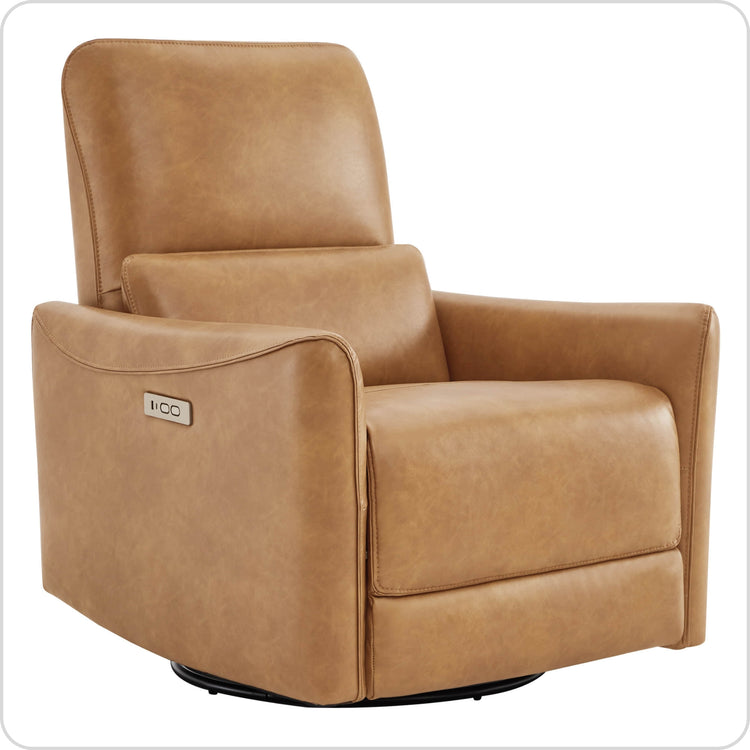
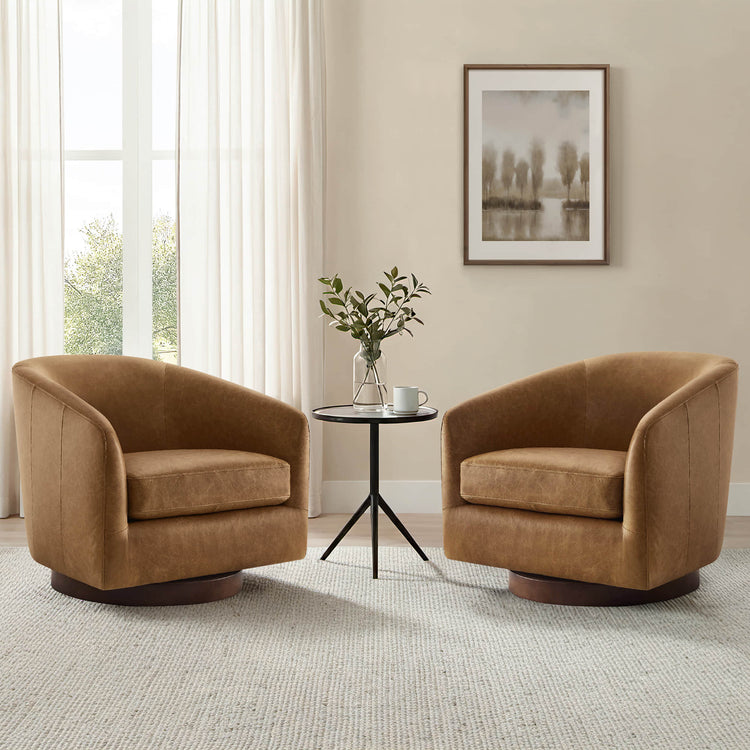
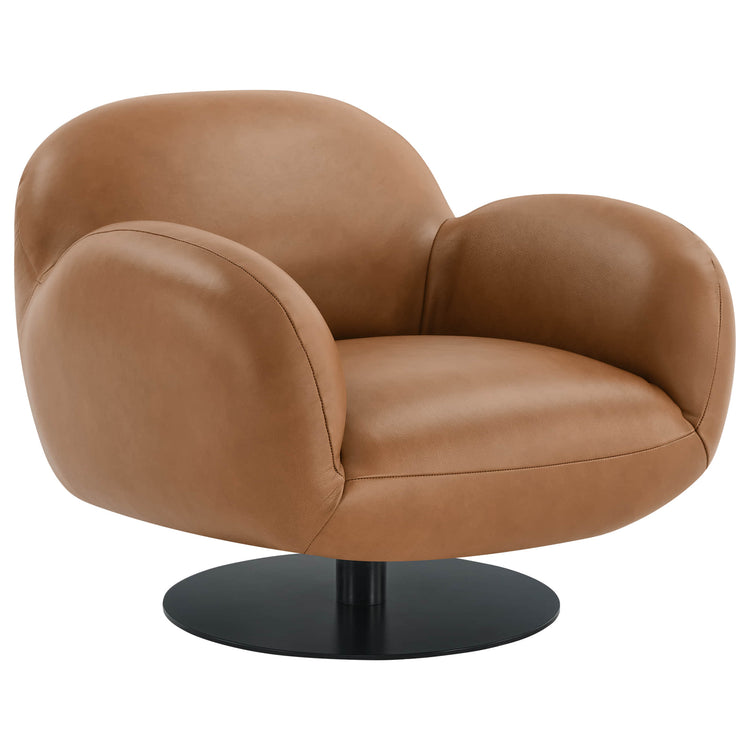
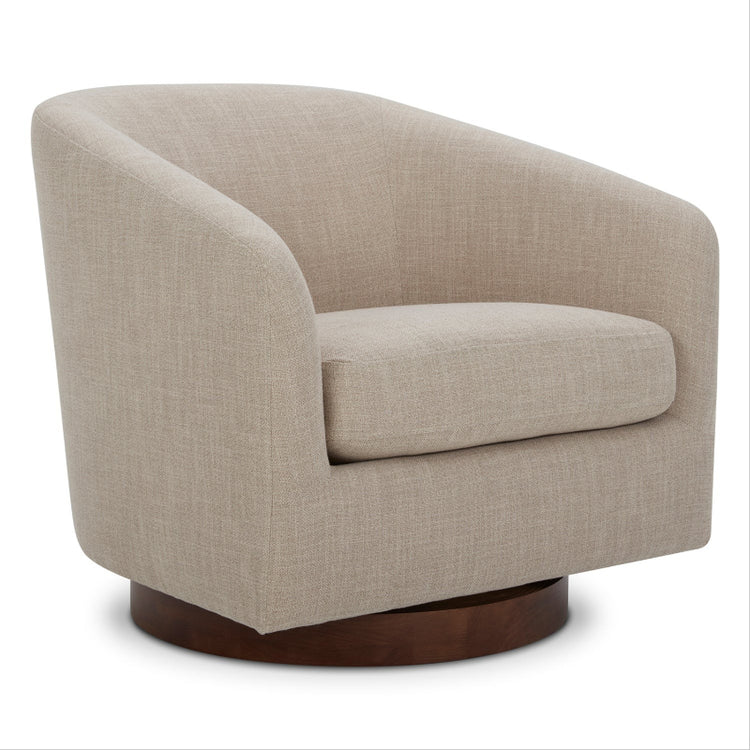
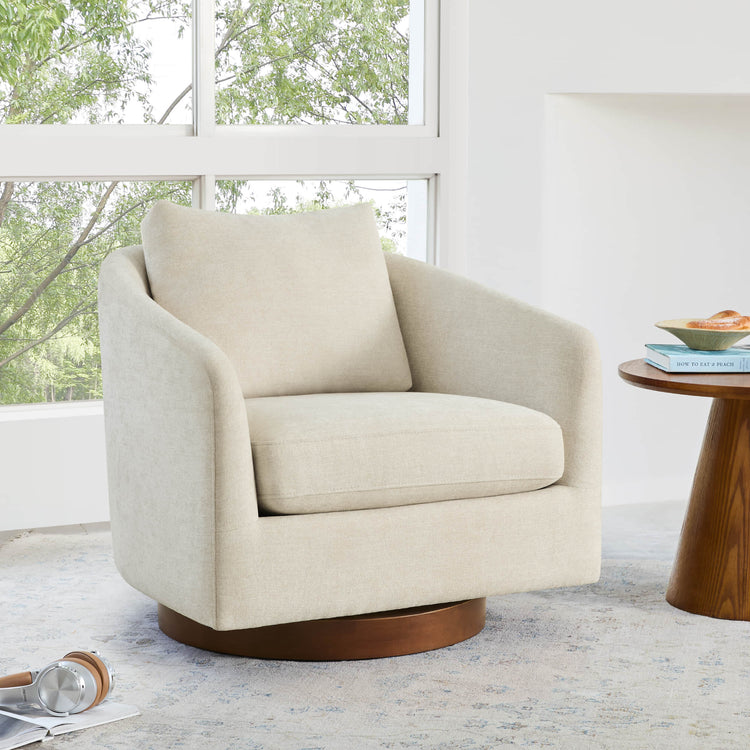
Product listings give you a real starting number. Our Dylan swivel chair lists a 30.7-inch width and 29.5-inch depth for its swivel configuration, with a 360-degree swivel base. That figure describes the chair itself, not the full turning radius once it is in use, so treat it as your footprint baseline and still test the actual rotation before you push the chair against a wall or railing.

Small balconies and compact patios
On a tight balcony, decide on one dominant motion before you shop, since a smaller static footprint does not guarantee a smaller operating footprint. Check the chair against railings, a sliding door, planters, and any neighboring seating, because a compact swivel base can still need a wide open arc to rotate freely. For more layout ideas suited to limited square footage, our small balcony layout ideas walk through footprint-first furniture choices.
Larger patios and decks
A bigger deck gives you room to separate a conversation zone from a relaxation zone, which is exactly the setup that makes a hybrid chair more realistic. A swivel-rocker becomes more plausible here only when the layout can preserve both the rotational swing and the front-to-back rocking path without crowding a dining table, grill, or walking route.
Compare entry, exit, and orientation changes
There is no motion that is automatically easier to get in and out of; entry and exit depend on the specific chair and the space around it. Seat height, seat angle, arm placement, and how close nearby furniture sits all matter more than whether the base swivels or rocks.
Entry and exit depend on the exact chair
Before you buy, check the seat height and angle, note where the arms sit, and look at the approach space in front of the chair. Where you can, do a sit-and-stand test in the showroom or on delivery, since that tells you more than the motion label ever will.
Orientation changes and nearby routes
A swivel chair can reduce how often you have to lift or drag a chair to face a different view or a new conversation partner, which is a real convenience in a busy seating area. Keep any accessible route or turning space you rely on as a separate layout question. The ADA turning-space guidance covers clear floor and turning-space planning for accessible routes, and that standard exists apart from the clearance a patio chair needs to swivel or rock. A chair being labeled swivel or rocker never substitutes for that separate route planning.
Match the motion to relaxation, dining, and conversation
Rocking and swivel motions fit different everyday habits, and matching the motion to your habit matters more than choosing whichever one sounds more premium.
Relaxation-first seating
If your main goal is a calm, repetitive sway while you unwind, rocking delivers that motion directly. That is a personal comfort preference, not a universal ergonomic advantage, so it is worth trying the actual chair's rocking angle before you commit.
Conversation, dining, and entertaining
A swivel chair lets you turn to face a new conversation partner or a shifting view without moving the chair's base, which is useful in a busy social setting. For dining tables or tight circulation paths, prioritize whichever motion will not swing into a server's path, a neighboring chair, or foot traffic, since obstruction there matters more than which motion feels nicer.
Choose a swivel-rocker hybrid when both motions earn the space
A swivel-rocker is worth its extra footprint only when you will regularly use both the rotation and the rocking motion. If you only care about one direction of movement, a single-motion chair is the simpler, easier-to-place choice.
What the hybrid solves
The hybrid addresses a real conflict for readers who want to face different people or views but still want a rocking motion available. Its value comes from actually using both movements, not from the swivel-rocker label by itself.
What to verify in the listing
Before buying, confirm that the listing states the actual mechanism, exact width and depth, seat height, base geometry, and any stated operating-clearance guidance. Do not assume a chair rocks just because it swivels, or the reverse; a standard swivel product's specifications do not tell you anything about rocking behavior unless the listing says so directly.
Make the final choice with a motion-and-space matrix
Use this matrix to turn everything above into one decision, then run the short check that follows before you order.
| Motion | Space-planning implication | Best-fit use case | Not-fit condition |
|---|---|---|---|
| Swivel | Needs open rotational room around the base | Changing views, conversation, facing a table | Tight layout where a full turn hits a wall, railing, or neighbor |
| Rocking | Needs open front-to-back travel space | Quiet, repetitive relaxation | Confined spot where forward-and-back motion meets furniture or a door |
| Swivel-rocker | Needs room for both a rotation and a rocking path | Households that will use both motions regularly | Space that can only support one movement direction comfortably |
Once you have a motion in mind, run this sequence before you check out: confirm the exact configuration you are ordering, mark the chair's static footprint on your patio, mark the active movement path for that motion, and check for obstructions, required routes, and the return policy in case the fit is off. When you are ready to compare current options, our outdoor seating collection is a reasonable next stop for browsing swivel and other patio chair styles. This is the core choice when comparing swivel vs rocking patio chairs.
FAQ
Which is better for small spaces?
Neither motion is automatically smaller. On a tight balcony, pick the motion that matches your main use, then compare the chair's exact footprint and its active movement path against your walls, railings, and any nearby furniture before you decide.
Are swivel chairs safe for children?
A swivel label alone does not make a chair safe for children. Follow the exact product instructions and warnings for the model you are considering, supervise use as appropriate, and do not treat any motion type as a child-safety certification.
How much clearance do I need for a rocking chair?
There is no universal clearance number that applies to every rocking chair. For an illustration only, suppose the exact rocker is 30 inches deep and the layout leaves 12 inches of open space in front and 12 inches behind it. Planning depth = 30 inches + 12 inches + 12 inches = 54 inches, or 4.5 feet. Those 12-inch allowances are not a universal requirement; measure the actual travel of your model, then check the manufacturer's current dimensions or guidance if any is provided.
What is a swivel-rocker patio chair?
A swivel-rocker chair combines rotation with forward-and-back rocking in one seat. It makes sense only when you will use both movements and have enough open space for each path. Before buying, check the specific model listing for the mechanism, its dimensions, and whether it can rotate and rock in your intended placement; then compare both movement paths with nearby obstructions.
Recommended Products

More to Read
 7 Sofa Trends That Actually Improve Comfort in 2026
Upgrade your living room with furniture that supports your body. Here are 7 modern sofa features designed to maximize your daily comfort...
7 Sofa Trends That Actually Improve Comfort in 2026
Upgrade your living room with furniture that supports your body. Here are 7 modern sofa features designed to maximize your daily comfort...
 Mother's Day Gift Guide: Cozy and Stylish Furniture Picks for Modern Moms
Make Mother's Day more meaningful with furniture gifts that bring comfort, smart features, storage, and quiet luxury into her everyday routine.
Mother's Day Gift Guide: Cozy and Stylish Furniture Picks for Modern Moms
Make Mother's Day more meaningful with furniture gifts that bring comfort, smart features, storage, and quiet luxury into her everyday routine.
 Performance Fabric Reality Check: Does It Really Repel Pet Hair and Stains?
Performance fabric is often marketed as a miracle solution for homes with pets and kids, but the reality is more nuanced. It...
Performance Fabric Reality Check: Does It Really Repel Pet Hair and Stains?
Performance fabric is often marketed as a miracle solution for homes with pets and kids, but the reality is more nuanced. It...