





































The 2026 Sizing Guide: TV Stands for 98-Inch and 115-Inch Ultra-Large Screens

For a television near or above 100 inches, start with the exact model and installation method. A TV resting on furniture needs a compatible surface for its entire base and weight. A wall-mounted TV needs a suitable bracket and wall installation; the cabinet below has its own load and clearance requirements.
Estimate screen width, then obtain actual dimensions
The advertised screen size is its diagonal. For a 16:9 screen, multiply that diagonal by 16 ÷ √337 to estimate screen width. The corresponding height uses 9 ÷ √337.
| Diagonal | Approximate screen width | Approximate screen height |
|---|---|---|
| 98 inches | 85.4 inches | 48.0 inches |
| 100 inches | 87.2 inches | 49.0 inches |
| 115 inches | 100.2 inches | 56.4 inches |
These calculated dimensions describe the screen rectangle. Use the model specifications for outside width, height with the stand attached and complete stand footprint. Frames, feet and mounting arrangements vary.

For tabletop installation, measure the complete base
Record the distance between the outer edges of the feet and their full front-to-back depth. For a central pedestal, record its entire base width and depth. Use the approved foot position you intend to install. The Sony XR-100X92 dimensions and stand specifications illustrate separate entries for body dimensions, stand width and weight with the stand. Use the entries for your exact TV model.
Compare those dimensions with the cabinet's flat, usable top. Check raised edges, seams and cable openings where a foot or pedestal would sit. Each contact area needs the support specified by the television and furniture instructions.
Measure screen overhang separately when assessing appearance. A 101-inch-wide television centered above a 79-inch cabinet extends 11 inches beyond each side: (101 − 79) ÷ 2. This example describes the visible width difference; load capacity and installation suitability require the checks below.
Check the load rating for the surface you will use
Find the television's weight with its tabletop stand attached. Add the soundbar and other items resting on the same cabinet top. Compare the combined weight with the cabinet's stated top-load rating and loading-position requirements.
Check internal shelf ratings separately. Follow assembly instructions for supports, center legs and leveling feet. Use the published rating for the specific cabinet, including the stated loading arrangement.
If load information is unclear, contact CHITA product support about the exact cabinet and the intended TV and accessory weights. Confirm these details before selecting the pairing.
Calculate height from your seated eye level
Sit in your normal viewing position and measure eye height from the floor. Use this as a starting point for the screen center and check the proposed position from your usual viewing posture.
For tabletop use, obtain the vertical distance from the bottom of the TV's feet or pedestal to the screen center. Subtract it from your chosen screen-center height to estimate cabinet height.
Example: a desired screen center 42 inches above the floor and a support-surface-to-center distance of 27 inches gives a 15-inch cabinet height. Both inputs are example measurements. A different TV base or seating position changes the result.
For wall mounting, mark the screen outline on the wall and check it from each main seat. Include the gap above the cabinet, soundbar position and connection access. Our low-profile media console guide discusses how cabinet height changes the visible space beneath a screen.

Plan ventilation and cable access by model
Read the installation clearances for the TV, soundbar, receiver and other equipment. Record the required space at the rear, sides and top for each device. Use those measurements when choosing the cabinet location and shelf arrangement.
Allow access to HDMI and power connections and room for cables to follow a natural route. Measure shelf openings with connectors included. Keep ventilation openings clear and follow instructions for enclosed equipment. For a PS5, PlayStation's PS5 ventilation guidance calls for clear side and rear vents, at least 10 cm of free space around each side, and an open installation rather than a cramped enclosure.
An electric-fireplace cabinet also has installation and operating clearances. Check the fireplace and television instructions together before placing the screen or electronics.

Separate wall mounting from anti-tip anchoring
A wall bracket supports a wall-mounted television. An anti-tip attachment restrains a television or furniture according to its instructions. Identify the arrangement your setup uses and follow the requirements for every component.
The U.S. Consumer Product Safety Commission recommends furniture designed to hold a TV, securing TVs and furniture, and following installation instructions. Check hardware and wall construction for the chosen system. Arrange installation assistance when the product instructions require it.
Can a 79-inch cabinet work beneath a larger TV?
For a wall-mounted television, assess the bracket and wall installation independently. Check the cabinet for the items it supports and the required clearances. A narrower cabinet leaves more screen visible beyond its sides. Our TV stand, sofa and recliner layout guide discusses checking sightlines and leaving room for recliner movement.
For a TV resting on a 79-inch cabinet, verify the complete foot or pedestal footprint, top-load rating, loading position and anchoring requirements for that exact pairing. Record each result before choosing it.
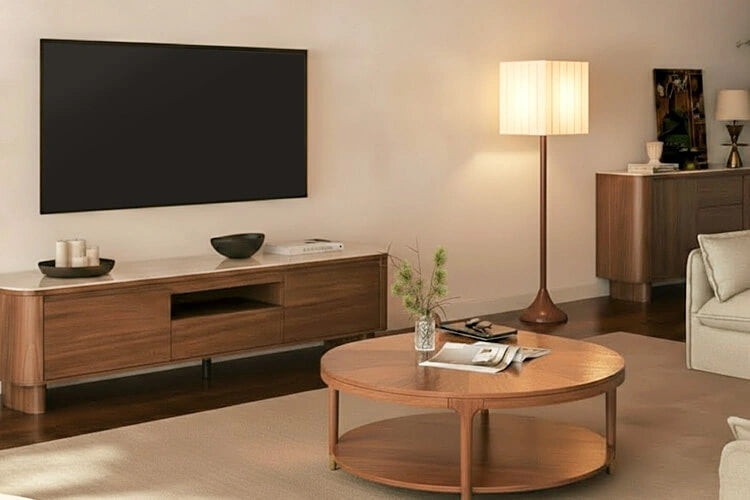
Our TV stand collection provides the starting point for comparing cabinet models. Bring the TV specifications into that comparison. The 79-inch Aaron TV console is one example with open shelving and enclosed compartments; measure the intended equipment and its connectors against the storage openings.
Keep a compatibility worksheet
| Record for the TV | Record for the cabinet or installation |
|---|---|
| Exact model and approved installation method | Exact cabinet model or wall-mount system |
| Body width and complete base footprint | Usable top width and depth |
| Weight with stand plus top-mounted accessories | Top-load rating and permitted loading arrangement |
| Support surface to screen-center distance | Cabinet height and intended screen-center height |
| Ventilation and connection requirements | Available clearances and cable access |
| Mounting and anti-tip instructions | Compatible hardware and fixing locations |
Frequently asked questions
How wide is a 100-inch TV?
A 100-inch 16:9 screen is approximately 87.2 inches wide by geometry. Obtain the actual television width and stand dimensions from its specifications.
What capacity does a 115-inch TV require?
Use the chosen model's weight with its stand, add items sharing the cabinet top, and check the cabinet's top-load rating and loading requirements.
How high should the cabinet be?
Use the intended screen-center height measured from the floor, then subtract the TV's support-surface-to-center distance. Check the result from your usual seat.
For smaller setups, the 75- and 85-inch media console guide provides width examples.
Recommended Products



More to Read
 7 Sofa Trends That Actually Improve Comfort in 2026
Upgrade your living room with furniture that supports your body. Here are 7 modern sofa features designed to maximize your daily comfort...
7 Sofa Trends That Actually Improve Comfort in 2026
Upgrade your living room with furniture that supports your body. Here are 7 modern sofa features designed to maximize your daily comfort...
 Mother's Day Gift Guide: Cozy and Stylish Furniture Picks for Modern Moms
Make Mother's Day more meaningful with furniture gifts that bring comfort, smart features, storage, and quiet luxury into her everyday routine.
Mother's Day Gift Guide: Cozy and Stylish Furniture Picks for Modern Moms
Make Mother's Day more meaningful with furniture gifts that bring comfort, smart features, storage, and quiet luxury into her everyday routine.
 Performance Fabric Reality Check: Does It Really Repel Pet Hair and Stains?
Performance fabric is often marketed as a miracle solution for homes with pets and kids, but the reality is more nuanced. It...
Performance Fabric Reality Check: Does It Really Repel Pet Hair and Stains?
Performance fabric is often marketed as a miracle solution for homes with pets and kids, but the reality is more nuanced. It...