






















Round Dining Tables for Small Spaces: Size, Chair Clearance, and Room Flow

A round dining table can make a compact dining area easier to arrange when its diameter, base, and occupied chairs fit the room. The curved edge removes projecting tabletop corners. The space needed for sitting and walking still comes from the full arrangement, including the chairs and the routes around them.
Decide Whether the Room Suits a Round Layout
Round tables often suit a roughly square dining zone or a corner with access from several directions. In a long, narrow room, a rectangle or oval may use the available length more conveniently. Compare the same number of diners when testing different table shapes.
Our oval dining table guide for narrow rooms compares end turns, chair positions, and the full footprint in a long space. Draw both shapes with the chairs you intend to use; the tabletop alone leaves out much of the arrangement.

Measure Table Clearance and Walking Space Separately
First measure from the table edge to the nearest wall or obstruction on each side. This table-edge clearance includes the chair's working area. Next, seat someone in the chair and measure any separate walking route from the occupied chair's outermost point to the obstruction.
The publicly available NKBA seating-traffic guidance distinguishes 32 inches from table edge to obstruction for seating with no traffic, 36 inches for edging past, and 44 inches for walking past a seated diner. These figures come from that published planning guide; use its measurement endpoints and test the actual chair and intended traffic in your room.
Our small-space dining table sizing guide explains how to reserve space on both sides before calculating the tabletop boundary. Keep the measured starting points written on your plan so a table-edge allowance is never mistaken for a clear route behind the chair.
Calculate a Room-Fit Example
For one room dimension, use this relationship: room width = table diameter + clearance on one side + clearance on the other side. Each clearance starts at the table edge and ends at the obstruction.
In a 120-inch-wide dining zone, a 42-inch round table leaves 78 inches to divide between two sides. Centering it leaves 39 inches per side. If one side needs a 44-inch table-edge allowance for walking behind a seated diner, 34 inches remain on the opposite side. That opposite side needs its own seating and traffic check.
| Example measurement | Inches |
|---|---|
| Dining-zone width | 120 |
| Table diameter | 42 |
| Total remaining clearance | 78 |
| Clearance on side with passing traffic | 44 |
| Remaining clearance on opposite side | 34 |
Repeat the calculation in the other room direction, then place the actual chairs. An opening, cabinet, or wider chair can change the usable outline even when the arithmetic fits.
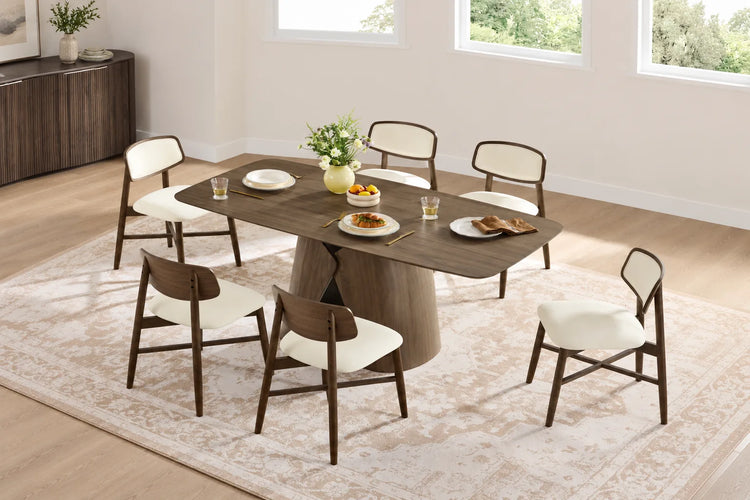
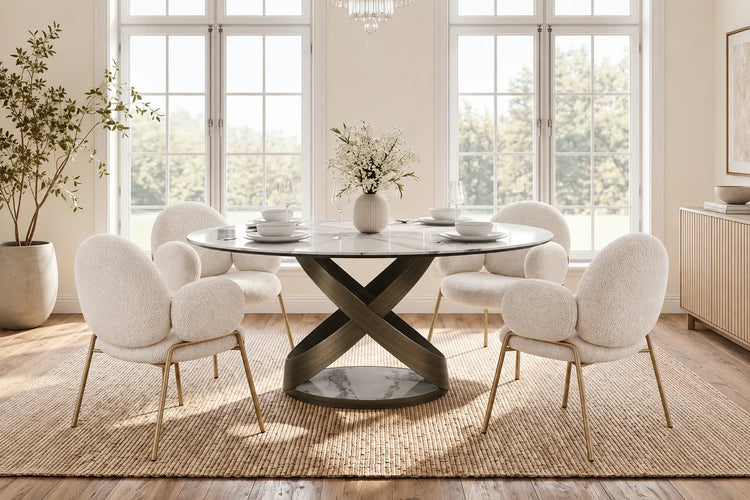
The two arrangements below use different seat counts: six around the rectangular table and four around the round table. For your own comparison, keep the number and size of chairs consistent before judging which shape leaves more walking room.

Check the Base at Knee and Foot Level
A central pedestal may remove corner legs from some chair positions. A broad pedestal foot, cross-base, or angled support still occupies space under the table. Sit at each proposed position and check where your knees, feet, and chair legs meet the base.
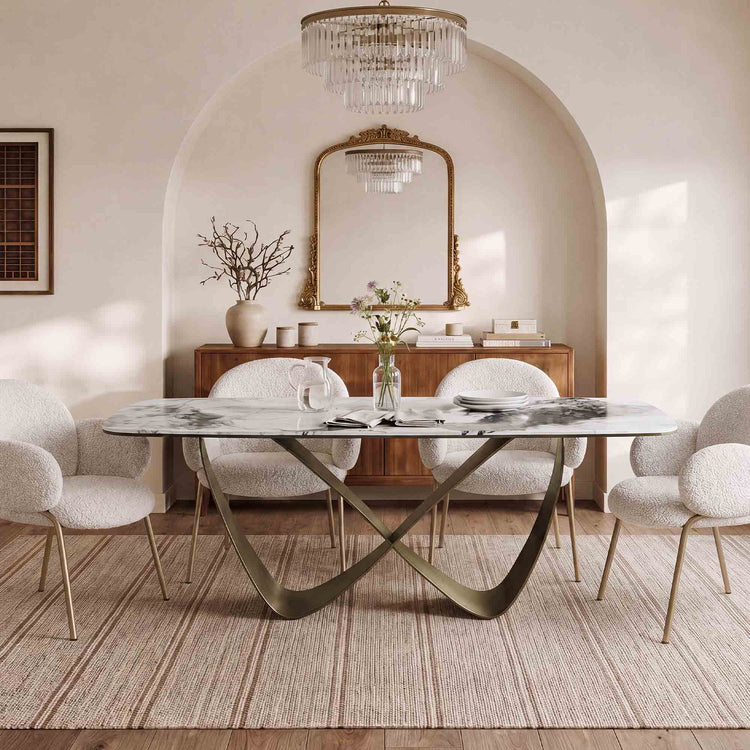
Our comparison of pedestal and four-leg dining table bases focuses on those usable spaces. Our Rory Round Wood Cross-Base Dining Table has intersecting supports, so include the cross-base footprint in the legroom check. Choose the base by the actual sitting arrangement and follow its assembly instructions.
For wheelchair access, include knee, toe, and turning clearances beneath and around the table. Where ADA route requirements apply, check the remaining path against the accessible-route width and turning requirements. An accessible route and space to approach and use the table each need attention.
Allow for Extension and Chair Movement
An extendable table needs two floor outlines: everyday use and expanded use. Our Camila Round Extendable Dining Table expands from 33.46 to 51.18 inches. Mark both configurations, including the extra chairs and the paths they occupy when seated.
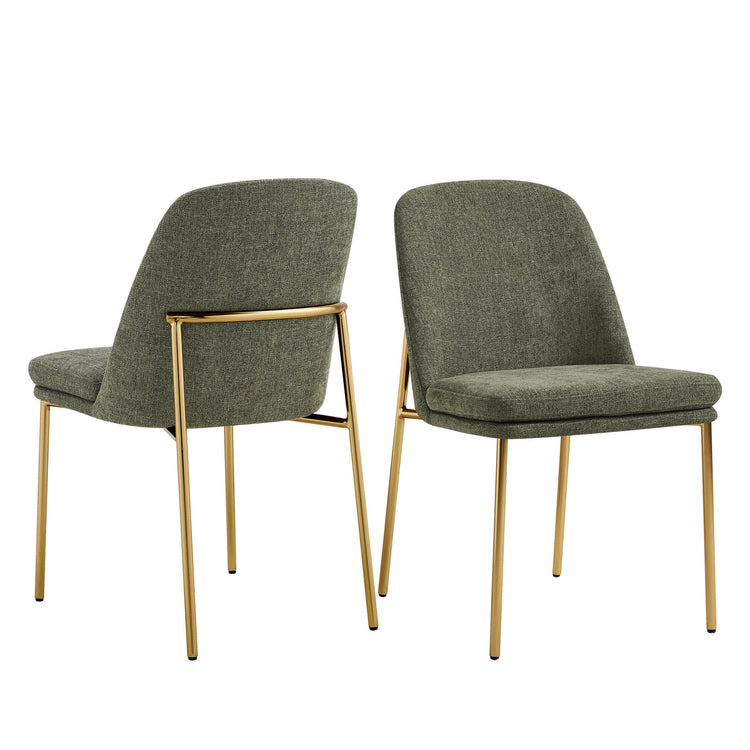
Compare width, depth, and arm height in our dining chair collection against the table's underside and base. Then use the tested outline to shortlist sizes and base shapes in our dining table collection. Try opening doors and pulling out chairs before settling on the arrangement.
Round Table FAQs
What size round table fits my room?
Subtract the intended table-edge clearance on both sides from the room width, then repeat in the other direction. The smaller remaining diameter is a starting point. Test the selected table with occupied chairs, its base, and nearby doors before deciding.
How many people fit at a 42-inch round table?
A 42-inch round table commonly forms a four-seat arrangement with suitably sized chairs. Check the chair width, place settings, and base positions together; wide arms or projecting supports can reduce the usable room at each seat.
Are round tables better in narrow rooms?
An oval or rectangular table may fit a narrow room more conveniently because it follows the room's length. Compare equal seat counts with chairs occupied and measure the remaining side routes before selecting the shape.
Where should I measure walkway clearance from?
Measure a separate clear walking route from the occupied chair's outermost point or other projecting obstacle. If using a table-planning allowance, measure from the table edge to the obstruction exactly as that guidance defines it; that allowance includes the chair area.
Recommended Products

More to Read
 7 Sofa Trends That Actually Improve Comfort in 2026
Upgrade your living room with furniture that supports your body. Here are 7 modern sofa features designed to maximize your daily comfort...
7 Sofa Trends That Actually Improve Comfort in 2026
Upgrade your living room with furniture that supports your body. Here are 7 modern sofa features designed to maximize your daily comfort...
 Mother's Day Gift Guide: Cozy and Stylish Furniture Picks for Modern Moms
Make Mother's Day more meaningful with furniture gifts that bring comfort, smart features, storage, and quiet luxury into her everyday routine.
Mother's Day Gift Guide: Cozy and Stylish Furniture Picks for Modern Moms
Make Mother's Day more meaningful with furniture gifts that bring comfort, smart features, storage, and quiet luxury into her everyday routine.
 Performance Fabric Reality Check: Does It Really Repel Pet Hair and Stains?
Performance fabric is often marketed as a miracle solution for homes with pets and kids, but the reality is more nuanced. It...
Performance Fabric Reality Check: Does It Really Repel Pet Hair and Stains?
Performance fabric is often marketed as a miracle solution for homes with pets and kids, but the reality is more nuanced. It...