






















Host with Ease: The Ultimate Guide to Modern Extendable Dining Tables
An extendable dining table lets you keep a compact footprint for everyday meals while quickly adding space for guests. The right model balances easy operation, stable construction, and smart sizing so your room stays functional in both its daily and hosting configurations.

Modern designs for 2026 have improved significantly in smoothness and reliability. Many now use precision-engineered glides, secure locking systems, and high-performance materials like sintered stone that reduce the wobbles and pinch risks once common with older leaf tables. This makes them especially appealing for small homes, apartments, and open-plan kitchens where the dining area doubles as a workspace or gathering spot.
Why an Extendable Dining Table Solves Real Hosting Challenges
Many families want to host occasional dinners without dedicating permanent floor space to a large table. An extendable dining table stays compact during the week and expands when needed, preserving room for chairs to pull out comfortably and for people to circulate.
This flexibility is particularly valuable in small dining rooms or multifunctional spaces. As official accessibility guidance explains, circulation space around furniture matters as much as the tabletop itself for comfortable daily living. Planning for both states prevents the table from becoming an obstacle when expanded.
How Extendable Mechanisms Work: Scenario-Based Recommendations
Most contemporary extendable tables fall into a few practical categories. Choosing the "best" one depends on your specific usage frequency and spatial constraints.
1. The Frequent Host (Glide or Slide-out Systems)
If you host weekly, look for glide mechanisms on ball-bearing tracks. These often allow one person to expand the table with minimal effort.
- Check for: Integrated locking levers that prevent the table from "creeping" open during a meal.
- Best for: High-frequency use where speed and ease are priorities.
2. The Occasional Host (Butterfly or Self-Storing Leaves)
For those who host once a month or on holidays, self-storing designs hide the leaves inside the table frame.
- Check for: Smooth hinge movement and "pinch-free" zones.
- Best for: Small apartments where you don't have a closet to store extra table leaves.
3. The Maximum Space-Saver (Removable Leaf Systems)
These typically offer the largest expansion range but require separate storage for the panels.
- Check for: Alignment pins that ensure the tabletop remains flush.
- Best for: Large holiday gatherings where you need to jump from seating 4 to seating 10.
Regardless of design, keep hands clear of moving joints because furniture extension points can create pinch hazards. When evaluating a table, test the mechanism or look for "soft-close" or "one-handed operation" in product descriptions.

The 2026 Selection Checklist: Choosing the Right Size
To find the best fit, use this decision matrix to compare models. Do not rely on "seat counts" alone, as chair widths vary significantly.
| Feature to Check | Target Metric / Rule of Thumb | Why It Matters |
|---|---|---|
| Closed Length | Must allow 36" clearance on all sides | Ensures daily traffic flow isn't blocked. |
| Extended Length | 24" of table edge per person | Prevents guests from bumping elbows. |
| Leg Placement | Inset legs or pedestal base | Maximizes knee room when chairs are crowded in. |
| Locking Hardware | Under-table latches or tension locks | Prevents the table from wobbling or separating. |
| Chair Width | Measure your chairs (usually 18"-22") | Ensures the "8-person" table actually fits 8 of your chairs. |
Space Planning and Measuring Before You Buy
Measure your dining area carefully before purchasing a space-saving dining table. Start by noting the table's compact and fully extended dimensions.
Important Boundary Note: While 36 inches of clearance is a standard heuristic for walking paths, this is a minimum estimate. You may need 42–48 inches if the table is located in a high-traffic thoroughfare or if you use wider, armchair-style dining seats.
Practical checklist before buying:
- Measure the "Extended Footprint": Use painter's tape on the floor to mark the table at its largest size.
- Check the "Chair Pull-Out": Ensure there is at least 24 inches from the table edge to the nearest wall so guests can sit down.
- Verify Door Swings: Ensure the expanded table doesn't block the path of a swinging kitchen or pantry door.
- Legroom Check: Look at the underside of the table. Some extension tracks can hang low, potentially hitting the knees of taller guests.
Dining Room Fit Guide for an Extendable Table
Planning guidance for quick space checks: compact fit first, then expanded clearance.
View chart data
| Category | Compact table state | Expanded guest state | Minimum room width (compact fit) | Minimum room width (expanded fit) |
|---|---|---|---|---|
| 4 seats | 60.0 | 84.0 | 132.0 | 180.0 |
| 6 seats | 72.0 | 96.0 | 156.0 | 204.0 |
| 8 seats | 84.0 | 120.0 | 180.0 | 228.0 |
Note: The values in the diagram above are illustrative examples for a standard rectangular room. Actual needs vary based on your specific chair depth and room layout.
Materials and Styles for Everyday Family Use
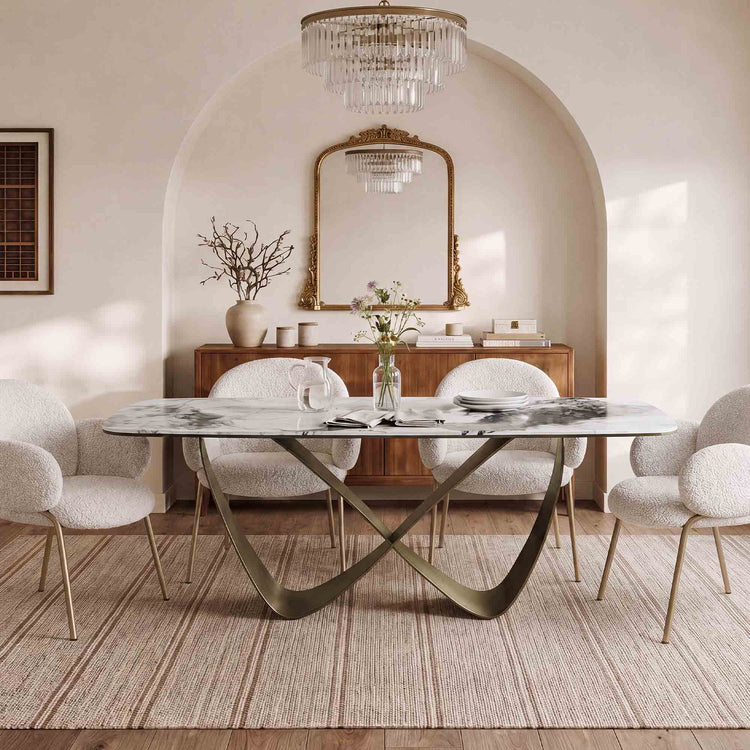
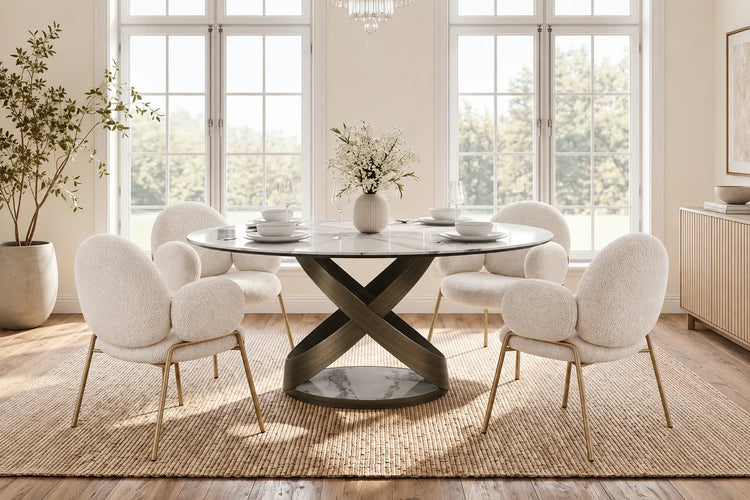
Sintered stone, solid wood, and quality veneers are popular choices for modern expandable dining tables. Sintered stone is a 2026 favorite because it offers excellent durability and heat resistance, making it suitable for busy households where the table serves as a desk, craft station, and dining surface.
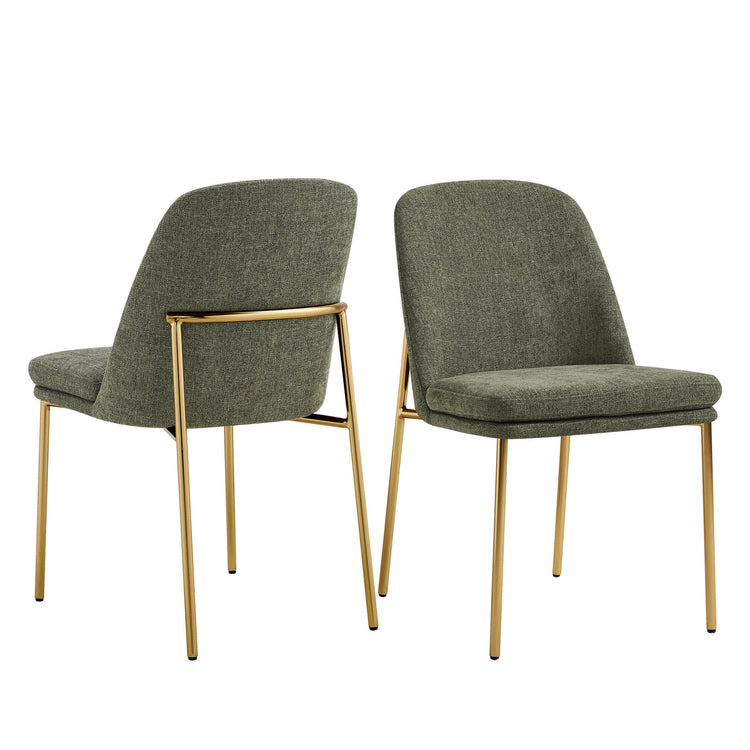
For families, prioritize surfaces that clean easily and resist stains. Rounded edges improve safety with children present. Pair your table with comfortable seating that matches the style. Our tufted dining chairs or performance fabric dining chairs can complete the look while adding practicality.
Final Decision: Which Table is Best for You?
The best extendable dining table for small space depends on your constraint-first filter: confirm the compact size works daily before focusing on maximum expansion.
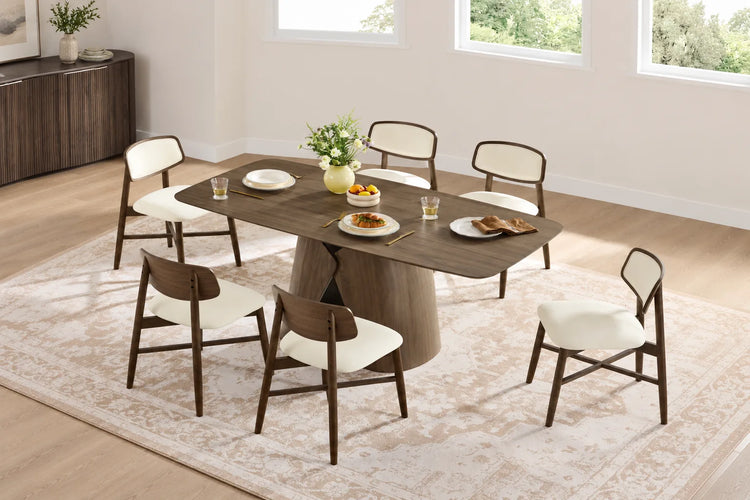
Our Sean Extendable Sintered Stone Dining Table and similar models offer practical expansion ranges from around 55 inches to 75 inches, fitting many small-to-medium rooms. For even more versatility, explore our full dining room bestseller collection.
Comfort and Safety Note: This article discusses furniture selection and setup considerations for comfort and convenience only. It does not constitute medical, ergonomic, or safety advice. Table stability, mechanism operation, and clearance needs vary by model and installation. Verify all specifications with the manufacturer. Always follow product-specific assembly and usage instructions. Keep hands clear of moving parts during extension.
Frequently Asked Questions
How many people can an extendable dining table realistically seat? It depends on the specific model and your chair width. A 75-inch table typically seats 6 comfortably, but can fit 8 if you use narrower side chairs (approx. 18" wide) and don't mind a "cozy" fit.
Are extendable tables stable when fully extended? Quality modern designs with reinforced steel glides and locking mechanisms maintain high stability. However, avoid leaning heavily on the very edge of an extended leaf, as the leverage can stress the joints over time.
What is the easiest mechanism to use daily? Glide or slide-out systems with ball bearings are the easiest. If you plan to expand the table daily, avoid "removable leaf" systems that require manual lifting and separate storage.
How do I maintain the extension tracks? Periodically check extension tracks or glides for dust or debris. If the movement feels "gritty," wipe the tracks with a dry cloth. Only use lubricants if specifically recommended by the manufacturer, as some oils can attract more dust and gunk up the mechanism.
Recommended Products

More to Read
 7 Sofa Trends That Actually Improve Comfort in 2026
Upgrade your living room with furniture that supports your body. Here are 7 modern sofa features designed to maximize your daily comfort...
7 Sofa Trends That Actually Improve Comfort in 2026
Upgrade your living room with furniture that supports your body. Here are 7 modern sofa features designed to maximize your daily comfort...
 Mother's Day Gift Guide: Cozy and Stylish Furniture Picks for Modern Moms
Make Mother's Day more meaningful with furniture gifts that bring comfort, smart features, storage, and quiet luxury into her everyday routine.
Mother's Day Gift Guide: Cozy and Stylish Furniture Picks for Modern Moms
Make Mother's Day more meaningful with furniture gifts that bring comfort, smart features, storage, and quiet luxury into her everyday routine.
 Performance Fabric Reality Check: Does It Really Repel Pet Hair and Stains?
Performance fabric is often marketed as a miracle solution for homes with pets and kids, but the reality is more nuanced. It...
Performance Fabric Reality Check: Does It Really Repel Pet Hair and Stains?
Performance fabric is often marketed as a miracle solution for homes with pets and kids, but the reality is more nuanced. It...