







































Banish the Tangle: How to Choose a TV Stand for Flawless Cable Management
Cable clutter ruins the clean look of a modern living room, especially when a soundbar, game console, and streaming devices add more wires. Choosing a TV stand with cable management features, such as rear cutouts and routing paths, can minimize visible cords and create a polished entertainment setup without major renovations.

Apartment dwellers and homeowners alike often struggle with exposed HDMI and power cables that distract from stylish decor. The right media console with hidden wires makes devices accessible while keeping everything tidy. This guide explains what to evaluate so your TV stand supports a clutter-free space that fits your specific devices and room constraints.
Why Cable Clutter Persists in Many Living Rooms
Visible wires behind the TV and media devices remain one of the most common frustrations in home entertainment setups. Even with a sleek TV, loose cables create visual noise that undermines a modern aesthetic. Many stands lack sufficient cutouts or dedicated paths, forcing cords to bunch up or hang in plain sight.
Renters and those in apartments face extra limitations because wall modifications for in-wall concealment often require landlord approval or professional installation. Furniture-based solutions therefore become the most practical starting point for hiding TV wires. As this official guide on hiding TV cables explains, dedicated routing paths and concealed compartments help keep cords organized and less noticeable.
Poor fit between the stand, TV size, and device stack adds to the problem. Without enough rear clearance or access points, swapping cables or troubleshooting becomes difficult. Soundbars placed in front can also create new clutter if the console design does not allow easy routing underneath.
Key Features: Your Cable Management Checklist
Effective cable management starts with planned pathways rather than just open space. To ensure a stand can actually handle your equipment, use this 6-point checklist before purchasing:
- Cutout Diameter: Ensure rear openings are at least 2 inches (5cm) wide to accommodate bulky power plugs and multiple HDMI heads simultaneously.
- Compartment-to-Cutout Ratio: Ideally, every enclosed shelf or compartment should have its own dedicated exit hole to prevent "daisy-chaining" wires between sections.
- Depth Allowance: Calculate your deepest device + 2 inches. This extra space is necessary for the "cable bend radius"—the curve cables make when plugged into the back of a device.
- Ventilation Clearance: For consoles or receivers, ensure at least 2-3 inches of overhead clearance within the cabinet to prevent heat-induced hardware failure.
- Exit Point Alignment: Check if the stand has bottom or side notches that allow cables to reach floor outlets without being pinched against the wall.
- Removable Back Panels: Look for stands with magnetic or screw-off back panels, which make initial wiring significantly easier than threading through small holes.

Matching TV Stand Size and Storage to Your Devices
Select a stand that accommodates your TV width while leaving room for a soundbar, gaming console, and streaming box without crowding the back panel. A common mistake is choosing a stand based only on the TV's screen size; instead, measure the actual footprint of the TV stand/legs and the total width of your peripheral devices.
Storage style affects both organization and cable routing. Open shelves offer easy access but may show some cords. Cabinets with doors conceal devices yet require adequate rear cutouts to avoid trapping wires. Drawers provide hidden storage for remotes and small accessories while keeping the top surface clear for decor.
For family rooms balancing aesthetics and function, consider a media console with a mix of open and closed storage. This approach keeps frequently used devices reachable while hiding less attractive components.
Here is an illustrative comparison of common TV stand types based on typical design patterns:
TV Stand Types: Cable Management Trade-offs
Heuristic comparison of TV stand types for cable management and everyday usability.
View chart data
| Series | Cable Management | Storage Capacity | Device Access Ease | Size Fit Flexibility |
|---|---|---|---|---|
| Open Shelf | 4.0 | 4.0 | 9.0 | 8.0 |
| Cabinet with Cutouts | 8.0 | 7.0 | 7.0 | 6.0 |
| Closed Cabinet | 7.0 | 8.0 | 4.0 | 5.0 |
| With Drawer | 6.0 | 6.0 | 6.0 | 6.0 |
This radar chart shows relative strengths using heuristic scores. Cabinets with cutouts often strike a practical balance, while open shelves prioritize access at the expense of full concealment. Actual results depend on your exact device mix and room layout.
How to Choose Between Storage Styles for Your Setup
Different living room scenarios call for different TV console designs. Open-shelf media consoles suit minimalist rooms where devices look intentional and frequent access is needed. They simplify cable routing but may require additional cord covers for a completely tidy appearance.
Closed cabinets work well for families who prefer to hide gaming systems and streaming boxes. However, they demand generous rear cutouts and ventilation. Based on standard electronics thermal guidelines, enclosed spaces without airflow can lead to "thermal throttling" in game consoles, reducing performance.
For small apartments or condos, prioritize stands that fit against the wall without blocking outlets. Furniture with built-in cable channels reduces reliance on wall modifications, which may be restricted. This tenant resources page highlights how building constraints often make furniture solutions the easiest path to cleaner setups.
Setup Tips for a Clean TV Console with Cord Management
Proper planning prevents future headaches. Map your outlet locations and device positions first.
- Route Longest First: Thread your power strips and main HDMI cables through the stand's cutouts before placing electronics.
- Bundle by Function: Use Velcro ties (not plastic zip ties) to bundle power cables separately from signal cables (HDMI/Audio) to reduce potential interference.
- Leave a "Service Loop": Leave about 6 inches of slack inside the cabinet so you can pull a device forward to check a port without unplugging everything.
- Label Both Ends: Use a label maker or masking tape to mark which HDMI goes to which device.
- Check Viewing Angles: After setup, step back and check from the sides. If wires are visible, use adhesive clips to tuck them along the inner frame of the stand.
Remember that complete wire elimination usually requires in-wall kits and precise outlet planning beyond what a stand alone can achieve, as outlined in general electrical inspection guidelines. Our TV stand size guide offers additional help calculating ideal dimensions for comfortable viewing.
Which TV Stand with Cable Management Fits Your Living Room
Evaluate stands based on your room size, device count, and tolerance for visible cords. Renters should lean toward freestanding media consoles with built-in routing rather than solutions needing wall alterations.
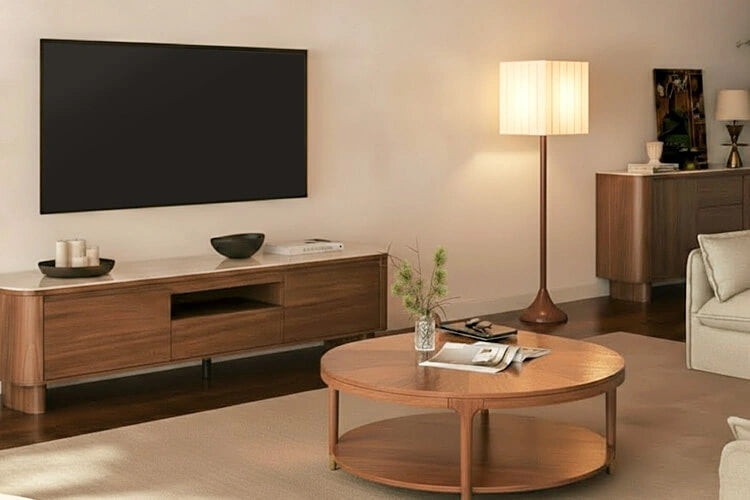
Several CHITA pieces deliver on these priorities. The Bennett 62" Modern Arched Wood TV Stand includes cable management alongside push-to-open doors and drawers for a clean, organized look. The Woodland Mid-Century Modern TV Stand with 2 Drawers combines retro style with practical cord routing and ample storage.
For more storage-focused setups, explore the full storage TV stand collection to match your exact needs. Pair your new stand with smart organization habits for the best long-term results.
Frequently Asked Questions
Do TV stands completely hide all wires? No. Most TV stands minimize visible cords through routing paths, but some wires may remain visible between the stand and the wall outlet. For 100% invisibility, you typically need in-wall cable routing or a stand positioned perfectly over a recessed outlet.
How many cable cutouts does a good media console need? This depends on your device count. A good rule of thumb is one cutout per vertical compartment. For a standard setup (TV, Soundbar, Console), at least two to three strategically placed cutouts are recommended to prevent a single hole from becoming a "bottleneck" for thick cable bundles.
How do I know if my devices will overheat in a closed cabinet? Check your device manual for "clearance requirements." Most consoles require at least 2 inches of space on all sides. If the cabinet back is solid, you may need to leave the front door slightly ajar during heavy use or choose a stand with a mesh or slatted front.
What is the "cable bend radius" and why does it matter? It is the minimum curve a cable can make without damaging the internal wires. For HDMI and power cables, this usually requires 1.5 to 2 inches of depth behind the device. If your TV stand is too shallow, you risk snapping the connectors or damaging the device ports.
Are there cable management stands suitable for apartments? Absolutely. Look for freestanding consoles with "integrated wire management" or "cord ports." These allow you to organize everything within the furniture itself, avoiding the need to drill into apartment walls to hide cables.
Recommended Products



More to Read
 7 Sofa Trends That Actually Improve Comfort in 2026
Upgrade your living room with furniture that supports your body. Here are 7 modern sofa features designed to maximize your daily comfort...
7 Sofa Trends That Actually Improve Comfort in 2026
Upgrade your living room with furniture that supports your body. Here are 7 modern sofa features designed to maximize your daily comfort...
 Mother's Day Gift Guide: Cozy and Stylish Furniture Picks for Modern Moms
Make Mother's Day more meaningful with furniture gifts that bring comfort, smart features, storage, and quiet luxury into her everyday routine.
Mother's Day Gift Guide: Cozy and Stylish Furniture Picks for Modern Moms
Make Mother's Day more meaningful with furniture gifts that bring comfort, smart features, storage, and quiet luxury into her everyday routine.
 Performance Fabric Reality Check: Does It Really Repel Pet Hair and Stains?
Performance fabric is often marketed as a miracle solution for homes with pets and kids, but the reality is more nuanced. It...
Performance Fabric Reality Check: Does It Really Repel Pet Hair and Stains?
Performance fabric is often marketed as a miracle solution for homes with pets and kids, but the reality is more nuanced. It...