























How to Choose Comfortable Bar Stools That Fit Your Counter

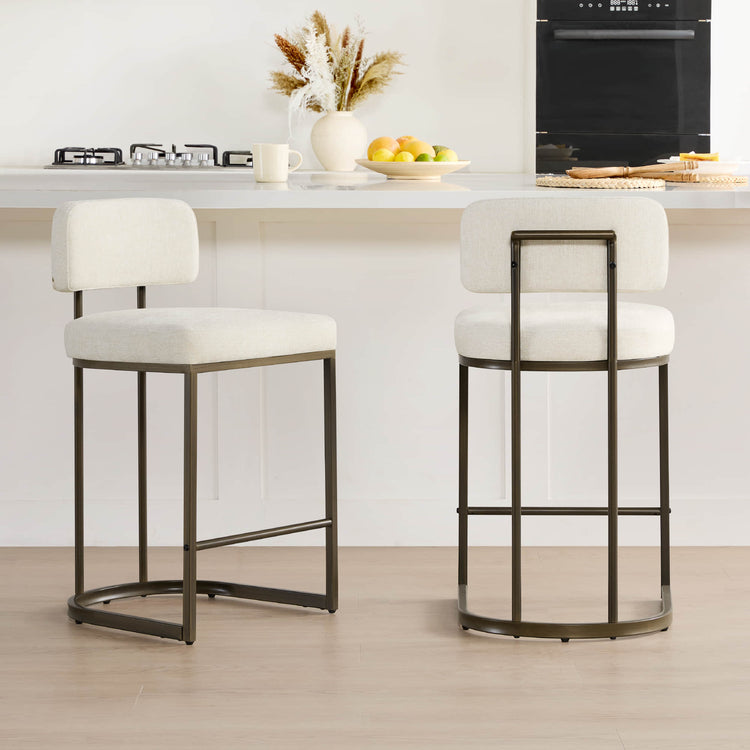
A comfortable bar stool fits both the counter and the person sitting on it. The seat needs space beneath the worktop, your feet need somewhere to rest, and the backrest should meet your body where you want support. Start with those points before choosing a finish or adding more seats to the island.
Measure the counter and the space underneath
Record three separate measurements: the height from the floor to the top of the counter, the height to the lowest obstruction underneath, and the stool’s seat height. A thick countertop, apron, drawer, or support bracket can reduce the space available for your legs. Our counter-height and bar-height measuring guide explains how to compare those measurements before ordering.
As a starting point, our bar and counter stool collection recommends roughly 10–12 inches between the seat and the countertop. Use that difference to narrow the seat height, then check the underside clearance with the person who will use the stool.
| Measured counter height | Starting seat-height range | Next check |
|---|---|---|
| 36 inches to the top | 24–26 inches | Space for thighs beneath the worktop or apron |
| 42 inches to the top | 30–32 inches | Footrest reach and getting on and off |
These ranges are the result of subtracting 10–12 inches from the example counter heights. Measure your own furniture, including any lower obstruction, before choosing a size.
Also measure the horizontal space beneath the overhang. The National Kitchen & Bath Association’s published knee-space planning recommendations give 24 inches of width and 15 inches of depth per diner at a 36-inch-high counter. These figures describe the space under the counter; measure the vertical seat-to-countertop gap separately.

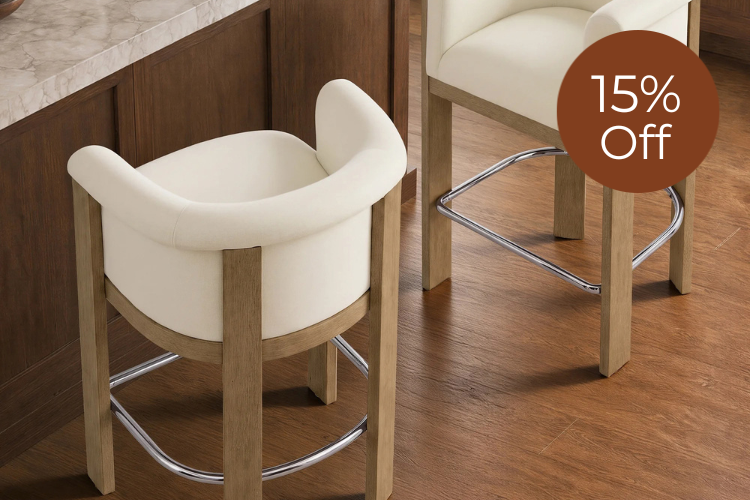
For example, the 27-inch seat-height configuration of our Aislinn Swivel Bar & Counter Stools leaves 9 inches to the top of a 36-inch counter. The usable leg space is smaller once the countertop thickness is included. That combination needs a close fit check; a lower seat may give the user more room.
Check the seat against your own proportions
Measure a chair you already find comfortable from side to side across the usable seat and from the front edge to the backrest. Compare those measurements with the stool’s seat dimensions. Overall width includes the frame or arms and serves a different purpose when you plan how many stools fit.
On a well-fitting seat, you can reach the backrest without the front edge pressing into the backs of your knees. Your hips should have room to shift, and side rails or arms should feel clear of your body. A seat that is comfortable for one household member may feel deep or narrow to another. The Canadian Centre for Occupational Health and Safety uses the same back-of-knee and backrest checks in its office-chair seat-depth guidance. Apply those fit checks while trying a stool, with your feet resting on its rail.
The Aislinn 27-inch configuration lists a seat 17 inches wide and 16 inches deep. Treat those as dimensions for comparison with your own seating, rather than a universal comfort target.

Give your feet somewhere to rest
A footrest gives you a place to put your feet when the raised seat keeps them off the floor. Sit back as you would during a meal and check that both feet can rest securely. If you have to perch on the front edge to reach the rail, the seat depth, rail position, or stool height may be a poor match.
For a shared kitchen, have the regular users try the footrest and seat together. An adjustable seat can change the height at the counter, while a fixed footrest may still sit too far away for a shorter person. Compare the adjustment range with the counter and with each user’s reach.
Choose a backrest for the way you sit
For dinners, homework, or a long conversation at the island, try a backrest that supports you when you lean back naturally. Padding changes the feel of the seat, and the back’s angle and contact point affect whether you can use that support comfortably.
A low back gives some support while leaving an open view across the counter. A backless stool can tuck away neatly and suit a short coffee break. For longer sitting, test whether you are comfortable keeping your torso upright without a backrest.

Armrests can provide a place for your forearms. Measure their height against the underside of the counter if you want the stool to tuck in. Check the space between the arms as well as the seat width.
Choose upholstery for everyday spills
Think about what happens at your counter: breakfast, a child’s snack, working from home, or occasional drinks. Upholstery brings a softer surface to sit on; exposed wood has a different feel and shows its finish directly. The useful choice is the one whose feel and care instructions suit those daily activities. For upholstered seats, remove loose crumbs from accessible seams with a vacuum attachment, a method included in the American Cleaning Institute’s upholstery cleaning advice.
For fabric, leather, faux leather, wood, or metal, follow the care instructions for the selected product and finish. Look for specific instructions about spills, cleaning products, and removable covers. A zippered cover’s cleaning label determines how it can be washed. Wood finishes also vary, so use oil or polish only when the product instructions call for it.
For a specific example, our Nova stool fabric and faux-leather care instructions call for different methods: a water-based upholstery cleaner for the fabric and a lightly dampened cloth for faux leather. Use the instructions for the finish you own.

If you plan to add a cushion, include its thickness in the seat-height calculation. Choose a secure fit that stays in place as you sit down and turn. An extra cushion takes up some of the legroom you measured beneath the counter.
Leave room to sit down and turn
Lay out the stools using their overall width, including the arms or frame. Then allow room for each person to get on and off and for the stool to turn. Test this with the seats pulled into the position people use during a meal.
For an illustration, three 18.5-inch-wide stools take up 55.5 inches before gaps are added. On a 72-inch island, 16.5 inches remain for the spaces between the stools and at the ends. Divide that remaining space on your floor plan and try the arrangement with people seated. The calculation gives a starting layout; the actual turning and walking space decides whether three seats are practical.

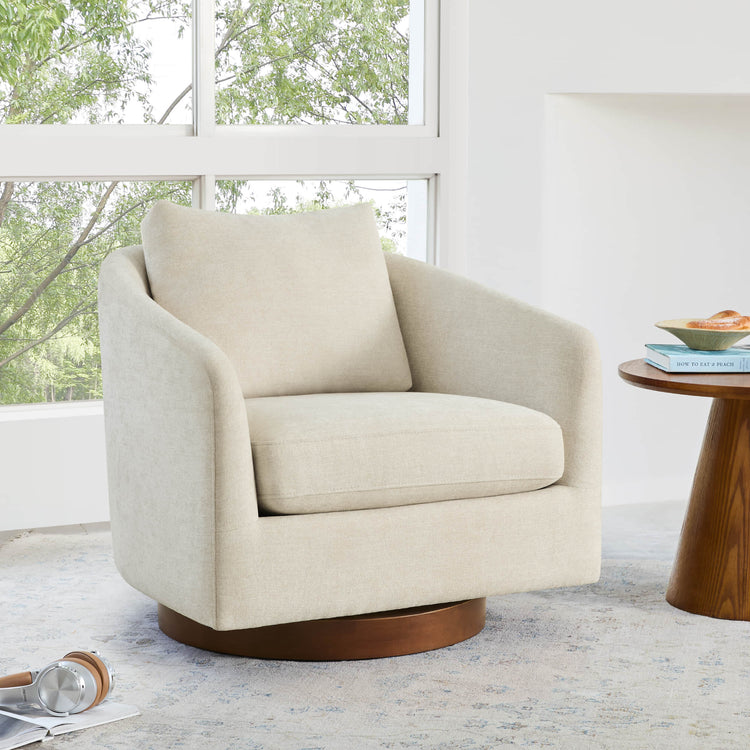
A swivel stool can make turning toward the room convenient. Its back or arms also move through space as it rotates. Keep that motion clear of the counter edge, neighboring stools, and cabinetry. Check the path behind occupied seats with drawers and nearby doors open.

Photo: @_desertcottage_.
When the stools arrive, assemble them according to their instructions and check that they stand evenly. Try an ordinary meal at the counter. If the fit feels wrong, review the current return conditions before further use and contact our product support team for help with the product.
Questions about comfortable bar stools
Are bar stools with backs more comfortable?
A well-fitting backrest is usually the more useful choice for meals or longer conversations because it gives you somewhere to rest your torso. Check its height, angle, and contact point when seated. A low or poorly positioned back can feel quite different from a supportive full back.
What seat height works with a 36-inch counter?
A 24–26-inch seat is a useful starting range for a counter that measures 36 inches to the top. It leaves a 10–12-inch height difference. Measure the clearance below the worktop and any apron as well, then check whether the actual user has room for their legs.
Can a cushion make a bar stool more comfortable?
A securely fitted cushion can soften a hard seat when its size and thickness suit the stool. Include the cushion in your seat-height measurement because it reduces the space beneath the counter. A cushion will leave the footrest and backrest in their original positions, so check those separately.
Is a swivel stool worth choosing for a kitchen island?
A swivel stool is useful when you frequently turn between the counter and the rest of the room. Check that the back and arms can rotate clear of the worktop and adjacent seats. A fixed stool may fit a tight layout more easily.
Recommended Products

More to Read
 7 Sofa Trends That Actually Improve Comfort in 2026
Upgrade your living room with furniture that supports your body. Here are 7 modern sofa features designed to maximize your daily comfort...
7 Sofa Trends That Actually Improve Comfort in 2026
Upgrade your living room with furniture that supports your body. Here are 7 modern sofa features designed to maximize your daily comfort...
 Mother's Day Gift Guide: Cozy and Stylish Furniture Picks for Modern Moms
Make Mother's Day more meaningful with furniture gifts that bring comfort, smart features, storage, and quiet luxury into her everyday routine.
Mother's Day Gift Guide: Cozy and Stylish Furniture Picks for Modern Moms
Make Mother's Day more meaningful with furniture gifts that bring comfort, smart features, storage, and quiet luxury into her everyday routine.
 Performance Fabric Reality Check: Does It Really Repel Pet Hair and Stains?
Performance fabric is often marketed as a miracle solution for homes with pets and kids, but the reality is more nuanced. It...
Performance Fabric Reality Check: Does It Really Repel Pet Hair and Stains?
Performance fabric is often marketed as a miracle solution for homes with pets and kids, but the reality is more nuanced. It...