

























Glider vs Rocker Recliner: Which One Is Better for Your Home?
A glider recliner offers smooth, quiet, and space-saving movement, while a rocker recliner provides a traditional tilting motion for deeper relaxation. The article explains their advantages, drawbacks, comfort features, and ideal use cases.

A great chair gives you a dedicated space to watch a movie, read, or rock a baby to sleep. While glider recliners and rocking recliners look similar, they provide two completely different types of comfort. One moves in a smooth, flat slide, while the other offers a traditional tipping motion. To avoid buyer’s remorse, you need to match the chair to your room size and your physical needs. Here is a simple look at how both styles perform in real homes.
What Is a Glider Recliner and How Does It Work?
A glider recliner moves back and forth on a fixed, linear track. Instead of tipping along an arch, the seat stays level with the floor while shifting horizontally. This design delivers a highly stable, quiet, and controlled movement that feels completely effortless.
Extra Features for Extra Comfort
Many models do more than just slide. You can easily find a power swivel glider recliner that turns in circles, allowing you to face any direction in the room without scraping your floor. Some premium choices also come with power headrest, which lets you adjust your view with the push of a button.
Best Places to Put a Sliding Recliner
Because these chairs stay on a fixed track, they are ideal for specific spots in your home:
- The Nursery: Parents love using a swivel nursery recliner chair because the gentle motion mimics a moving car, which helps infants sleep.
- Small Apartments: The compact design means you do not need to clear out half the room just to sit down.
- Reading Corners: If you want to read or sip coffee without spilling, the steady motion keeps your hands still.

The Errol Power Swivel Nursery Glider Recliner pairs soft beige upholstery with a supportive backrest, rounded arms, and easy power controls, fitting naturally into a serene reading corner where neutral tones, fresh flowers, and soft lighting create a quiet retreat.
What Is a Rocker Recliner and Why Is It Popular?
A rocker recliner sits on a rounded base that creates a distinct, curved movement. This is the classic style that people have enjoyed for generations. When you lean back, the chair tips backward, and when you lean forward, it rolls forward. It gives you a rhythmic, dynamic movement that can feel very comforting.
How It Combines Two Chairs in One
This furniture piece gives you the best of two designs. When the footrest is down, you can rock back and forth to your heart’s content. Once you pull the lever or press the button, the rocking mechanism locks, and the chair transforms into a deep lounge chair for napping.
Ideal Rooms for a Rocking Base
These chairs are built for spaces where people gather to relax and socialize:
- Living Rooms: It serves as the ultimate seat for watching sports or chatting with guests.
- Media and TV Rooms: The tilting motion lets you find a relaxed angle for looking at a screen.
- Casual Dens: It fits perfectly in a cozy basement or spare room meant for heavy lounging.
Glider vs Rocker Recliner: Key Differences Explained
Comparing the specific traits of these two chairs makes your final choice much easier. We will look at motion, space, noise, and safety side-by-side.
Motion and Comfort Feel
The difference in feel is huge. A glider gives you a flat, horizontal shift that keeps your body upright and steady. A rocker tips your entire body back and forth on an angle. If you get motion sickness easily, the flat slide of the glider usually feels much better than the tilting arch of the rocker.
Space Requirements and Room Footprint
Room layout is a major factor. A rocker needs a lot of empty space behind it and in front of it because the chair physically tilts deep into the room during a rock. A glider stays contained within its own frame, meaning you can place it much closer to a wall or a coffee table.
Noise Level and Mechanical Sound
Noise can ruin a relaxing moment. Gliders use enclosed ball bearings that create a quiet glide nursery recliner experience. Rockers rely on heavy springs and wood-on-wood contact, which can sometimes create a soft clicking or squeaking sound over time as the parts wear down.
Stability and Safety for Daily Use
Because a glider sits flat on a heavy, stationary metal base, it is very difficult to tip over. A rocker rests on curved wooden or plastic rails. If a heavy dog jumps into the chair, or if a toddler climbs on the back, a rocking chair has a higher chance of tipping out of balance.
Pros and Cons Summary
| Recliner Type | Advantages (Pros) | Disadvantages (Cons) |
|---|---|---|
| Glider Recliner |
• Extremely quiet mechanism |
• Lacks the traditional rocking feel • Can feel too mechanical for some |
| Rocker Recliner | • Classic, comforting motion • Excellent for deep lounging • Often lower in price • Great for movie nights |
• Needs major wall clearance • Higher risk of tipping • Can become noisy over time |
Best Use Cases: Which One Fits Your Lifestyle?
Different homes have different needs, so matching the chair to your daily routine is critical.
For Nursery & Baby Care
New parents need a reliable seat for late-night routines. A nursery glider recliner is widely considered the ultimate nursery rocking chair alternative because it makes feeding simple.
Using a baby feeding recliner chair ensures you can soothe a restless infant without any sudden, jerky drops. If you choose a power swivel nursery glider recliner, you can quietly turn around to grab a burp cloth from a nearby table without waking the baby. An ergonomic nursery glider chair also provides the right support so your arms and shoulders do not ache during long holding sessions.

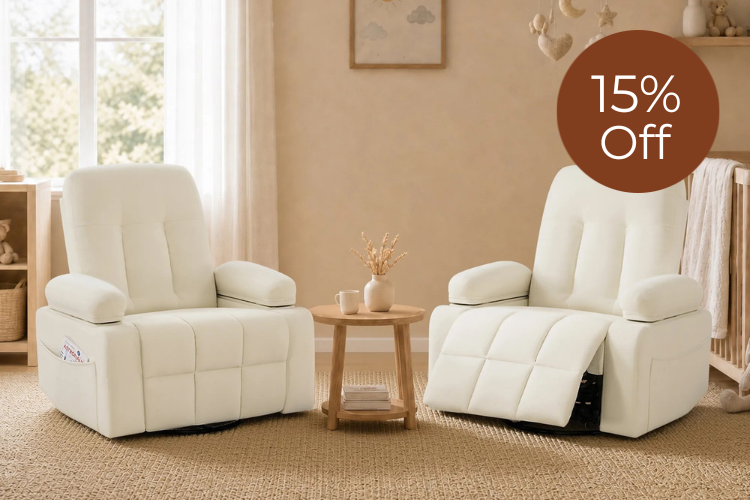
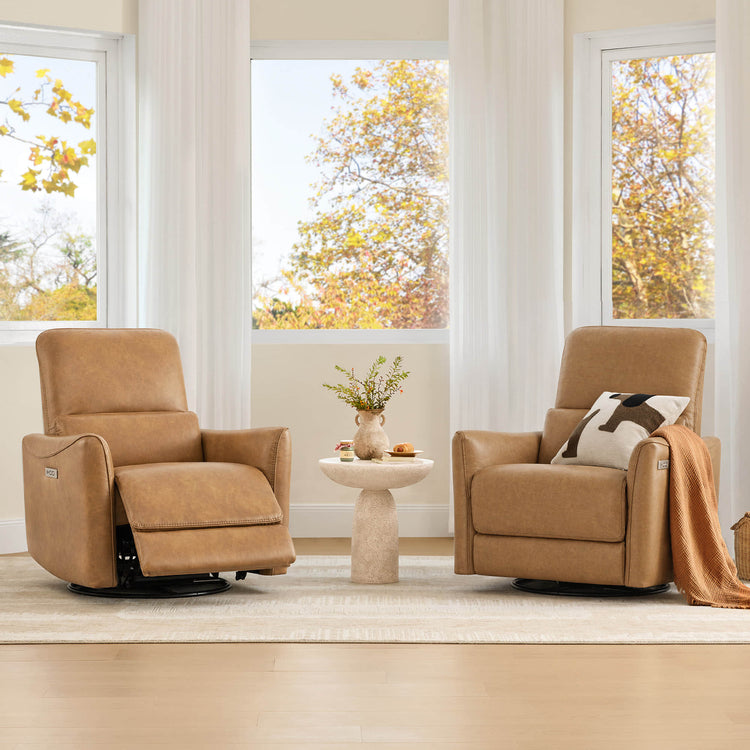
The Janice Power Swivel Nursery Glider Recliner combines softly textured upholstery, supportive cushioning, and an adjustable power headrest, while the coordinated two-chair setting offers a welcoming space for shared moments, from cuddling with a little one to unwinding together.
For Living Room Relaxation
If your main goal is lounging on weekends, the rocking option is tough to beat. It provides a casual, cozy feel that makes a living room look inviting. The deeper tilting action is excellent for kicking your feet up and forgetting about a stressful day at work.
For Small Spaces vs Large Rooms
Measure your floor before shopping. If you live in a tight urban apartment or a cozy townhouse, the glider wins because it uses space efficiently. If you have a large, open-concept home with plenty of square footage, a large rocking chair will look proportional and fit comfortably without blocking walkways.

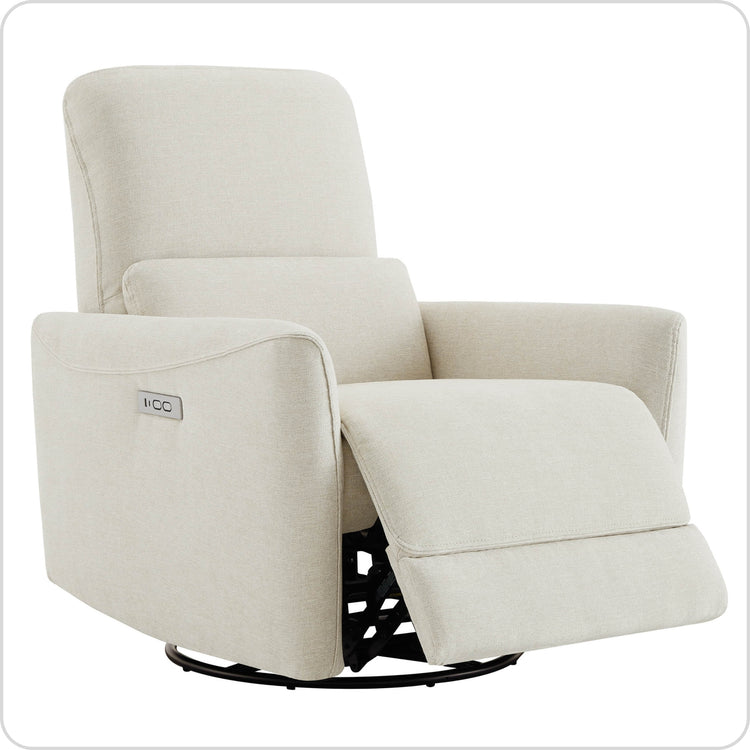
The Tracee Power Swivel Nursery Glider Recliner pairs clean-lined ivory upholstery with a supportive backrest, extended footrest, and convenient power controls, offering a calm place to glide, recline, and unwind beside a sunlit window.
Comfort Factors to Consider Before Buying Your Chair
Beyond the movement, several design elements determine if a chair will feel good for hours. Keep these details in mind when you visit a furniture store.
Seat Cushioning and Ergonomic Support
A soft chair feels great for five minutes, but a supportive chair feels great for five hours. Look for high-density foam that holds its shape. An ergonomic nursery recliner helps distribute your body weight evenly so you do not develop numb spots.
Reclining Depth and Positions
Check how far back the chair can go. Some models only tip back slightly, while a full body support power recliner chair can flatten out completely for sleeping. A baby feeding recliner with power recline is great because it lets you stop the footrest at the exact angle you want.
Armrest and Lumbar Support
Your lower back needs physical protection. Choosing a recliner with lumbar support prevents you from slouching, which reduces muscle strain. If you struggle with chronic soreness, a back pain friendly nursery recliner keeps your spine aligned. Make sure the armrests are wide and padded enough to support your elbows while reading or holding a bottle.

The Vinca Power Swivel Glider Recliner features fresh green upholstery, generously padded seating, and adjustable lumbar and headrest support, bringing personalized comfort and a warm natural accent to nurseries and relaxed living rooms.
Swivel and Multi-Function Features
Multi-functional bases add massive utility. A 270-degree swivel glider recliner gives you a wide range of motion without tangling any power cords. Look for configurations that combine sliding, reclining, and spinning into a single package.

The Lulla Power Swivel Nursery Glider Recliner combines soft ivory upholstery, a power-adjustable headrest, and a gentle built-in nightlight, creating a cozy setting for late-night feeding, quiet bonding, and everyday relaxation.
Material Choices: Fabric vs Leather
Fabric options feel warm and cozy, but they can stain if you spill drinks or baby formula. Leather and synthetic performance fabrics cost more upfront, but you can wipe them clean with a damp cloth in seconds.
Which One Is Better for Your Home?
Every household is unique, so there is no single right answer. Use this quick checklist to make your final decision based on your specific situation.
When to Choose a Glider Recliner
This option is your best match if you can check these boxes:
- You are setting up a nursery for a new baby.
- You want a power recliner with headrest support for targeted neck comfort.
- You have a small living space and need to place the chair close to a wall.
- You want completely silent operation.
When to Choose a Rocker Recliner
- This option is your best match if you can check these boxes:
- You love the classic, rhythmic feel of an old-school rocking chair.
- Your primary goal is watching TV, napping, and casual lounging.
- You have a large room with plenty of open space behind the seating area.
- You prefer a simpler mechanical design with fewer moving parts.
Choosing Your Perfect Glider or Rocker Recliner
Pick the movement that matches your daily routine. A glider keeps things steady, quiet, and compact, making it a dream for tight nurseries and smooth baby feedings. A rocker offers that deep, rhythmic sway made for weekend movies in a spacious living room. Measure your floor space, think about how you like to unwind, and bring home the comfort your family needs.
FAQs About Recliners
Q1: Is a glider or rocker recliner better for newborns?
A glider is usually better for newborns because the straight sliding motion is incredibly smooth and quiet. It allows parents to rock a baby to sleep without any sudden tilting movements that might startle the infant awake.
Q2: Do rocker recliners take up more space than gliders?
Yes, rocking recliners require significantly more clearance space behind them. Because the entire frame tilts backward along an arc during movement, you cannot place them directly against a wall like you can with many sliding models.
Q3: Which recliner is more comfortable for long sitting sessions?
It depends on your personal preference. Gliders offer excellent stability for activities like reading, feeding, or working on a laptop. Rockers are often preferred for purely recreational relaxation, like watching long movies or taking afternoon naps.
Q4: Can a glider recliner also rock like a traditional rocking chair?
No, standard gliders cannot replicate the rolling, arched motion of a traditional rocking chair. They are engineered to move strictly on a horizontal pathway, keeping the seat level at all times.
Recommended Products


More to Read
 7 Sofa Trends That Actually Improve Comfort in 2026
Upgrade your living room with furniture that supports your body. Here are 7 modern sofa features designed to maximize your daily comfort...
7 Sofa Trends That Actually Improve Comfort in 2026
Upgrade your living room with furniture that supports your body. Here are 7 modern sofa features designed to maximize your daily comfort...
 Mother's Day Gift Guide: Cozy and Stylish Furniture Picks for Modern Moms
Make Mother's Day more meaningful with furniture gifts that bring comfort, smart features, storage, and quiet luxury into her everyday routine.
Mother's Day Gift Guide: Cozy and Stylish Furniture Picks for Modern Moms
Make Mother's Day more meaningful with furniture gifts that bring comfort, smart features, storage, and quiet luxury into her everyday routine.
 Performance Fabric Reality Check: Does It Really Repel Pet Hair and Stains?
Performance fabric is often marketed as a miracle solution for homes with pets and kids, but the reality is more nuanced. It...
Performance Fabric Reality Check: Does It Really Repel Pet Hair and Stains?
Performance fabric is often marketed as a miracle solution for homes with pets and kids, but the reality is more nuanced. It...