































Firm vs. Soft Sofa: Choose the Feel That Fits How You Sit

You sit down, lean back, and immediately know that a sofa feels too hard or too yielding. Naming the part you dislike makes the next choice easier: the seat under your hips, the back pillow, the front edge, or the depth that separates you from the backrest.
Start with the position you use most at home. Then compare how each sofa feels after settling, turning, and standing up.
Firm, medium, or soft: which should you try first?
| Feel | A reason to try it | What to notice while seated |
|---|---|---|
| Firm | You prefer less sink and a more defined sitting surface. | Whether the seat edge and pressure under your hips and thighs feel comfortable. |
| Medium | You alternate between sitting upright and stretching out, or share the sofa with someone who likes a different feel. | Whether both positions feel comfortable and you can move between them easily. |
| Soft | You enjoy settling into the cushion and curling up. | How low you sit after settling and how easily you can shift forward and stand. |
These descriptions are starting points for comparison. Try the same movements on each seat. Pressing a cushion with your hand gives a brief impression; sitting on the complete sofa shows how the seat, back, and base work together.

If you mostly read or talk while sitting upright
Try a seat that lets your feet rest comfortably while your back meets the back cushions. Pay attention to the front edge behind your knees and the height of the arms. A firmer cushion may suit your preference for less give; the seat dimensions still need to fit you.
If you mostly curl up or stretch out
Try a softer seat in your normal lounging position, including where your shoulder rests and where your legs go. Then sit upright again and stand. You may prefer a firmer seat with soft back pillows, or enjoy the deeper settling feel throughout those movements.
Separate cushion feel from seat fit
Firmness describes resistance at the cushion surface. Seat fit describes where your body ends up on the sofa. The two can feel similar when something is uncomfortable.
- The back feels too far away: compare usable seat depth or try a loose back pillow. Notice the remaining space behind your knees.
- You sit lower than expected: assess the seat height after the cushion compresses. Compare another cushion and seat height.
- The front edge presses under your thighs: check the seat height, depth, and edge feel together.
- You enjoy the seat but dislike the back: describe the back pillow's feel separately when comparing another model.
Our sofa seat height and depth guide explains the measurements. Use a comfortable seat at home as your reference: measure from the floor to the sitting surface and from the front of the back cushion to the seat edge.
When getting up easily matters
Try the full movement from sitting back to standing. Notice how far you scoot forward, whether your feet reach a useful position, and whether the arms are within reach. A low, deep sofa can require different movements from a taller, shallower one even when both are labeled firm.
For persistent pain, recent surgery, or limited mobility, a physical or occupational therapist can help choose suitable seat dimensions and support. Bring the measurements and describe what happens when you sit and stand.

When two people prefer different feels
Try a medium seat together and describe your reactions separately. One person may want a softer back pillow while the other wants less sink beneath the hips.
Use three short notes: seat feel, back feel, and sitting depth. For example, “I like the seat, but the back feels too far away” calls for a different comparison from “I like the back, but I sink too low.” Try your usual places, including the end seat or chaise.
A chaise or ottoman can accommodate different lounging habits. If your preferences for the seat cushion remain far apart, a sofa and a separate chair can give each person a regular place with the feel they prefer.
Read foam and cushion descriptions
Foam density and firmness are different measurements
Density describes the mass of a given volume of foam. Firmness describes its resistance to indentation. Dense foam can be made soft or firm. The Polyurethane Foam Association also distinguishes surface firmness from resistance under deeper compression.
Read the whole cushion description: the core, any feather or fiber outer layer, and the back cushions. The outer layer can affect the first impression, while deeper compression becomes apparent after you settle. Check which cushions can be turned, rotated, or reshaped.
Firmness labels need their scale
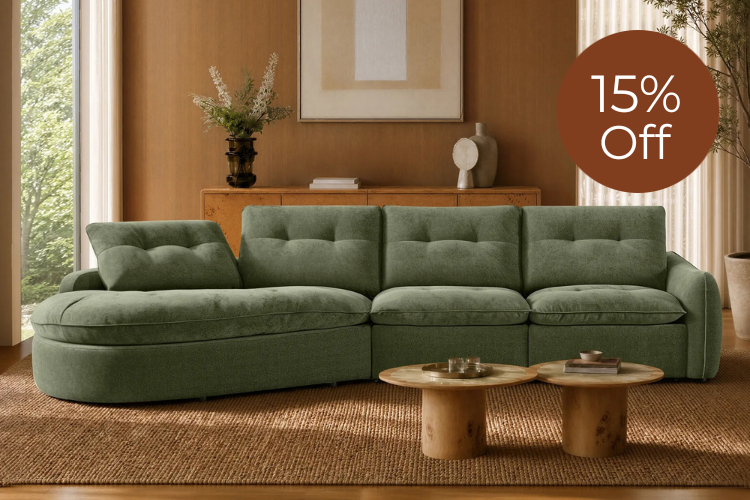
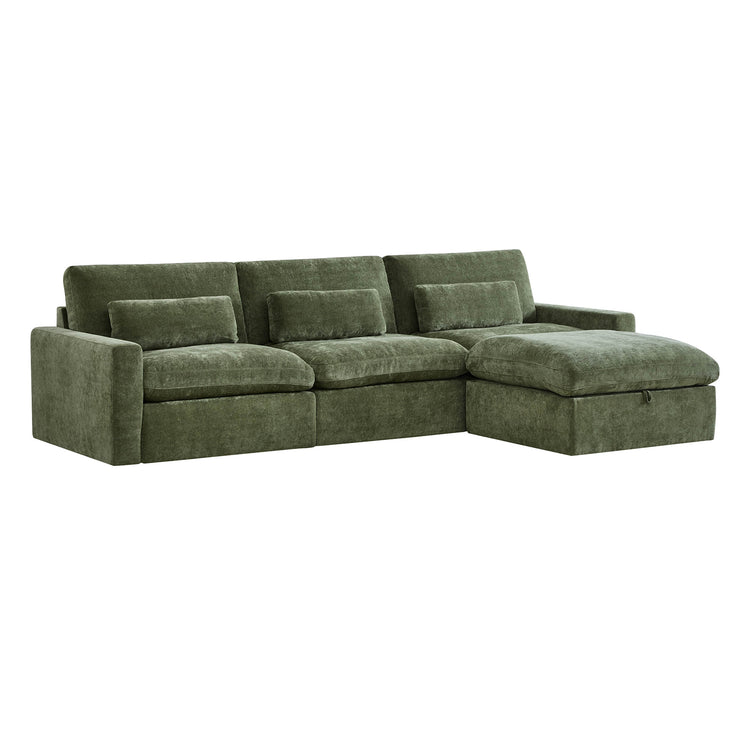
For example, our Teleri chenille sofa is described as medium, with a 3 out of 5 seat-firmness rating where 5 is firmest. That explains the direction of the scale. Use the rating with the seat measurements and your preferred sitting position.
Keep ratings within the scale used by the seller. A number without its endpoints or the part being rated gives you little basis for comparison.
What happens as cushions are used?
Foam can lose firmness and height with repeated compression. The amount of change depends on its material and use. Choose a starting feel you find comfortable, and keep the care instructions for the specific cushion. A soft-or-firm label alone gives no service-life estimate.

How to compare sofas online
Use measurements and specific comfort descriptions to narrow the choices. A useful question to send us is: “I prefer a seat with little sink, a softer back pillow, and enough support to sit upright. Which of the models I am considering matches that description?” Include the models and the seat dimensions you find comfortable at home.
- Compare usable seat dimensions. Overall sofa depth includes parts behind the sitting area. Look for the measurement from the back cushion to the front seat edge.
- Read seat and back details separately. Note the cushion core, outer fill, and whether cushions are removable.
- Use reviews for specific questions. Comments about sinking low or a distant backrest can guide what to investigate on the same configuration.
- Plan the purchase around the stated return conditions. Read our return policy for the eligibility, condition, packaging, and costs that apply. It is useful to understand those terms before delivery.
Sofa firmness questions
Is a firm or soft couch better for everyday use?
A medium seat is a useful first comparison if you mix upright sitting with lounging. Try firm if you prefer less sink, and soft if you enjoy settling in. Choose after testing the positions and movements you use each day.
Will a firm couch get softer?
Some cushions soften with use, with the amount and timing varying by construction and use. Choose a new sofa you find comfortable when you assess it. If a cushion develops an uneven dip, contact us with the model, seat location, and photos.
Is a firmer sofa better for back pain?
A firm label alone does not establish which sofa will suit your back pain. Seat height, depth, sink, and back support all affect your sitting position. For ongoing pain, discuss those measurements and your symptoms with a clinician or therapist.
Can I put a board under a soft cushion?
Use an added support board only when it is approved for that sofa's seat construction. It changes how the cushion meets the base and may leave a damaged cushion or seat-support component unresolved. Ask us about suitable support or replacement parts, and tell us whether the sofa has always felt soft or has developed a new dip.
How can I make my sofa feel more comfortable?
Match the change to the discomfort. Try a back pillow for a backrest that feels too far away, or an ottoman when you want leg support while lounging. Follow the cushion's care instructions for reshaping or rotating. For persistent unevenness, contact us about your CHITA sofa and describe where the change has occurred.
Recommended Products


More to Read
 7 Sofa Trends That Actually Improve Comfort in 2026
Upgrade your living room with furniture that supports your body. Here are 7 modern sofa features designed to maximize your daily comfort...
7 Sofa Trends That Actually Improve Comfort in 2026
Upgrade your living room with furniture that supports your body. Here are 7 modern sofa features designed to maximize your daily comfort...
 Mother's Day Gift Guide: Cozy and Stylish Furniture Picks for Modern Moms
Make Mother's Day more meaningful with furniture gifts that bring comfort, smart features, storage, and quiet luxury into her everyday routine.
Mother's Day Gift Guide: Cozy and Stylish Furniture Picks for Modern Moms
Make Mother's Day more meaningful with furniture gifts that bring comfort, smart features, storage, and quiet luxury into her everyday routine.
 Performance Fabric Reality Check: Does It Really Repel Pet Hair and Stains?
Performance fabric is often marketed as a miracle solution for homes with pets and kids, but the reality is more nuanced. It...
Performance Fabric Reality Check: Does It Really Repel Pet Hair and Stains?
Performance fabric is often marketed as a miracle solution for homes with pets and kids, but the reality is more nuanced. It...