






















Round vs Rectangular Dining Tables: Which Is More Practical for Your Home?

Round vs rectangular dining table choice comes down to room fit first, then how you actually use the table. If you're comparing a round or rectangular dining table for a home, the best dining table shape is usually the one that preserves clearance, matches your seating needs, and fits daily routines.
In a practical dining room table comparison, round tables often feel easier in compact, conversation-focused spaces, while rectangular tables tend to work better in longer rooms and for more structured seating. If you're choosing a dining table for open concept living, the shape that supports circulation and keeps the room balanced usually matters more than the shape that looks best in isolation.
What Shapes Fit Best in Different Rooms?
The room usually decides the starting point. A table should support movement, chair pullout, and daily use without forcing people to squeeze around it.
- Round tables often feel more natural in square rooms or small breakfast nooks because the edges are softer and the footprint can feel less rigid. Those round dining table benefits are mostly about circulation and a calmer visual footprint.
- Rectangular tables usually fit better in long, narrow rooms or open-plan layouts because the linear shape lines up with the room's geometry. Those rectangular dining table benefits are strongest when you need a clear path, a longer surface, or a more structured setup.
If you want more room-planning help, our small dining area guide is useful follow-up.
| Room Type | Round Table Tends To Work Better When... | Rectangular Table Tends To Work Better When... | Traffic Flow Impact | Best-Fit Use Case |
|---|---|---|---|---|
| Square room | You want a softer center and easier circulation around all sides | You want a more structured layout | Round often feels less corner-heavy | Casual everyday dining |
| Long, narrow room | The room is compact and you want a relaxed focal point | The room naturally supports a longer footprint | Rectangular usually wastes less length | Family meals and serving space |
| Open-concept area | You want a visual center that does not dominate the room | You want to anchor the dining zone with a clear line | Both can work, but proportions matter most | Multi-use living and dining |
| Small breakfast nook | You need movement space and a cozy feel | The nook is long enough for a slimmer profile | Round can reduce corner conflicts | Quick meals and coffee |
| Family dining area | The household is smaller and the table stays social | You want more surface for dishes and homework | Rectangular can organize a busier routine | Daily meals and multitasking |
A helpful rule is to protect the walkway first, then judge shape. If the table leaves enough room for chairs and passage, either shape can work. If the room gets tight when chairs slide back, the shape may be a bad fit even if it looks right on paper.
How Seating and Conversation Change the Experience
Shape changes the social feel of a dining room as much as it changes the footprint.
Round Tables: Designed for Intimacy and Easy Conversation
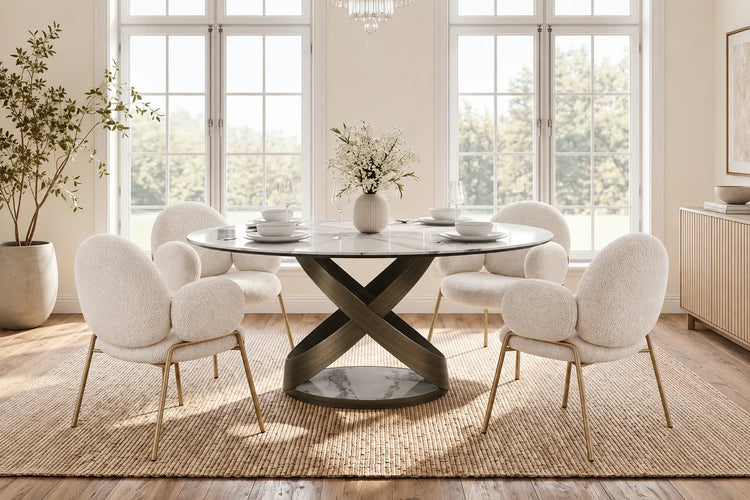
Round tables usually make conversation feel easier because everyone faces inward and no one sits at a true end. That can be a strong advantage for smaller households, casual meals, and everyday gatherings where connection matters more than formal structure.
Pros: Better face-to-face conversation and a more inclusive, intimate feel.
Cons: Less obvious edge space for serving dishes and platters.
Rectangular Tables: The Choice for Practicality and Scale
Rectangular tables are usually the more practical choice when you need organized seating, a clearer serving layout, or a surface that can handle larger items. They are the standard choice for larger households or formal dining rooms.
Pros: More usable surface area, easier scaling for extra guests, and ample room for center-table serving dishes.
Cons: A less intimate feel, especially for those seated at the far ends.
Family Dilemma: Solving the Right Problem
For families, the question is often not "which shape is better?" but "what problem does the table need to solve?"
- Choose a round table if your meals are conversation-heavy and your group is smaller.
- Choose a rectangular table when homework, serving, decor, and extra guests all need to share the same surface.
Planning Note: Dining table seating capacity should be treated as a planning check, not a promise from the shape alone. Seat count is highly size-and-chair-width dependent. A 48-inch round table typically seats 4, while a 60-inch round table can seat 6 to 8 depending on chair width.
A Quick Framework for Your Decision
To simplify your choice, rely on this decision sentence: if your priority is conversation and everyday intimacy, a round table is often the better fit; if your priority is serving space, larger groups, or a more formal layout, a rectangular table usually wins.

The Sean Extendable Dining Table pairs a glossy Pandora sintered stone top with a warm walnut-finished steel frame, expanding from 55.1" to 78.7" while offering a heat-, stain-, and scratch-resistant surface for everyday meals and larger gatherings.
Which Shape Feels Better in Tight Spaces?
The Small-Space Case for Round Tables
In tight spaces, round tables often feel easier to live with because they remove corners. That can matter in a compact room where chair pullout, door swings, or a nearby walkway already compete for space. The smoother edge can make the dining area feel less visually cluttered, which is why round tables often get attention in apartment and condo setups.
When Rectangular Tables Win in Tight Rooms
That said, round is not automatically the right answer for every small room. A narrow rectangular room can actually favor a rectangular table because the shape follows the room's longest line instead of fighting it. In that case, the dining area may feel more efficient and less awkward than it would with a round table placed in the same footprint.
A 4-Step Sequence for Small Space Planning
When deciding on a table shape for a small space, the goal is not simply to find the smallest table possible. Instead, it is to find the shape that preserves movement and feels comfortable for a dining table for everyday use. Use this planning sequence before buying:
- Measure the room's dimensions.
- Map the natural walking paths people take through the space.
- Check the clearance needed for chair pullout.
- Compare the table's shape directly to the overall room outline.
The Narrow vs. Compact Trade-Off
When weighing your options, keep this second decision sentence in mind:
Choose round when the space is compact and you need softer, smoother circulation; choose rectangular when the room is narrow and the long axis needs to stay organized.
This functional trade-off often matters far more to your daily life than pure style preference.
How About Oval and Extendable Dining Table Options
You may also see oval and extendable options while shopping. Those can be smart alternatives, but only when the closed size, open size, and surrounding clearance all work together. A flexible table does not solve a bad layout by itself.

The Camila Extendable Dining Table pairs a white glossy sintered stone top with an integrated lazy Susan, smooth rounded edges, and a walnut-accented steel base, extending from 47.24" to 61.02" so compact meals can shift easily into shared gatherings.
How to Choose the Best Shape for Your Home?
Step 1: Room First, Shape Second
When choosing the best shape for your home, always start with the room, then look at your routine. This is the foundational rule of any practical dining table size guide:
- Choose a round table if the dining area is small, square, or part of a casual corner. It keeps the room feeling open and highly social.
- Choose a rectangular table if the room is longer, if you want a more formal look, or if you need extra surface area for serving and multitasking.
Step 2: Evaluate Your Ordinary Weekly Routine
Next, ask yourself how the table will actually be used on a typical Tuesday rather than a rare holiday. Style matters, but it should confirm the practical fit, not override it.
- The Case for Round: If the table is mostly for family meals, quick coffees, and casual conversation, a round shape is often the cleaner fit.
- The Case for Rectangular: If the table needs to support laptops, homework, holiday spreads, or multiple serving dishes, a rectangular shape gives you a much more workable surface.
Balancing Daily Comfort with Occasional Hosting
For households that host only occasionally, extendable tables deserve an early look. A flexible table can successfully bridge daily space-saving needs with guest capacity—but only if the base shape still suits the room's primary layout.
That makes extendable pieces a strong mixed-use option, not an automatic upgrade. For shoppers comparing shape and size, the best dining table for families is often the one that balances daily comfort with occasional overflow, while the best dining table for entertaining may prioritize serving surface and easy chair placement.

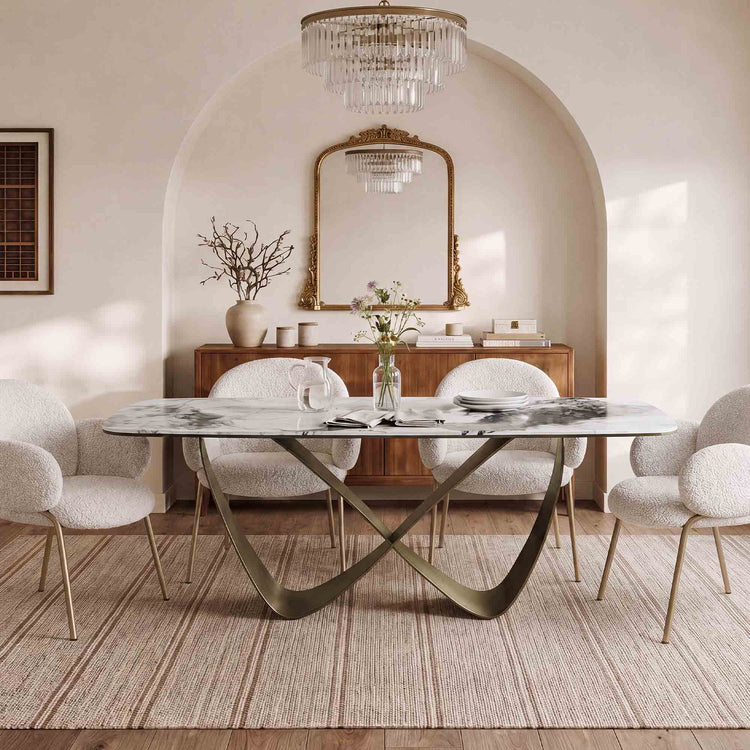
The 71” Layla Sintered Stone Dining Table pairs a scratch- and heat-resistant glossy sintered stone top with an extra-thick 1.81" build, bronze-finished curved metal base, and non-slip pads, creating a stable centerpiece that seats six to eight.
Your Final Dining Table Checklist
Before you buy, confirm the essentials one last time:
- Measure the room and protect enough clearance for chairs and movement.
- Decide whether the space is conversation-first, family-first, or host-first.
- Compare how round vs rectangular dining table shapes affect your exact traffic flow.
- Check whether the table needs to support daily meals, homework, entertaining, or all three.
- Review how the table will look with your chairs, lighting, and nearby storage.
- If you are considering an extendable or oval option, verify both the closed and open dimensions.
- Use collection pages to compare styles, then narrow by finish, material, and footprint.
If you want to continue shopping after the checklist, start with the dining tables collection and compare it with Dining Room New Arrivals. That keeps the next step practical: measure first, browse second, and buy only when the shape fits your room.

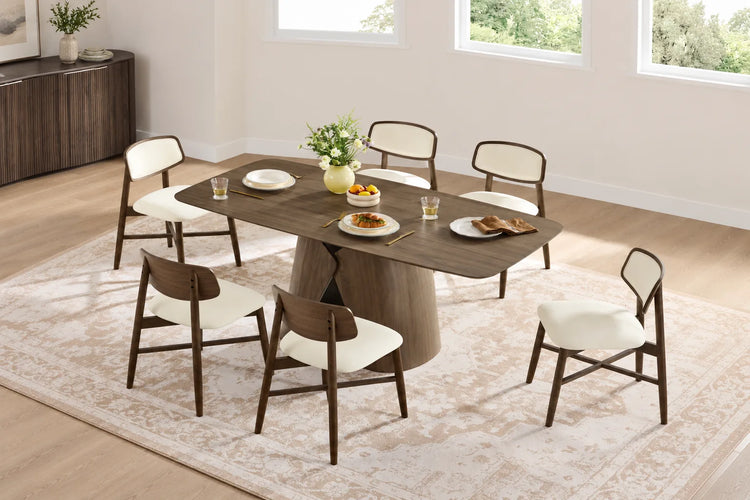
The Coral Fluted Oval Wood Dining Table combines an oval, space-smart tabletop with walnut or oak wood veneer, sculptural fluted rubberwood columns, rounded family-friendly edges, and heavy-duty support for comfortable six-seat dining.
Find Your Perfect Dining Table Shape
Your ideal dining table respects your room's flow and your daily habits. Pick a round table to soften tight corners and invite casual, face-to-face chatting. Go with a rectangular table if you frequently host large groups, layout big serving platters, or need a multitasking workspace.
Measure your space, picture your busiest dinner night, and choose the shape that keeps your home moving beautifully.
FAQs
Q1: Which Dining Table Shape Is Better for Small Spaces?
Round tables often work well in compact rooms because they remove corners and can make movement feel easier. The better choice still depends on your room geometry, walkway space, and how many seats you need.
Q2: Do Round Tables Seat More People Than Rectangular Tables?
Not by shape alone. Seating depends on the table's actual size, chair width, and how much elbow room you want. Rectangular tables often scale up more easily, but a larger round table can still seat a family comfortably.
Q3: Are Round Dining Tables Better for Conversation?
Often, yes. People tend to face inward more naturally at a round table, which can make conversation feel more inclusive. A rectangular table can still be great for conversation if the household values a more structured layout.
Q4: What Shape Works Best for Family Dining?
Families usually do best when the shape matches the room and the routine. Round can be better for smaller, conversation-heavy meals. Rectangular can be better when the table needs to handle serving dishes, homework, and occasional guests.
Q5: Can an Extendable Table Solve the Round Versus Rectangular Decision?
It can help, especially for households that host occasionally. The key is to check the table's closed and expanded dimensions first, because flexibility only helps if the table still fits the room comfortably in both modes.
Q6: Is an Oval Table a Good Middle Ground?
Sometimes. An oval table can blend a softer look with a longer footprint, but it is still only a good choice if the dimensions and circulation work in your room.
Recommended Products

More to Read
 7 Sofa Trends That Actually Improve Comfort in 2026
Upgrade your living room with furniture that supports your body. Here are 7 modern sofa features designed to maximize your daily comfort...
7 Sofa Trends That Actually Improve Comfort in 2026
Upgrade your living room with furniture that supports your body. Here are 7 modern sofa features designed to maximize your daily comfort...
 Mother's Day Gift Guide: Cozy and Stylish Furniture Picks for Modern Moms
Make Mother's Day more meaningful with furniture gifts that bring comfort, smart features, storage, and quiet luxury into her everyday routine.
Mother's Day Gift Guide: Cozy and Stylish Furniture Picks for Modern Moms
Make Mother's Day more meaningful with furniture gifts that bring comfort, smart features, storage, and quiet luxury into her everyday routine.
 Performance Fabric Reality Check: Does It Really Repel Pet Hair and Stains?
Performance fabric is often marketed as a miracle solution for homes with pets and kids, but the reality is more nuanced. It...
Performance Fabric Reality Check: Does It Really Repel Pet Hair and Stains?
Performance fabric is often marketed as a miracle solution for homes with pets and kids, but the reality is more nuanced. It...