






















2026 Coffee Tables Trends for work-from-couch

The best 2026 coffee table for working from the couch is not one universal style. Choose a lift-top when a changing work surface is your main need, a storage-focused table when quick cleanup matters, a minimalist standard-height table for occasional laptop use, or a modular-friendly design when your seating arrangement carries more visual weight. In every case, measure the sofa, laptop position, closed table, working state, and walking path before you buy.

Choose the Coffee Table Trend That Matches Your Work Routine
The 2026 conversation includes softer silhouettes, richer wood tones, natural-looking materials, visible craftsmanship, and concealed functionality. These are design directions, not proof that one style is dominant, so match the direction to your routine and your living room's main constraint. Current 2026 trend coverage provides context, not a ranking.
| Direction | Best fit | Main tradeoff |
|---|---|---|
| Lift-top | Regular laptop work when the surface needs to move toward the sofa | More mechanism and working-state clearance to verify |
| Storage-focused | Work-to-relaxation resets when chargers, notebooks, and remotes need a home | A heavier visual presence or less open access |
| Minimalist standard-height | Occasional laptop use when easy lounging and visual lightness come first | No built-in change in surface position |
| Modular-friendly | Substantial or reconfigurable seating arrangements that need balanced proportions | A coordinated look does not prove fit from every seat |
- Choose a lift-top direction if you regularly work from the sofa and want the surface to come toward you. A lift-top can address the need for a changing surface position, but the raised and closed dimensions, clearance, movement, and stability still need to be verified on the individual product page. It should remain useful as a living room centerpiece after the laptop is put away.
- Choose a storage-focused design if your biggest frustration is visible work clutter. A table with storage can hold chargers, notebooks, remotes, and similar items for a faster reset, while the tabletop remains available for everyday use. The tradeoff is that drawers or compartments can make the center of the room feel more substantial.
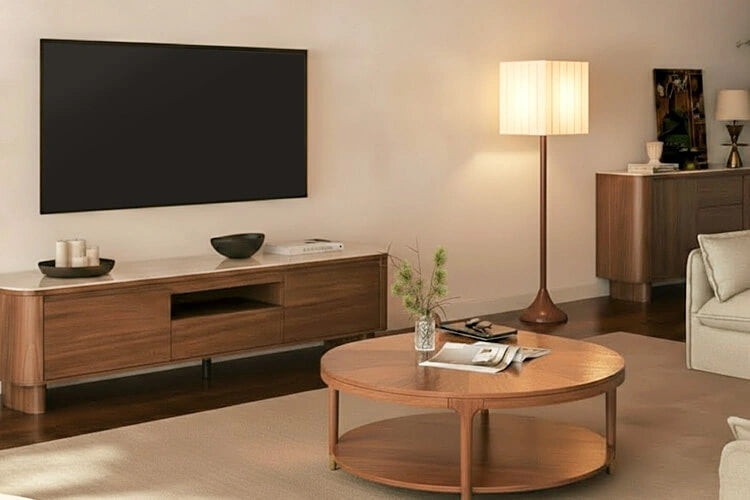
- Choose a minimalist standard-height table if laptop work is occasional and you want the room to read as a living space first. A simpler surface avoids built-in movement, but you need a separate plan for the laptop and accessories once work ends.
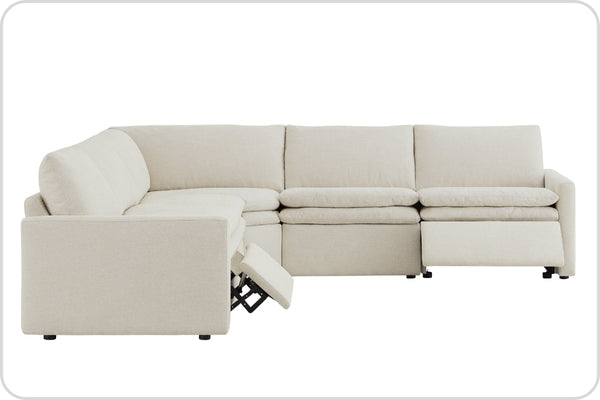
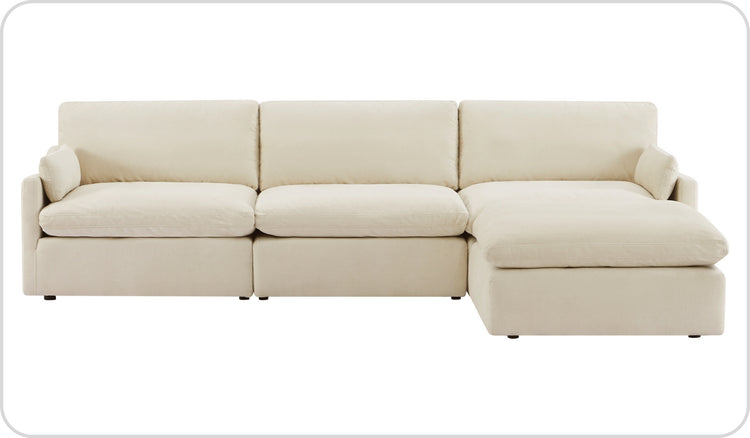
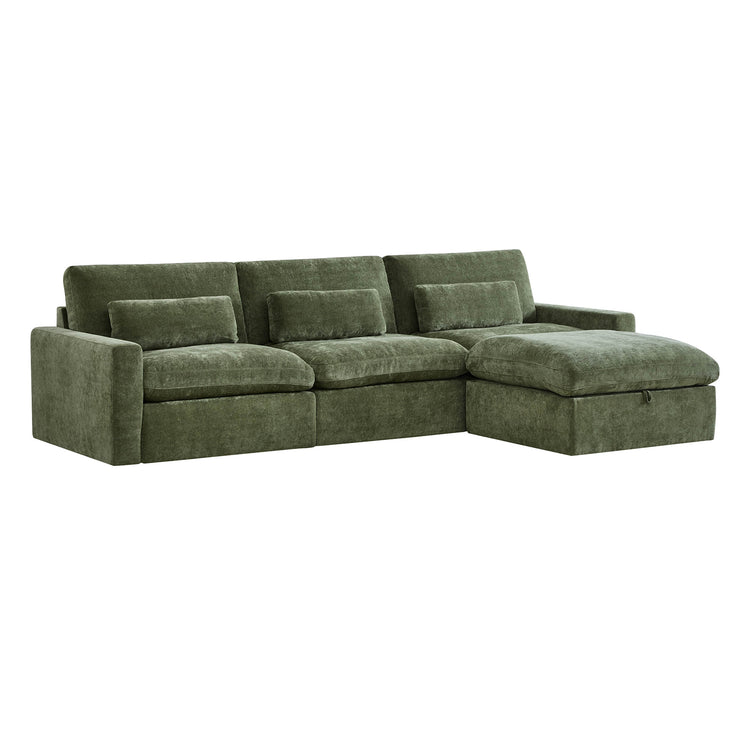
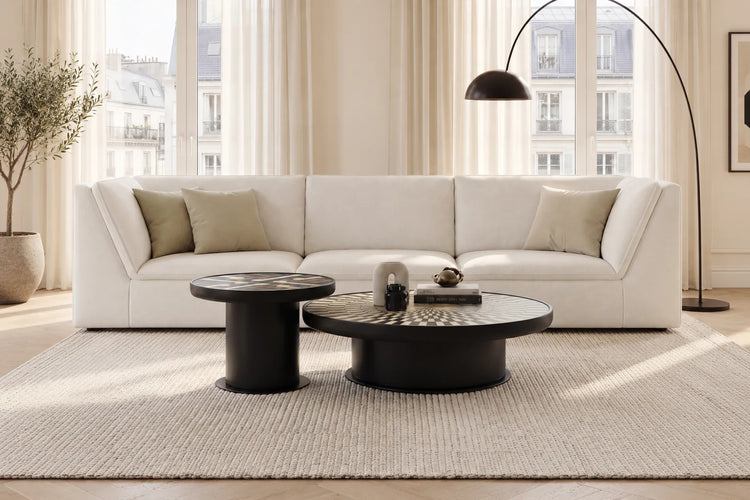
- Choose a modular-friendly direction if your seating is substantial, reconfigurable, or arranged around several active seats. Use the seats where you actually work and relax as your reference. A table's visual relationship to modular seating can be appealing without proving that it fits every sectional or access route.
The right design solves your biggest source of friction without becoming awkward during the hours when you are not working.

Measure the Sofa, Laptop Position, and Room Before You Buy
A table passes the fit check only when both its normal living room state and its laptop-working state preserve sofa access, usable surface, and circulation. Start by measuring the sofa seat, intended laptop position, and walking path rather than shopping by appearance alone. For a useful follow-up, see this guide to coffee table height and sofa-seat fit.
- Measure the sofa seat. For a standard closed table, use the relationship to the sofa seat as your first screen. General furnishing guidance commonly places tables around 14–20 inches high and recommends a table at the same height as the sofa seat or slightly lower, but this is not a universal laptop-work or ergonomic specification. Compare your measured sofa cushion height with the product's listed height using coffee-table height guidance.
- Mark the laptop position. Sit where you actually work and note whether the laptop rests on the table, on your lap, or on a separate support. Record the reach you need to open the laptop, use a mouse or keyboard, and stand up without pushing the table out of place. Do not assume a standard tabletop or a product name proves laptop compatibility.
- Check the proportion. As a layout starting point, a table is often kept to roughly two-thirds of the sofa length. Compare your measured sofa with the table's width or length using this sofa-length proportion guidance, then check whether the shape keeps the seats you use within practical reach.
- Measure surrounding access. Roughly 12–18 inches around the table is a commonly cited starting point for legroom and circulation, not a universal building or safety requirement. Place tape on the floor and walk the route between the sofa, side tables, doors, and other furniture. If the taped footprint blocks the path, a smaller table or a different direction matters more than extra storage.
- Test both states. For a lift-top or any changing surface, record the closed height, raised height or position, usable surface, opening clearance, and access to the sofa. Verify any documented load capacity and the product's described movement. The working position must not eliminate the relaxed position you use every evening.
This sequence gives you measurable fields to compare: height, width, depth, usable surface, working-state clearance, closed-state clearance, and access from the seats you actually occupy.
Compare the Main Coffee Table Tradeoffs Before Choosing a Style
The central choice is whether your room benefits more from a changing surface or uncomplicated daily use, followed by whether it needs concealed reset storage or a lighter, more open center. Category guidance notes that a lift-top surface can come toward the sofa, while the exact product still determines how much room the movement requires.
Lift-Top and Standard-Height Surfaces
Choose a lift-top when moving the work surface toward the sofa solves a recurring reach problem. This direction may suit regular work-from-couch routines, but the mechanism adds a verification step: compare the closed and raised dimensions, check whether the open surface interferes with sofa access, and review the documented movement and stability information. Lift-top storage may also be shallower than other storage formats, so inspect the usable interior space rather than assuming the compartment will hold every work item.
Choose standard height when work is occasional, the table must transition easily to lounging, and visual simplicity matters more than a moving surface. This option does not promise laptop comfort, but it avoids asking a mechanism to solve a problem you may encounter only once or twice a week. Either direction works only when the measured setup passes in the state you will actually use.
Storage-Focused and Minimalist Forms
Choose hidden storage when the larger problem is the visible residue of work. Current category guidance explains that concealed storage reduces visible clutter, but drawers and panels still need to be checked for usable interior dimensions, opening access, and any effect on legroom. Choose a visually lighter or open-base form when openness, flexible access, and a less substantial center matter more than a fast reset.
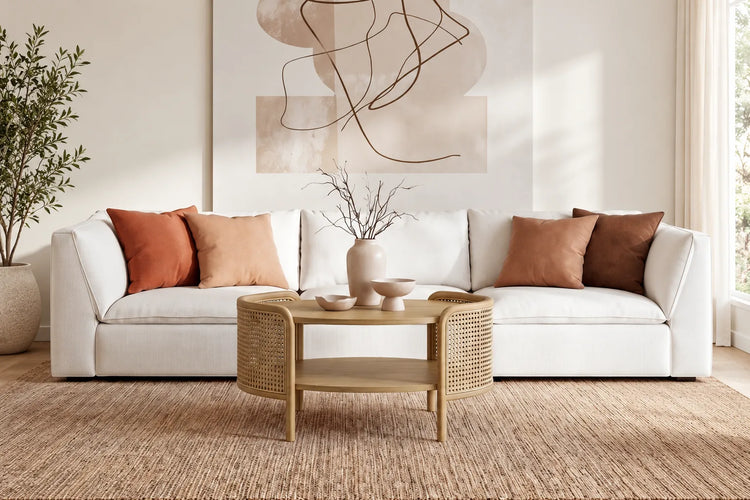
Our products illustrate different storage approaches without proving laptop fit or ergonomic suitability. The Blake hidden-drawer storage table measures 51.18 inches wide by 29.53 inches deep by 14.96 inches high and has two hidden drawers with soft-close operation. Its rounded form can support a softer visual direction, but its dimensions still need to be compared with your sofa and circulation path.
The Vanessa solid-wood storage table measures 39.37 by 39.37 by 11.81 inches and documents two hidden drawers, rounded corners, and a 220-pound weight capacity. Those are product facts, not proof that the table suits a particular laptop, sofa, or room.
The Ari modular hidden-storage table measures 39.37 by 39.37 by 10.01 inches and includes one drawer, two sliding panels, and a movable black rack. It can be considered when storage and display flexibility matter, but a modular-looking table is not automatically compatible with a specific modular sofa. Use modular sofas for a coordinated setup as a styling starting point, then measure the actual arrangement.
The practical tradeoff is reset versus openness. Storage-focused designs can make work disappear faster, while minimalist forms can preserve a lighter visual and physical feel. Pick the feature that removes your most frequent frustration, then verify that it does not create a new access problem.
Make the Final Choice for Your Room Size and Work Frequency
Room size should be treated as an actual access problem, not an undefined label. In a compact living room, protect the walking route and sofa access first; in a larger or modular arrangement, use the seats where you work and relax to judge reach, visual weight, and proportion. For broader arrangement context, these modular living-room planning ideas can help you think through reconfigurable seating without treating a collection name as proof of table fit.
- Compact room: Tape the proposed footprint and working state before prioritizing drawers or a mechanism. If crowding is the main problem, choose the direction that preserves access. If clutter is the main problem, choose only the storage that fits without narrowing the walking path. Rounded or oval forms may create softer visual flow in some smaller layouts, but the footprint still controls the decision.
- Larger or modular seating layout: Reference the seats actually used for work and relaxation, not the full theoretical seating capacity. Check whether the table is reachable from those positions and whether its visual weight balances the seating. A substantial arrangement may need a substantial-looking table, but proportion does not replace measurement.
- Regular work: Start with a lift-top or other function-forward direction only if the product page documents the working state you need. Prioritize verified surface position, clearance, movement, and a reset plan for work items. No supplied product information establishes all-day ergonomic suitability for any table.
- Occasional work: Favor the everyday living-room experience. A standard-height, minimalist, or storage-focused table may be more sensible when the laptop is used temporarily and the room should quickly return to a relaxed setting.
Measure the sofa seat, sofa length, laptop position, closed footprint, working footprint, and walking path. Choose the direction that addresses the dominant constraint, then verify the exact dimensions and documented features on the product page before making the purchase.
Frequently Asked Questions
These answers address the remaining fit and feature questions that commonly arise when a living-room table also supports occasional work.
Is a lift-top coffee table better for working from the couch?
It can be a better fit when you regularly need a surface to move toward the sofa, but the category is not proven to be universally ergonomic or suitable for all-day work. Compare the model's closed and raised dimensions, movement, clearance, and stability information before deciding whether the added mechanism solves a real problem.
What size and height coffee table works best for laptop use from a couch?
Start by measuring the sofa-seat height, intended laptop position, sofa length, usable surface, and access in both closed and working states. The common 14–20-inch height range, same-height-or-lower sofa relationship, roughly two-thirds sofa-length proportion, and roughly 12–18-inch clearance are screening guidelines, not a universal laptop-work specification.
Should a work-from-couch coffee table have hidden storage or an open base?
Choose hidden storage when a fast work-to-relaxation reset matters most. Choose an open or visually lighter base when legroom, openness, and flexible access matter more, then check the usable interior space and whether drawers or panels obstruct your preferred seating position.
How can I make a coffee table work for a home office without crowding my living room?
Protect the walking path first and decide where the laptop and accessories go after work. In a compact room, use the taped route and sofa access instead of a generic small-room cutoff; rounded or oval forms may soften the layout, but the footprint and circulation path still control fit.
Recommended Products

More to Read
 7 Sofa Trends That Actually Improve Comfort in 2026
Upgrade your living room with furniture that supports your body. Here are 7 modern sofa features designed to maximize your daily comfort...
7 Sofa Trends That Actually Improve Comfort in 2026
Upgrade your living room with furniture that supports your body. Here are 7 modern sofa features designed to maximize your daily comfort...
 Mother's Day Gift Guide: Cozy and Stylish Furniture Picks for Modern Moms
Make Mother's Day more meaningful with furniture gifts that bring comfort, smart features, storage, and quiet luxury into her everyday routine.
Mother's Day Gift Guide: Cozy and Stylish Furniture Picks for Modern Moms
Make Mother's Day more meaningful with furniture gifts that bring comfort, smart features, storage, and quiet luxury into her everyday routine.
 Performance Fabric Reality Check: Does It Really Repel Pet Hair and Stains?
Performance fabric is often marketed as a miracle solution for homes with pets and kids, but the reality is more nuanced. It...
Performance Fabric Reality Check: Does It Really Repel Pet Hair and Stains?
Performance fabric is often marketed as a miracle solution for homes with pets and kids, but the reality is more nuanced. It...