























Behind the Build: The Engineering and Logistics of Delivering High-Spec Modular Sofas

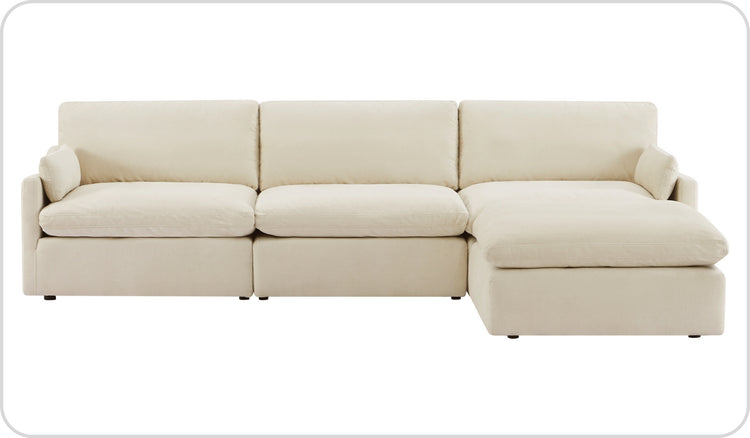
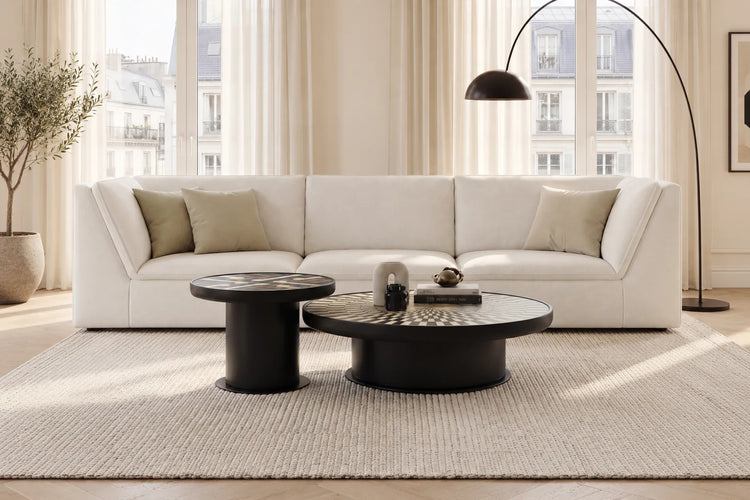
Modular sectional sofas arrive in multiple manageable boxes rather than one oversized piece, making them far easier to navigate through standard 30-inch doorways, stairwells, and elevators compared to traditional sectionals. Delivery tiers range from basic threshold drop-off to full white glove service that includes unpacking and basic assembly. The internal engineering relies on kiln-dried hardwood frames, corner blocking, and 2.0 high-density foam that delays common sagging and warping failures found in lower-cost alternatives. These features help justify the mid-market price when you plan to keep the sofa beyond three to five years or live in a space with delivery constraints.

Demystifying Big-and-Bulky: What to Expect on Delivery Day
Big-and-bulky furniture delivery for modular sectionals typically involves several large cartons instead of a single oversized piece. CHITA's shipping policy outlines three main tiers: Standard (threshold delivery to your door), Room of Choice (placement inside a chosen room), and White Glove (which includes unpacking and up to 30 minutes of assembly).
The real decision driver is not just price but your household's capacity to handle the "Cardboard Mountain" of five to eight heavy boxes on arrival day. Solo apartment dwellers often face the highest friction because one person must manage box movement, stair or elevator navigation, and immediate disposal of bulky packaging. Suburban families with multiple adults and easier trash access can usually make Standard delivery work, though Room of Choice adds helpful margin when access is awkward.
White Glove service becomes the practical choice when labor, disposal, or time constraints would otherwise turn delivery day into a multi-hour ordeal. As this White Glove policy page details, the service covers unpacking and limited assembly, reducing the immediate burden. Check your building rules, elevator size, and trash capacity before selecting a tier to avoid delivery-day regret.
Why Modular Design Wins the 'Last Mile' Logistics Battle
Modular sectional sofas solve many of the classic problems of moving large furniture into urban apartments or homes with tight entryways. Individual modules ship in smaller boxes that fit through standard 30-inch doorways where a one-piece sectional would get stuck, as noted in logistics guides for final-mile furniture delivery.
This design particularly benefits renters and urban dwellers who may need to navigate stairwells or small elevators. The ability to disassemble and reconfigure modules also makes future moves or room rearrangements simpler compared to traditional sofas that remain one rigid unit. Many buyers discover that what feels like a compromise in modular construction actually provides practical advantages for real-world living situations.
Read more about choosing between modular and traditional sofas to see how the logistics benefits align with your specific space.
The Chassis Study: Kiln-Dried Hardwood and Frame Engineering
High-spec modular sofa frames rely on kiln-dried hardwood rather than air-dried lumber to minimize moisture content and reduce the risk of seasonal bowing, twisting, or cracking. This furniture buying guide explains how kiln-drying removes moisture before assembly, helping the frame maintain dimensional stability over time.
Corner blocking reinforces stress points where modular units connect, limiting the racking or loosening that often develops in high-use areas. These frames are also designed to meet ANSI/BIFMA X5.4-2020 standards for lounge seating, which include repetitive stress and structural integrity testing.
The engineering pays off most clearly for buyers who expect years of daily use or live in climates with significant humidity swings. Kiln-dried construction does not eliminate all movement but meaningfully delays the structural drift common in lower-cost frames.
Beyond the 'Sink-In' Feel: The Science of 2.0 High-Density Foam
Cushion foam density directly affects how long a modular sectional maintains its support. CHITA uses 2.0 high-density foam, which provides better recovery and resists sagging compared to the 1.5 to 1.8 density foam common in many budget options, according to third-party reviews of their products.
This foam carries CertiPUR-US certification, confirming it meets standards for content, emissions, and performance without certain harmful substances. The higher density trades some initial ultra-soft sink for longer-term shape retention, helping prevent the "bottoming out" that occurs when lower-density foam compresses repeatedly.
Buyers who sit heavily or frequently will notice the difference after the first couple of years. Foam density alone does not determine comfort, but it serves as a reliable indicator of support longevity in high-spec modular sofas.

Assembly Without the 'Flat-Pack' Fatigue
Unlike flat-pack furniture that requires extensive tools and hours of puzzling over instructions, most modular sectionals from CHITA use simple connector hardware such as alligator clips or U-bars that snap modules together securely. The process typically transitions from unboxing to lounging in under 30 minutes for most configurations.
The primary effort comes from managing the packaging volume rather than the assembly itself. Many customers report that moving and breaking down the cartons creates more work than joining the modules. Placing connectors properly on hard floors helps prevent sections from drifting over time.
For detailed guidance on keeping modular sections stable, see how to join modular couches securely.
Delivery Tier Sweet Spot by Household Type
Low, medium, and high burden tiers help compare household fit across delivery choices.
View chart data
| Category | Labor Burden | Disposal Burden | Recommended Tier |
|---|---|---|---|
| Solo Apartment | 1.0 | 1.0 | 1.0 |
| Suburban Family | 2.0 | 3.0 | 3.0 |
The Verdict: Does Engineering and Logistics Justify the Price?
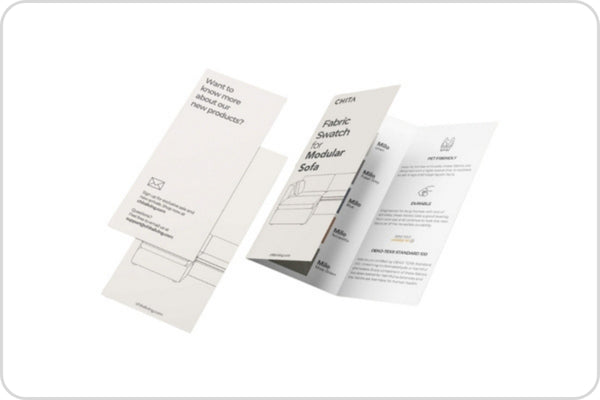
The 20% restocking fee and requirement to retain original packaging make returns of large modular sectionals expensive and logistically challenging. This policy encourages thorough pre-purchase research rather than casual trial-and-error buying. Measure carefully, request fabric samples, and confirm your delivery capacity before ordering.
Mid-market engineering with kiln-dried frames and 2.0 density foam tends to pay for itself after year three when compared with budget furniture that often shows sagging or frame issues earlier. The modular format further reduces long-term moving costs and frustration for renters or frequent movers.
This investment suits buyers who prioritize longevity over the lowest upfront cost and who understand their household's ability to manage delivery logistics. Families or individuals planning to keep the sofa for many years in the same home usually find the build quality and delivery options align well with their needs. Those seeking ultra-low-cost or temporary solutions may prefer different categories.
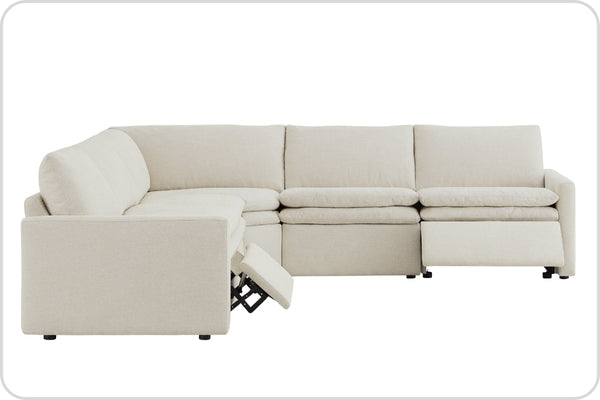
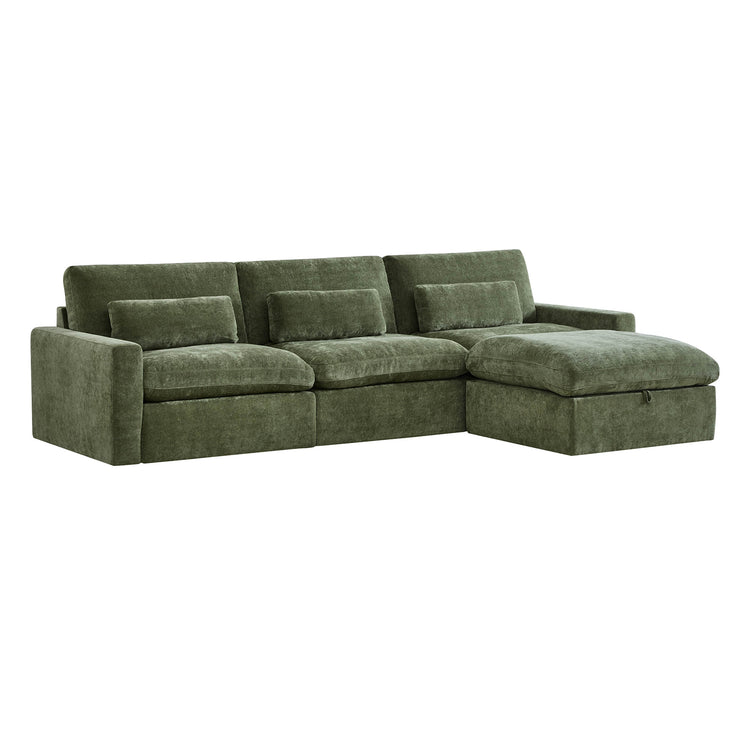
Consider exploring the Delaney Modular Sofa Set or Kenna Modular 5 Seat Sofa Chaise Sectional to see how these engineering principles translate into specific designs. The full Modular Sofas collection offers various configurations to match different room layouts and lifestyles.
Frequently Asked Questions
How long do modular couches typically last?
Modular couches built with kiln-dried hardwood frames and 2.0 high-density foam often last 8 to 12 years or more with regular use, compared to 3 to 6 years for many budget alternatives. Actual lifespan depends on usage intensity, fabric care, and environmental factors such as humidity.
Is furniture delivered assembled or do I need to build it?
Most high-spec modular sofas arrive in multiple boxes and require simple connector-based assembly that usually takes less than 30 minutes. White Glove delivery options include this step, while standard tiers leave assembly to the customer.
Are modular sofas easier to move than traditional sectionals?
Yes, modular sofas are generally easier to move because they can be separated into smaller, lighter pieces that fit through standard doorways and navigate tight spaces better than one-piece traditional sectionals.
What is the difference between threshold, room of choice, and white glove delivery?
Threshold delivery leaves boxes at your door. Room of Choice brings them inside to a specified room. White Glove includes unpacking, basic assembly, and packaging removal, making it the least labor-intensive option for the buyer.
Do modular sofas come with a restocking fee on returns?
Yes, returns typically incur a 20% restocking fee and require retention of all original packaging. This policy applies to most large furniture purchases and underscores the importance of accurate measurements before buying.
Recommended Products



More to Read
 7 Sofa Trends That Actually Improve Comfort in 2026
Upgrade your living room with furniture that supports your body. Here are 7 modern sofa features designed to maximize your daily comfort...
7 Sofa Trends That Actually Improve Comfort in 2026
Upgrade your living room with furniture that supports your body. Here are 7 modern sofa features designed to maximize your daily comfort...
 Mother's Day Gift Guide: Cozy and Stylish Furniture Picks for Modern Moms
Make Mother's Day more meaningful with furniture gifts that bring comfort, smart features, storage, and quiet luxury into her everyday routine.
Mother's Day Gift Guide: Cozy and Stylish Furniture Picks for Modern Moms
Make Mother's Day more meaningful with furniture gifts that bring comfort, smart features, storage, and quiet luxury into her everyday routine.
 Performance Fabric Reality Check: Does It Really Repel Pet Hair and Stains?
Performance fabric is often marketed as a miracle solution for homes with pets and kids, but the reality is more nuanced. It...
Performance Fabric Reality Check: Does It Really Repel Pet Hair and Stains?
Performance fabric is often marketed as a miracle solution for homes with pets and kids, but the reality is more nuanced. It...