


























Elevate Your Dining Space: How to Choose a Premium, Fully Assembled Sideboard in 2026

A premium fully assembled sideboard in 2026 combines factory-perfect alignment with high-end construction details such as kiln-dried wood and superior joinery, making it a strong choice for homeowners who want both visual impact and reliable performance without the frustration of flat-pack assembly.
This approach suits design-conscious buyers upgrading dining rooms or open-concept spaces who value convenience and longevity, but it may not fit those on very tight budgets or seeking fully custom one-of-a-kind pieces. The key is checking construction specifics rather than relying on the "fully assembled" label alone.

The New Standard for Dining Storage in 2026
Shoppers today often seek high-end looks in their dining storage without the headaches of poor fit, wobbly construction, or hours spent assembling flat-pack furniture. In 2026, a premium fully assembled sideboard stands out by arriving ready to use with consistent factory alignment that is difficult to achieve at home. This convenience matters most in busy households where time and presentation count, yet the real value comes from verifying the underlying build quality rather than assuming the assembly status guarantees premium results.
Busy homeowners furnishing open-concept layouts or formal dining rooms frequently regret choosing pieces that look good in photos but reveal misaligned doors or weak joints after a few months. A fully assembled option reduces that risk when paired with clear evidence of solid materials and joinery. Start by confirming the piece uses stable wood and professional-grade assembly techniques before focusing on style.
Beyond the Box: Why 'Fully Assembled' is a Quality Signal
Fully assembled furniture typically offers better longevity and structural integrity because it is built in a controlled factory environment with professional-grade tools and alignment checks that are difficult to replicate at home, according to comparisons of assembly methods. This controlled process helps ensure drawers glide smoothly and doors close evenly from day one, which many buyers notice as a difference in everyday use.
However, the label alone does not guarantee premium construction. Some pre-built pieces still rely on cam-locks or staples that can loosen over time. Treat "fully assembled" primarily as a convenience and finish-quality signal rather than a complete durability guarantee. Check product details for specific joinery terms to avoid disappointment in high-use dining areas.
This distinction helps filter options quickly: if a listing emphasizes only the no-assembly aspect without mentioning materials or joints, view it as a logistics benefit rather than a full quality upgrade. For those short on time, the time savings—often several hours compared to flat-pack—can be meaningful, but pair it with a construction review.
The Construction Checklist: Dovetails, Joinery, and Kiln-Dried Wood
Premium furniture construction is marked by time-tested joinery such as dovetail joints for drawers and mortise-and-tenon joints for frames, which offer superior strength over staples or glue alone. Look for these terms in product descriptions or request close-up photos, as visible cam-lock fasteners often indicate modular builds even in pre-assembled units.
Kiln-dried wood further supports longevity by reducing moisture content to help prevent warping, cracking, or splitting over time. This matters in dining rooms where humidity can fluctuate with cooking or seasonal changes. Premium sideboards often utilize kiln-dried wood to maintain finish and alignment, though results depend on the specific environment and care.
A practical self-check involves scanning listings for explicit joinery mentions and material stability details. If these are absent, treat the piece as standard rather than premium, even if fully assembled. This friction filter helps avoid regret when drawers begin to stick or frames loosen after heavy use with dinnerware.

Here is a decision chart that visualizes quality and safety thresholds for sideboard selection:
Premium Fully Assembled Sideboard Fit: Quality and Safety Thresholds
A decision aid for 2026 dining spaces, comparing construction and placement factors as Good Fit, Caution, or Not Recommended.
View chart data
| Category | Good Fit | Caution | Not Recommended |
|---|---|---|---|
| Joinery: Dovetail / solid construction | 3.0 | 0.0 | 0.0 |
| Joinery: Cam-lock / flat-pack style | 0.0 | 2.0 | 1.0 |
| Assembly: Fully assembled | 3.0 | 0.0 | 0.0 |
| Assembly: Partial assembly | 1.0 | 2.0 | 0.0 |
| Height: Under 27 in | 3.0 | 0.0 | 0.0 |
| Height: 27 in and above | 1.0 | 2.0 | 0.0 |
| Placement: Wall-backed / anchored | 3.0 | 0.0 | 0.0 |
| Placement: Floating / freestanding for heavy use | 1.0 | 2.0 | 0.0 |
This chart clarifies patterns across typical setups: solid joinery and anchored placement tend toward stronger fit signals, while certain combinations warrant caution or additional checks.
Choosing Your Profile: Sideboard, Credenza, or Buffet?
The terms sideboard, credenza, and buffet are often used interchangeably, yet they carry subtle differences that affect fit. As this guide to furniture terminology explains, sideboards typically feature a lower profile with drawers and cabinets suitable for dining storage and display, while credenzas often present a long, low silhouette without legs that works well in open-concept spaces.
A buffet may emphasize serving height and surface area for entertaining. Choose based on your primary need: a sideboard cabinet for dining room storage and display if you want balanced storage and style, or a narrower profile for hallway use. This decision prevents buying a piece that looks out of scale or fails to serve its intended purpose.
For modern homes, many prefer a modern sideboard fully assembled that blends these roles without dominating the room.
The 2026 Fit Test: Dimensions, Clearance, and Open-Concept Placement
Measure carefully before purchase. Allow at least 36 inches of clearance between the sideboard and dining table for comfortable movement, as noted in standard dining flow guidelines. In narrow hallways, opt for a narrow sideboard for hallway storage with 12-16 inch depth to avoid impeding traffic.
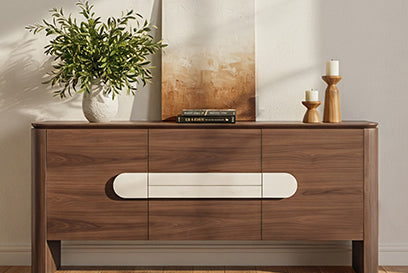
Open-concept layouts often benefit from a sideboard that doubles as a room divider. Wall-backed placement allows slimmer profiles and easier anchoring, while floating units need 360-degree finish and extra clearance. Our 62" Clara Contemporary Wood Sideboard offers cable management useful for tech-integrated setups.
Test fit by marking the floor area and walking the traffic path. A piece that blocks chair pull-out or creates bottlenecks quickly becomes frustrating in daily use.
Safety First: Stability Standards and the STURDY Act
In 2026, safety compliance for storage furniture includes adherence to updated stability standards, such as the STURDY Act and ASTM F2057, which require rigorous testing to prevent tip-over accidents. Official guidance from the U.S. Consumer Product Safety Commission focuses on units 27 inches and taller, but shorter sideboards holding heavy items like stoneware or wine can still pose risks if top-heavy.
Units under the legal threshold still benefit from wide bases, low center of gravity, and anchoring in homes with children or pets. Store heaviest items in lower cabinets and consider anchoring regardless of height when using the top for display. This practical approach addresses real-world use beyond legal minimums.
Balancing Utility and Aesthetics: Hidden Storage vs. Styled Display
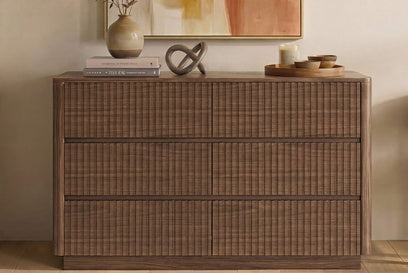
A good sideboard balances concealed organization with open display. Use drawers and cabinets for linens, serving pieces, or electronics, while the top surface showcases decor, plants, or seasonal tableware. This dual role elevates the room without adding visual clutter.
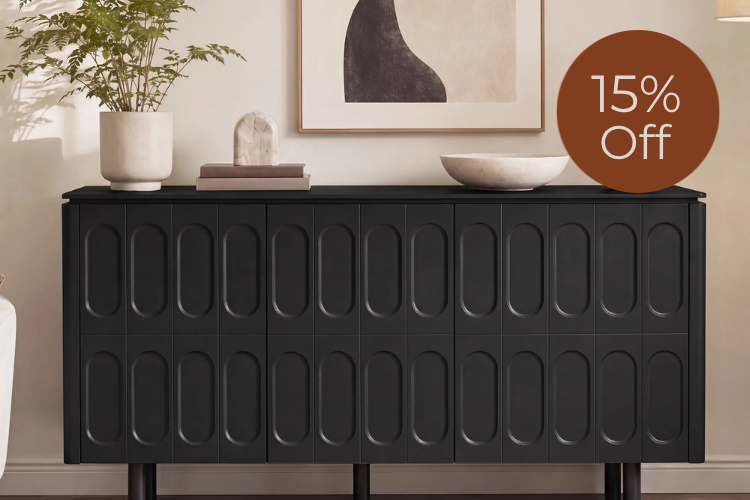
In open-concept dining and living areas, coordinate the sideboard finish with surrounding furniture for cohesion. Our 71'' Kyle 4-Door Black Solid Wood Display Sideboard provides generous display space, while models like the 63" Elias Versatile Multi-Section Curved Sideboard add organic modern interest.
Avoid overloading the surface; a few well-chosen items create more impact than crowded arrangements. This approach keeps the space functional for entertaining while maintaining a polished look.
Final Selection: Your 2026 Premium Sideboard Checklist
Use this checklist to evaluate options and reduce purchase regret:
- Confirm joinery details (dovetail or mortise-and-tenon preferred over cam-locks).
- Verify kiln-dried wood or equivalent stability measures.
- Check dimensions against your space, including 36-inch dining clearance.
- Review safety features and anchoring options, especially for units 27 inches or taller.
- Ensure the finish quality matches both hidden and visible surfaces for your placement scenario.
- Select fully assembled models from collections prioritizing factory alignment for best results.
Cross-reference these points against product specs and room measurements. A durable storage cabinet that looks high end meets most of these criteria when construction details are transparent.
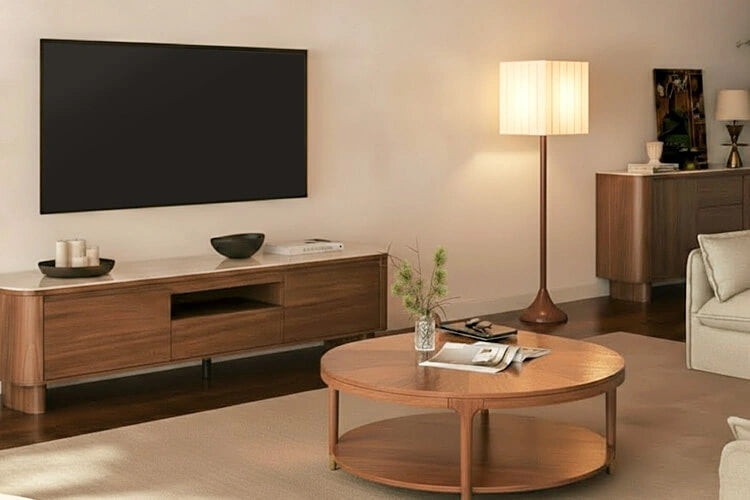
For further inspiration on styling storage pieces, see our guide to expert tips for styling your TV stand and media console, which shares overlapping principles for balanced vignettes. Additional reading on stylish coffee tables with smart storage solutions can help coordinate across rooms.
Frequently Asked Questions
Does fully assembled furniture always mean better quality? No. While factory assembly often improves alignment and finish consistency compared to home assembly, quality ultimately depends on materials and joinery. Always verify construction details rather than relying on the assembly description alone.
How do I choose the right size sideboard for my dining room? Measure your available wall space and add at least 36 inches of clearance to the dining table. For open-concept rooms, consider how the piece functions as a divider or serving station. Narrower profiles (12-16 inches deep) suit hallways, while wider models work better for entertaining storage.
What joinery should I look for in a premium sideboard? Prioritize dovetail or mortise-and-tenon joints for drawers and frames. These mechanical connections resist pulling forces better than staples or glue. If product photos or descriptions omit joinery details, ask the seller for clarification before purchasing.
Are there safety rules I need to follow for sideboards in 2026? Units 27 inches and taller fall under the STURDY Act stability requirements. Regardless of height, anchor any top-heavy piece in homes with children or pets, and keep heavy items in lower compartments to maintain a low center of gravity.
Can a sideboard work in a narrow hallway? Yes, provided you select a shallow depth model with a stable base. Focus on low-profile designs that maintain clear egress paths. Fully assembled options minimize setup issues in tight spaces where alignment is critical.
How do I style a sideboard for both storage and display? Use interior cabinets for hidden organization and limit tabletop items to three to five curated pieces. Mix heights and textures while keeping the overall look balanced. This creates an elevated appearance without sacrificing practicality.
Recommended Products


More to Read
 7 Sofa Trends That Actually Improve Comfort in 2026
Upgrade your living room with furniture that supports your body. Here are 7 modern sofa features designed to maximize your daily comfort...
7 Sofa Trends That Actually Improve Comfort in 2026
Upgrade your living room with furniture that supports your body. Here are 7 modern sofa features designed to maximize your daily comfort...
 Mother's Day Gift Guide: Cozy and Stylish Furniture Picks for Modern Moms
Make Mother's Day more meaningful with furniture gifts that bring comfort, smart features, storage, and quiet luxury into her everyday routine.
Mother's Day Gift Guide: Cozy and Stylish Furniture Picks for Modern Moms
Make Mother's Day more meaningful with furniture gifts that bring comfort, smart features, storage, and quiet luxury into her everyday routine.
 Performance Fabric Reality Check: Does It Really Repel Pet Hair and Stains?
Performance fabric is often marketed as a miracle solution for homes with pets and kids, but the reality is more nuanced. It...
Performance Fabric Reality Check: Does It Really Repel Pet Hair and Stains?
Performance fabric is often marketed as a miracle solution for homes with pets and kids, but the reality is more nuanced. It...